
Small adventures, big connections
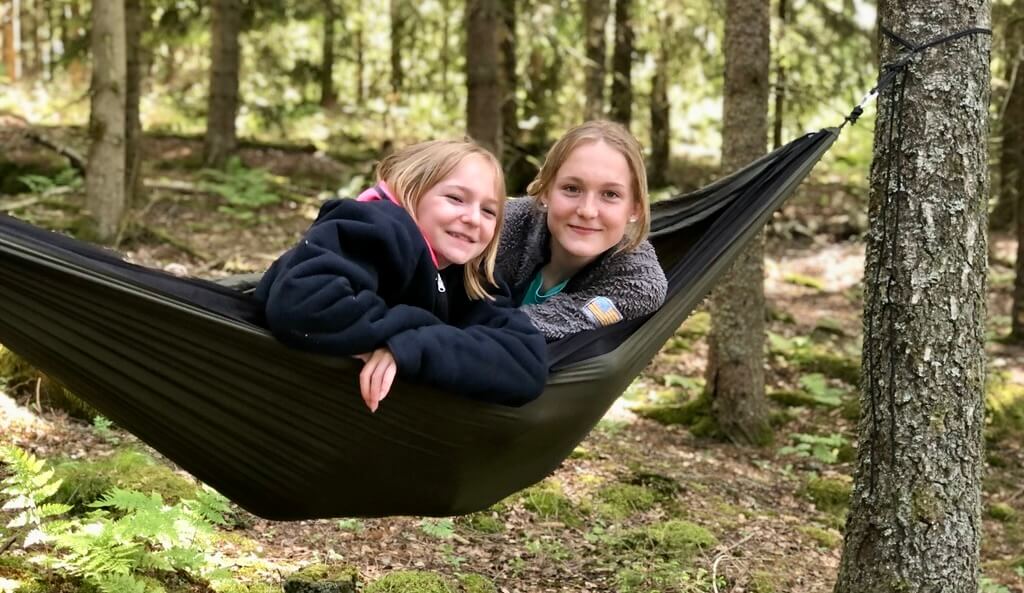
A few years ago, when my daughters were nine and twelve, I took them on a ten-hour drive to northern Sweden. We were on a mission to hike Helagsfjället, a horseshoe-shaped mountain which, at 5,892 feet, is Sweden’s highest peak south of the Arctic Circle. The area around Helags takes pride in its rich Sámi history, pristine views and magnificent glacier, and draws hikers from around the world every year. The hike to the peak has even been listed by National Geographic as one of the best summit hikes in the world.
We were out for five days and four nights, sleeping in a tent, photographing reindeer and getting bit by more than a few mosquitos. The hike up the mountain took some effort, but the girls were excited to put their names in the logbook at the summit, and even more excited to slide down the slowly melting snowfields on our way down.
In the car on our way home, I asked them what their favorite part of the trip had been. “The cows!” they responded in unison, without hesitation.
“Cows? You mean the ones we saw in the pasture along the trail?” I was incredulous, considering that we live in the countryside and see cows all the time. These looked no different, and I never would’ve guessed that the ten minutes the girls had spent petting them would be a trip highlight. But sure enough, it was the cows that, in their eyes, had made the journey to one of the most beautiful areas in the Swedish mountains worthwhile.
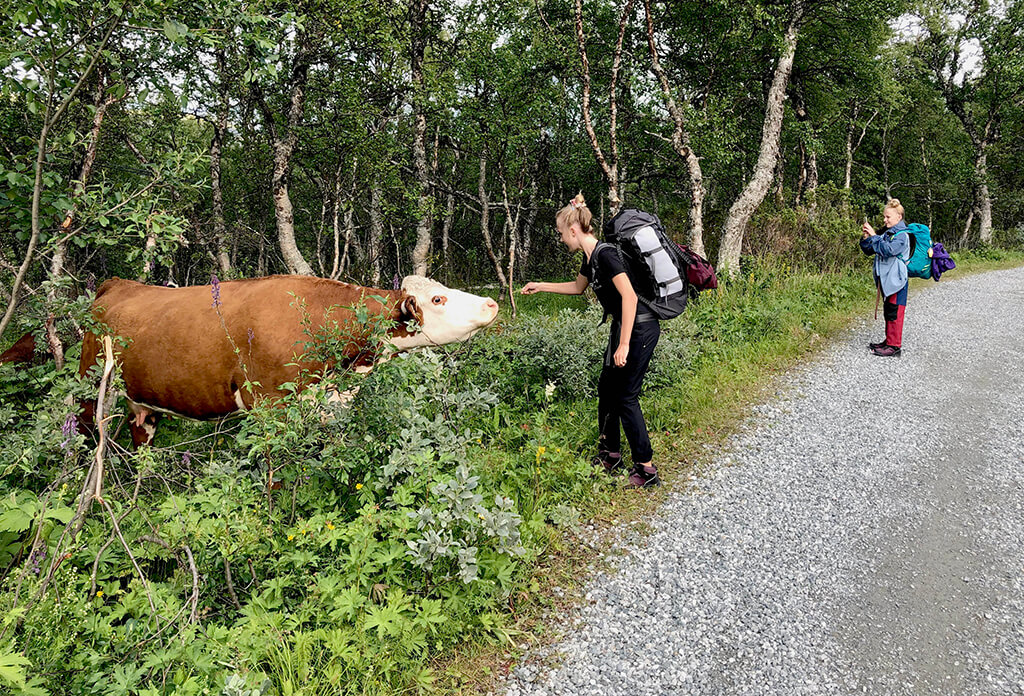
Stopping to pet a cow on the way to the Helags glacier.Photo by Linda Åkeson McGurk.
The episode was a reminder that children don’t always appreciate being out in nature for the same reasons adults do — and that we adults often overcomplicate the idea of connecting children with nature. While I don’t regret taking my daughters on the trip, I also suspect they would’ve been just as happy camping in our local woods. Sure, they really enjoyed seeing the reindeer, but unlike me, they were neither interested in nor impressed by the sweeping views. And while I soaked up the feeling of being in the “wilderness” (relatively speaking, because to the Indigenous Sámi people, this area is anything but), they preferred doing what they normally did at home: rolling down grassy hills and looking for frog spawn in puddles of water.
I always come back to this story when I talk to parents who worry they’re not taking their kids to enough scenic, remote or “special” natural places. When it comes to helping children connect with nature, I believe the small, everyday experiences are just as valuable — if not more — as the big adventures requiring weeks of advance planning and countless hours in the car.
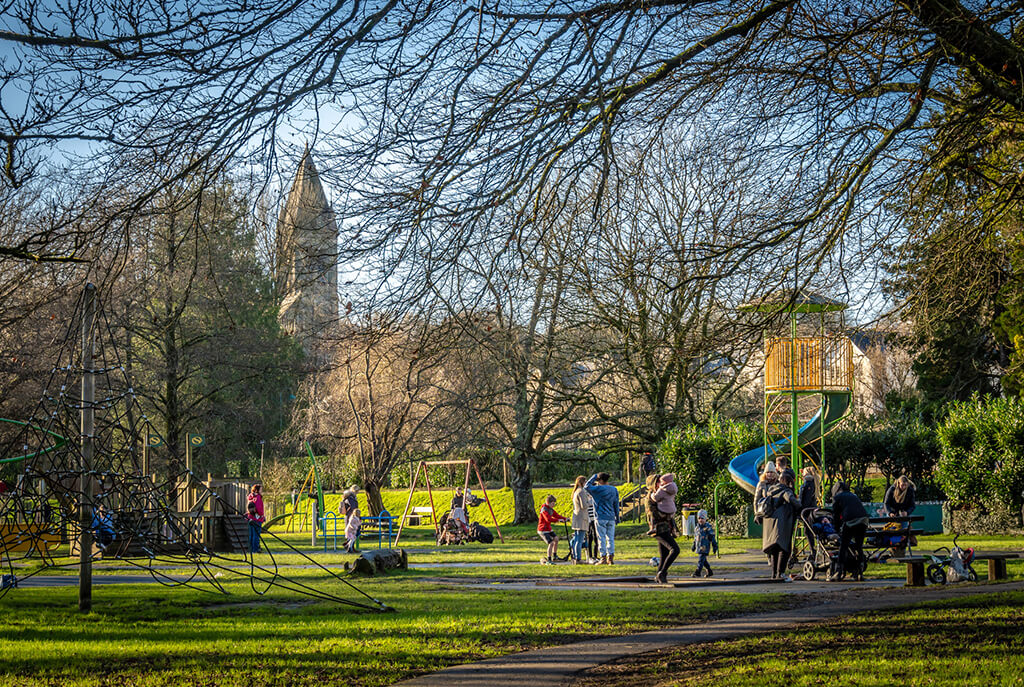
Whether it’s visiting a local patch of woods, city park or neighborhood creek, quick adventures into local nature can be just as valuable as “big adventures.”
Returning to the same local greenspace over and over again may feel tedious to us, but to a child, it’s anything but. Forest school educators, for example, often take children to the same spot again and again, whether it’s a patch of woods, a city park or a neighborhood creek. Part of the reason is logistical, as they use the greenspaces that they can easily get to. But it’s also intentional. When children revisit outdoor places regularly, they learn to feel safe there, which is essential for them to thrive and develop genuine affinity toward the natural world. They also can watch the natural world change and grow with the seasons.
Everyday contact with nature has many other tangible, well-documented benefits. One Lithuanian study found that children who live in greener neighborhoods have better mental and general health, and more time spent in parks was associated with decreased sedentary behaviour. In fact, every additional hour spent at a park each week can help reduce the risk of poor health in children.
Local parks and other nearby nature areas can be especially beneficial for children from underserved communities. A British study showed that frequent park visits can positively influence peer interactions, reduce behavioral problems and lessen hyperactivity in children from low-income families. “The more green space available, the stronger the effect,” the researchers concluded.
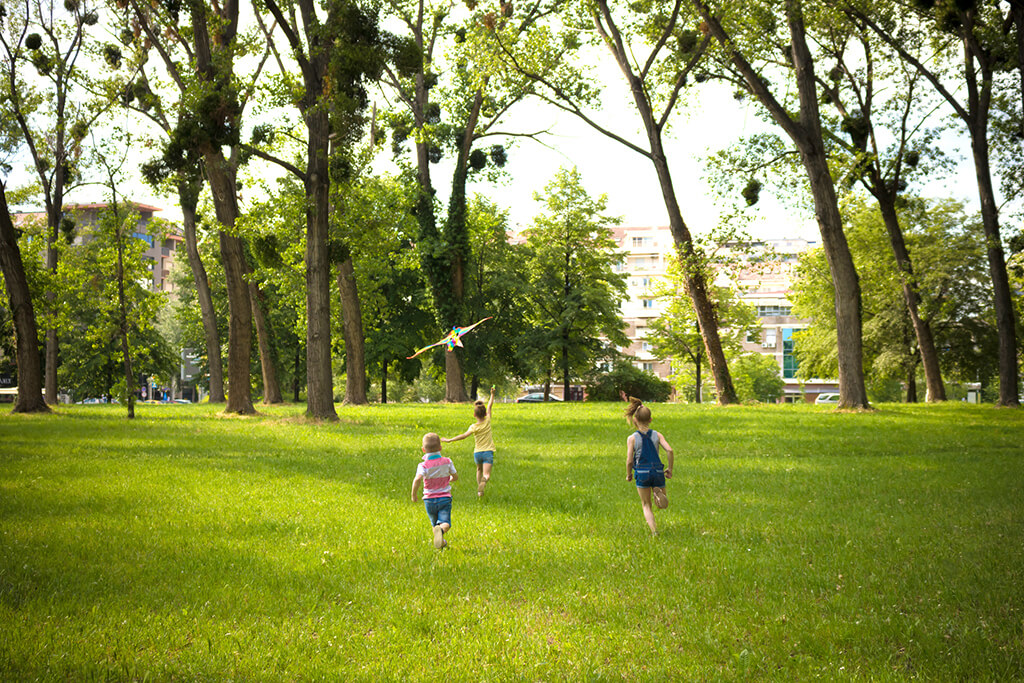
Engaging in nearby nature on a regular basis helps form a lifelong connection with nature.
Of course, not every trip to the park will qualify as an epic adventure — and it doesn’t need to. If you immerse your child in nearby nature on a regular basis, those experiences will still linger, deeply rooted in their body and memory. As they grow older, they may not recall every walk to the local creek, but they’ll remember the chill of water flowing past their feet, the feeling of wet hands searching for the perfect rock and the thrill of spotting a toad or salamander. Chances are they’ll carry those places with them — and with that, a lifelong connection with nature.
My own daughters are teenagers now and not always eager to join me on expedition-style camping trips in the mountains. But we still walk in our local woods several times a week. It’s a time for us to decompress, talk about life and reconnect with nature, as well as with each other. And from time to time, we still stop to pet some cows.
Families Together in Nature, resources for families and caregivers
Join the Vitamin N Challenge this summer to connect with inspiration and community for your next small adventures!
Creating a stronger family culture through “friluftsliv,” a Finding Nature News story from Linda Åkeson McGurk
Research Digest: Family Engagement with Nature
People and forests: Vitamin N for nature connection in Hungary, a Finding Nature News story
Why nature is my motherhood ally, a Finding Nature News story
How the 52-Hike Challenge helped carry on a family tradition of ‘love moments’ in nature, a Finding Nature News story
-
Richard Louv
THE "VITAMIN N" PRESCRIPTION - Some health professionals now recommending nature time for children and adults
-
Feature
A decade of ripples: What Nature Everywhere Communities reveal about systems change
-
Feature
Crossing invisible boundaries in the outdoors: A Q+A with Mason Branstrator
-
Feature
Forest bathing: Educators need nature connections, too
-
Feature
A future full of promise: Nature in early childhood