
Forest bathing: Educators need nature connections, too
Inhale deeply. Now exhale. Close your eyes and inhale again. Exhale. That’s better. Could you use a screen break right about now? Leave your phone behind and grab your water bottle. Head outside. Once there, move slowly through all available senses one at a time. Notice any evidence of nature in your surroundings. Be here now.
Twenty years ago, environmental educator, author and co-founder of the Children & Nature Network, Richard Louv coined the term “nature-deficit disorder” in his 2005 classic, “Last Child in the Woods: Saving Our Children from Nature-Deficit Disorder.” Louv pointed to a cultural “retreat indoors,” and argued that children face adverse mental, spiritual, emotional and physical impacts as they lose connection with the natural world.
I’ve seen the impacts of nature-deficit disorder throughout my time working in park interpretation with K-12 audiences. In my work, I taught place-based education to my students, showing them how to identify common species of flora and fauna in their own neighborhoods as easily as they recognize corporate logos and cartoon characters.
Throughout those years guiding hundreds of school field trips, I began to recognize that it isn’t just the students who face a disconnection from nature — busy teachers also experience nature-deficit disorder. Upon deboarding the school buses, many teachers were understandably hyper-focused on student behavior and safety. They would remain suspended in that high alert, energy-draining mindset throughout the entire visit. Given their responsibility to protect both their students and the resources they were visiting, many educators didn’t find moments to let go a bit, relax and enjoy time spent outside.
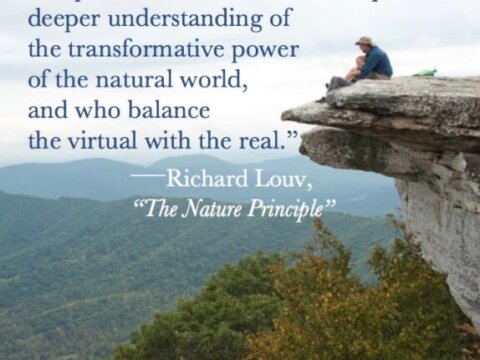
Louv documents adults’ “need-for-nature” in his 2012 book, “The Nature Principle.” His work inspired my journey to become a certified forest therapy guide through the Association of Nature and Forest Therapy Guides and Programs (ANFT) and to support new adult audiences in connecting to nature. I took baby steps at first, learning to share the somatic practice of forest bathing with Michigan teachers and to provoke them to engage in this free practice wherever, however and whenever they wanted. In 2022, I offered the first forest bathing walk for professors at the University of Michigan’s Biological Station campus. From there, I began offering regular forest bathing walks for teachers and writing about the scientific impacts of forest bathing on body and mind for state newsletters and national magazines.
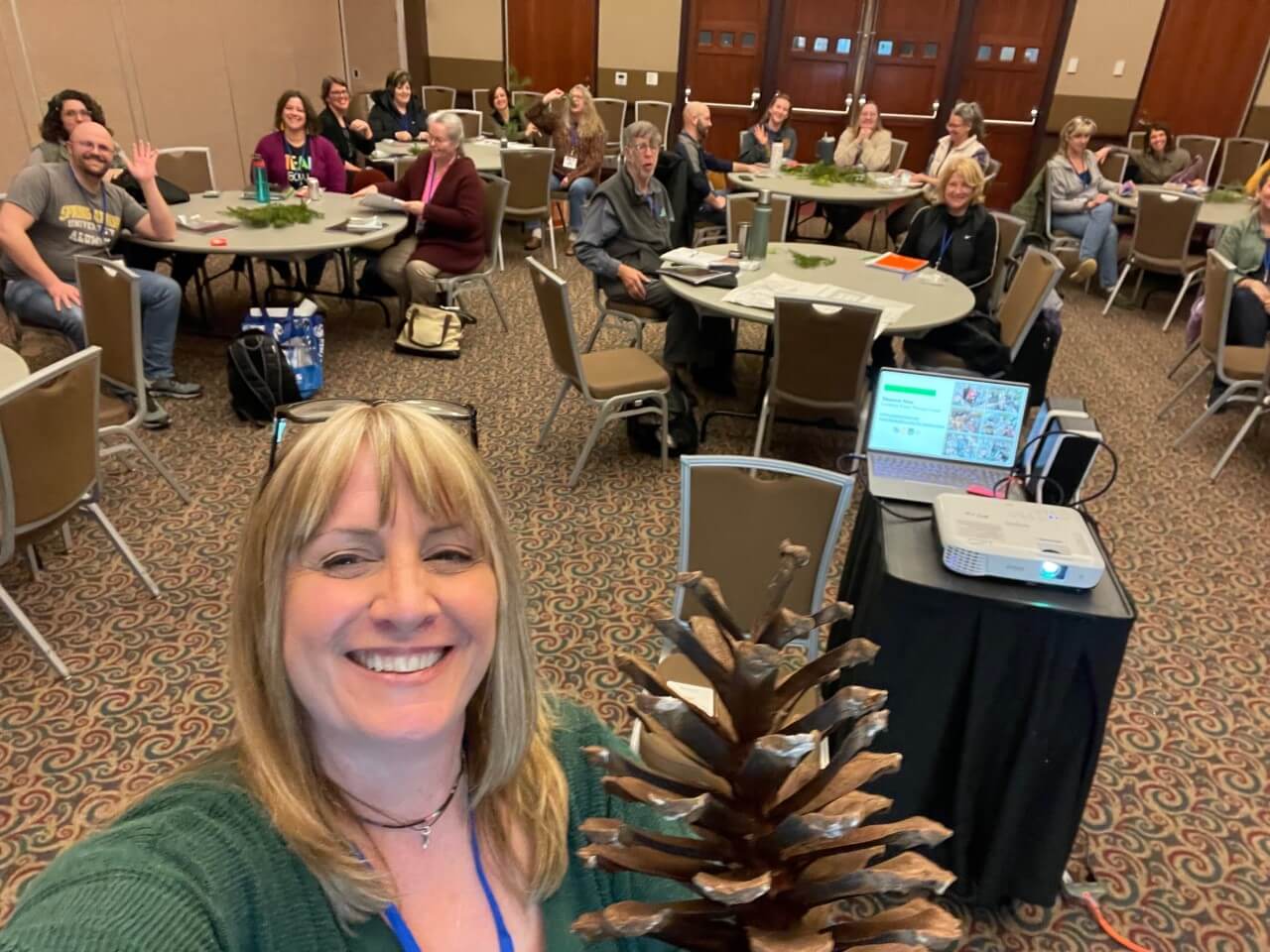
Maureen presented “Forest Bathing for Teachers” at the 2023 Michigan Science Teachers Association conference in Grand Rapids, Michigan.
After-school phytoncide cocktails
The term “shinrin-yoku” originated in Japan in 1982, and it translates to “bathe in the forest atmosphere.” Many of us have been forest bathing since childhood, without ever calling it that. What is new is this intentional pursuit of habitually carving out agenda-free time for aimless wandering out-of-doors. Momentarily escaping our screens and nagging mental baggage for recentering and grounding. The practice of forest bathing is now part of a global effort to tend to the stressful conditions of living in a modern industrialized civilization — but it is of particular importance for teachers who spend hours indoors amid artificial lighting, poor indoor air quality and electromagnetic pollutants along with other environmental stressors.
Research reveals that time spent in nature results in a wide array of health benefits, including increasing NK (Natural Killer) cell activity, impacting nervous system activity, lowering blood pressure, sharpening memory and reducing cortisol levels. Many of these health benefits are directly linked to atmospheric phytoncides — organic chemical compounds defused by trees and plants. These allelopathic, antibacterial compounds help trees and plants attack harmful insects, bacteria and fungus. And studies show that phytoncides may also be good for mammals — the mammalian body benefits greatly from the contact of phytoncides with the respiratory tract and skin.
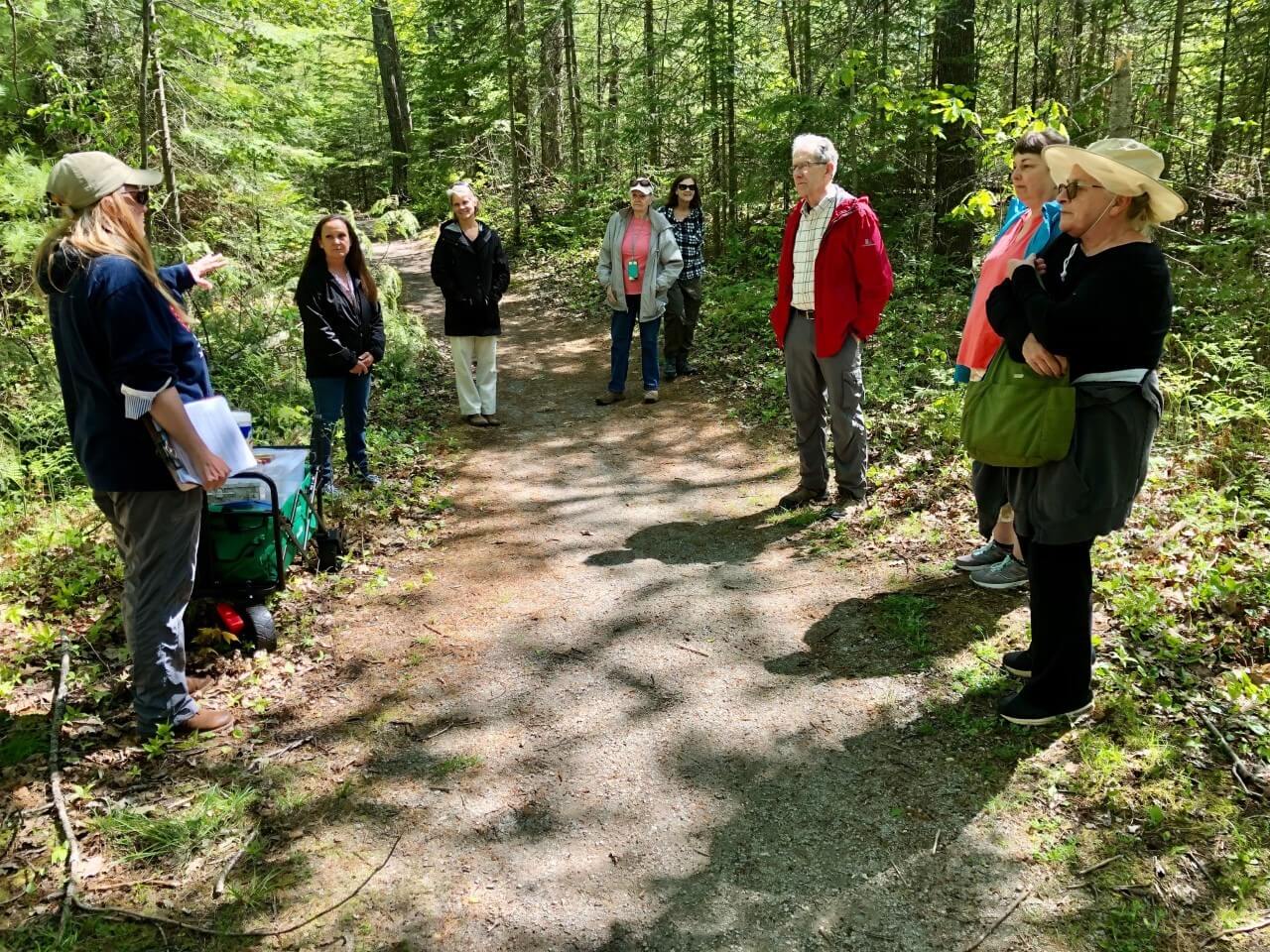
A forest bathing meditation with educators from the University of Michigan. Photo by Sherry Nelson.
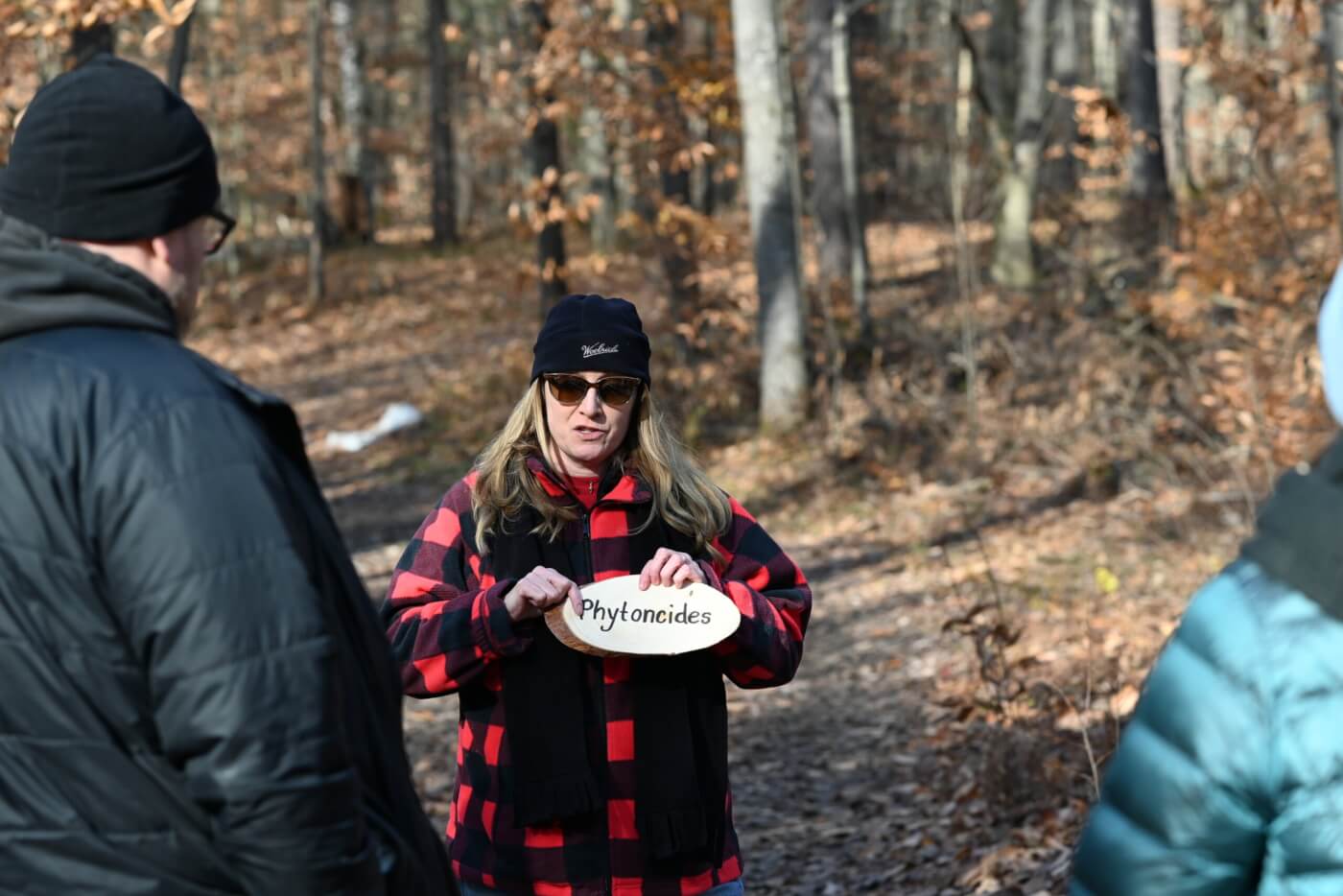
Forest bathing is different from traditional nature walks. While forest bathing, we are not there to get our steps in or expand our bird life-lists. Instead, we move slowly, using all available senses to experience nature. If we notice a fox or an owl, the idea is to quell our inner Hermione Granger and not scramble to come up with the common or Latin names, but instead explore how the wildlife encounter makes us feel. For teachers, forest bathing is a free and simple way to find solace. The practice gives teachers a permission slip to engage in “me time,” promotes health and wellness, and enhances how teachers show up for their students, colleagues, family and most importantly, for themselves.
Cindy Fitzwilliams-Heck, a professor at Ferris State University in Michigan, reminds us in her work, “A Practical Guide to Nature Study,” that nature may help us feel “unstuck.” “When you find yourself mentally blocked,” shares Fitzwilliams-Heck, “try time outdoors walking around with no agenda except to be present in the moment… The sights, sounds, smells and textures can translate into many forms of artistic interpretations. Experiences outdoors can inspire you in ways that may be unexpected.”
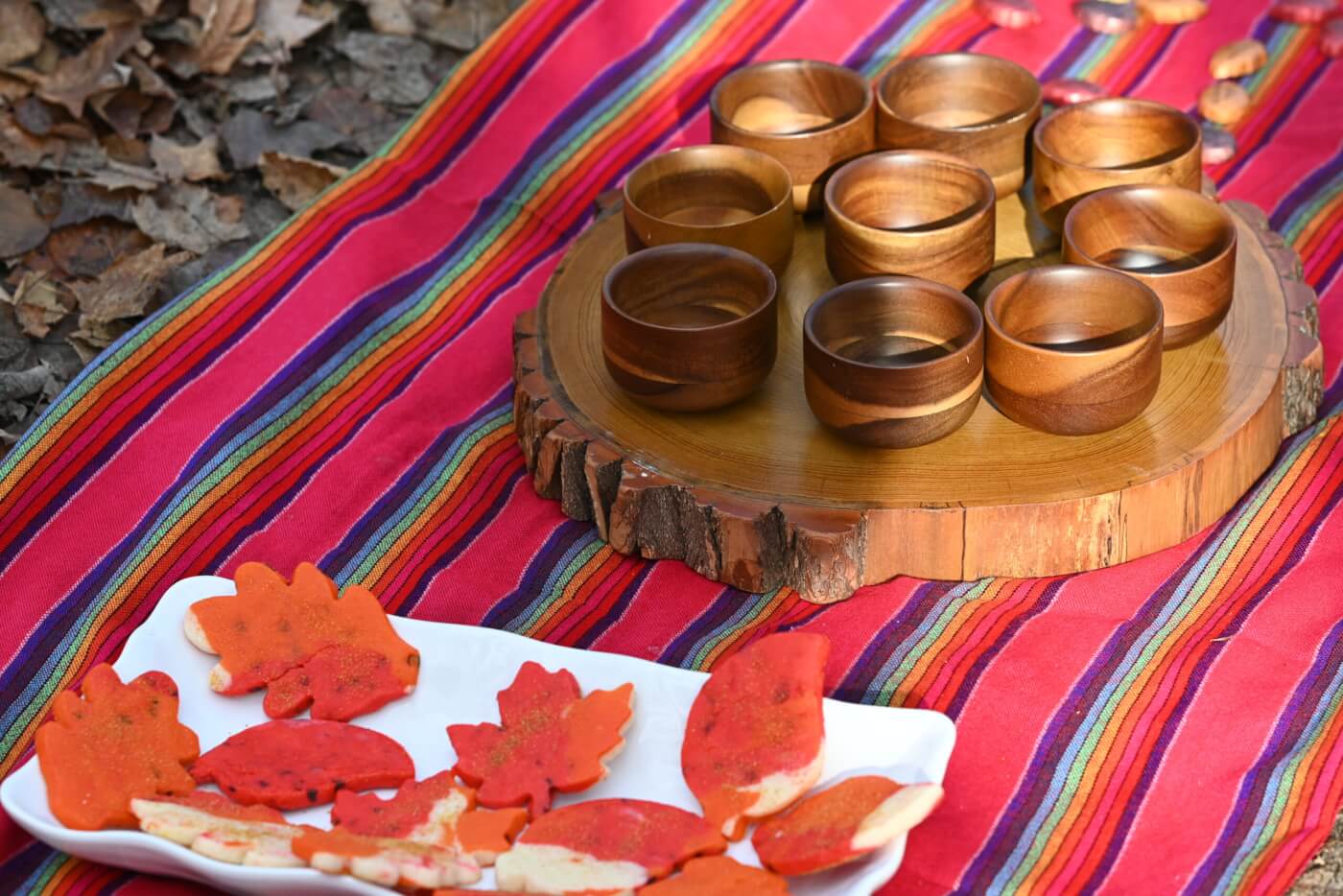
Maureen concludes every forest bathing meander with a tea ceremony. Photo by Etched Emmet.
Your homework assignment
Teachers (and all!), I invite you to try my forest bathing invitation called “Meet a Being.”
- Tell someone in your inner circle where you are headed.
- Pack up water, a snack, something to sit on, something to write with, and something to write on (bring along anything else you think you’ll need to avoid excuses that might compel you to cut your outing short!).
- Throw on some comfortable clothing and footwear.
- Travel to a trail and wander to a place along the trail that calls to you.
- Congratulate yourself for taking this time just for you.
- Check in with your body and “nest” into your chosen spot. Breathe slowly and deeply.
- Sit quietly and notice a forest being from the more-than-human world. Whatever it is, let it emerge to your senses like a slow reveal.
- Draw a picture, write a poem, write a word about it or simply spend time observing it.
If you enjoyed the experience, you can gather fellow teachers and experience being professionally guided during a group trip. Visit www.anft.earth or www.forestbathingfinder.com to find and hire a guide who can demonstrate how the practice of forest bathing can become part of your weekly health regimen.
References and recommended reading, from Maureen Stine
Association of Nature and Forest Therapy
Research Digest: Teachers and outdoor educators, covering the latest research on educators’ beliefs about outdoor education — and the accompanying benefits and barriers
How to Connect with Nature in Cities: A Forest Bathing Approach, a toolkit written by Victoria Reynal, with support from Cheryl Charles, co-founder of the Children & Nature Network
Forest Bathing: How Trees Can Help You Find Health and Happiness, a book by Dr. Qing Li
Giving patients the power to self-prescribe nature, a Finding Nature News story
Nature’s Role In Promoting Resilience, Regulation And Recovery, a bibliography of recent academic literature
-
Richard Louv
VITAMIN N FOR THE SOUL: How Nature Can Nourish the Spirit of Children and Adults
-
Network News
Prescribe Outside: Progress moves at the speed of trust in Philadelphia
-
Voices
Nature to screens: How our built environment set the stage for the anxious generation
-
Feature
We’re all looking for the same moon
-
Feature
Forest bathing: Educators need nature connections, too