


A decade of ripples: What Nature Everywhere Communities reveal about systems change
Over the past decade, the Nature Everywhere Communities initiative has partnered with communities across the country to expand children’s access to nature where they live, learn and play. From the beginning, this work has been rooted in a shared understanding: achieving equitable access to nature requires change that is lasting, community-driven and embedded across policies, practices and decision-making structures. This is what is referred to as “systems change” work.
As the initiative reached a milestone of supporting 100 communities, the Children & Nature Network, National League of Cities and KABOOM! partnered with Education Northwest, an educational research and evaluation organization, to step back and take stock of what communities have built and what they have learned along the way, asking a critical question: What does it actually take to create lasting, transformational change for children’s access to nature?
The resulting Education Northwest Nature Everywhere Evaluation report clarifies not only what has changed but also how change happens and what it takes to sustain it over time. This evaluation builds on years of learning within the Nature Everywhere Communities initiative and offers practical insight into the conditions that enable lasting change for children’s access to nature.
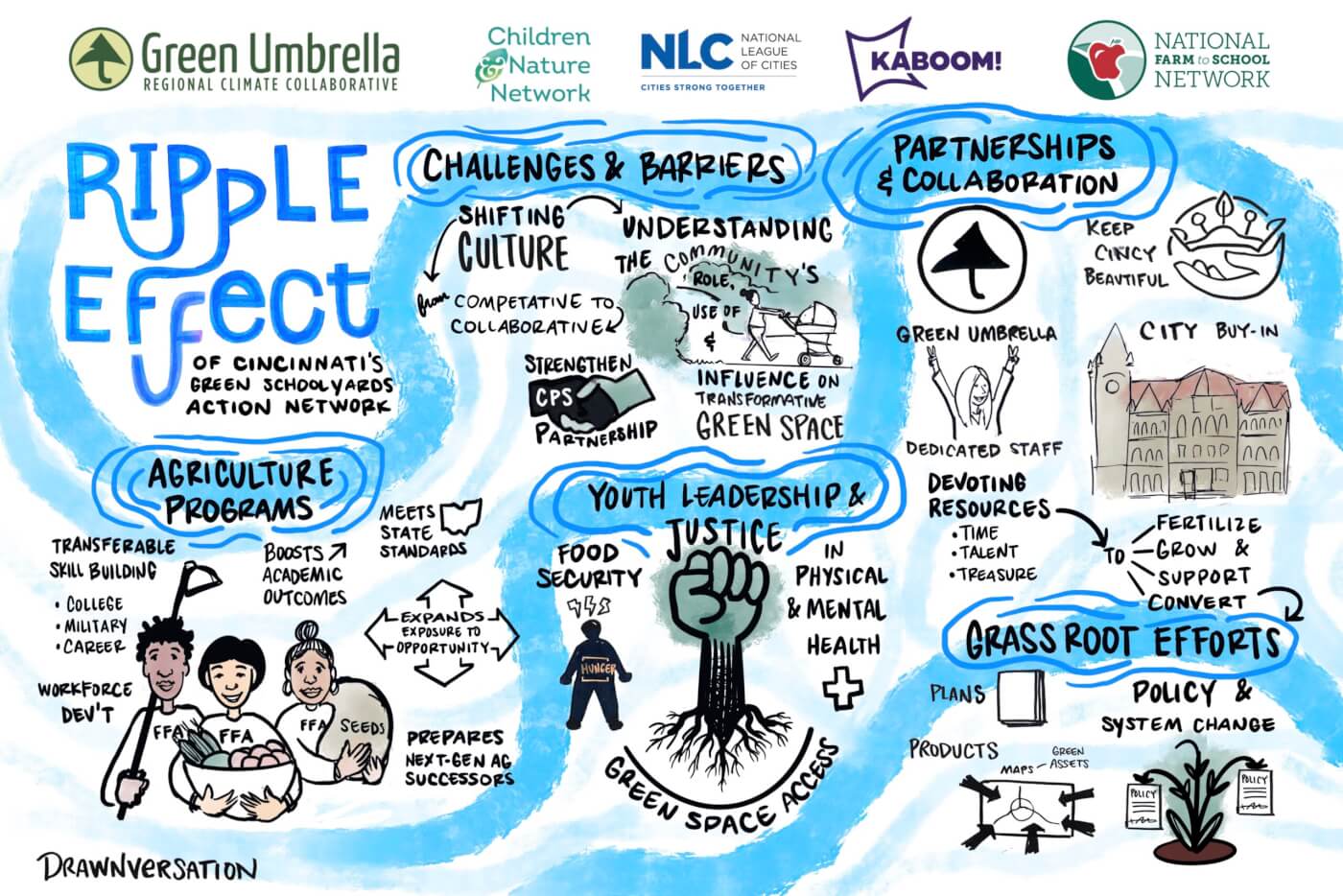
This image is an example of the results of the Ripple Effects Mapping process for Cincinnati’s Green Schoolyards Action Network through a real-time visual illustration. The ripple effects map shows impact across the city, school district, food systems and green workforce development.
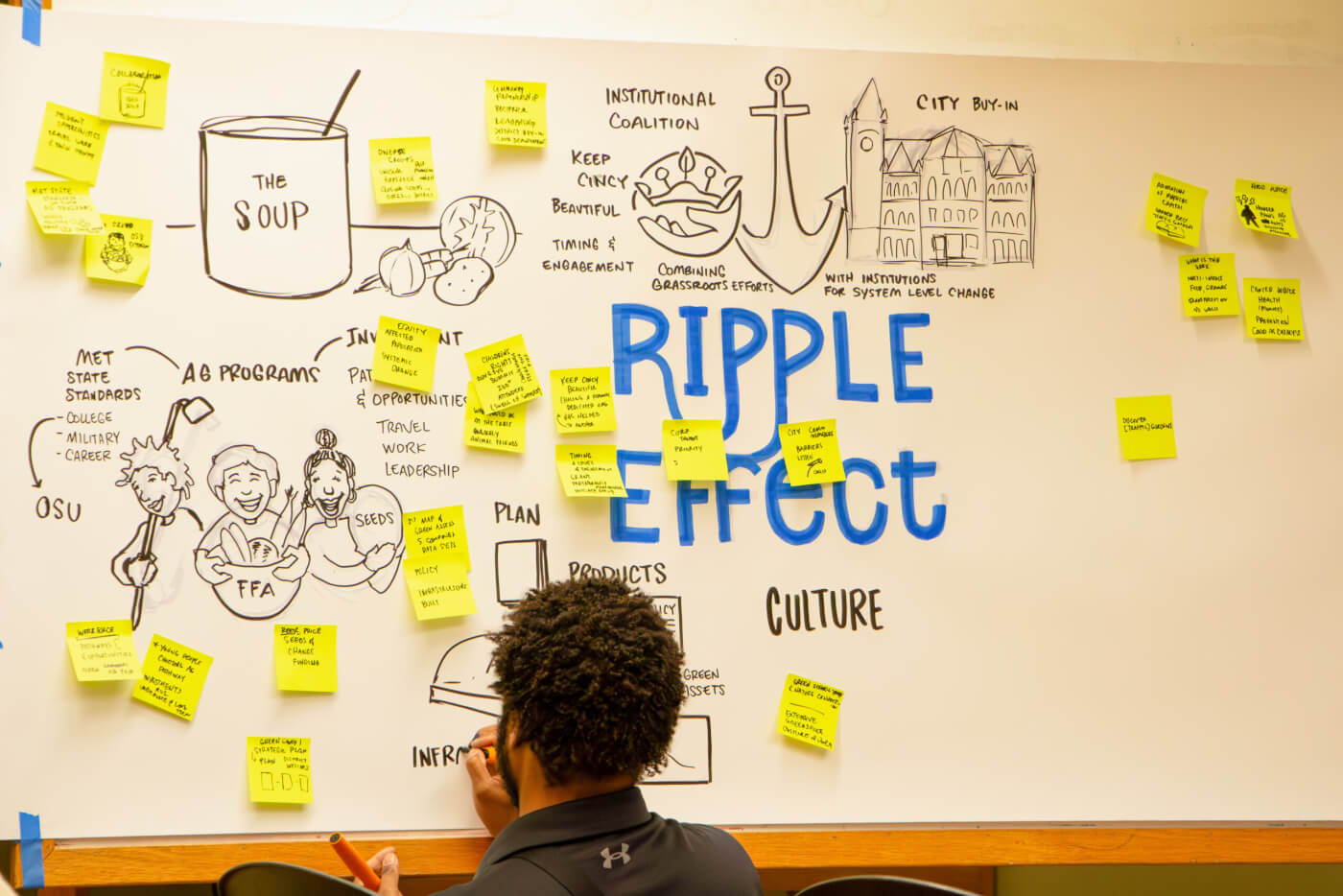
The Ripple Effects Mapping process in action.
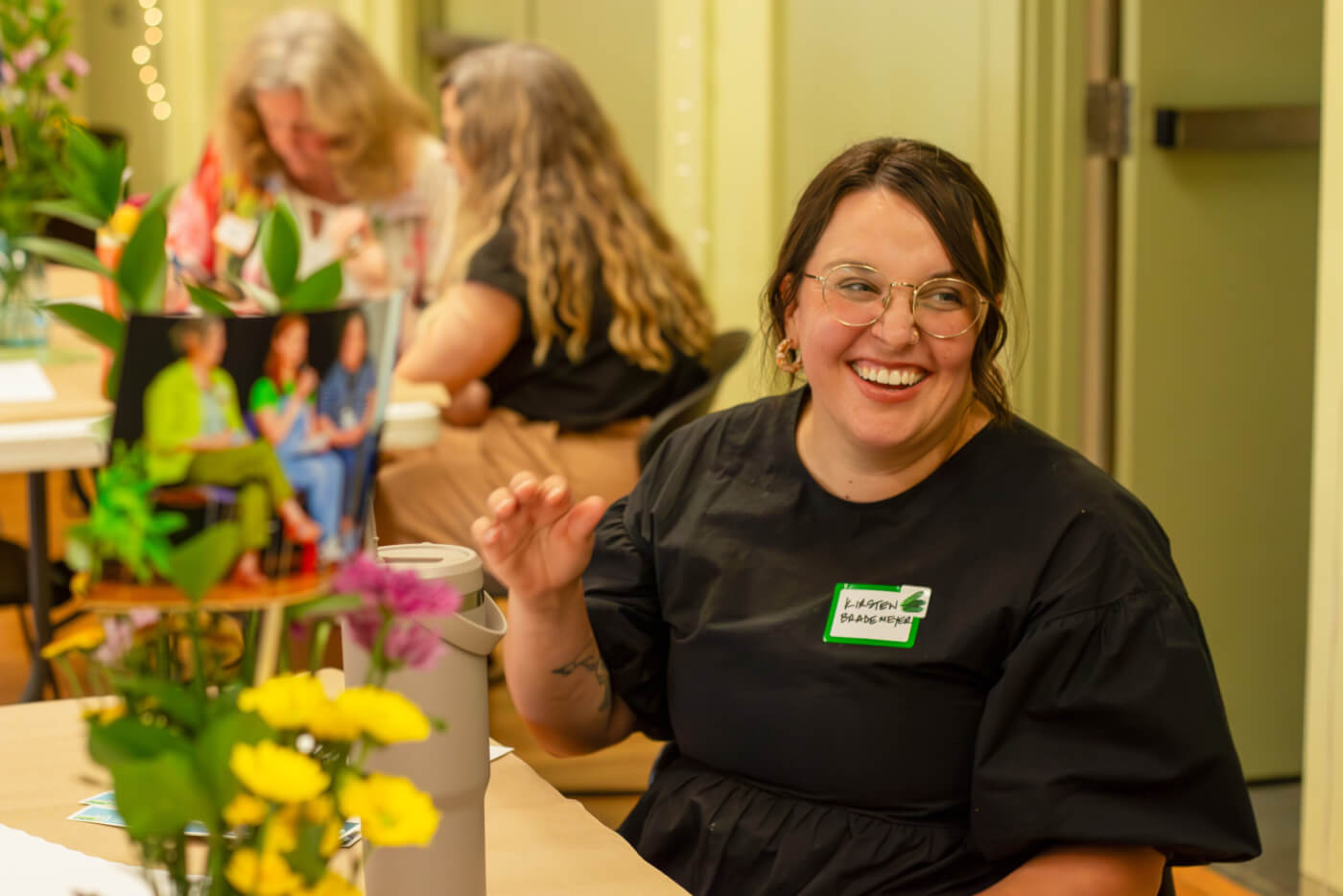
The Ripple Effects Mapping process in action.
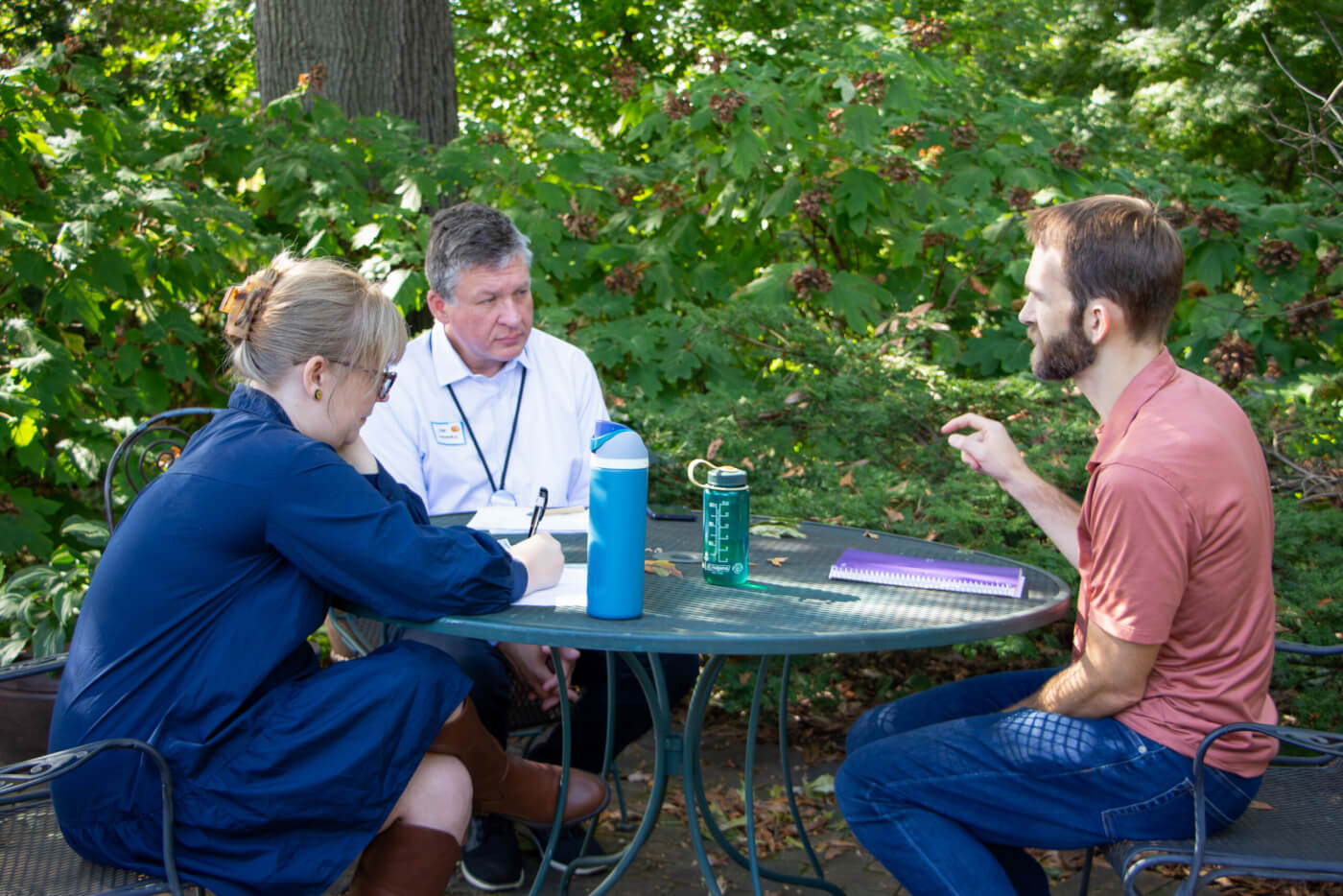
The Ripple Effects Mapping process in action.
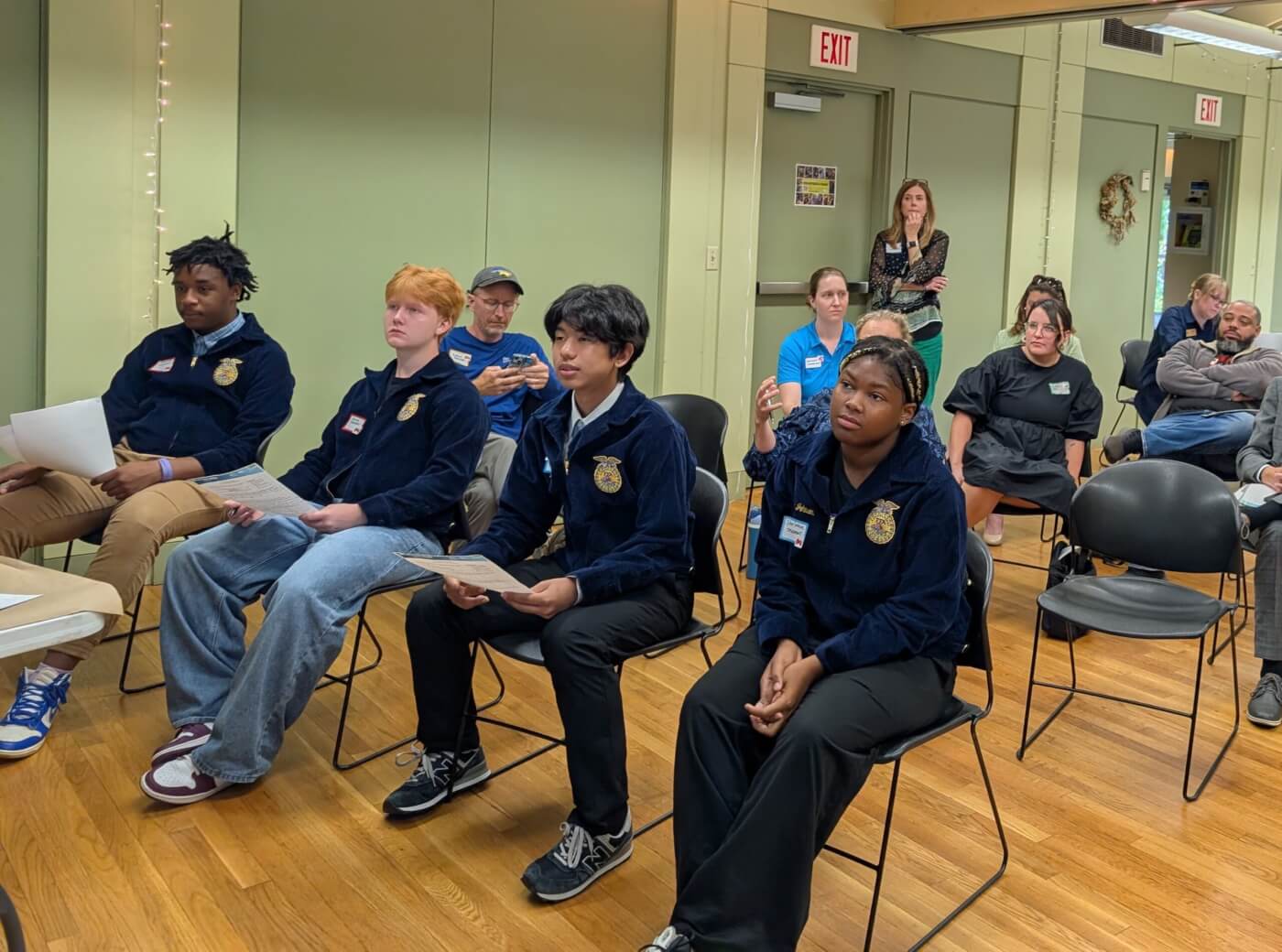
The Ripple Effects Mapping process in action.
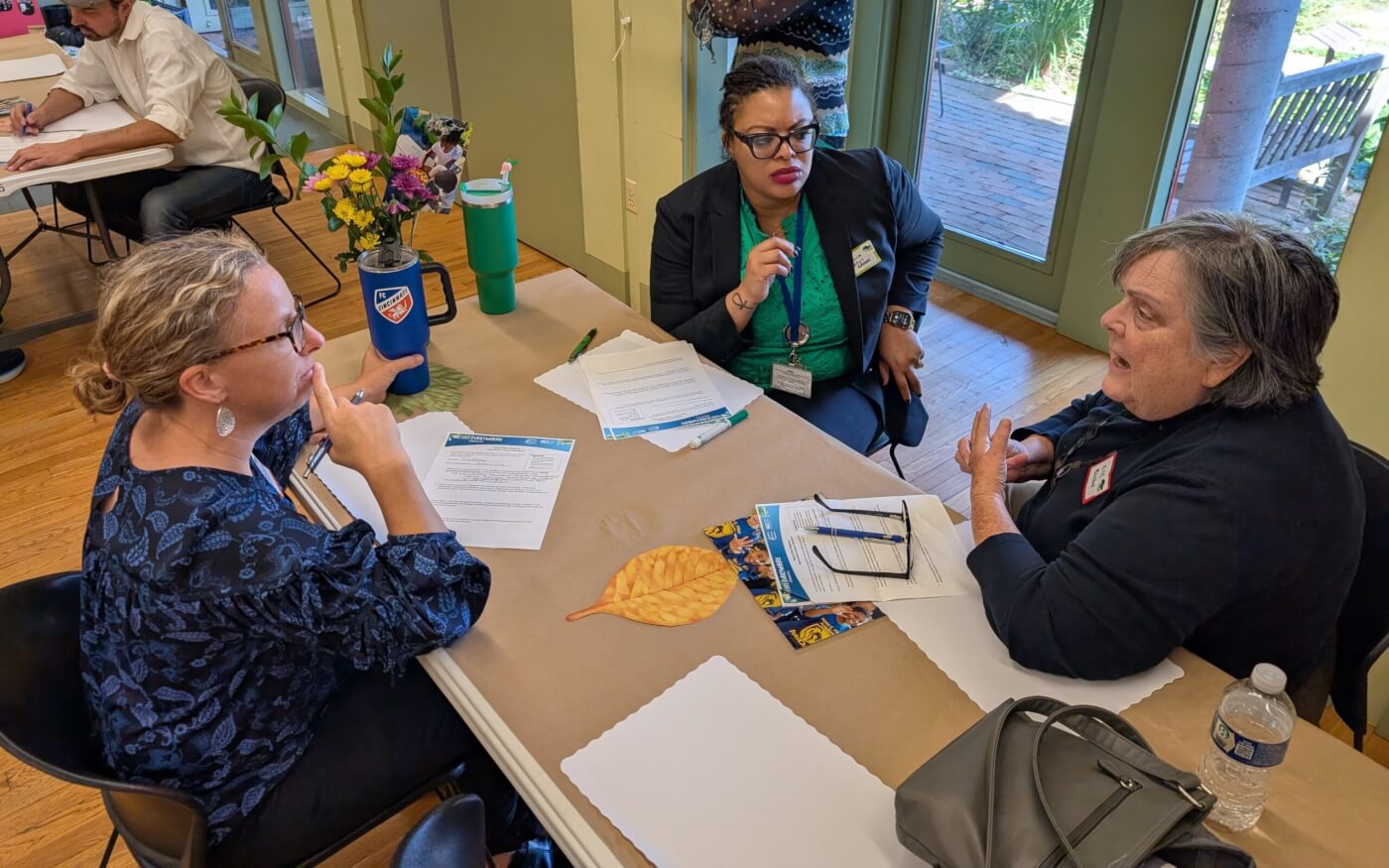
The Ripple Effects Mapping process in action.
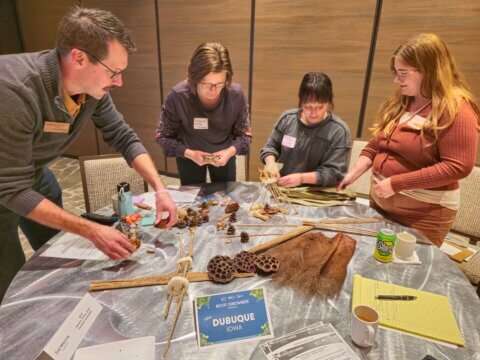
During the evaluation process, the Nature Everywhere Communities evaluation team also engaged five Nature Everywhere Community teams in Ripple Effects Mapping (REM), providing direct evaluation support that amplifies local stories about meaningful change. REM enabled us to examine communities and identify consistent themes that drive success, while supporting strategic learning to advance the movement. Taken together, the Education Northwest report and the REM reports provide strong evidence that the Nature Everywhere Communities initiative successfully achieved systems change in participating communities.
What the evaluation set out to understand
Education Northwest’s evaluation focused on how communities progress through the stages required for true, long-term change, and on the supportive factors that enabled them to advance in a meaningful way. The evaluation examined shifts at the relational, structural and transformative levels, looking at changes in relationships and power dynamics, policies and resource flows, and underlying beliefs about the role of nature in children’s lives.
The findings affirm something communities have long known: long-term, transformational change is not linear. Progress begins with relationships, bringing together partners who may not have worked closely before, and evolves over time into changes in policy, funding and long-term priorities. Participation in the Nature Everywhere Communities initiative provided the scaffolding that communities needed to progress through each phase of these changes. Paired with evidence-based resources and national legitimacy, participation in the Nature Everywhere Communities initiative provided local teams with the guidance and direction they needed to navigate this complex journey.
Relationships as the foundation for change
Across communities, the evaluation found that relational change was the most immediate and widespread outcome. A requirement of the Nature Everywhere Communities initiative is the formation of a team that includes representation from different sectors, departments and agencies. The emphasis is to intentionally strengthen collaboration across city agencies, schools, community-based organizations and local leaders. The Nature Everywhere Communities process also emphasizes youth voice and family perspectives, ensuring that those most affected by inequitable access to nature help shape visions and strategies for change.
These relational shifts mattered. Communities with strong cross-sector partnerships and shared purpose were better positioned to take on more complex work, such as aligning policies, coordinating funding and embedding nature access into broader planning efforts. Ripple Effects Mapping highlighted the critical role of coordinating organizations and authentic relationships in building the trust required for collective action. Key to relational change was meaningful youth and community engagement, which contributed to greater trust in public institutions and to improved program and nature space design. Once trusting relationships were in place, they translated into “ripple effects” on the ground, leading to new partnerships — and expanded access to nature for children and families.
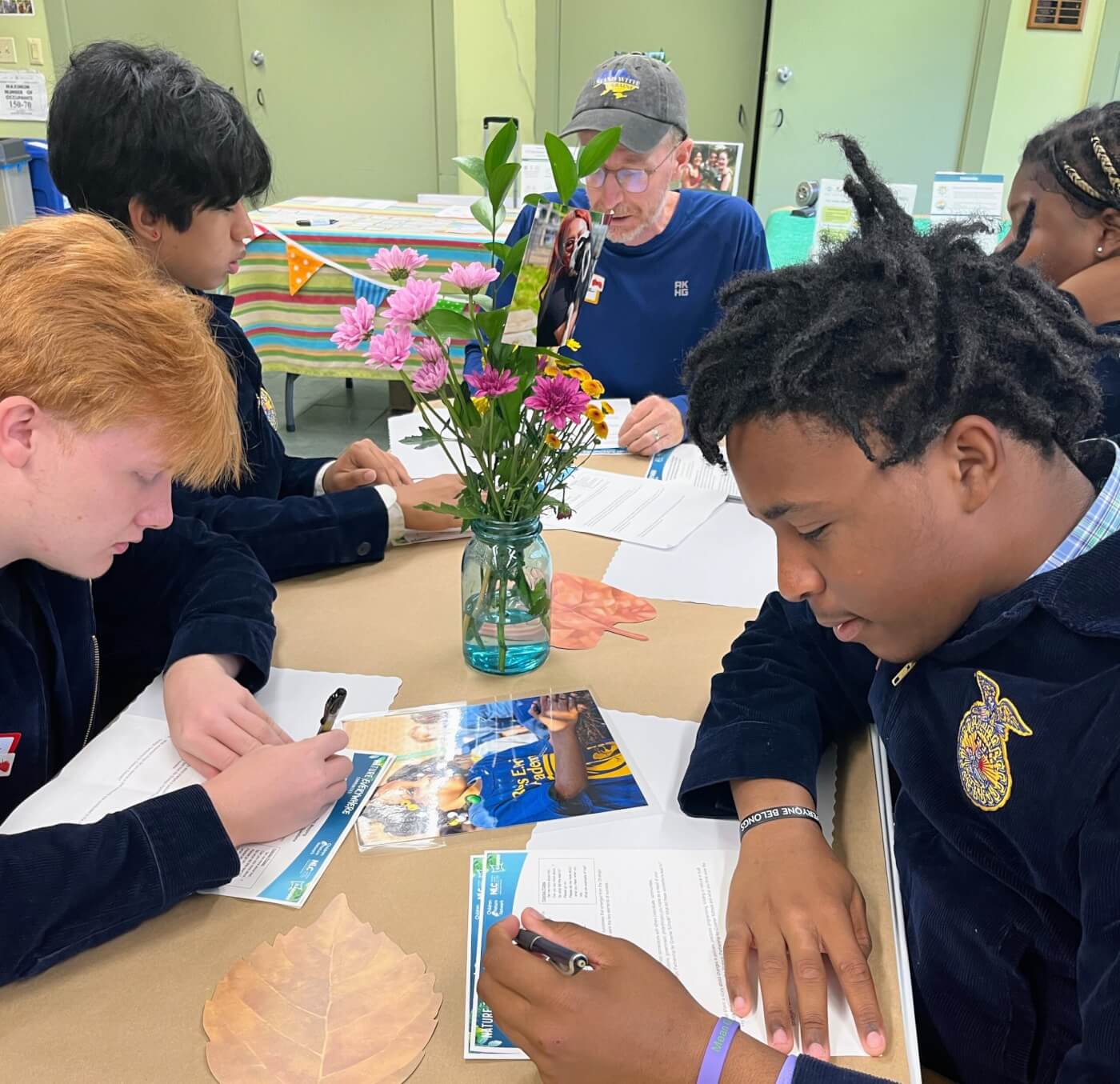
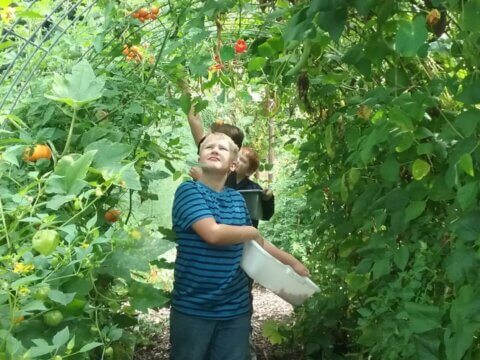
Cincinnati Public School students interviewing each other about the ripple effects of the district agricultural program on student leadership and opportunities for green workforce development. This is an example of how youth voices are uplifted in the systems-change process.
From relationships to structural change
As partnerships deepened, some communities began changing how systems operate. Coalitions took action on their shared vision by integrating children’s access to nature into comprehensive plans, school district strategies, parks and recreation policies, climate resiliency planning and funding decisions. Communities redirected resources toward green schoolyards, nature-based infrastructure, early childhood nature connections and other strategies designed to reduce inequities in access.
Education Northwest’s findings underscore the importance of clear guidance and technical assistance during this phase. Communities that engaged consistently with the initiatives’ subject-matter experts and strategic coaching, and understood the concept of “systems change” from the outset, were more likely to move from vision to action. Funding also played a critical role, helping communities hire coordinators, strengthen community engagement, conduct community assessments, develop implementation plans, and leverage funding for infrastructure projects. The initiative provided access to seed and catalytic funding, which communities frequently cited as essential to sprouting community action.
Transformative change happens, with time
Transformative change, especially shifts in how leaders and institutions fundamentally prioritize children’s access to nature, took several years in most communities. Signs of progress were evident in the early stages, as teams formed around a shared commitment and set of values, and later as collaboration strengthened organizational alignment and rippled into an expanded set of partners and commitments.
Looking across ten years of learning, the evaluation points to a clear set of conditions that consistently supported change. Communities made the most progress when they were led by well-equipped teams — teams with the authority, commitment, and capacity to lead —supported by cross-sector partners who reflected their communities and shared a common purpose. Nature Everywhere Communities’ proven processes and resources, including technical assistance, funding, peer learning and practical tools, gave these teams the structure, legitimacy and momentum they needed to move from vision to action.
Just as important, communities needed time. Time to build trust across partners. Time for policy and funding shifts to take hold. And time for new ways of thinking about children’s access to nature to become embedded in everyday decision-making. Participation in the Nature Everywhere Communities initiative created that space, allowing teams to stay focused on long-term systems change rather than short-term wins.
The Education Northwest evaluation helps us understand why these conditions matter and how they work together to make transformational change possible. Ripple Effects Mapping complements that analysis by showing what those conditions look like in practice, capturing the stories, relationships and moments of connection that reveal how change is experienced and sustained within communities.
Ripple Effects Mapping gave communities an opportunity to pause and reflect on what their collaboration made possible. Through the participatory process, local teams revisited their collective outcomes, surfaced compelling stories and recorded tangible evidence that their strategies were increasing children’s proximity to green space and strengthening youth outcomes through meaningful connections to nature. Across participating sites, communities described how working collectively expanded their reach, brought nature-based learning to more children, improved access to nearby green spaces for families, and strengthened youth development and nature programming rooted in local priorities. In many places, this work helped unlock new resources and investments, enabling thousands of children and youth to experience more regular, equitable access to nature.
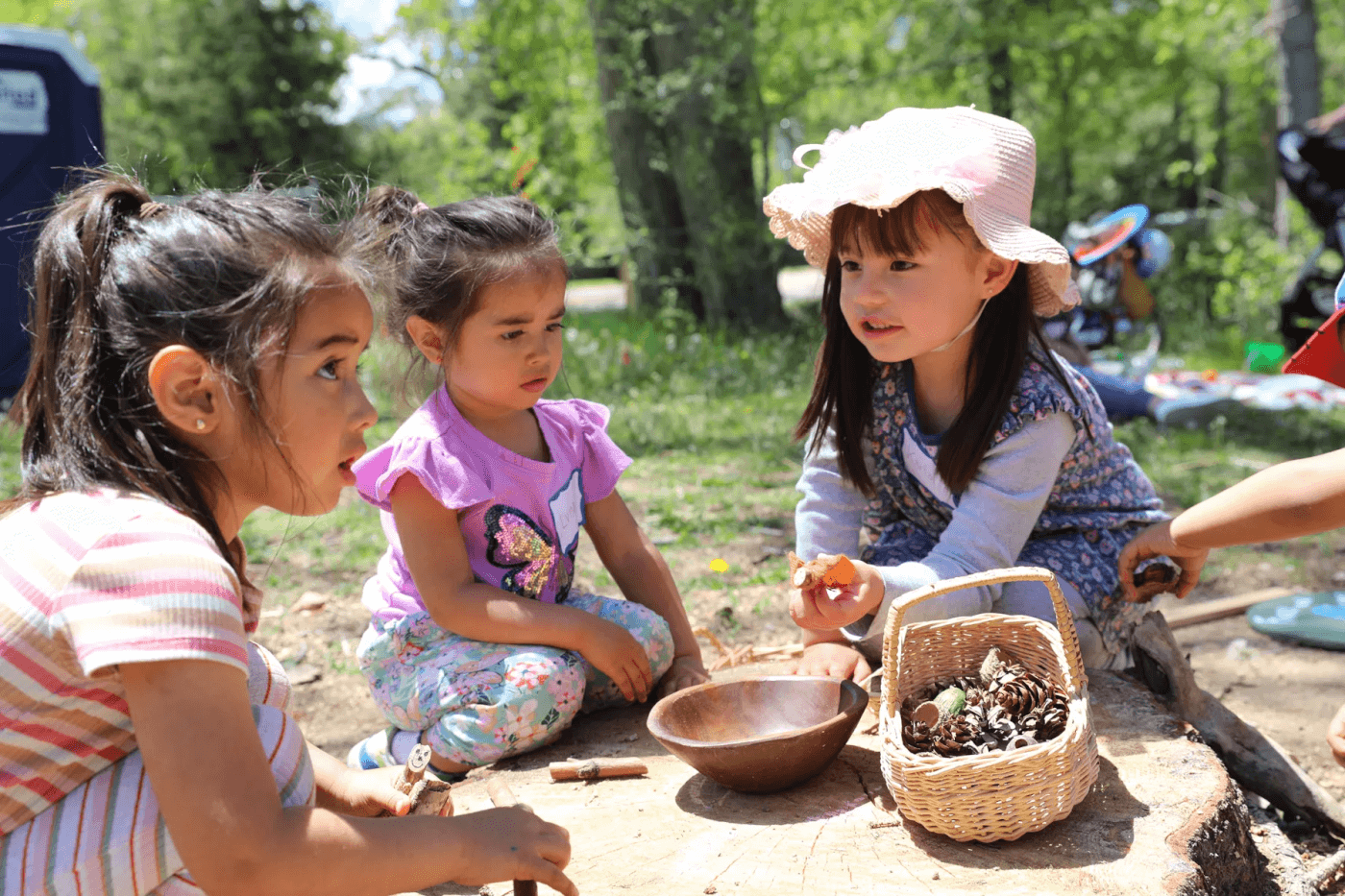
Nature Everywhere Boulder’s coalition of city departments and community partners used equity mapping and youth and family engagement to expand access to nature citywide through hyperlocal nature planning, school partnerships and youth leadership opportunities.
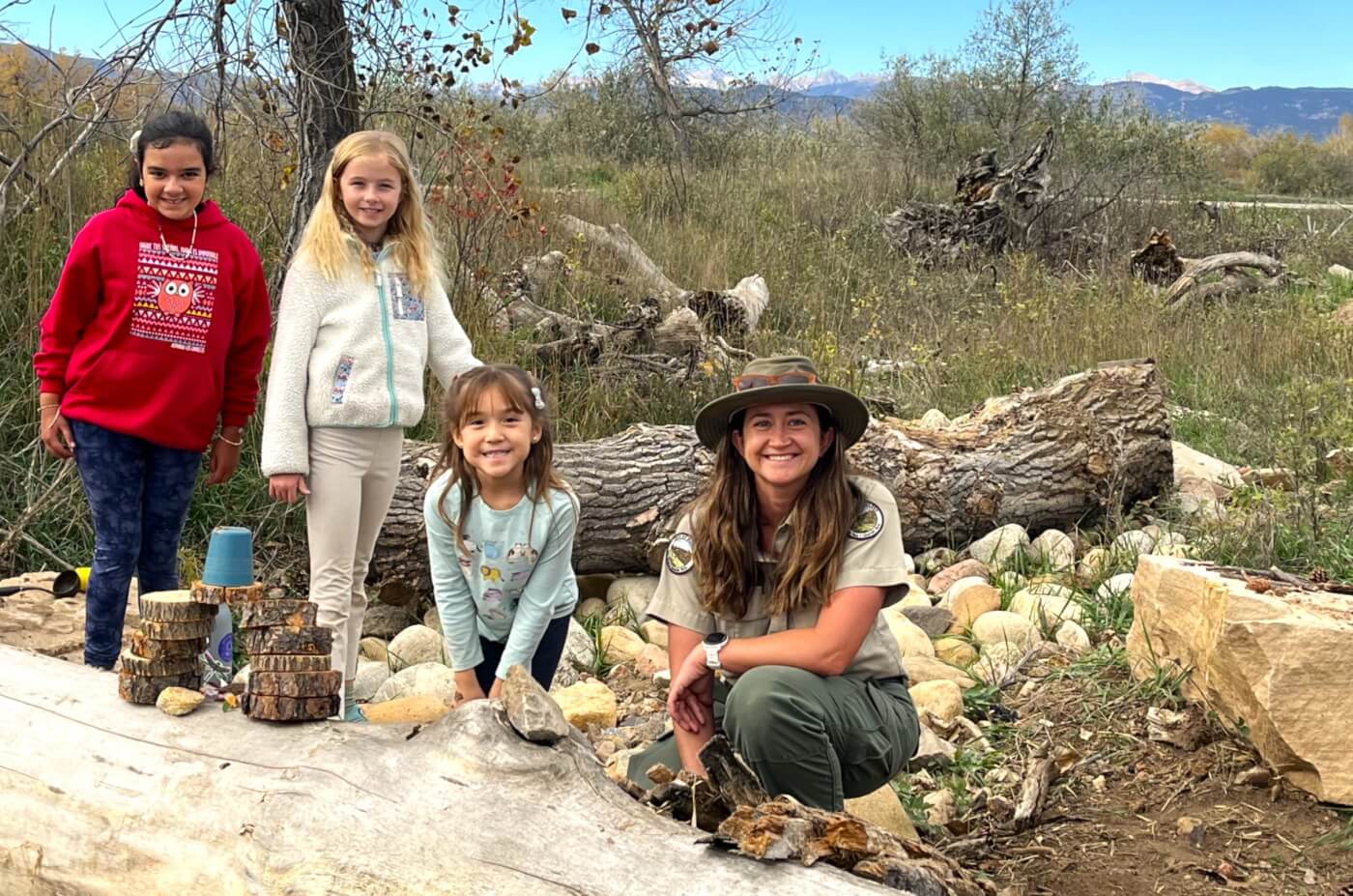
Nature Everywhere Boulder’s coalition of city departments and community partners used equity mapping and youth and family engagement to expand access to nature citywide through hyperlocal nature planning, school partnerships and youth leadership opportunities.
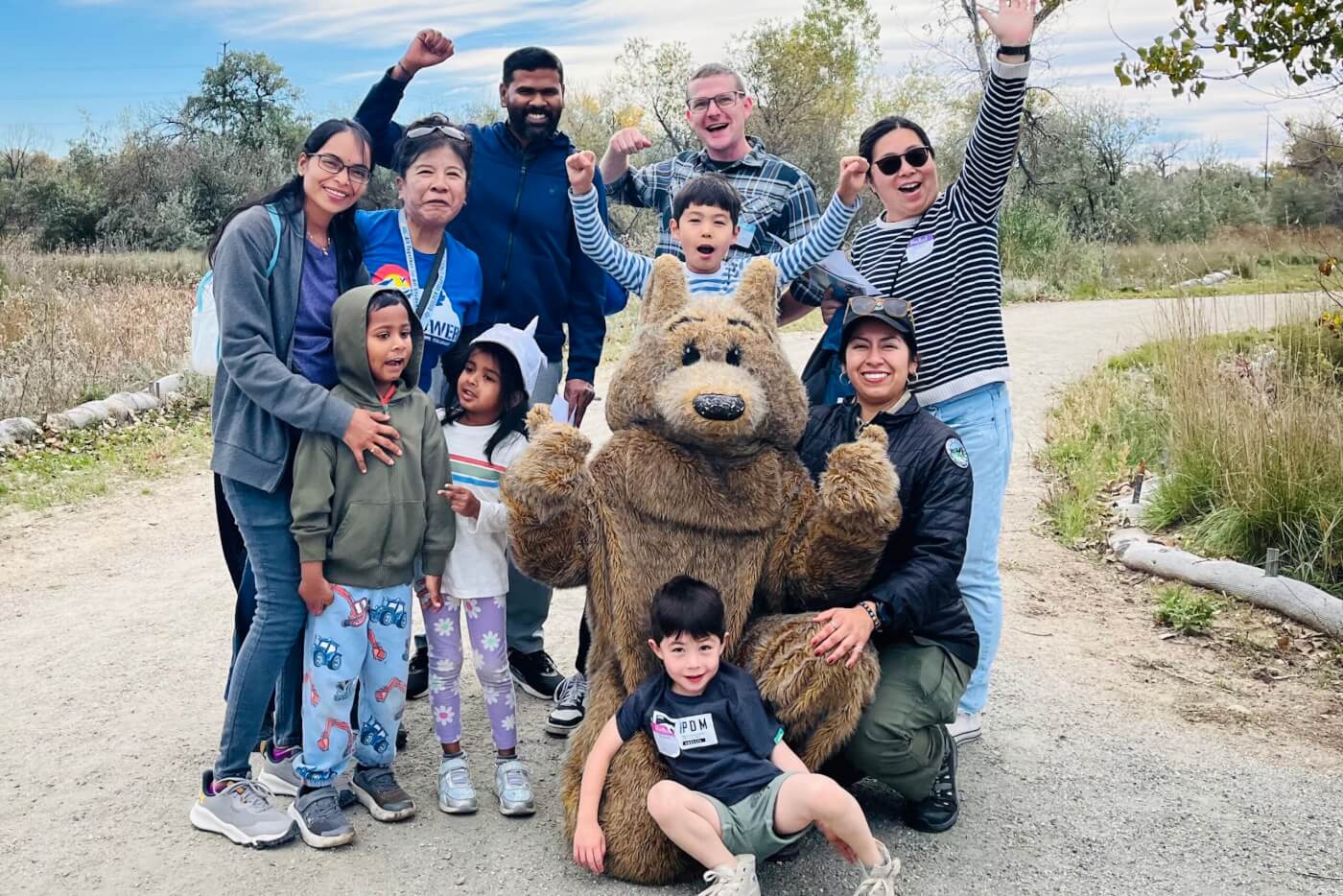
Nature Everywhere Boulder’s coalition of city departments and community partners used equity mapping and youth and family engagement to expand access to nature citywide through hyperlocal nature planning, school partnerships and youth leadership opportunities.
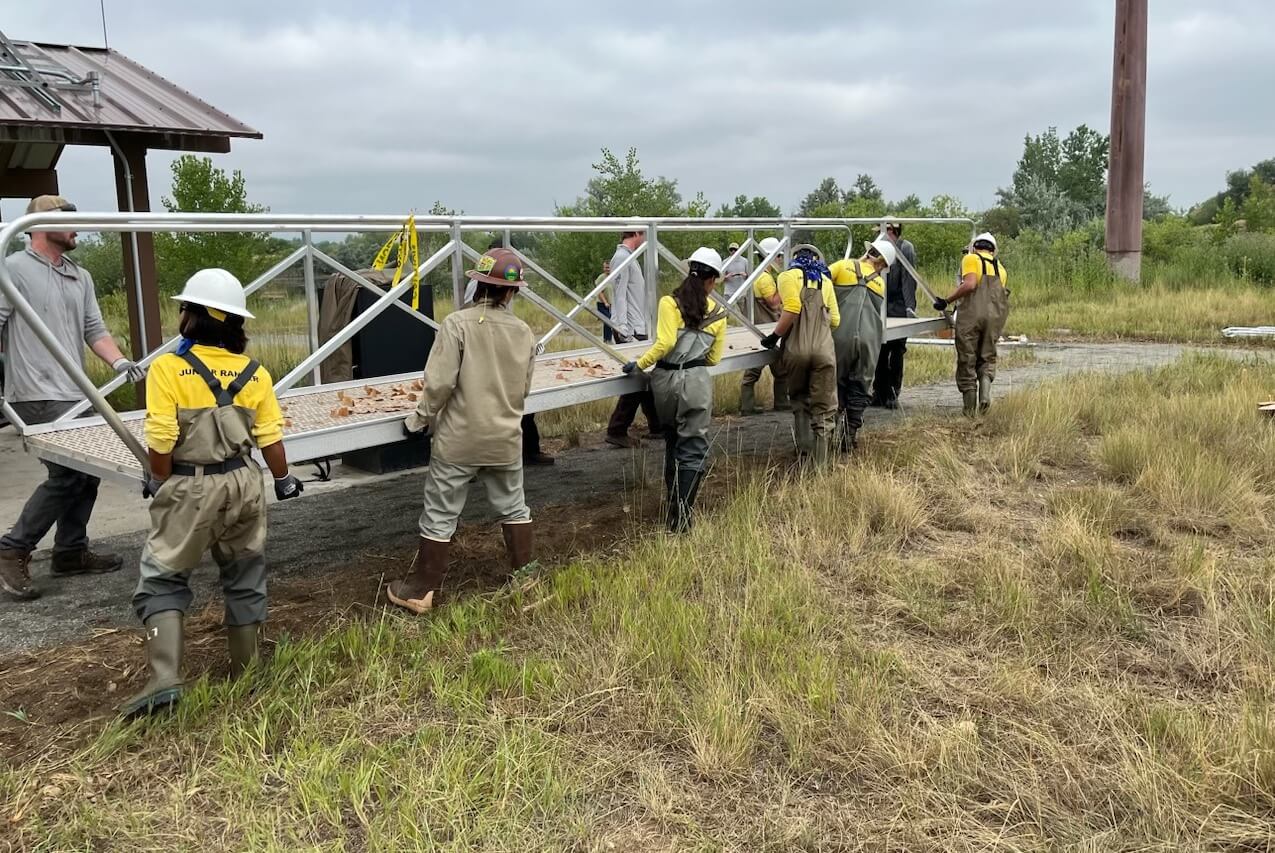
Nature Everywhere Boulder’s coalition of city departments and community partners used equity mapping and youth and family engagement to expand access to nature citywide through hyperlocal nature planning, school partnerships and youth leadership opportunities.
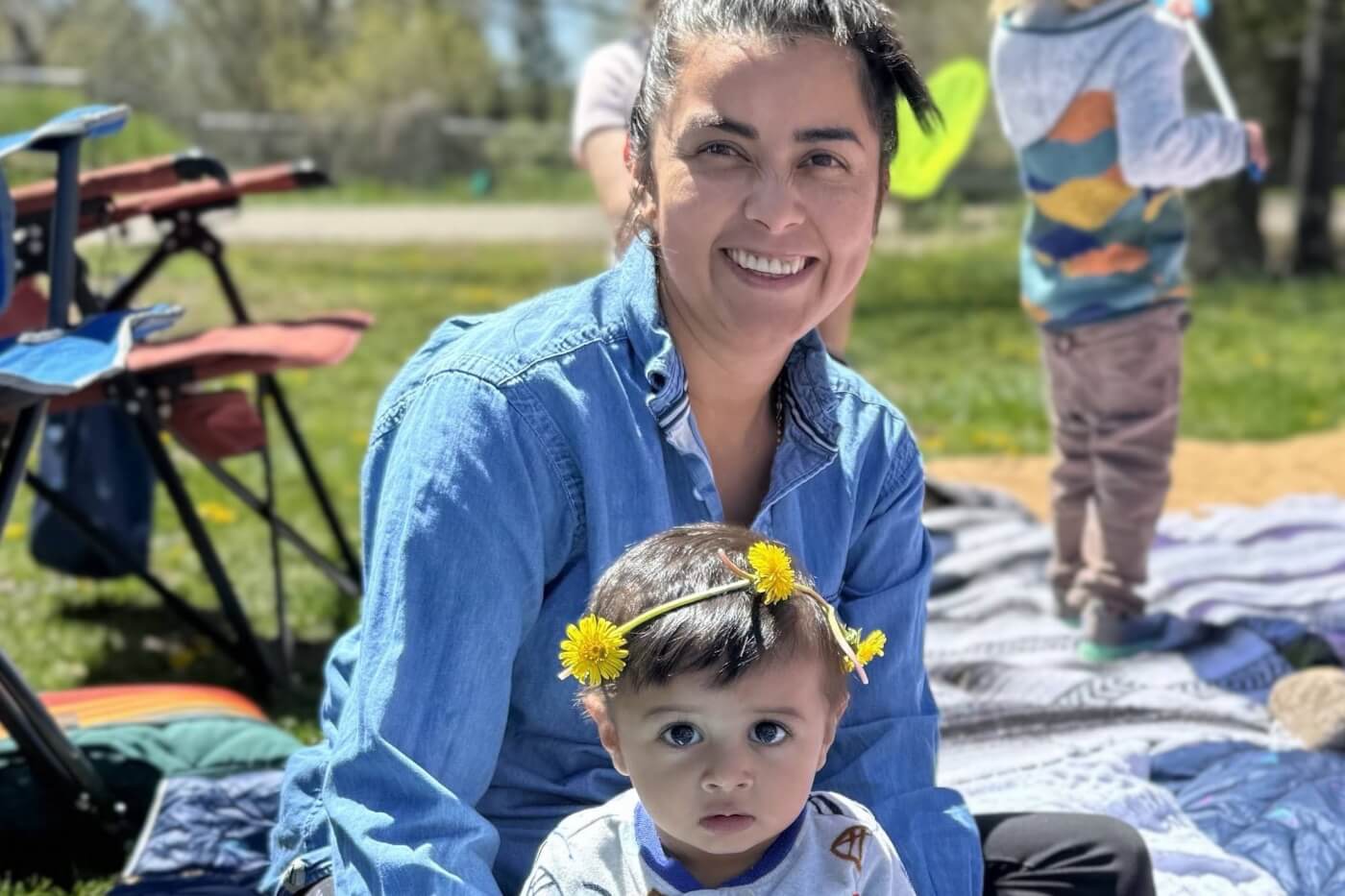
Nature Everywhere Boulder’s coalition of city departments and community partners used equity mapping and youth and family engagement to expand access to nature citywide through hyperlocal nature planning, school partnerships and youth leadership opportunities.
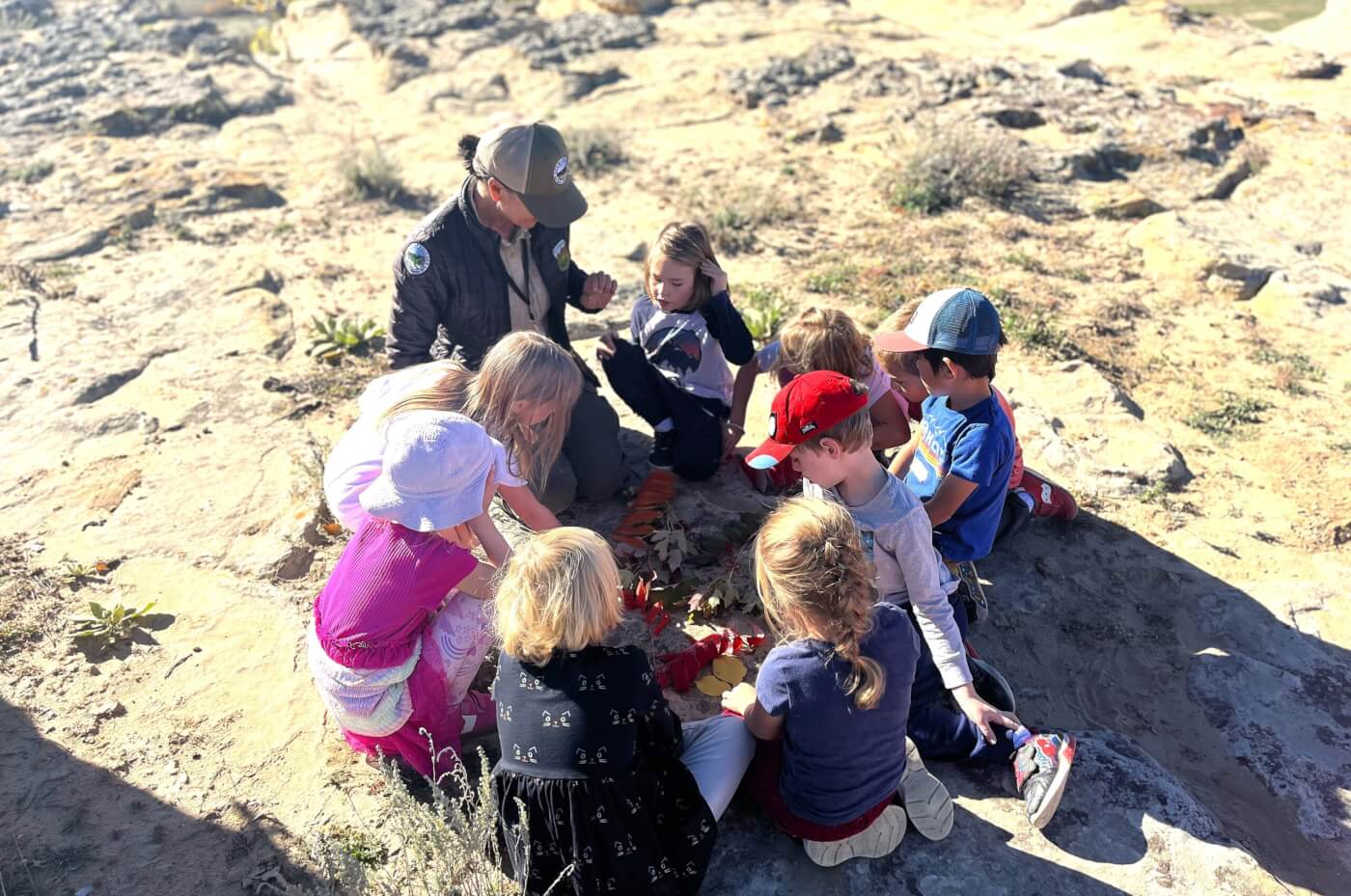
Nature Everywhere Boulder’s coalition of city departments and community partners used equity mapping and youth and family engagement to expand access to nature citywide through hyperlocal nature planning, school partnerships and youth leadership opportunities.
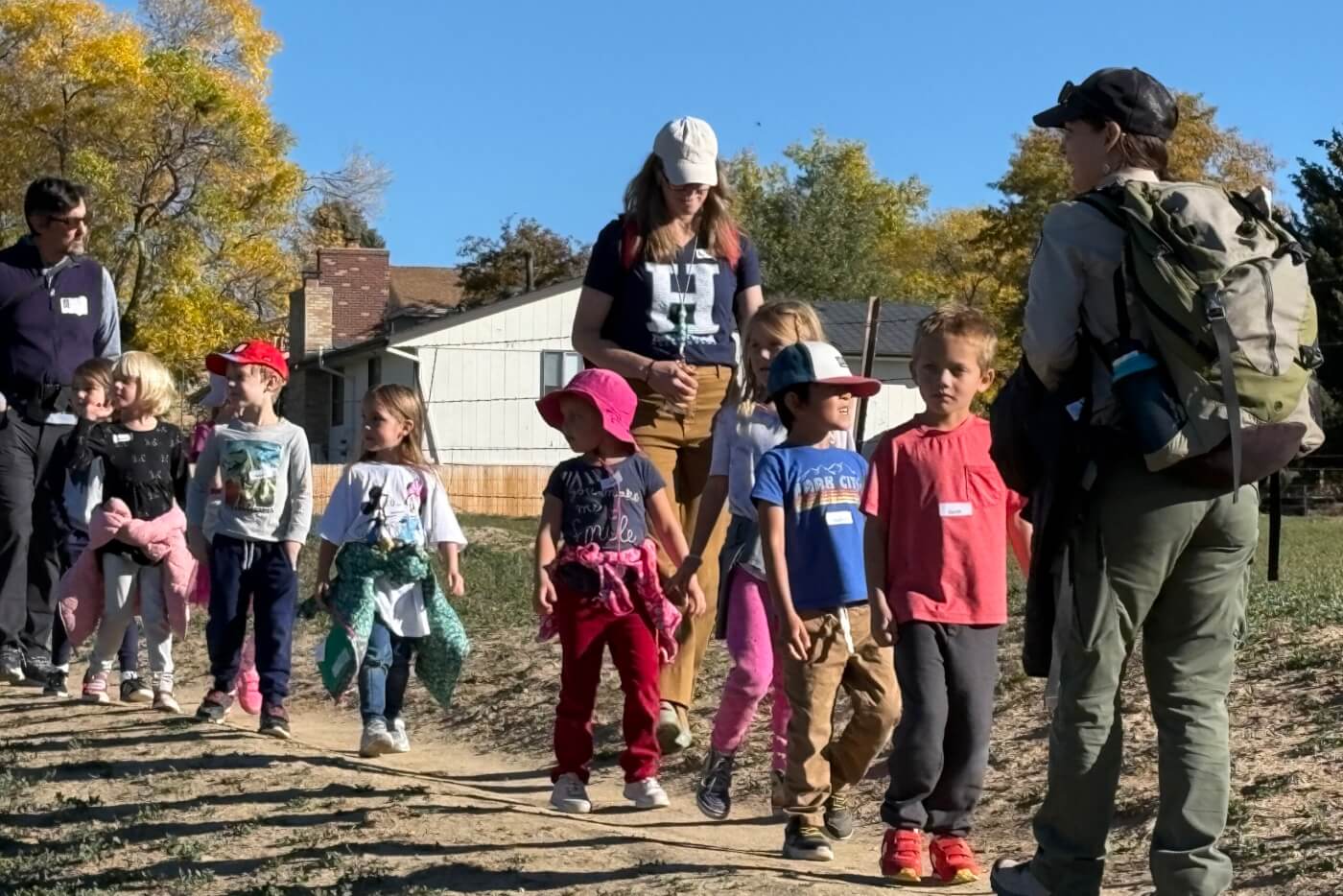
Nature Everywhere Boulder’s coalition of city departments and community partners used equity mapping and youth and family engagement to expand access to nature citywide through hyperlocal nature planning, school partnerships and youth leadership opportunities.
Looking ahead
Insights from the Nature Everywhere Evaluation offer a fuller picture of what lasting change in children’s access to nature looks like, both across communities and on the ground. The findings reaffirm the power of collaboration, systems thinking and community-driven design in creating lasting change.
As Nature Everywhere Communities looks to the future, these lessons contribute to our shared learning: With the right conditions in place, communities can prioritize children’s access to nature, create necessary changes, and inform systems and policies ensuring every child has meaningful access to nature, now and for generations to come. The Nature Everywhere Communities initiative is excited to continue supporting communities through this journey, with evaluation insights lending guidance along the way.
For more, read the Executive Summary of the Nature Everywhere Evaluation.
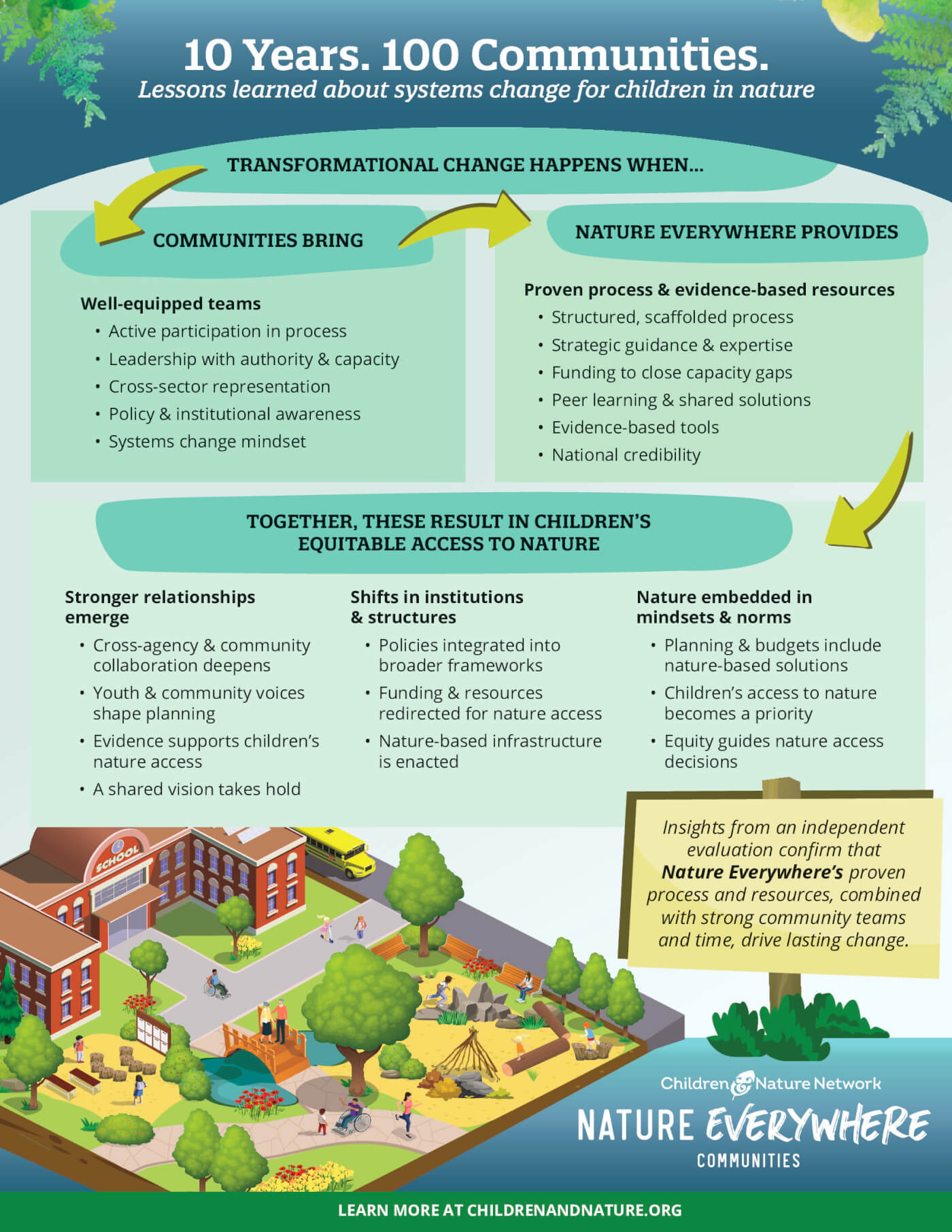
A process map depicting the Nature Everywhere Communities process.
3 Comments
Submit a Comment
-
Richard Louv
VITAMIN N FOR THE SOUL: How Nature Can Nourish the Spirit of Children and Adults
-
Network News
Prescribe Outside: Progress moves at the speed of trust in Philadelphia
-
Voices
Nature to screens: How our built environment set the stage for the anxious generation
-
Feature
We’re all looking for the same moon
-
Feature
Forest bathing: Educators need nature connections, too
Thanks for sharing this work Erin. If you are ever looking for wider research collaboration I would love to join if that’s of interest. As member of the Institute of Environmental Team we just completed What is Environmental Learning Document for British Columbia and teach sessionally in immersive and experiential place and nature-based environmental field schools for Simon Fraser University.
I am particularly interested in the ripple effect of long-term engagement of nature-based learning and its potential for personal and community transformation. My major research and pedagogical influences are Arjen Wals & Stephen Stirling – Transformative Education, Wild Pedagogies – Bob Jickling et al and Transformative Inquiry Methodologies – Nick Stanger et al
I am located in coastal British Columbia, North Vancouver, the unceded territory of Squamish and Tseil Waututh people.
Thank you, Erin for sharing this report. This is very important work and understanding the true impact of collaborative, systems level change is fundamental to appealing to the hearts and minds of individuals and institutions that have the power to contribute to a global movement for equitable access to nature for children and families and ultimately for healing of the planet and humankind. I am hyper focused currently on helping build the ‘Nature as Healer’ framework in San Antonio with local partners. I am the Education and Volunteer Management Officer for the San Antonio River Authority and would be happy to support your work, if and when required. Keep up the great work. It sure takes a village!
Thank you for this feedback – and for the work you are doing in San Antonio!