

Community Spotlight: Milwaukee, Wisconsin

Since 2018, Milwaukee, Wisconsin, has been transforming its schoolyards from vast expanses of asphalt into vibrant, nature-rich environments that enhance student well-being and manage stormwater. Anchored in collaboration, innovation and community engagement, Milwaukee has become a national leader in green schoolyards.
Milwaukee Public Schools (MPS) owns over 500 acres of impervious surfaces among its 160 schools. Impervious surfaces like asphalt can retain heat and increase local temperatures, while preventing the absorption of floodwaters — which can then overwhelm sewer systems. But the Milwaukee Metropolitan Sewerage District (MMSD) had a new vision: What if these spaces were replaced with multifunctional landscapes — not only green and educational, but also important elements of stormwater infrastructure?
The Green Healthy Schoolyard Redevelopment Program recognizes that vision. At the heart of the program is a powerful partnership between MMSD and Reflo, a nonprofit focused on sustainable water use and green infrastructure. Reflo oversees MMSD funding and provides technical expertise to support conceptual green schoolyard design projects for Milwaukee Public Schools (MPS). Then, the nonprofit works with the school community in a phased approach to help fundraise for, implement and oversee the resulting greenspaces. In addition to MMSD and Reflo, the program works in partnership with the Fund for Lake Michigan, the City of Milwaukee, the University of Wisconsin and others.
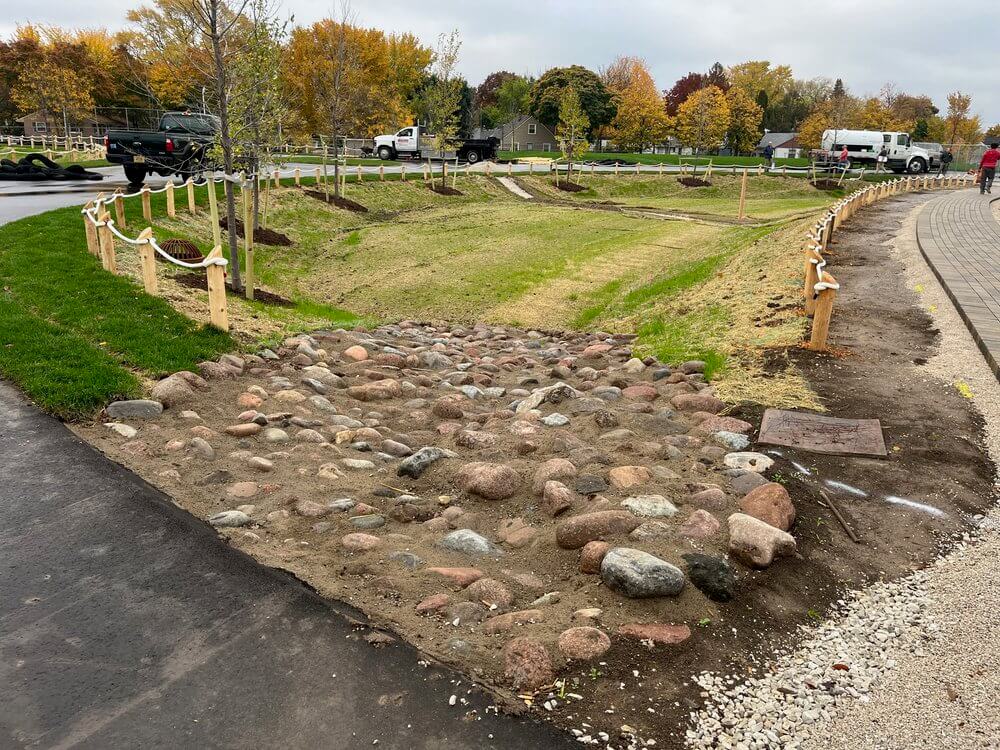
This green schoolyard incorporates a bioswale, a landscape depression designed to capture and filter stormwater runoff. Photo courtesy of Reflo.
Milwaukee’s Green Schoolyard Initiative takes a systems-change approach. Each year, five schools are selected through a competitive process that evaluates readiness, community commitment and need. The selected schools then undergo a year-long conceptual planning phase, with support from the program partners, to design custom landscapes that integrate bioswales, rain gardens, native plants, trees and microforests. These nature-based solutions replace nonporous pavement with natural areas that cool the environment, foster imaginative play and manage hundreds of thousands of gallons of stormwater on-site — preventing sewage overflows and protecting Lake Michigan by reducing runoff.
By the end of summer 2025, 36 Milwaukee schoolyards, representing roughly one-quarter of all MPS sites, will have been transformed, with 10 more in the planning and construction pipeline and five more projects launching in the fall. Over the past six years, an estimated 806,000 square feet of asphalt was removed, 3,773 trees were planted and 281,000 square feet of native habitat was restored. These environments are impacting over 14,000 students.
Support from both federal and local funding sources were instrumental to Milwaukee’s success. For example, in 2024, the City of Milwaukee received $345,000 through a federal appropriation sponsored by U.S. Senator Herb Kohl and funded by the USDA Forest Service. That investment helped leverage an additional $150,000 from the CERES Foundation. Reflo reports that in previous years, 39% of the program costs were covered by city funds (MMSD and the City Department of Public Works), 23% by federal grants, 22% by private foundations, 12% by school fundraisers and budgets, and 4% by state grants. This unique mix of funding sources has helped enhance play, learning and climate resilience in Milwaukee’s schoolyards — though the funding landscape for 2026 and beyond is expected to change.
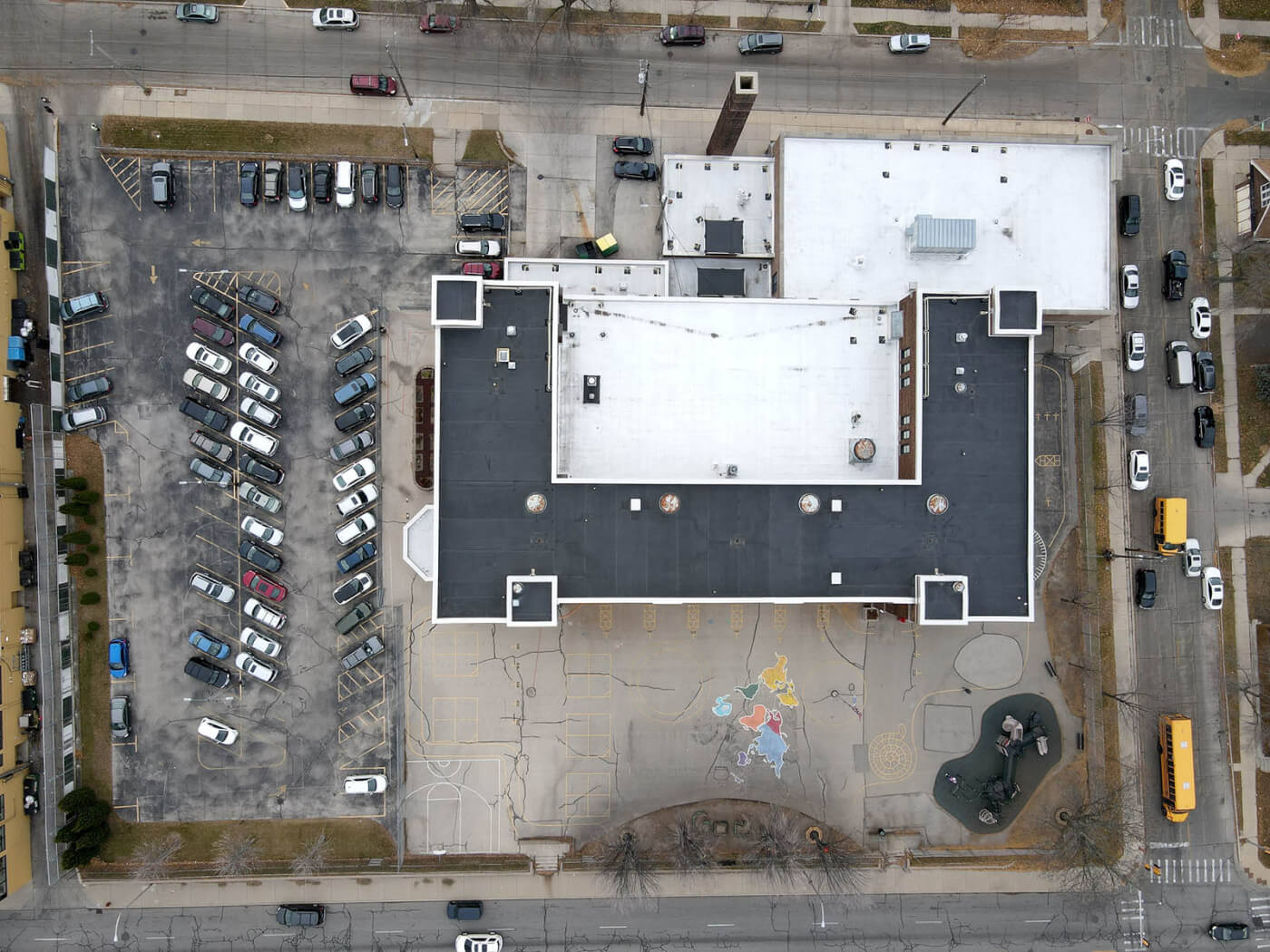
Before and after photos of Milwaukee Green Schoolyard progress at Greenfield Bilingual School.
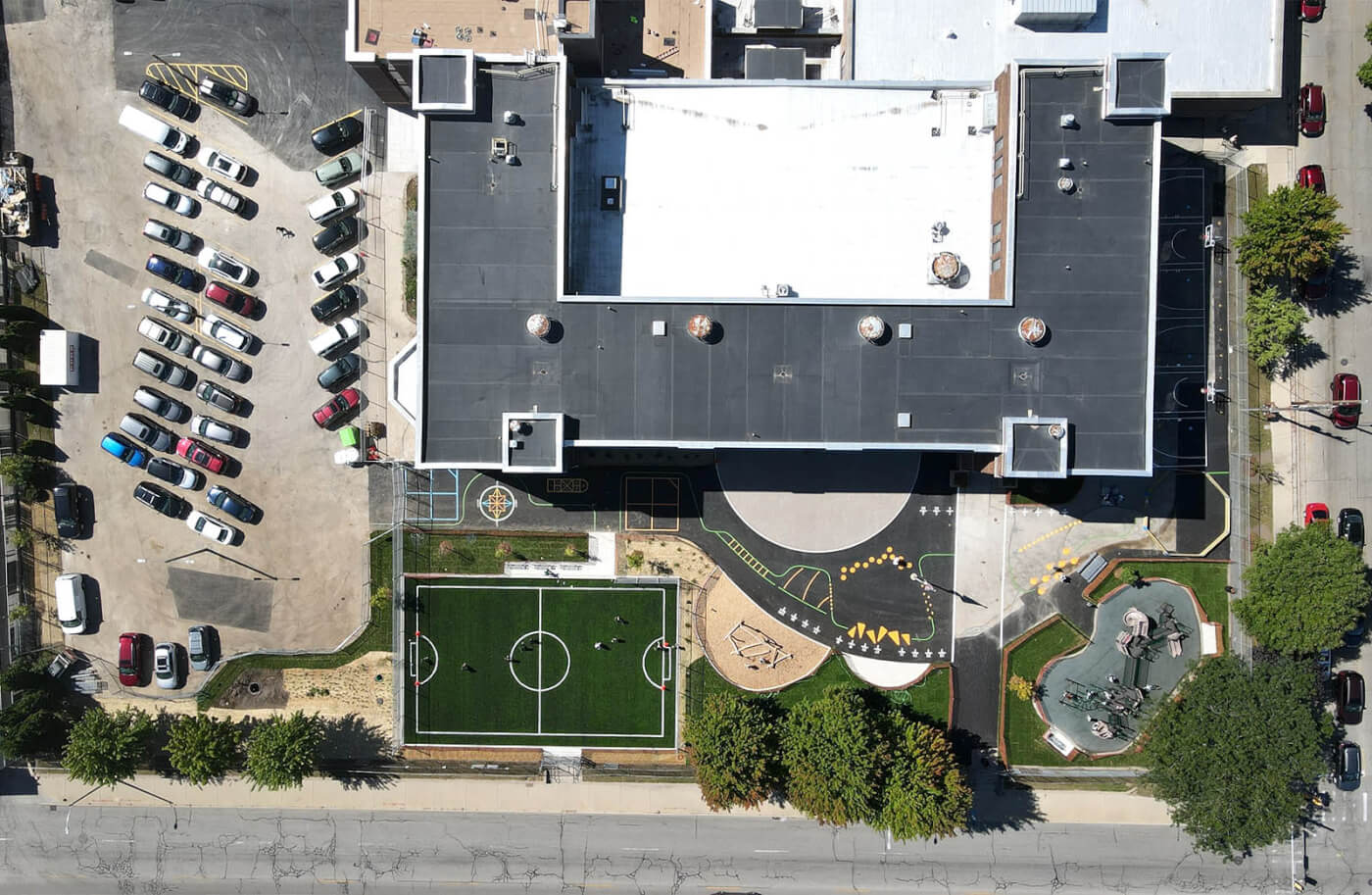
Before and after photos of Milwaukee Green Schoolyard progress at Greenfield Bilingual School.
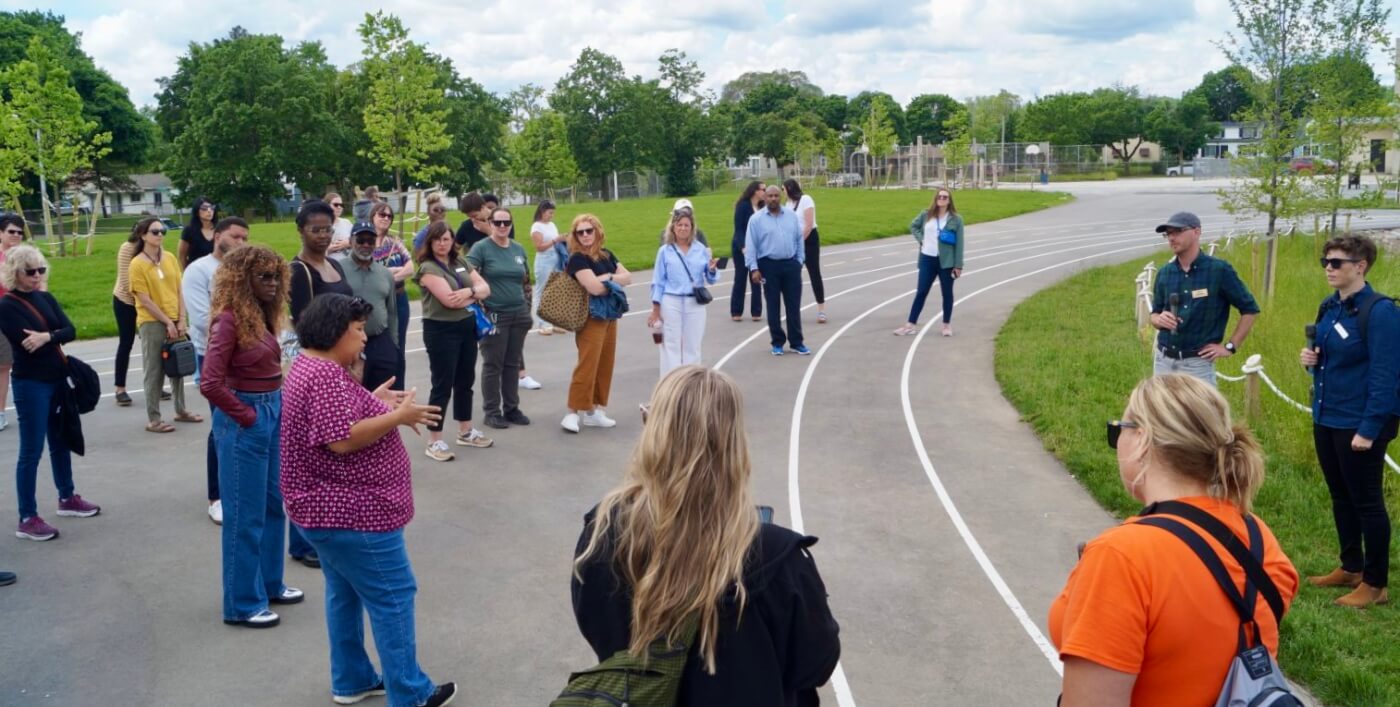
The City of Milwaukee’s leadership in this work was further solidified when it joined the Cities Connecting Children to Nature (CCCN) initiative in 2021 as part of the Green Schoolyards cohort. Milwaukee has hosted several CCCN green schoolyard tours to provide examples of what is possible when city departments and community organizations align around shared goals. Their work has become a model for a sustainable approach to greening schoolyards and stormwater management.
Green schoolyards advance not only climate resilience and stormwater management, but also equity, education and public health. The city’s commitment to equitable access to nature is reflected in the Milwaukee Climate and Equity Plan, where green schoolyards are included within the city’s top 10 “big ideas” under the “Nature in the City” strategy. The plan aims to double the impact of the Green and Healthy Schoolyard Redevelopment Program by 2030 with “more sustainable sources of annual funding and synergistic programming.” In other words, the city aims to have 10 schools per year served by the program.
Beyond physical transformation and leadership, Milwaukee’s approach to green schoolyards is cultivating a movement. Through the Green Schools Consortium of Milwaukee (GSCM), educators, nonprofits, government agencies and funders have organized an annual Green & Healthy Schools Conference, published regular newsletters, and established a platform for resource sharing and storytelling. Reflo, a key implementation partner, also serves on the Facilities Long Term Planning Advisory Board and leverages a data dashboard to support strategic planning and long-term stewardship.
For the Green and Healthy Schoolyard Redevelopment Program, every project is rooted in the community. Teachers, parents and students are actively engaged in the planning process, ensuring that each schoolyard reflects the unique needs and vision of its users. This sense of ownership strengthens both usage and maintenance, making these greenspaces lasting assets for their neighborhoods.
Nature Everywhere Communities initiative
The Nature Everywhere Communities initiative was launched in November 2023 by the Children & Nature Network, National League of Cities and KABOOM!, with the goal of advancing equitable access to nature everywhere children live, learn and play in 100 communities by 2025.
The effort builds on lessons learned over the past nine years of providing technical assistance, training, resources and grants in more than 50 U.S. cities through Cities Connecting Children to Nature, a program specifically designed for municipal leaders. Nature Everywhere Communities is an expansion of this proven approach, as it welcomes leadership from both city and regional governments as well as school districts and the nonprofit, philanthropic and private sectors.
Through a competitive application process, communities are selected to join the Nature Everywhere Communities initiative. They receive assistance in strategic planning, technical support and start-up funding to develop and implement community-driven plans for connecting children to nature-based experiences and learning.
Green and Healthy Schoolyard Redevelopment Program
Milwaukee Metropolitan Sewerage District
Systems Change: A Toolkit for Cities
Check out the green transformations of these five Milwaukee schoolyards, OnMilwaukee
“Nature Everywhere initiative will advance community visions for a nature-filled future,” a Finding Nature News article about the inaugural Nature Everywhere Communities cohort
“Collaboration by nature: Getting children outdoors gets top billing when organizations work together,” a Finding Nature News article
In search of a greener schoolyard: As the planet heats up, green schoolyards offer a world of benefits, a Finding Nature news article
Rich Soil: The economic benefits of green schoolyards, a Finding Nature news article
In Flagstaff, green schoolyards sprout after climate-related disasters, a Finding Nature news story
The Urgent case for green schoolyards during and after COVID, a Finding Nature news article
LEVELING THE PLAYING FIELD: Nature play for gender equity, a Finding Nature news article on green schoolyards
-
Richard Louv
THE "VITAMIN N" PRESCRIPTION - Some health professionals now recommending nature time for children and adults
-
Feature
A decade of ripples: What Nature Everywhere Communities reveal about systems change
-
Feature
Crossing invisible boundaries in the outdoors: A Q+A with Mason Branstrator
-
Feature
Forest bathing: Educators need nature connections, too
-
Feature
A future full of promise: Nature in early childhood