
The case for climbing trees

Recently, a childhood friend reached out. She’d been thinking about long friendships and missing me. “I have the most vivid memories of sitting up in your neighbor’s tree eating the fruits,” she wrote. “I don’t even know what they were! Lychee?”
Actually, they were plums. There were three plum trees in the boulevard down the street from my house. It was Northeast Portland, Oregon, in the ‘70s, and the neighbors didn’t mind if we foraged their fruit. The trees were small and easy to get into: I liked to hang from the strong lower branches, walk my feet up the trunk and swing up onto it. The upper limbs were thin and grew up rather than out. We had to shimmy between them but once we found a good spot, we could lean back — as if in an easy chair.
The leaves were deep purple-red and very dense. We couldn’t see much of the world below us; we were too busy inhaling fruit to care. My gosh, the plums. They were grey with bloom, so I’d give them a polish, then bite off the sweet-tart skin in one go and suck up the juicy flesh. In my memory, they were perfect.
Thinking about the plum trees got me wondering: Do kids get to lounge around in the trees anymore?
***
 I found a 2017 study looking into kids and tree-climbing. In its preamble, the authors noted that a literature review uncovered “limited” research on the impact of climbing trees on childhood development and resiliency — and a “void” of statistics on injuries. This is ironic: Schools, parks and cities across the U.S., including Portland, now prohibit tree climbing for fear of injury and liability.
In contrast, there is an abundance of research pointing to the many health and developmental benefits of nature play, the unstructured adventuring that outdoor habitats rich with natural elements, like mud, stumps and plants encourage.
Nature play often includes risk-taking play. That’s what happens when a kid sizes up a thrilling challenge — like leaping from one boulder to the next — and decides to go for it. Risky play builds courage, confidence and problem-solving skills, and it’s deeply satisfying.
In the words of Cathy Jordan, Ph.D., “It’s important to understand the value of a little risk-taking as children grow up.”
Jordan is a pediatric neuropsychologist by training and Consulting Research Director at the Children & Nature Network. “All children benefit from risky play, though the play as well as the risk look different at different ages and for children of varying abilities,” she explains.
“When children approach risk, they have the opportunity to observe the situation, evaluate the risk in the context of their abilities, exercise judgement, regulate their behavior, manage impulses and test their mettle,” Jordan adds. “This sets the stage for the development of agency, self-esteem and resilience, which can contribute to mental health and well-being throughout life.”
The 2017 study set out to explore whether or not tree-climbing confers the benefits of nature play — including risky play — through a mixed-method survey of more than 1,600 parents across the U.S. with children aged 3 to 13 who climb trees.
***
The windows of my mom’s tiny apartment look into a park alongside the Mississippi River — it’s fall and the yellow afternoon light is high in the tops of the trees. We sit together, watching the sun fade and comparing memories of my youth.
I ask if she “allowed” my brother and me to climb trees. “Did we ask you, did you come outside to watch us?” I say. “Or did you even know?”
This is not accusatory: My brother and I spent our free time outside unchaperoned, ambling around the neighborhood, digging in the dry creek for pottery shards, rummaging the alleys for good junk — and scrambling up trees.
“There was no letting you climb trees,” she says. “It was just what kids did, and you knew your own limits. Except when you didn’t.”
***
In the study, parents talked about using rules to balance managing risk and encouraging independence. Among 1,242 responses, the most frequent rule was that children must climb up and down the tree on their own: “If you need me to put you up, it is beyond your skill and you shouldn’t be there.” Other safety precautions included appropriate shoes and height limits: No “higher than you can jump” or “taller than the two-story house.”
These approaches acknowledge risk without treating it as something that can be erased from childhood.
***
Back in the plum trees of the ‘70s, we had one rule: Respect the trees.
That meant no breaking or stripping the leaves off branches. We climbed on the inside of the tree, close to the trunk, toeing the limbs on our way up, so that the leafy ends waggled — too small, too brittle, too bendy, just right.
I learned that branches were strongest at their collar, where they meet the tree, and that even a stubby remnant of that connection could hold me. In a tree, every move was a strategic plan. I’d put all the weight on the inside of my foot, and press up — always looking up, not down, not to the canopy of leaves above, but to where I was headed, that one branch.
As careful as we tried to be, branches would snap and twirl to the ground. Sly as birds, we picked them up and hid them around.
If a tree was small, like the plum trees, only one kid could be in it at a time. That could get contentious. Some days, I paced the bottom of the tree, waiting for another kid to drop down. “Quit eating all the plums,” I’d say, though we never could eat all the plums.
***
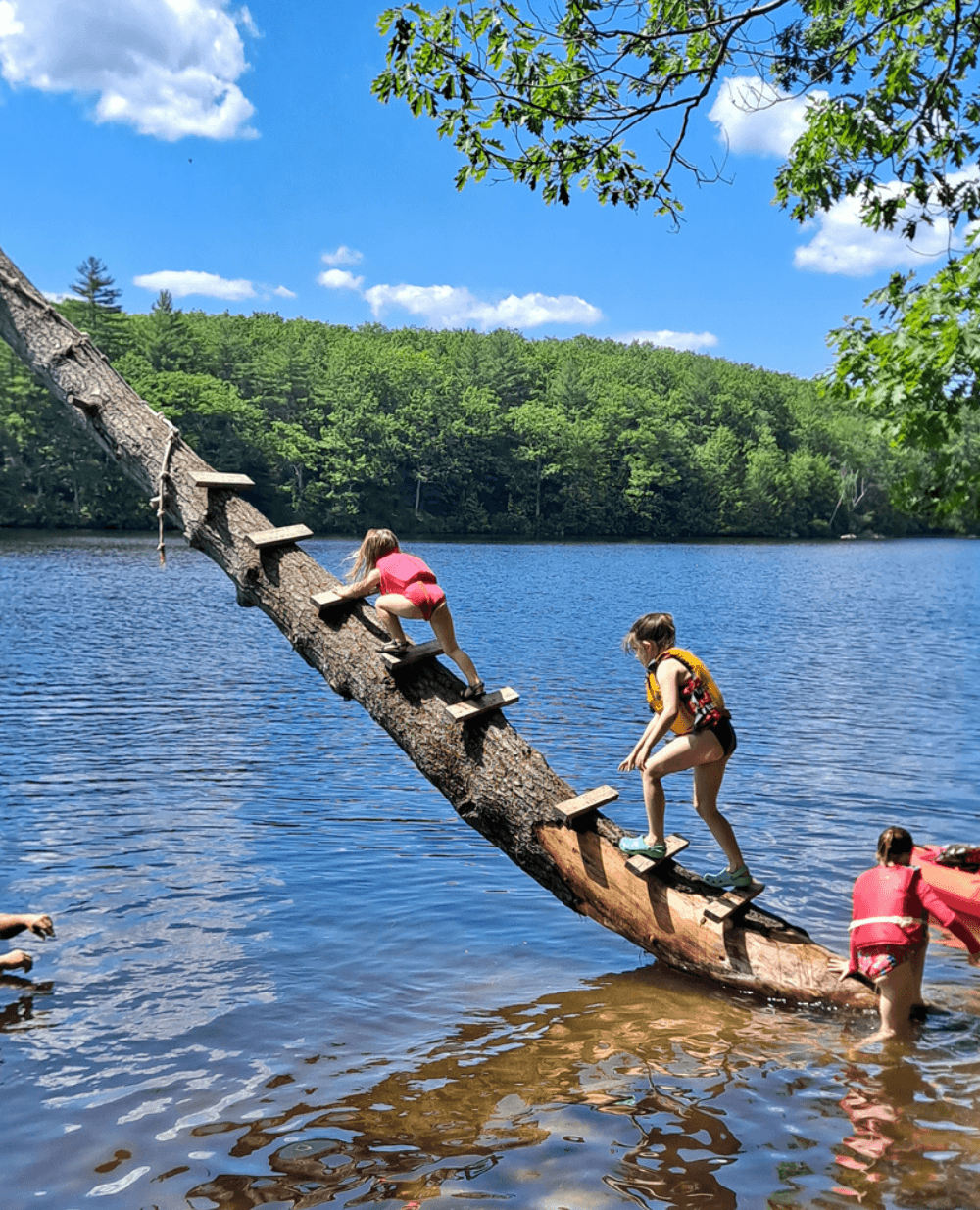
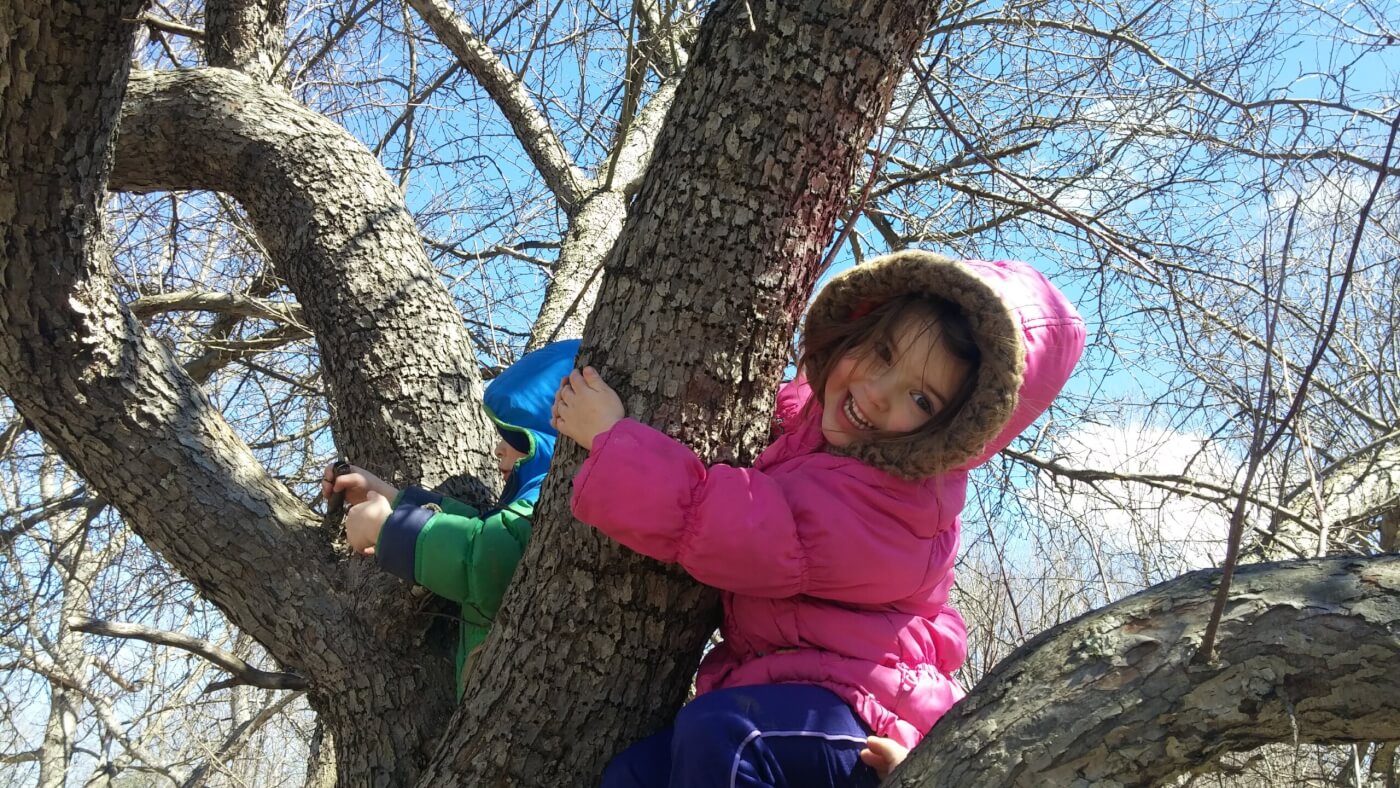
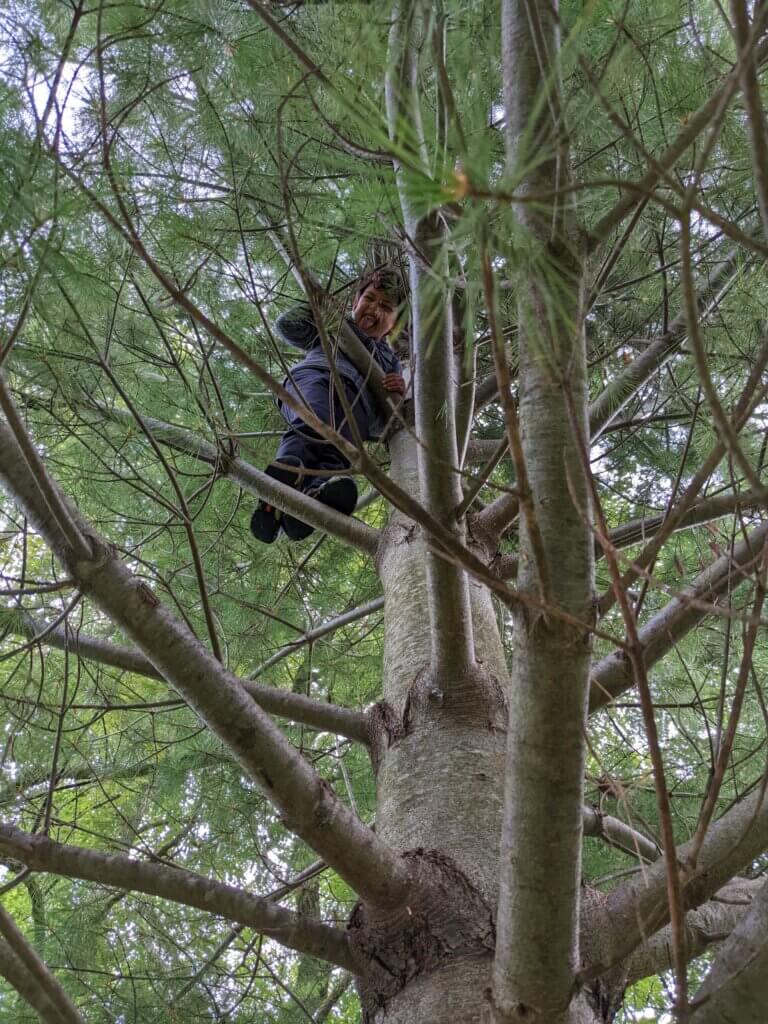
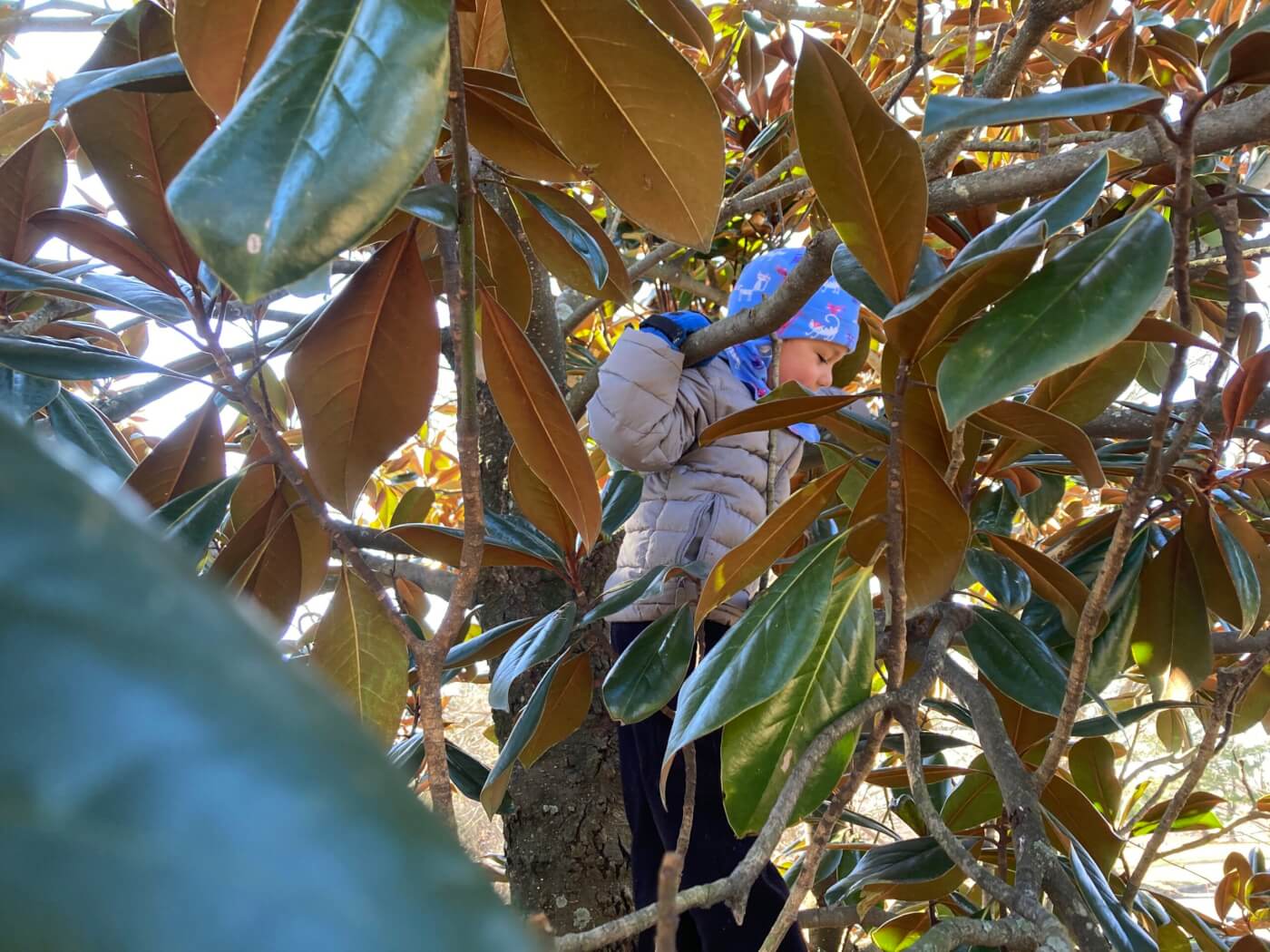
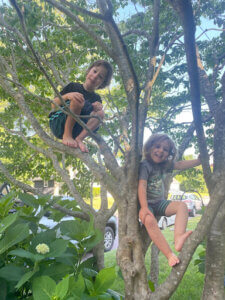
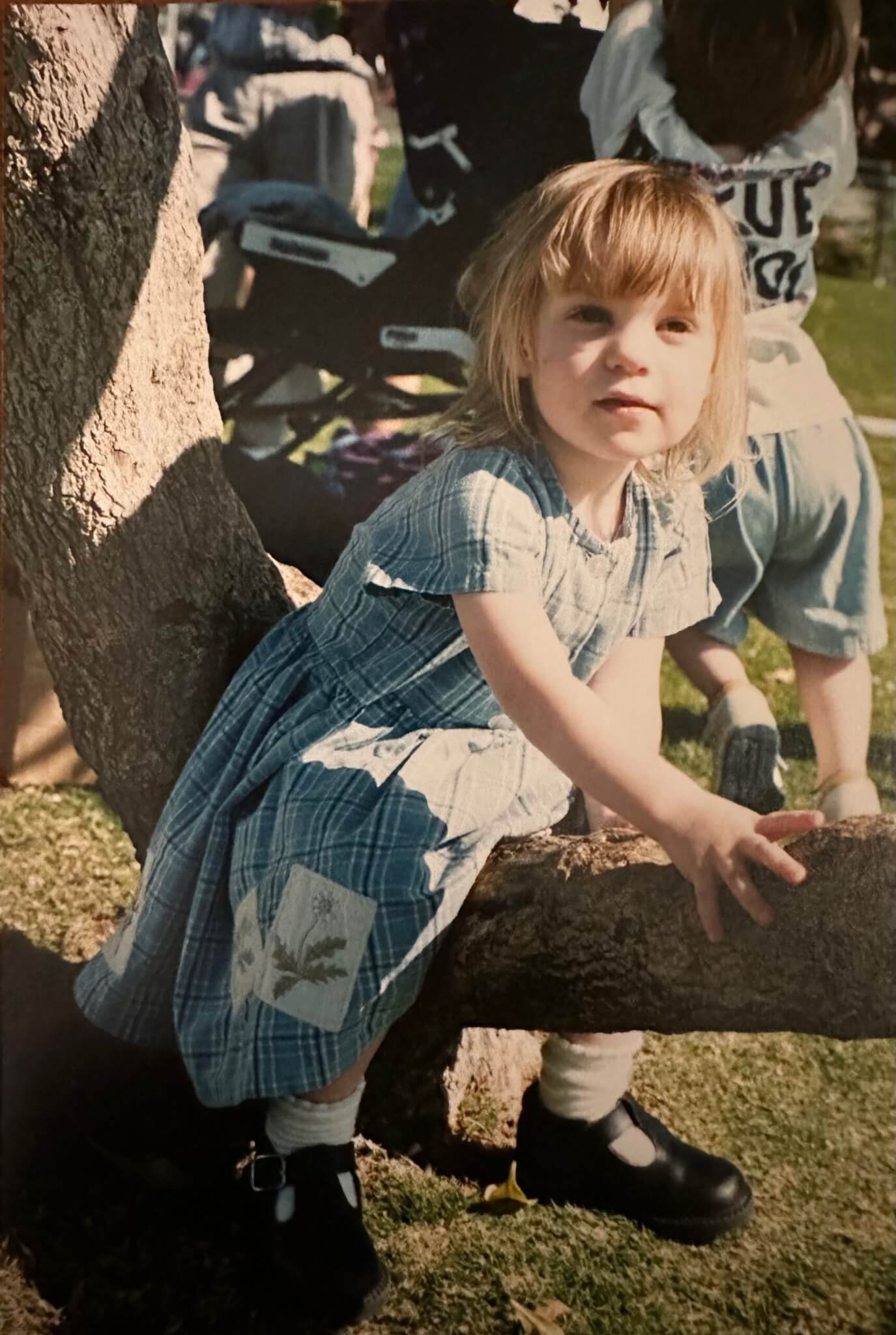
Children & Nature Network staff and friends shared pictures of the kids they care about climbing trees.
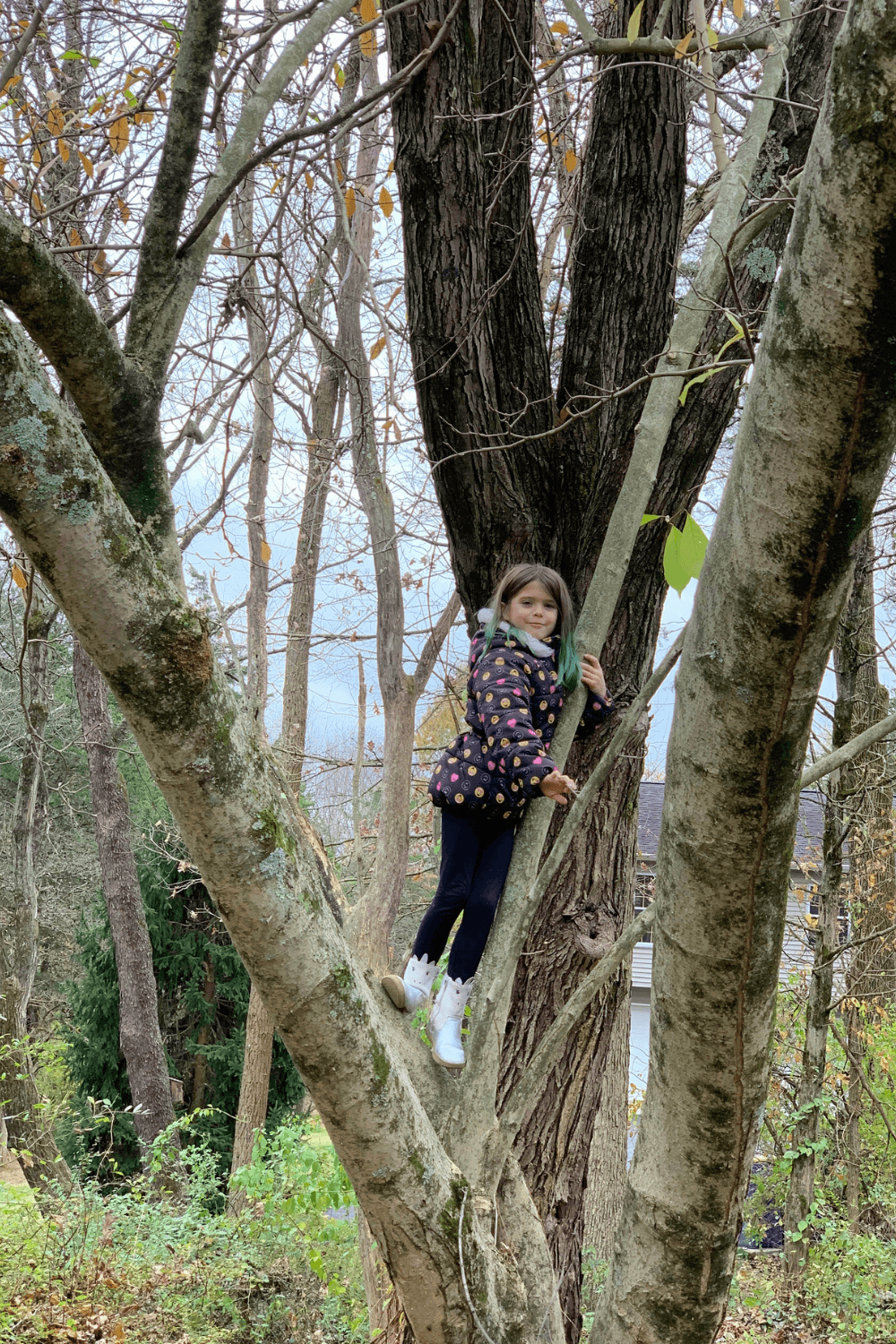
Children & Nature Network staff and friends shared pictures of the kids they care about climbing trees.

Children & Nature Network staff and friends shared pictures of the kids they care about climbing trees.
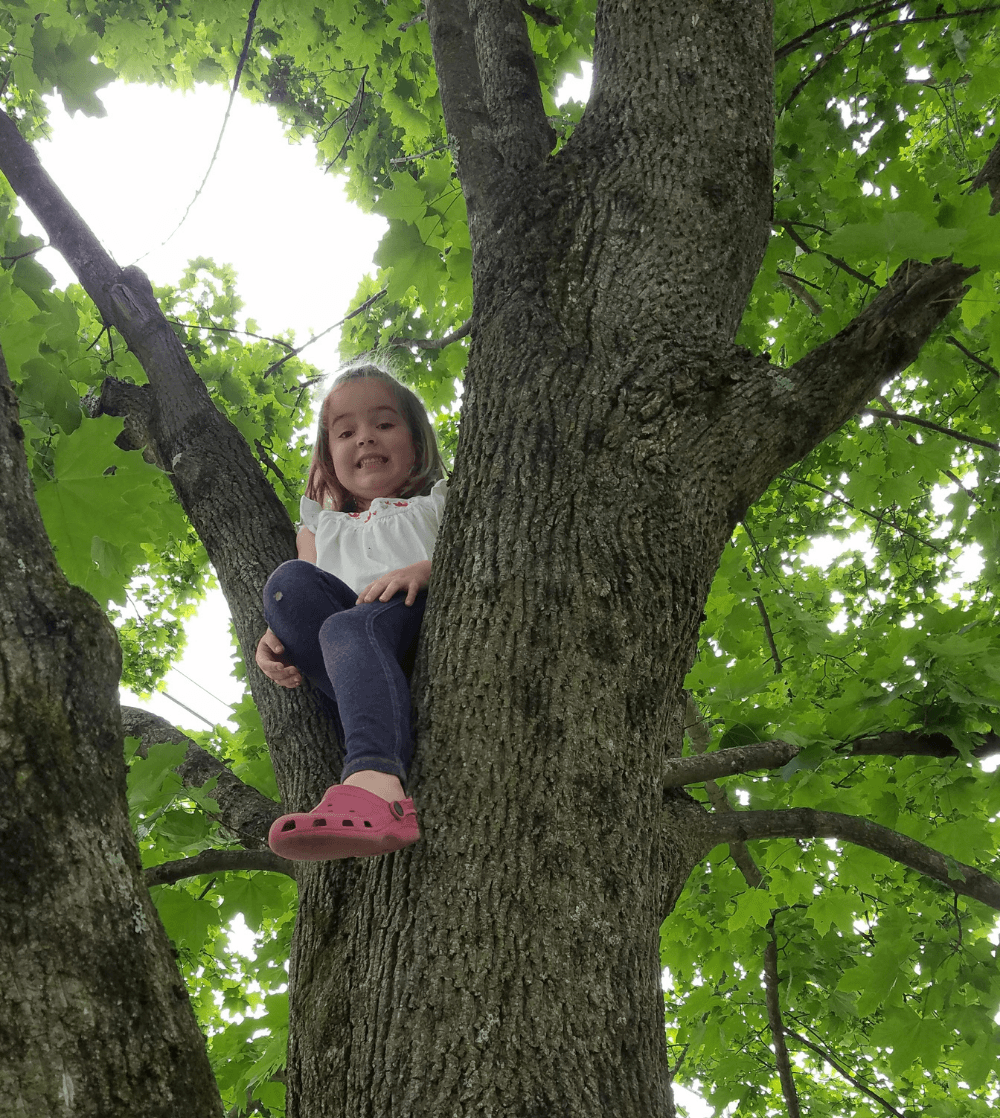
Children & Nature Network staff and friends shared pictures of the kids they care about climbing trees.

Children & Nature Network staff and friends shared pictures of the kids they care about climbing trees.
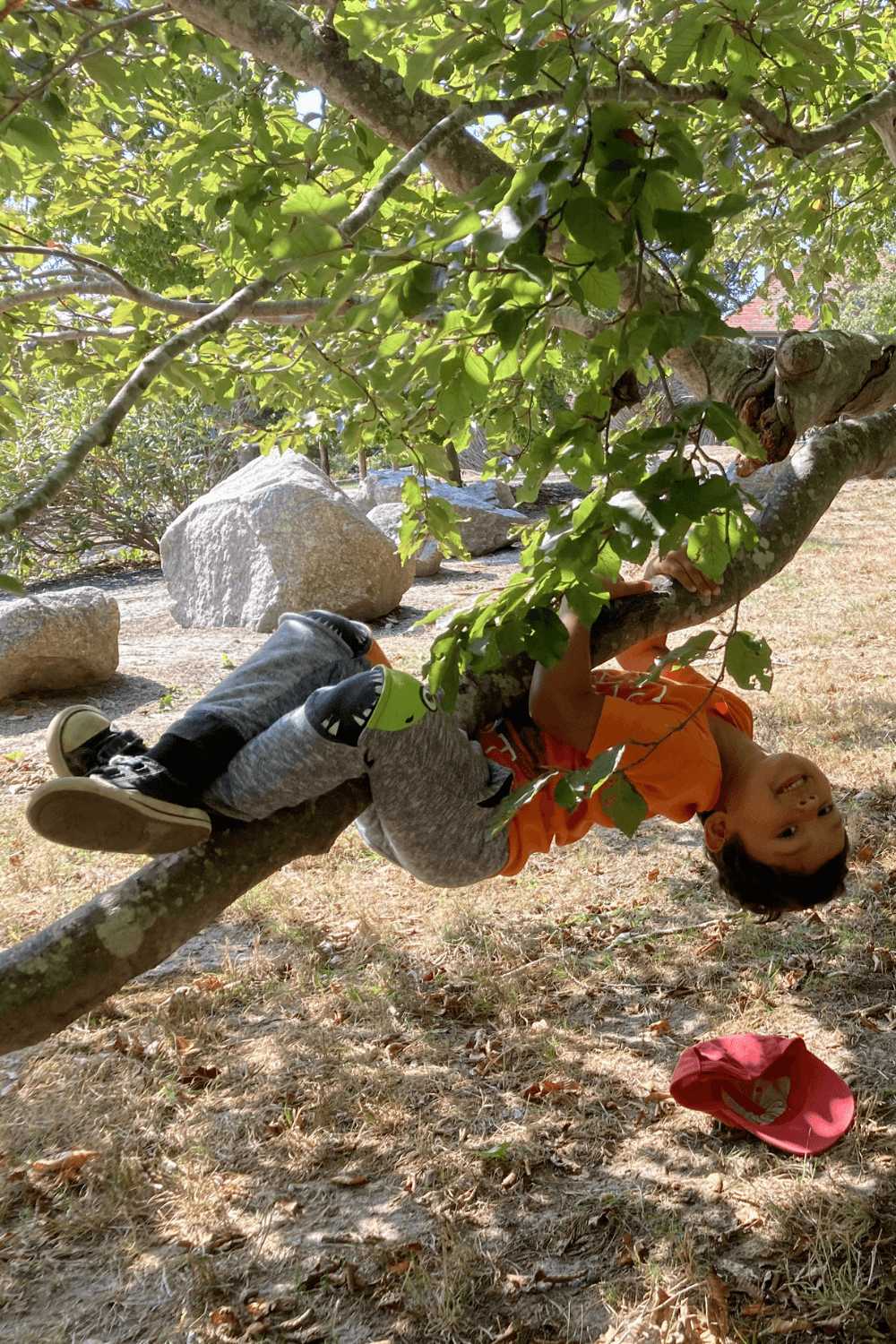
Children & Nature Network staff and friends shared pictures of the kids they care about climbing trees.
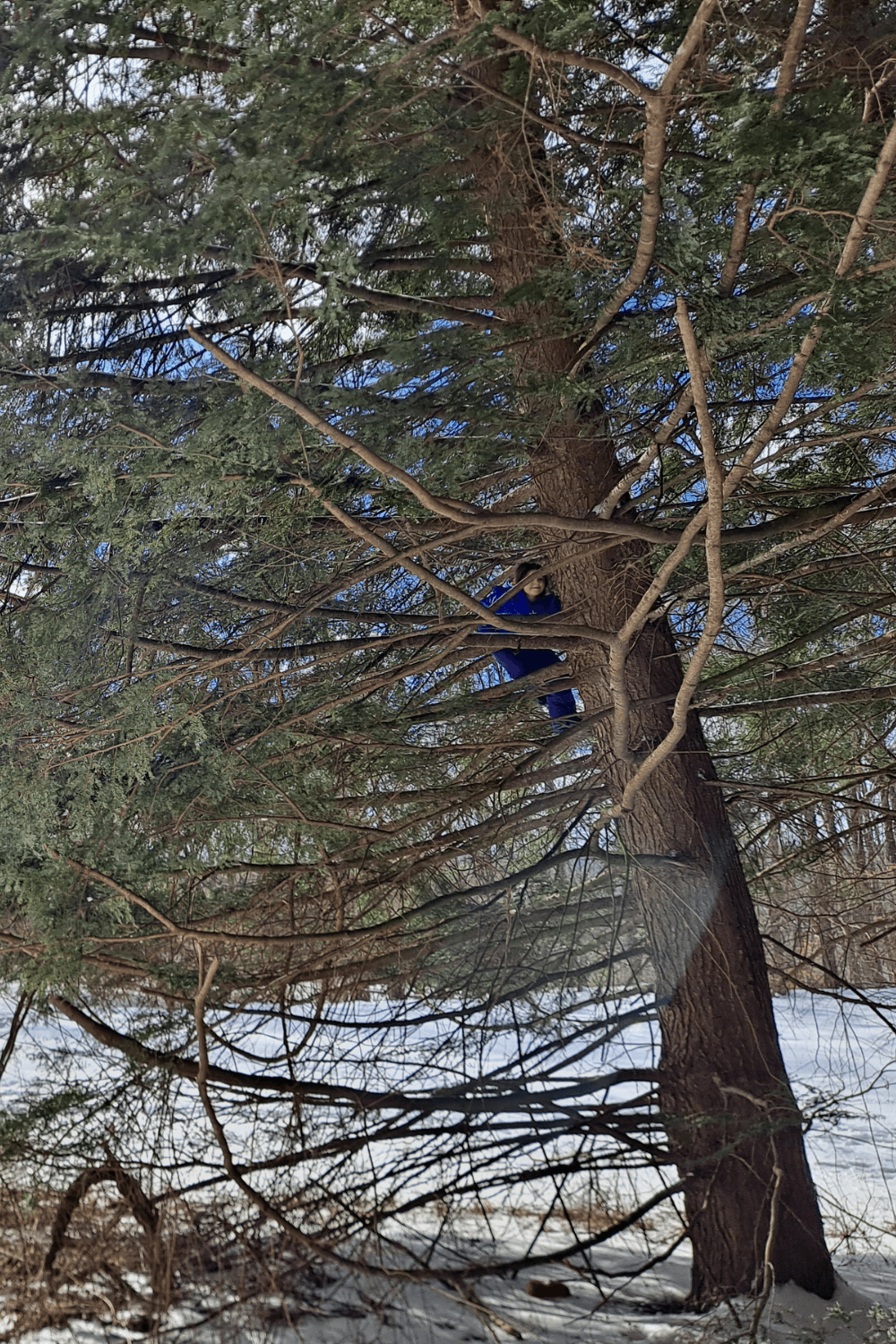
Children & Nature Network staff and friends shared pictures of the kids they care about climbing trees.
In the study, 82% of responding parents agreed or strongly agreed that the benefits of tree-climbing outweigh potential injuries. They also said that tree-climbing provides physical and emotional benefits, including critical thinking, problem solving, imagination and creativity, self-confidence, dexterity and physical strength, cognitive and emotional strength, resiliency, risk negotiation and spatial awareness.
One parent wrote, “Watching my daughters work to master something they originally thought they could not do. Empowering!” and another talked about how climbing “teaches him to trust and believe in his whole body’s abilities.”
Over 40% of parents said that tree-climbing highly impacts imagination and creativity. Trees, they said, become more than trees when we venture into their limbs.
***
There was an oak tree in the isthmus between our driveway and the neighbor’s yard. It was tall and had big, open branches — the kind a kid could really stretch out on.
My best friend and I spent whole weekends up there. The tree was a detective agency, a newspaper and a stable full of horses. The tree was an all-girl hauling company. We sat way out on the branches, driving our big rigs across the neighbor’s lawn and out onto the highway. She could do a roaring, fart-like Jake brake, and we’d laugh every time.
My brother was five years older and eons cooler than me, but he’d still play Star Wars up in the tree. We brought up as many plastic action figures as we could jam into our jeans pockets. Mostly, they’d smash into each other and fall out of the tree. We’d argue about who would climb down and get them but it was always me: I was lower down in the tree.
***
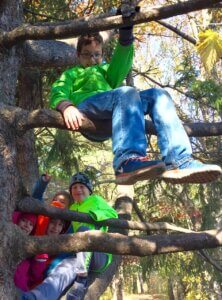
According to the parents in the study, tree-climbing doesn’t increase social interaction. I wonder if that’s because today’s kids don’t have as much unchaperoned time to pack around outside.
Still, the researchers note that trees provide alone time and a place to get away, which is also valuable. One parent says that children “need to climb to be happy and calm.” Another says, “He seems at peace in a tree.”
Perspective is also mentioned as a reason to allow climbing: Kids enjoy “having a ‘secret’ bird’s eye view of the world around them.”
***
In late summer, the oak was a miracle of shade. A perpetual breeze rustled through its leaves, which were deep green and lobed and rustled together like big, leathery hands. I’d go there often to take in the long view and to brood. But one day a younger neighbor girl was in my spot, way high up, hugging the trunk.
“Are you stuck?” I said.
Her head shook — no.
Climbing to the branch below her, I could see that she was crying. Her cousin had died in a car accident. She was in the car too, she said, but somehow she was still here.
We were in grade school, and I was wearing rainbow kneesocks. It was the first time I’d ever talked about death. I reached up for her hand, but she didn’t let go of the trunk. So I hugged the trunk too, and felt the bark against my face, cool and comforting.
***
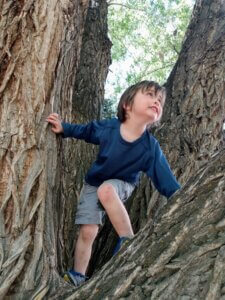
“Anytime kids have to solve their own challenges and problems they develop resiliency,” one parent reported in the study. “They must think outside the box. Maybe calm down and rethink the situation. Ask for help if needed.”
Overwhelmingly, parents reported that climbing trees teaches children to adapt to uncertainty, fostering skills like critical thinking, persistence and confidence. Children “learned not to give up.” One parent reflected, “He’s learned about his limits and survived to tell the tale… I truly hope he will return to the tree.”
***
A very early memory: One afternoon, my brother squirreled into the oak’s uppermost branches and leapt onto the neighbors’ garage.
I was too small to follow, and I watched with envy and admiration as he tossed pebbles off the roof and yelled. He was at that age where certain words are a lot funnier than others. He shouted “poop” down into the canyon of my small ears — and I didn’t let the word bounce around in there for too long before I echoed it right back at him.
And then, suddenly, the neighbors’ car was turning into the driveway.
Rather than picking his way down the tree, my brother decided to jump off the edge of the roof at the back of the garage. But as he pushed off, his belt caught on a nail. The neighbors followed his cries for help to find him dangling there like the end of a Looney Tunes cartoon.
Was anyone mad or freaked out? Probably, but what we remember is the neighbor getting a ladder and helping my brother down, the relief when he was on the ground again, and the laughter.
***
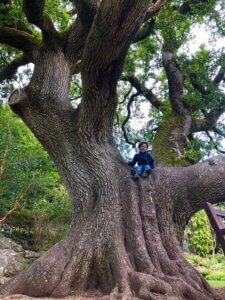
“It was my absolute favorite thing to do as a child,” one study parent wrote of tree-climbing. “It makes me feel close to my children when they find joy in the same activity I did.”
The quotes in the study are full of admiration and wonder. For these parents, talking about the benefits of climbing trees means talking about the awesomeness of their kids and about parenting into risky play. “I feel like my fear could limit them,” one parent wrote, “but I try my hardest to squash it.”
It’s harder to squash the watchfulness of an increasingly risk-averse world. “Finding climbable trees is the biggest challenge!” one mother wrote. A parent in New Jersey noted that her children are not “allowed to touch the trees in their school playground.” And, even if there aren’t posted restrictions, other parents often comment on the danger, teachers “flip out” and park bystanders may call the police.
On a more heartening note, the study said, parents and advocates are working to make space for climbing through Environmental Literacy Plans, Children’s Outdoor Bills of Rights, designated climbing trees and posted limits that guide how high children may go.
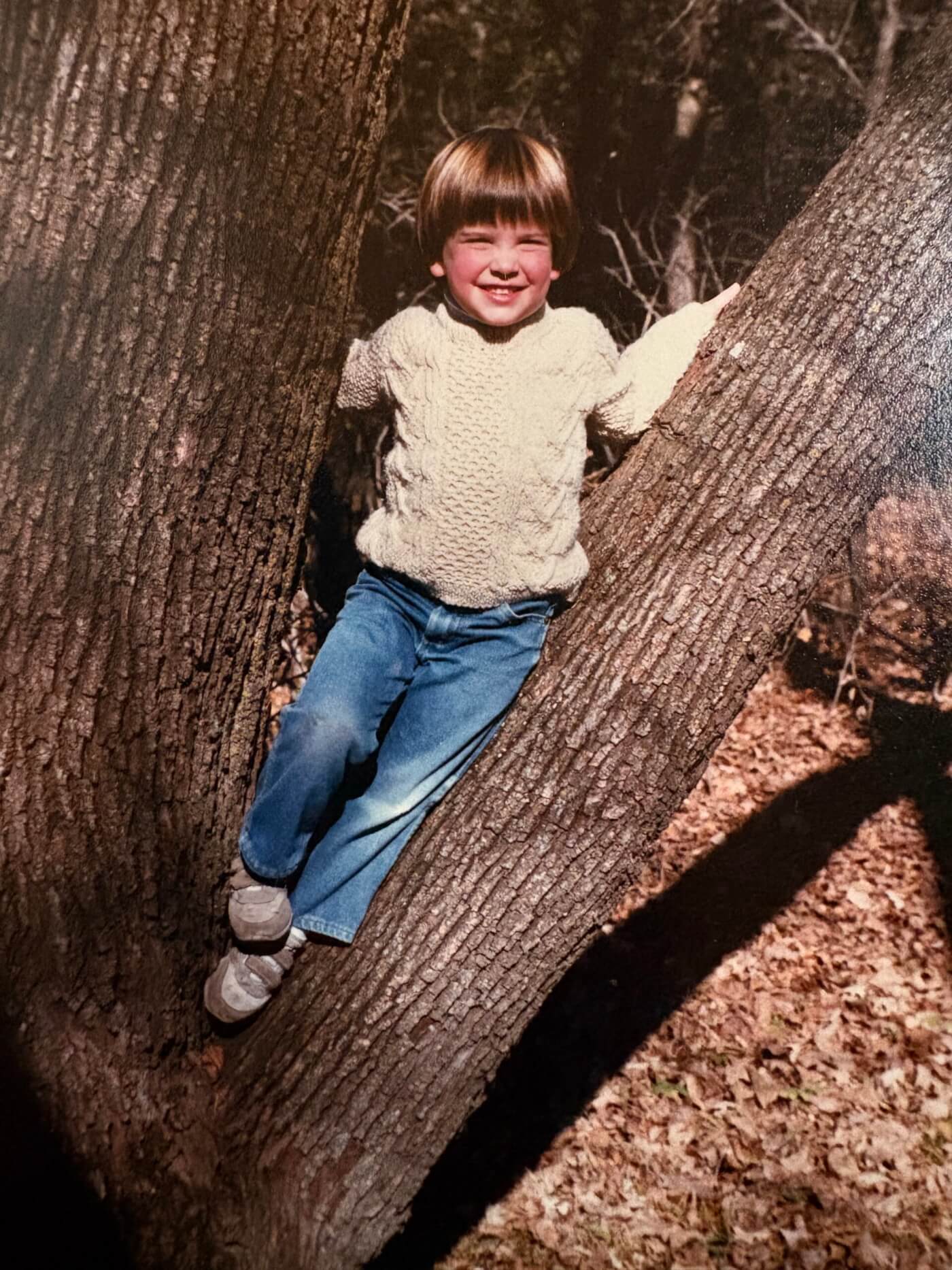
Reading the study has been a catalyst for a lot of conversations with friends — now I know their best tree-climbing stories. And I wonder, did we all grow up in the golden age of tree-climbing? Please, let it not be so.
Our tree-climbing stories are about a wild, outdoor kid life — the time that we spent adventuring in nature alone or with friends. So many small lessons (and joy!) were packed into those long stretches of time away from our parents with only our emerging internal compasses to guide us. I want that for the children in my life, for all children. It feels critical.
As one parent in the study said: “Our culture’s hyper focus on safety is having a damaging effect on our children’s ability to self-regulate. We are basically saying that we don’t trust them and if we don’t trust them, how will they learn to trust themselves?”
Benefits and risks of tree climbing on child development and resiliency
Richard Louv: Let them climb trees
Research Digest: Risk-taking in natural environments
Richard Louv: The criminalization of nature play
Why I’m encouraging “risky play” for my kids this year, despite my anxiety
-
Richard Louv
THE CRIMINALIZATION OF NATURAL PLAY: It's time to look for solutions
-
Network News
Cincinnati: From green schoolyards to city-wide green initiatives
-
Feature
A decade of ripples: What Nature Everywhere Communities reveal about systems change
-
Feature
Crossing invisible boundaries in the outdoors: A Q+A with Mason Branstrator
-
Feature
Forest bathing: Educators need nature connections, too