



)
)
)
)
)

From parents to children: How nature experiences are transmitted across generations
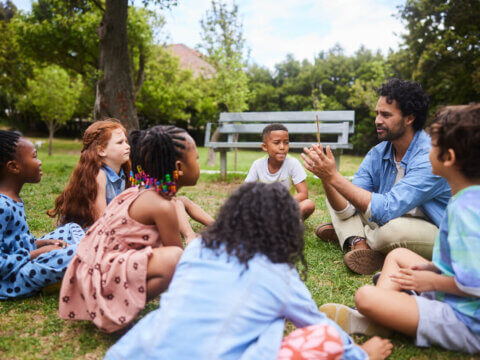
If you spent your childhood climbing trees and catching frogs, chances are your kids get outside more, too. That’s the takeaway from a survey of 1,000 Tokyo-area families: Parents’ early outdoor adventures seemed to deepen their connection to nature, and that connection was linked to kids spending time outside. So what if you, dear parent, didn’t grow up outdoors? Start a new tradition, and let your kids be the first generation in your family to fall in love with nature. Scientific Reports.
Read MoreState fund helping Native and rural youth connect with outdoor recreation and jobs
For Native youth in programs backed by New Mexico’s Outdoor Equity Fund, time outside is about more than visiting a beautiful place. These experiences “can mean connecting with landscapes they know through stories, songs and prayers and learning about places where their ancestors lived and cared for the land,” says Chas Robles of Ancestral Lands Conservation Corps. Since 2019, the fund has awarded about $12.8 million statewide, including to 241 tribal and rural groups. Now applications are up 141% and nearly half go unfunded, so supporters are urging lawmakers to double the fund to $10 million a year. New Mexico In Depth.
Read MoreHow does a kid become a birder? Like this!
Hanae Bettencourt of Birds Connect Seattle says kids can start birding just by looking out the window. Once they notice that one bird looks different from the next, she says, birding becomes a bit like collecting Pokémon. Case in point: Emma Perez was a reluctant hiker ‘til she took up photographing birds at age 8. Now a high school freshman and part of Birds Connect’s Young Birders program, Emma has a soft spot for migratory birds. “They’re sitting on your feeder for five minutes just relaxing in the rain, and you can tell that this is an amazing feast for them,” she says. Seattle’s Child.
Read MoreTo restore attention, reach out to nature
We know time outdoors can sharpen kids’ focus and even improve reading and math scores. But does any patch of green do the trick? WashU researchers dug into data on roughly 12,000 American children to find out. A strip of grass won’t cut it, and exercise didn’t explain the boost. Kids living near tree canopy and parks scored better on attention and achievement tests, and cleaner air seemed to play a role. “People need something to be occupying them a little bit — but not too much,” says the study’s lead author Carina Fowler. “Nature can provide that really well.” The Source.
Read MoreChildren can fear snakes and still love nature, new study finds
Is your kid a mud-and-beetles explorer or more of a tidy-garden type? Duke researcher Vanessa Woods noticed that split between her two children, and it sparked a study of 295 kids ages 3 to 13 in North Carolina and the Democratic Republic of Congo. The surprise: Fear and fascination aren’t opposites. Kids who were scared of spiders were just as likely as their fearless peers to welcome butterflies and beetles into their yards. Her advice for parents: “Don’t give up on your kid because they are terrified of one forest creature.” There’s still room for wonder. Duke University.
Read MoreWhen was the last time you sat under a tree? You might be missing more than you realise
What’s your earliest memory of a tree? In India, licensed clinical psychologist Dr. Ashwini Tadpatrikar’s university ecopsychology team asked people that very question. For many, trees were childhood companions, places to play and quiet sources of comfort. “Nature was not an activity to be scheduled. It was part of growing up,” she writes. She encourages a fresh take on digital detox: Put the phone away, take a child for a walk among the trees, touch the bark, and notice the breeze, the birdsong and the light through the leaves. Deccan Herald.
Read More-
RICHARD LOUV
Outdoors for All: Access to Nature is a Human Right
-
Feature
Waukegan, Illinois: Building a future where nature is for everyone
-
Feature
7 Ways communities can create lasting impact for children and nature
-
Feature
“Noticing” — An excerpt from Richard Louv’s new book, with a conversation between Louv and Ron Swaisgood
-
Voices
Returning to free play through a nature-based approach
STAY INSPIRED
Subscribe to receive high-quality journalism and commentary covering the children and nature movement worldwide — direct to your inbox every two weeks.
SUBSCRIBE