


Nature in Early Childhood Hub
Maria Durana/SF Children & Nature
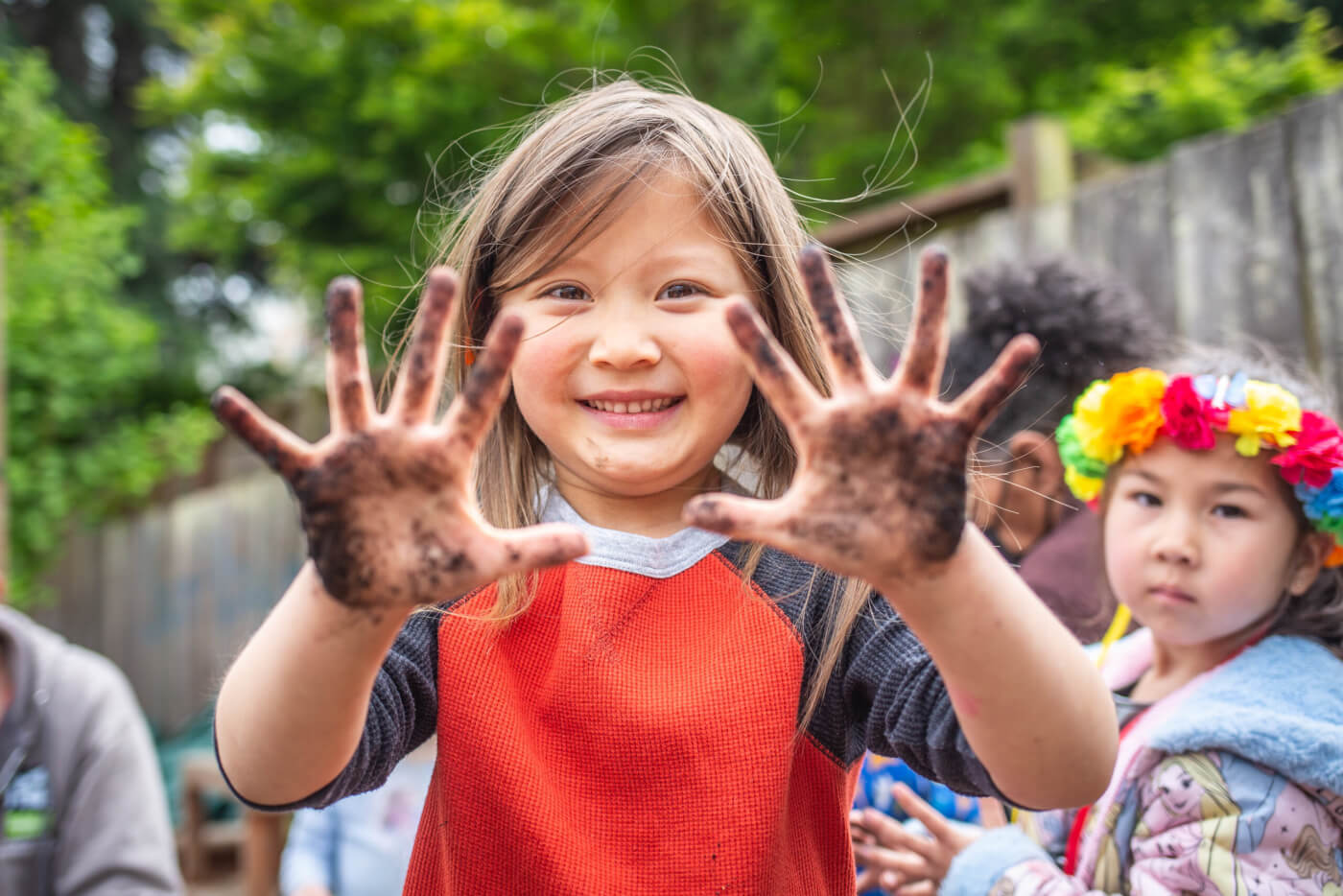
The first five years of a child’s life are foundational for lifelong health, learning and well-being. From birth to age 5, children’s brains grow at a faster rate than any other time. This makes early childhood a critical period for access to nature, setting the stage for children’s developing social-emotional skills, executive function, physical and mental health, and academic preparedness.
The resources on this page have been compiled to help parents and caregivers, educators, early childhood care providers, public agencies and other partners to understand and advocate for the importance of nature connection in the early years of life.
“Living and learning through nature is essential to child and family well-being. It is not an extra, it is essential.” – Joan Lombardi, Adjunct Professor and Principal Advisor, Stanford Center on Early Childhood, Former Deputy Assistant Secretary, Early Childhood Development, Administration for Children and Families, US Department of Health and Human Services
The Nature in Early Childhood Toolkit offers a structured, multi-layered approach to ensure that nature is fully integrated into early childhood education systems. It provides tools, case studies and implementation guides to help communities think through the various stages of implementation, from partnership building and workforce training to amplifying and sustaining efforts through policy change and funding.
The Outdoor and Nature-Based Early Care and Education (ONB ECE) Collaborative was launched in late 2024. The goal of the Collaborative is to increase public policy and funding supportive of ONB ECE at the local, state and federal levels. The Collaborative includes over 70 organizations and agencies, including the LIIF, NIEER, National Wildlife Federation-ECHO, Natural Start Alliance and the National League of Cities, among others.
The Collaborative contains three Working Groups that meet to dive deep into potential public policy ideas, supports and communications related to their respective topics. These Working Groups include providers, advocates, early childhood intermediaries, public agencies and more.
- Environments and Facilities: This Working Group focuses on public sector support for nature-filled early childhood spaces in programs and other green spaces suitable for early childhood nature-based programming.
- Prenatal-to-Age 3/Family Supports: This Working Group focuses on increasing nature-based programming and information for new and expecting parents and guardians via publicly funded programs and systems.
- Federal Policy: This Working Group focuses on increasing nature-supportive policy strategies in federal programs and funding.
To learn more about the Collaborative or to join the email list, please reach out to David Beard at david@childrenandnature.org.
You can also read more in the Finding Nature News story, Cross-sector leaders launch national effort to advance nature-based play and learning in early childhood.
Bibliography: Nature Engagement during the Early Childhood Years
Research studies included in this annotated bibliography support the understanding that connecting children with nature promotes their mental health and well-being and that this can be especially helpful for children who need to cope with stressful adverse conditions and the emotional responses that their life situations evoke.

Climate Resilience and Nature in Early Childhood
Integrating nature into early childhood settings can build climate resilience while improving young children’s health, development, and learning. This brief outlines practical policy, design, and program strategies communities can use to protect children and caregivers from climate impacts while expanding safe, nature-rich environments.

EQUITY MAPPING: YOUNG CHILDREN & NATURE
Equity maps depict how nature appears in a city relative to key demographic, economic, and social data. Cities use equity maps to prioritize programming, funding and resources to areas most in need. This resource guide provides step-by-step process for creating equity maps.

Outdoor and Nature-Based Early Care and Education Resource Library
The following resources provide valuable information for public agencies, early care and education providers, funders, advocates, and others interested in moving ONB ECE efforts forward.

Nature Engagement During Early Childhood
This 2021 Research Digest focuses on research about nature engagement in this early childhood period, sharing 12 recent research articles related to young children's health, enhanced play, school readiness and connectedness to nature stemming from nature engagement.

Infographic: Young children benefit from regular time outdoors
Research shows that connecting young children to nature during the early years of life has many long-term benefits. This infographic provides a visual summary of the benefits for children age 5 and under.

Webinar Recording: Babies, Toddlers & Preschoolers in Nature
Watch the recording and check out resources shared during our "Babies, Toddlers and Preschoolers in Nature" Families Together in Nature event featuring Alexis Burroughs, Jessica Carrillo Alatorre, and Gabriel Pickus. They discuss benefits of nature engagement for young children, tips on how to prepare for the elements, tangible tools for nature play, and more!
Early Childhood Education for Sustainability
The studies in this Digest were selected to provide some insights into ECEfS perspectives, curriculum and pedagogy, and barriers.

A Report on Nature-based Early Childhood Education at Antioch University
This report was commissioned by Dr. Ellen Doris, director of the nature-based early childhood program at Antioch University New England. The purpose is to describe the first ten years of the program’s development and to feature the inspiring stories of some of its participants.

A future full of promise: Nature in early childhood
Access to nature in the early years isn’t optional. It’s foundational. Read more about the why — and the how — in this article.

Buds in the Bluegrass State: Increasing access to nature-based early care and education in Kentucky
Why is access to nature important for children and infants under the age of 5? Read on to learn more about this growing movement in Kentucky.

Cross-sector leaders launch national effort to advance nature-based play and learning in early childhood
Regular nature access in early childhood improves physical and mental health, develops social-emotional skills, and better prepares children for school. Cross-sector leaders are eager to bring these benefits to the youngest members of their communities — and to consider the role of nature-based initiatives in mitigating climate change.

Stumps, jumps and tree cookies: Bringing nature’s benefits to young children in cities
Across the U.S., cities are working to connect kids to nature during their early developmental years, inspired by research indicating that providing young children, ages zero to five, with regular access to nature improves physical and mental health, develops social emotional skills and better prepares children for school.

NATURE’S NEURONS: Do early experiences in the natural world help shape children’s brain architecture?
What role do early childhood experiences in nearby nature play in the formation of brain architecture? It’s time for science to ask that question.
Designing Climate-Resilient Outdoor Spaces with Nature-Based Solutions
Imagine a neighborhood where young children and caregivers can explore nature-rich environments with plenty of shade, trees and flowers. A community where early childhood centers offer outdoor play and learning spaces filled with trees, pollinator gardens and natural play elements.
DONATE TODAY TO BECOME A MEMBER
Help us make sure that all children live, learn and grow with nature in their daily lives.