
How nature can strengthen healing, connection and well-being
At the Children & Nature Network, we know that nature connection can support many dimensions of children’s health and development, including mental health and well-being. That matters in a moment when mental and behavioral health concerns among young people are rising. Between 2016 and 2023, the rate of diagnosed mental or behavioral health conditions among U.S. adolescents increased by 35%, and today four in 10 students report persistent feelings of sadness or hopelessness (National Survey of Children’s Health, 2023).
At the same time, a growing body of research points to nature as one important protective factor. Studies have linked greater access to and time in nature with better mental well-being, lower risk of some mental health concerns and healthier developmental trajectories.
Through our Nature as Healer work, the Children & Nature Network is exploring how those benefits can be brought more intentionally into the systems and organizations that support children and families — not as a stand-alone program, but as part of everyday practice, culture and care.
One of our deepest explorations of this work has been our partnership with Casey Family Programs, a national foundation focused on improving the safety and well-being of children and families and strengthening the child welfare system. Because Casey works with young people and families who may have experienced abuse, neglect, trauma and involvement with the child welfare system, the partnership has also offered an important opportunity to explore nature through a trauma- and healing-informed lens. Together, the Children & Nature Network and Casey have been exploring what it means to move beyond individual nature activities or a handful of enthusiastic champions and instead embed nature more intentionally across an organization.
That has meant looking at nature through several interconnected lenses: how practitioners can weave it into their work with young people and families; how it can support family connection and well-being; how organizations can support staff wellness; and how community partnerships can expand opportunities for nature connection.
Across Casey Family Programs, those ideas are increasingly showing up in everyday practice. The stories that follow offer a glimpse of what that integration can look like.
Changing the conditions for connection
For practitioners working with young people and families, the setting in which an interaction takes place can influence what becomes possible.
Mimi Francis, a licensed clinical social worker in Casey Family Programs’ San Antonio Field Office, has seen this in her own practice. She uses a narrative approach that recognizes that people are more than the challenges they experience, helping young people explore stories about themselves that reflect their strengths, hopes and preferred identities — rather than allowing a problem to define who they are.
Nature, she explained, can give that work a tangible backdrop.
“I’ve seen kids open up more easily when we’re outside, particularly those who struggle with traditional talk therapy,” Francis shared. “There’s something about movement — walking while talking, skipping stones, digging in the dirt, feeling the breeze — that helps them process experiences differently.”
She has also found that outdoor settings can reduce some of the intensity young people may experience during difficult conversations. Walking side by side, rather than sitting face to face, can create space for reflection and communication.
This does not require practitioners to become wilderness experts or create elaborate outdoor experiences. Francis describes starting small: moving a conversation outside, using leaves or water as symbols in storytelling, noticing the view from a window or listening to what kinds of nature experiences resonate with a particular young person.
“You don’t have to lead wilderness hikes or know the names of plants to integrate nature into your work,” she said. “Let nature be a tool rather than a whole new method you have to master.”
Other Casey staff have observed similar shifts.
In one example, a social worker was struggling to build rapport with a 17-year-old refugee who had experienced isolation, family separation, bullying and distrust of child welfare professionals. During one visit, the social worker took him to a local beach — somewhere he had never been before.
After entering the water, the young man’s demeanor became visibly calmer. He reported feeling present and at peace, and conversation between him and the social worker began to open. Beach visits eventually became a regular part of their time together, and the relationship continued to grow.
In another reflection shared through the Nature as Healer work, a child who had previously described himself as angry offered a different understanding of his identity: “I no longer want to be known as an angry child. I am a child that does get angry sometimes, and my time outdoors has helped me not be so angry.”
These stories do not suggest that nature replaces therapy, social work practice or other forms of care. Rather, they demonstrate how nature can support the goals practitioners already hold: building trust, strengthening relationships, encouraging communication, supporting self-regulation and helping young people experience themselves in new ways.
Supporting family healing and connection

Nature can also create opportunities for families to connect, establish new routines and experience moments of relief together.
After a mother in Yakima, Washington, was reunited with her five children, she was looking for an activity they could share. A Casey kinship navigator suggested painting rocks for the family’s garden.
The mother and kinship navigator first went outside to gather rocks. The mother later shared that simply walking, searching and spending time in nature helped reduce her stress and brought her a sense of peace.
The following day, the family painted the rocks together. One included the family name and stick figures representing each family member. Others featured flowers, the sun, the ocean and basketball. When the paint dried, the family arranged the rocks as a border for a future garden.
The activity became more than a one-time project. The family continued tending vegetable, herb and flower gardens, and the mother began creating additional art with pinecones and other natural materials. When she felt stressed or overwhelmed, she would go to the patio and create.
She described the practice as healing and said that, although it was difficult to explain, she could feel relief in her body.
This story reflects several dimensions of Nature as Healer at once: caregiver well-being, family connection, creativity, identity and the creation of a shared sense of home. It also shows that meaningful nature-based practice does not always require a major trip or specialized program. Sometimes it begins with a walk, a handful of rocks and an invitation to create something together.
Supporting the people who support children and families
A central part of Casey Family Programs’ approach is the recognition that nature connection is not only for the children, youth and families the organization serves. It also matters for staff.
Child welfare and family-support professionals regularly engage with trauma, crisis, uncertainty and emotionally demanding situations. Embedding nature into an organization therefore includes considering how staff can access restoration, connection and moments of regulation within their own work lives.
In partnership with the Children & Nature Network and Dr. Denicia Carlay, Casey’s Bay Area Field Office hosted a two-day healing retreat for staff. Drawing on principles of healing-centered engagement, the retreat was designed to build community. A Native spiritual leader guided a talking circle and shared teachings about Indigenous connections to healing and spirit.
“The land became part of the healing,” explained Solis Aguilera, who directs the Bay Area Field Office. “Our staff were invited to slow down and reconnect with teachings about balance, culture, spirit and our relationship to the land.”
“The experience reminded us that if we are asking children and families to find pathways toward healing, we also have to create space for those who are doing the work to be grounded, restored and connected,” Aguilera said.
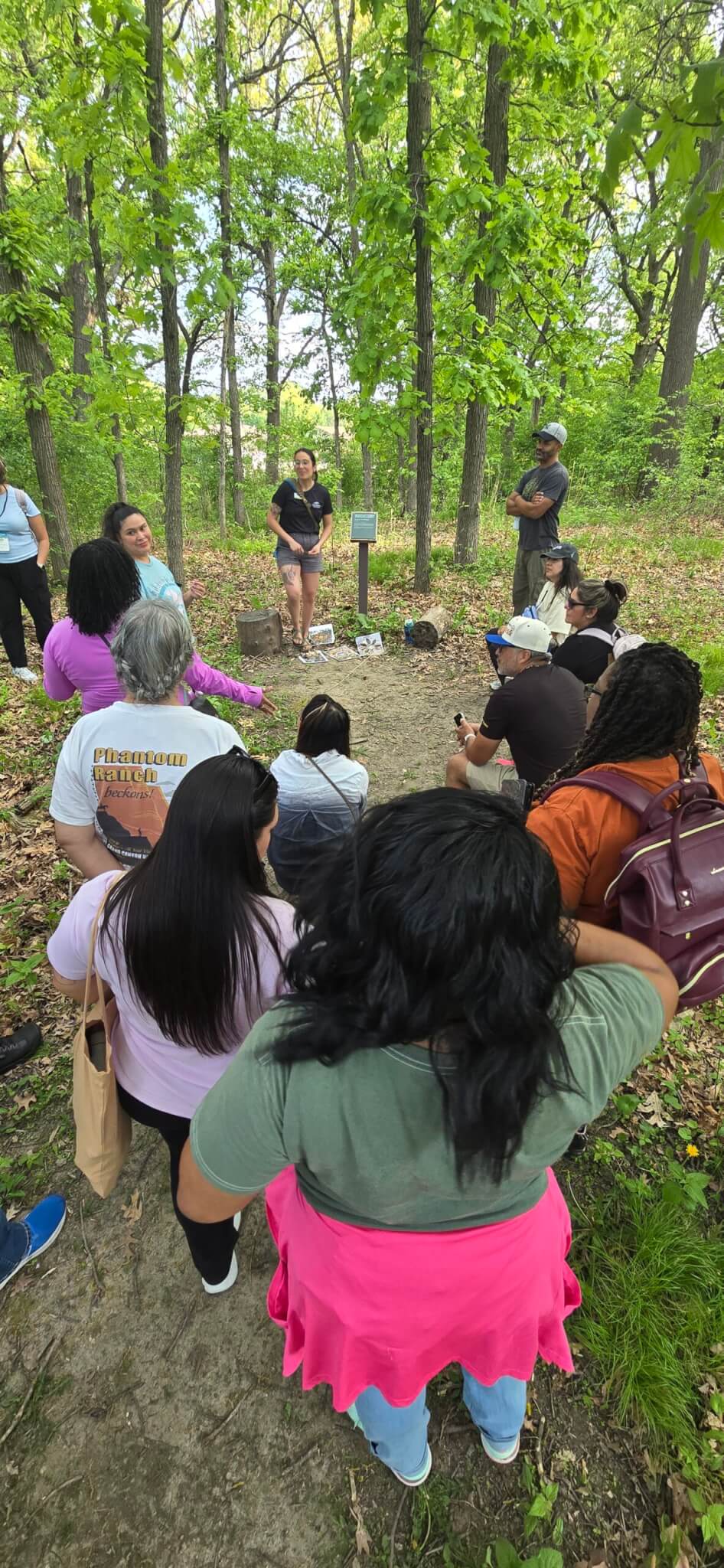
The people doing relational and emotionally complex work deserve support for their own health, well-being and restoration. While connection with nature can certainly happen outside of work, organizations can also create conditions that make it easier for staff to access those benefits as part of the workday itself. That might look like staff wellness days, encouragement to take breaks outdoors, walking meetings, access to natural elements in office spaces or simply creating a culture where stepping outside to reset is understood and supported. These practices can help staff feel more grounded, present and connected, and that can also shape the quality of the relationships they build with children, youth, families and colleagues.
This is one reason the Nature as Healer initiative reaches beyond individual activities. Casey Family Programs and the Children & Nature Network have worked together to build leadership engagement, staff learning opportunities, office-level planning, Nature Ambassadors, community partnerships and spaces for staff to share what they are trying and learning.
These structures help transform nature from an occasional activity into an organizational practice.
Building this work together
These stories demonstrate what can happen when staff are invited to experiment, reflect and adapt nature-based approaches to the realities of their own work.
As the Children & Nature Network continues developing its work at the intersection of nature, mental health and well-being, we are seeking to learn alongside mental health practitioners, social workers, community organizations, researchers, agencies and people with lived experience. We invite individuals from these sectors to participate in an upcoming advisory process that will help shape future strategies, partnerships and resources, and ensure that they are grounded in practice and responsive to the communities they are intended to support.
We are also interested in hearing from organizations that are exploring how nature might become more meaningfully embedded across their own practices, staff well-being efforts, culture and systems. We welcome opportunities to learn from one another and consider where there may be alignment.
Nature as Healer is not one program or intervention. It is a way of rethinking the environments, relationships and organizational conditions that can support healing for young people, families and the people who serve them.
If you’re interested in learning more about Nature as Healer and the upcoming advisory process, you can contact Jennifer Salinas, Program Manager, at jennifer@childrenandnature.org.
Nature as Healer: Children’s mental health in nature
Nature helps children recover from Adverse Childhood Experiences
Research Digest: Therapeutic Use of Nature
Research Digest: Trauma and displacement
Research Digest: Adolescent Mental Health
Bibliography: Nature’s Role In Promoting Resilience, Regulation And Recovery
-
RICHARD LOUV
Outdoors for All: Access to Nature is a Human Right
-
Feature
Waukegan, Illinois: Building a future where nature is for everyone
-
Feature
7 Ways communities can create lasting impact for children and nature
-
Feature
“Noticing” — An excerpt from Richard Louv’s new book, with a conversation between Louv and Ron Swaisgood
-
Voices
Returning to free play through a nature-based approach