
Creative Shift Saves Young Naturalist Program: Alayna Schmidt finds new ways to engage teens

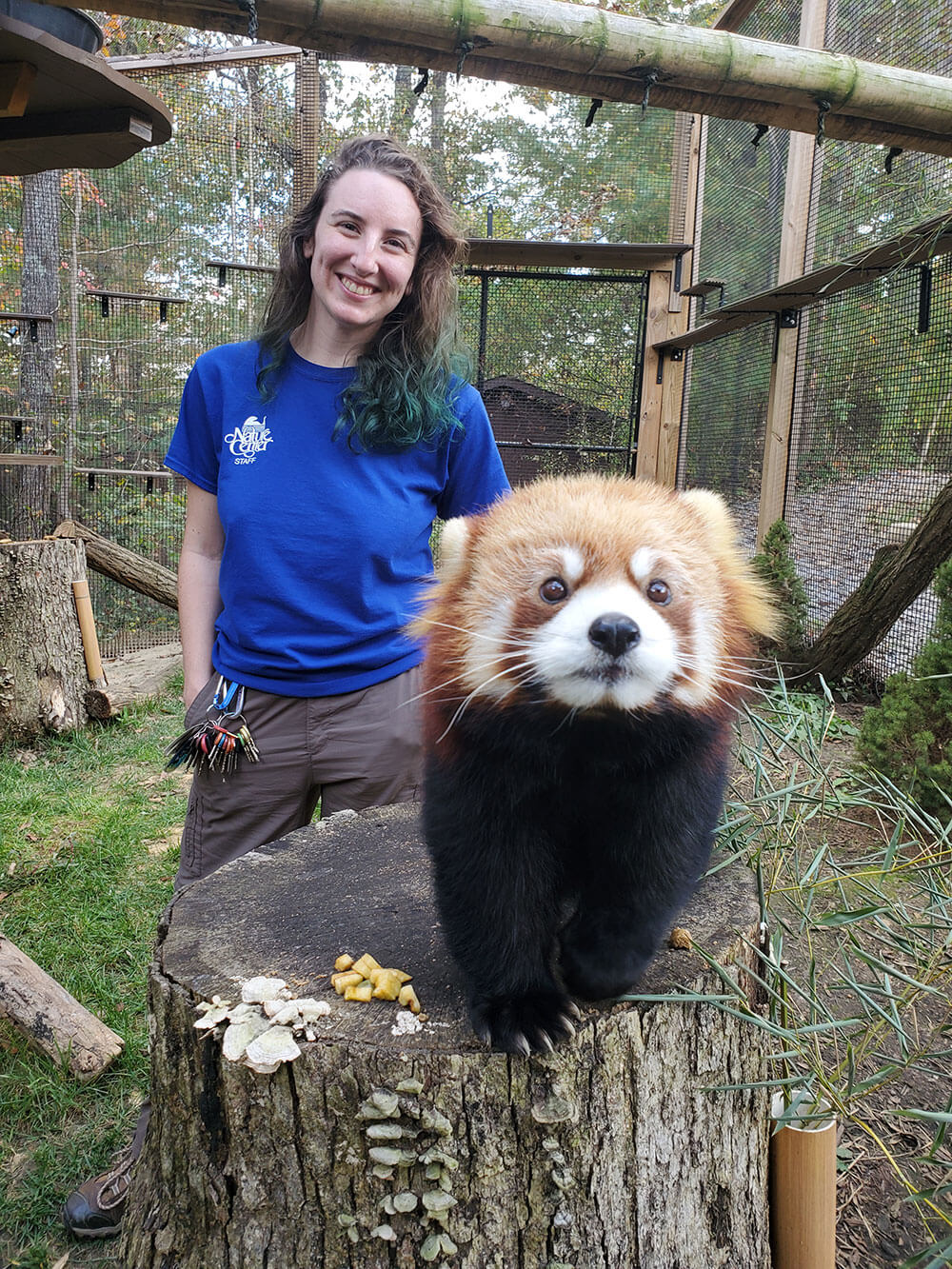 Sitting on Zoom calls with a yoga instructor, a herpetology professor and a non-profit conservation leader was not originally what Alayna Schmidt had in mind for her Summer 2020 Young Naturalist program. But when COVID-19 changed her plans, Alayna saw an opportunity to incorporate what she’d learned from a virtual Natural Leaders Training to develop new and creative ways to engage youth in her community.
“When COVID happened, we were concerned about the future of our summer program,” Alayna said. “In talking to the teens involved, we realized it was critical to keep the program going, even if it wasn’t in-person. We worked closely with the teens and their parents to figure out what they needed.”
During a typical summer, Alayna and up to 85 teens (ages 13 to 17) spend their days connecting guests to native animals of the Southern Appalachian region at the AZA-accredited Western North Carolina Nature Center. But while COVID limited physical proximity to nature center grounds and to each other, it didn’t limit the teens’ curiosity about the world around them.
“Although we couldn’t do hands-on work with the animals, we could go deeper in exploring topics that our teens cared about,” Alayna said. “This led to a different type of engagement.”
What the teens wanted was a safe space to hear from racially diverse voices about careers that connect to the outdoors. They wanted to tap into racial equity activism happening across the country and understand how nature could be part of many professions, including those not traditionally thought of as “outdoors,” such as health care, city planning and even yoga. That’s how the virtual guest speaker series started.
“We were inspired by the Black Birder’s movement,” Alayna said. “We wanted to be a part of uplifting and sharing voices of people of color who were in the outdoors. We wanted to challenge the socially accepted narrative that only white people like going outside. The speaker’s series was about challenging that perception.”
Shifting to an online summer program was successful due in large part to Alayna’s ability to involve teens in redesigning it. “There is power in my position as a program leader. For me, the question was: how can I decentralize that power and give it back to the teens?” Alayna said. “Through the [Natural Leaders] workshops I learned how to play the role of the coach, on the sidelines, and emphasize the leadership of the teens.”
As a Natural Leaders Workshop attendee, Alayna also experienced first-hand how to make workshops participatory and interactive. She learned what effective online learning looks like and used some of the same tactics with her teens.
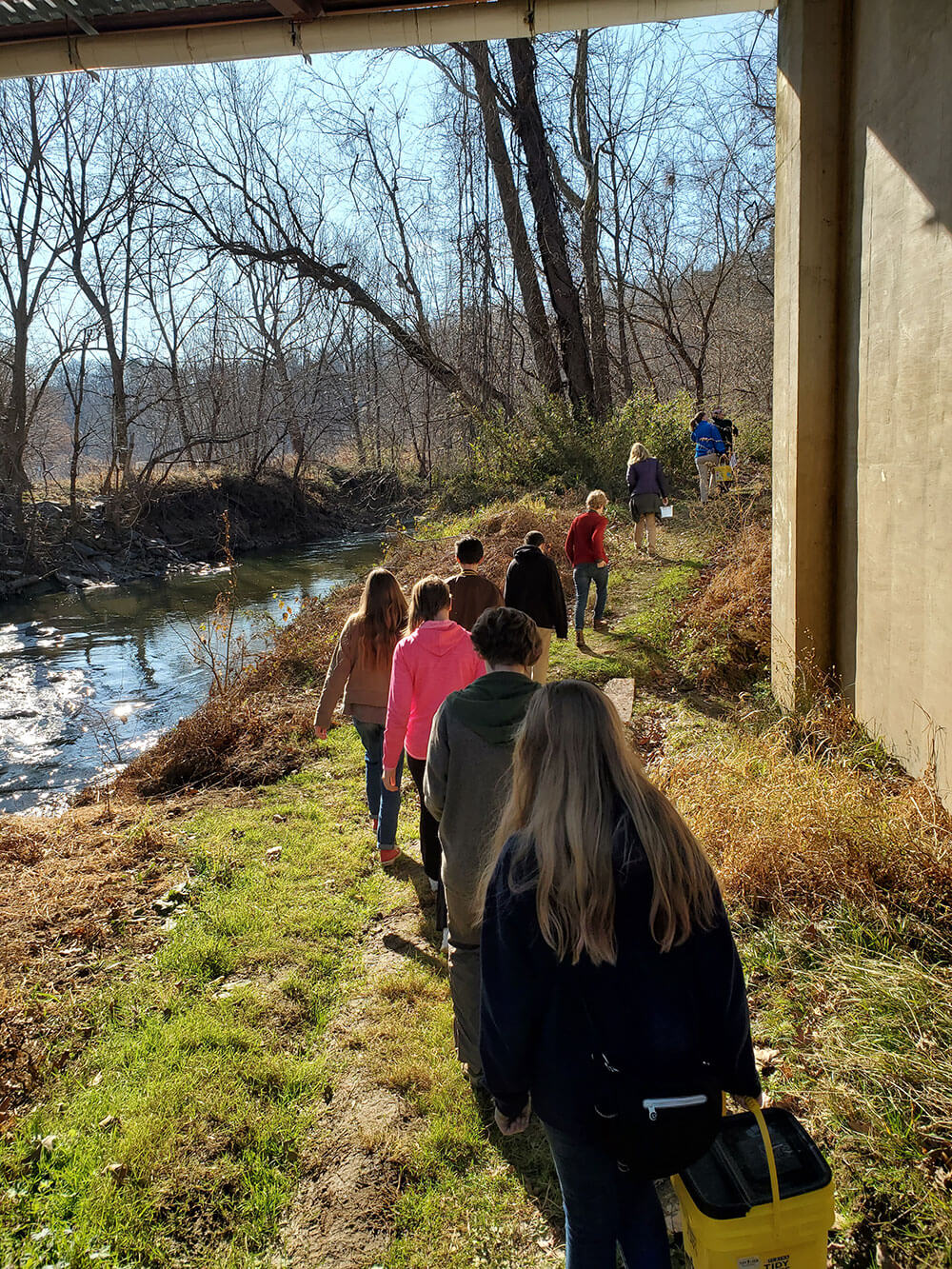
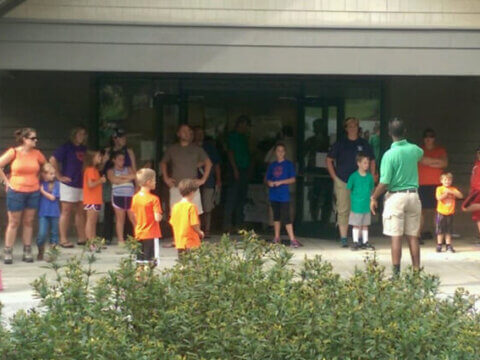
Teen participants in the Young Naturalists program sample the Swannanoa River for mudpuppy salamanders in 2019.
Following a successful summer, the Western North Carolina Nature Center extended the online summer speaker series into the fall. To keep the program running and to properly compensate speakers, Alayna applied for and received funding from C&NN’s Youth Outdoor Equity Leadership Fund, created to support young leaders’ efforts to increase equitable access to nature, and their work in the areas of environmental and social justice.
“I am a young person doing this work,” Alayna said. “I’m also setting up a pathway for other young leaders interested in doing this work and increasing my skills to help make that connection happen.”
Graduate-level study has also impacted Alayna’s approach to connecting children to nature. She joined the inaugural cohort of Western Carolina University’s M.S. in Experiential and Outdoor Education this fall. “It has helped me achieve a depth in my work that I always craved but never quite knew how to reach,” Alayna said.
Deeply passionate about connecting young people to nature, Alayna is currently in discussions about how to scale her work from the program-level to city-wide.
“It’s been a big year for me personally and a big year at a global level,” Alayna acknowledges. “Doing this work grounds me and connects me to my community. I see it as part of my vision and purpose. This is what I’m here to do.”
-
Richard Louv
THE "VITAMIN N" PRESCRIPTION - Some health professionals now recommending nature time for children and adults
-
Feature
A decade of ripples: What Nature Everywhere Communities reveal about systems change
-
Feature
Crossing invisible boundaries in the outdoors: A Q+A with Mason Branstrator
-
Feature
Forest bathing: Educators need nature connections, too
-
Feature
A future full of promise: Nature in early childhood