
Cincinnati: From green schoolyards to city-wide green initiatives

Cincinnati, Ohio, is best known for the Reds and Skyline Chili. But in the children and nature movement, the city is also synonymous with green schoolyards.
The Cincinnati Green Schoolyards initiative has an ambitious goal: providing safe, outdoor learning spaces at all Cincinnati Public Schools (CPS) campuses by 2028. It’s nearly there.
As of 2025, 60 of 66 Cincinnati public schools now have green space, including 20 new green schoolyards. Schools use these spaces for outdoor learning and play during the day, and children, families and the public can enjoy them outside of school hours.
This didn’t happen overnight. And it didn’t happen alone.
Cincinnati’s green schoolyards initiative began eight years ago as CPS Outside, a collaboration between the school board and park board. They joined the Cities Connecting Children to Nature (CCCN) initiative in 2018, the CCCN’s Green Schoolyards Technical Assistance Cohort in 2021, and the Nature Everywhere Communities initiative in 2023. These programs provided technical support and seed funding to hire a coordinator and develop a green schoolyards implementation plan.
The Green Schoolyards Action Network (GSAN) now leads this work in Cincinnati. The GSAN is a robust collaboration that includes the city, CPS, public agencies, nonprofit organizations, parents and students. In 2024, this network connected 50 schools to outdoor activities, engaged 10,989 students in nature-based learning, supported 272 educators with professional development and delivered 170 programs to schools via local partners.
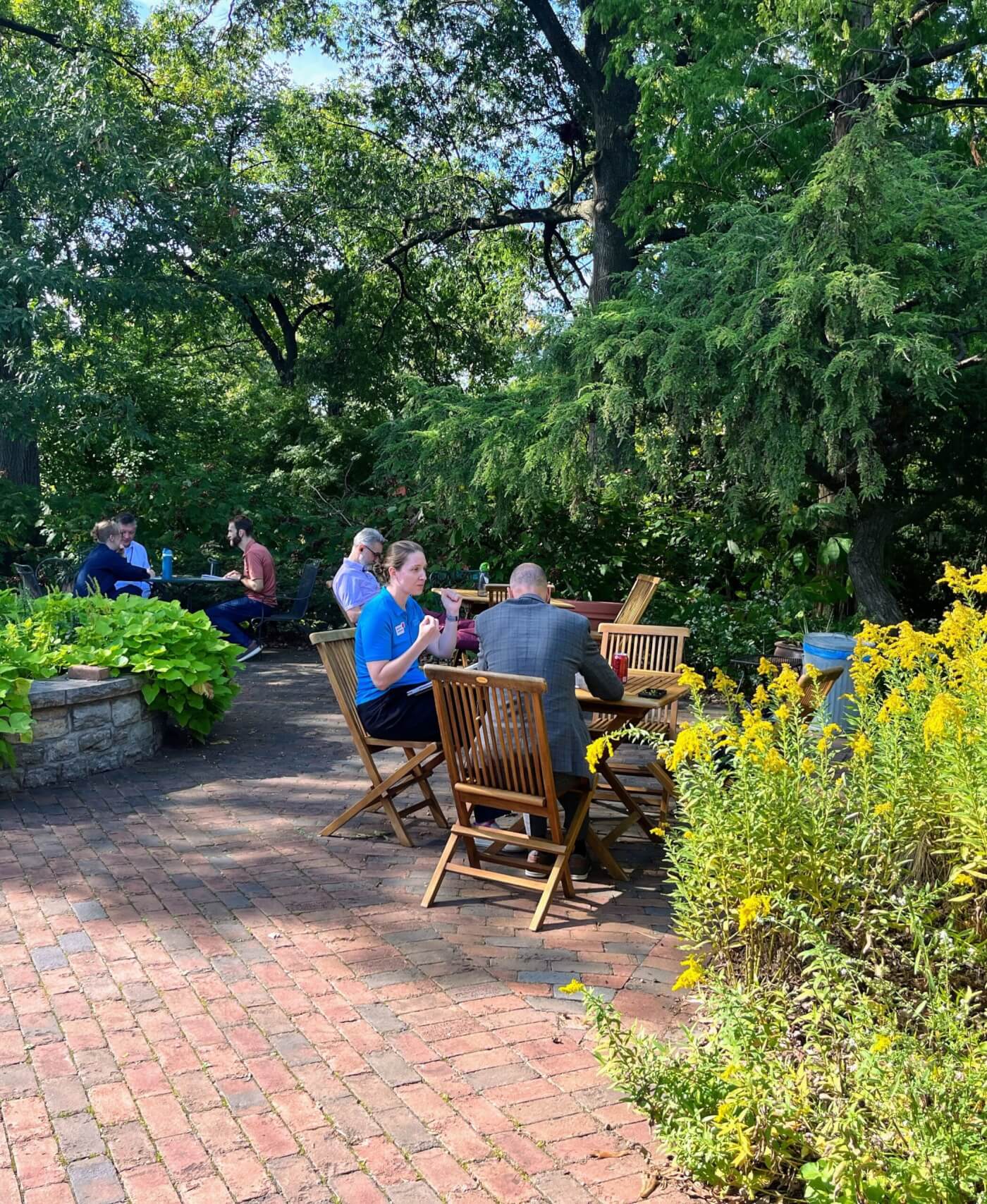
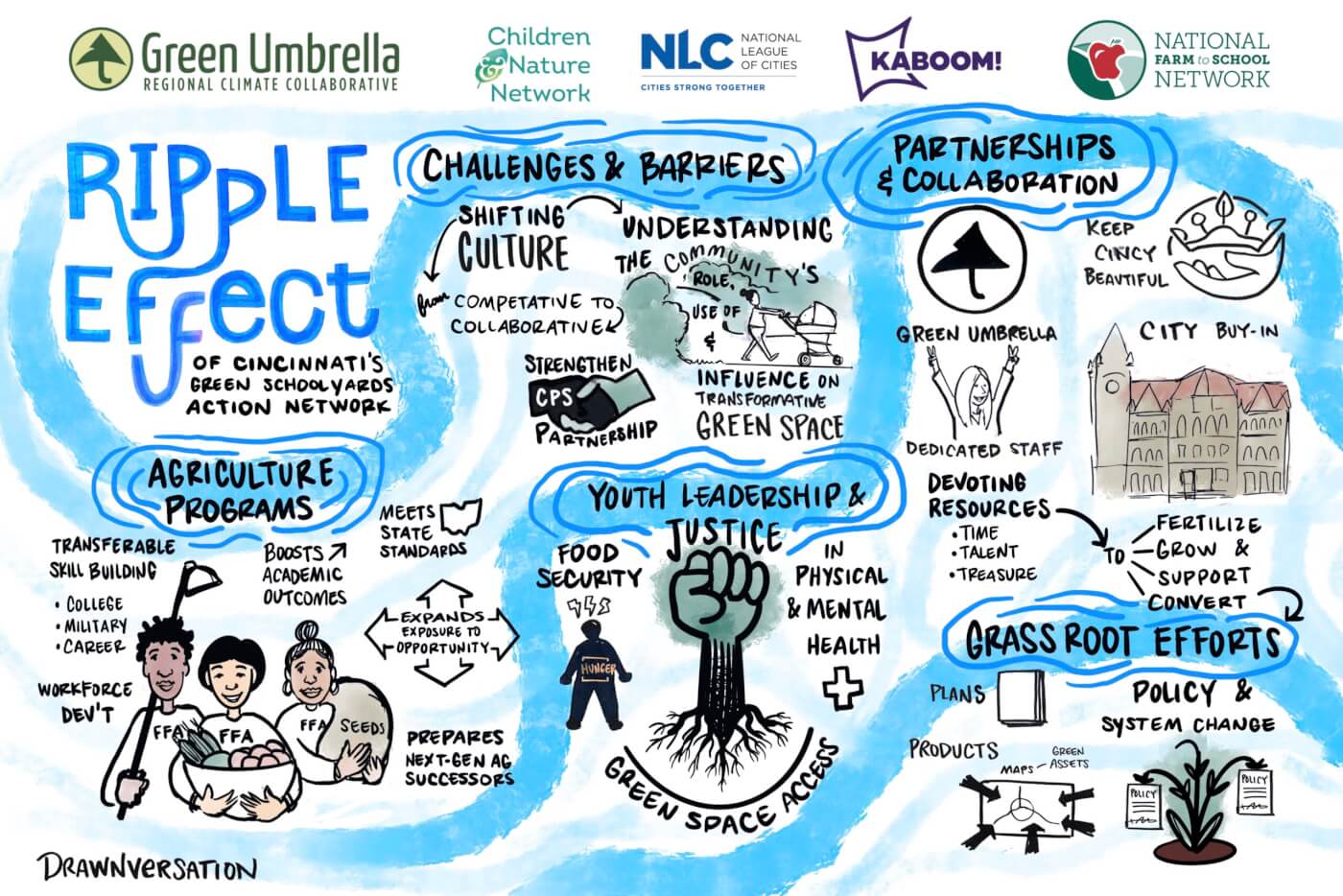
During the Ripple Effects Mapping process, partners from different sectors in Cincinnati discussed the impact of their shared efforts.
The GSAN recently completed Ripple Effects Mapping as part of the Nature Everywhere Communities evaluation process to understand these successes. This participatory evaluation process revealed that the Green Schoolyards Action Network — like Cincinnati’s “5-Way Chili”— leveraged five key ingredients:
- Strengthening partnerships and collaboration
- Transforming policy and practice in Cincinnati Public Schools
- Driving academic success and workforce development through agriculture programs
- Centering justice and youth leadership in programs and green spaces
- Growing grassroots efforts into city-wide policy and planning
Strengthening partnerships and collaboration
The first theme that emerged from Ripple Effect Mapping was that the Green Schoolyards Action Network’s success has stemmed from its multi-sector collaborative partnerships. Establishing the GSAN not only strengthened the relationship between the City and school board, who are “now moving lock-in-step together,” it also extended a long-standing initiative into a formal partnership with more than 30 organizations.
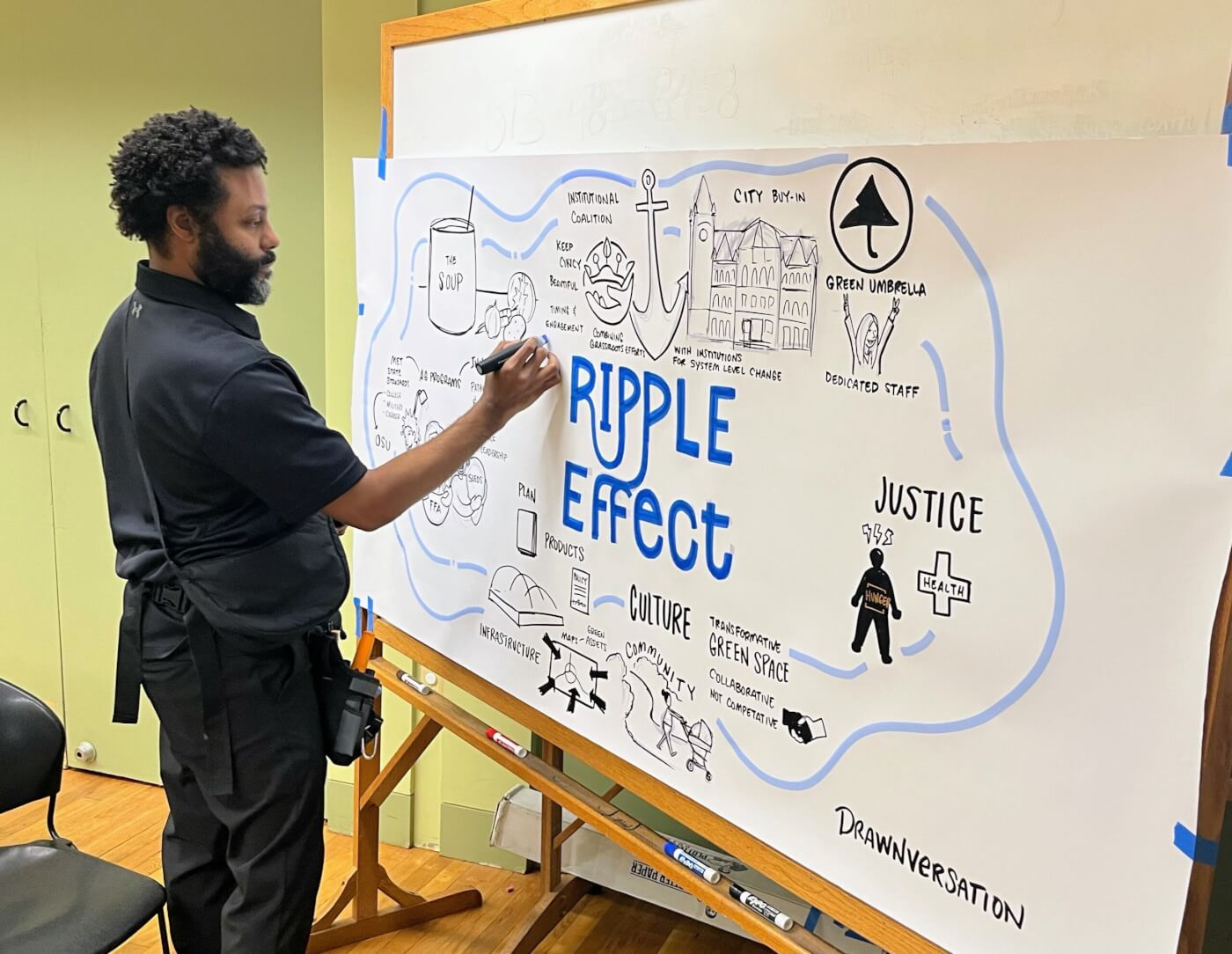
Drawnversation visual artist Brandon Black captures the ripples during the Ripple Effects Mapping meeting. GSAN wanted a visual representation of the ways their work has impacted the community as a whole.
Buoyed by a broad network of cross-sector partners, the green schoolyards initiative now goes beyond installing green spaces. Convened by Greater Cincinnati’s Green Umbrella Regional Climate Collaborative, the GSAN has connected green schoolyards to regional climate action initiatives, sustainable infrastructure, school wellness, green workforce development, and agricultural-based career and technical education pathways for CPS students.
This collaboration has overcome silos to create action. For example, partners created a green assets map to share data on outdoor learning spaces, school gardens, orchards and tree canopy to inform local decision-making, identify gaps and plan joint initiatives to connect schools, parks and recreation centers across the metropolitan area. Partner organizations have also come together to solve logistical problems and to raise more than $1 million in new funding.
With this collaborative structure, partners are excited to solve problems, collectively manage assets and collaborate on shared grants with a “shared understanding that we cannot do this alone.”
Transforming policy and practice in Cincinnati Public Schools
At the same time, Cincinnati Public Schools has shifted from scattered, school-by-school approaches to system-wide changes at the district level. CPS is not only developing green spaces but also embedding environmental education into K-12 curriculum and providing teacher learning modules to support district-wide implementation of outdoor teaching and learning.
Green schoolyards are now embedded in the school district’s wellness policies and sustainability plan. They also house their career and technical education program in agriculture and a successful farm-to-school program — where CPS Dining Services sources 20–24% of its food from campus farms and gardens, particularly the student-run farm at Aiken High School.
CPS agricultural pathways
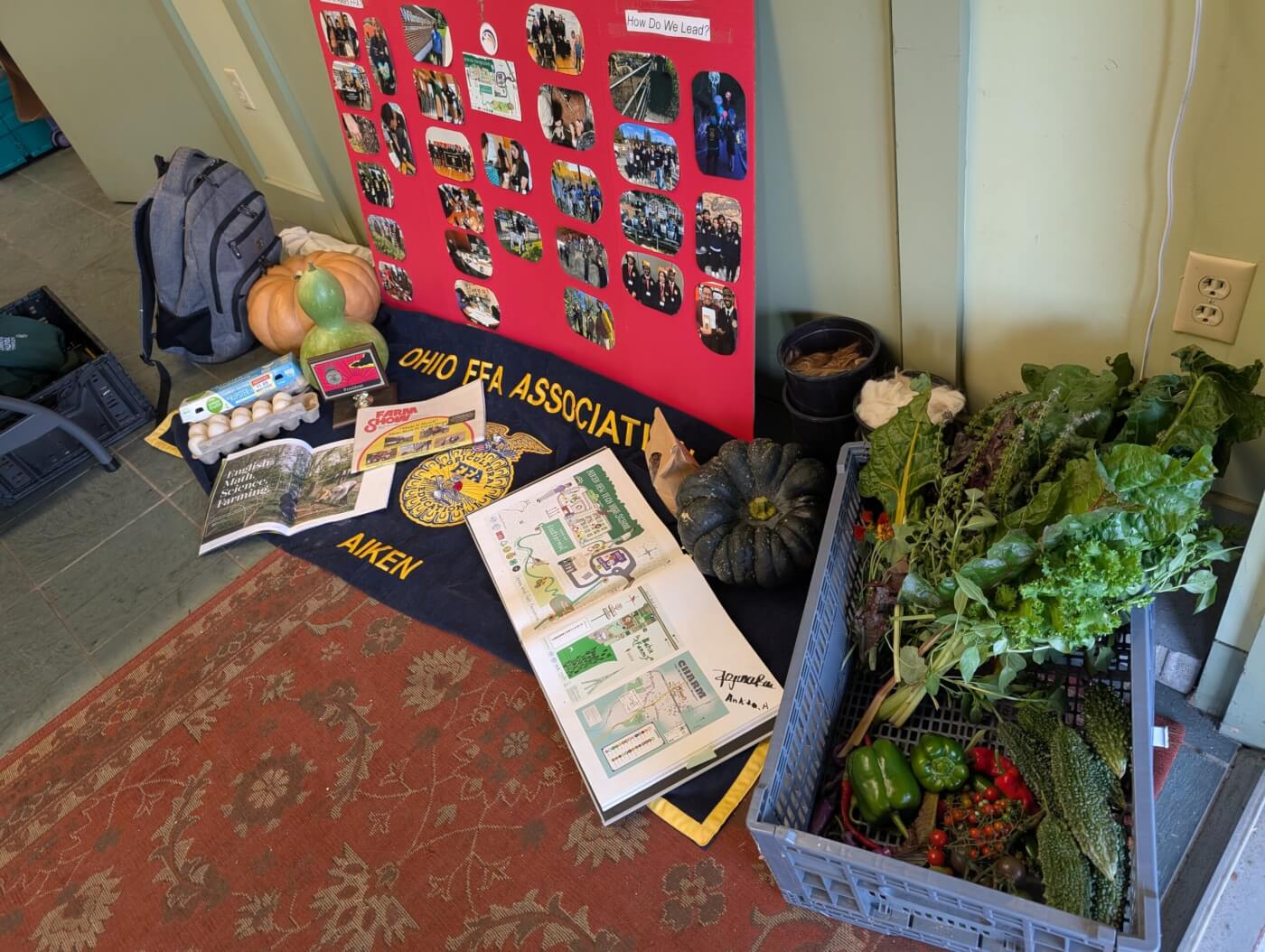
Ohio FFA Association at Aiken High School is one of the nonprofit partners collaborating on the agricultural and workforce development programs at Cincinnati Public Schools. FFA students brought their produce to the Ripple Effects Mapping session, showcasing the quality of their produce with the Green Schoolyard Action Network partners.
Aiken farm grew out of the GSAN’s green schoolyards partnerships. High school students helped transform an after-school garden club into a working farm on the campus of Aiken High School. The farm houses an agricultural career track focused on green workplace learning opportunities. Here, high school students plant trees for air quality, test water quality, manage the farm and sell local produce to the school district and local community.
The agriculture pathway is one of the fastest-growing workforce programs in the school district. CPS also credits this program for the district meeting state standards for career, college, and military readiness for the first time.
Centering justice and youth leadership
Educators and students explained that the agriculture pathway also increases equity by directing programs to kids who will benefit most, providing vocational track students a high-skill pathway that “non-Ag” students see every day.
The farm has also increased access to food in a neighborhood without access to a grocery store. The community can purchase fresh produce from the farm and also access its grounds to enjoy the health benefits of nearby nature: “We did not expect to see so many community members visit and use our Aiken Garden for food, animal interactions, and hiking through our prairie and woods.”
The CSAN’s work has addressed environmental justice and community health more broadly, including a partnership with La Soupe, where students and community members learn what to do with surplus food and get it to people who can use it.
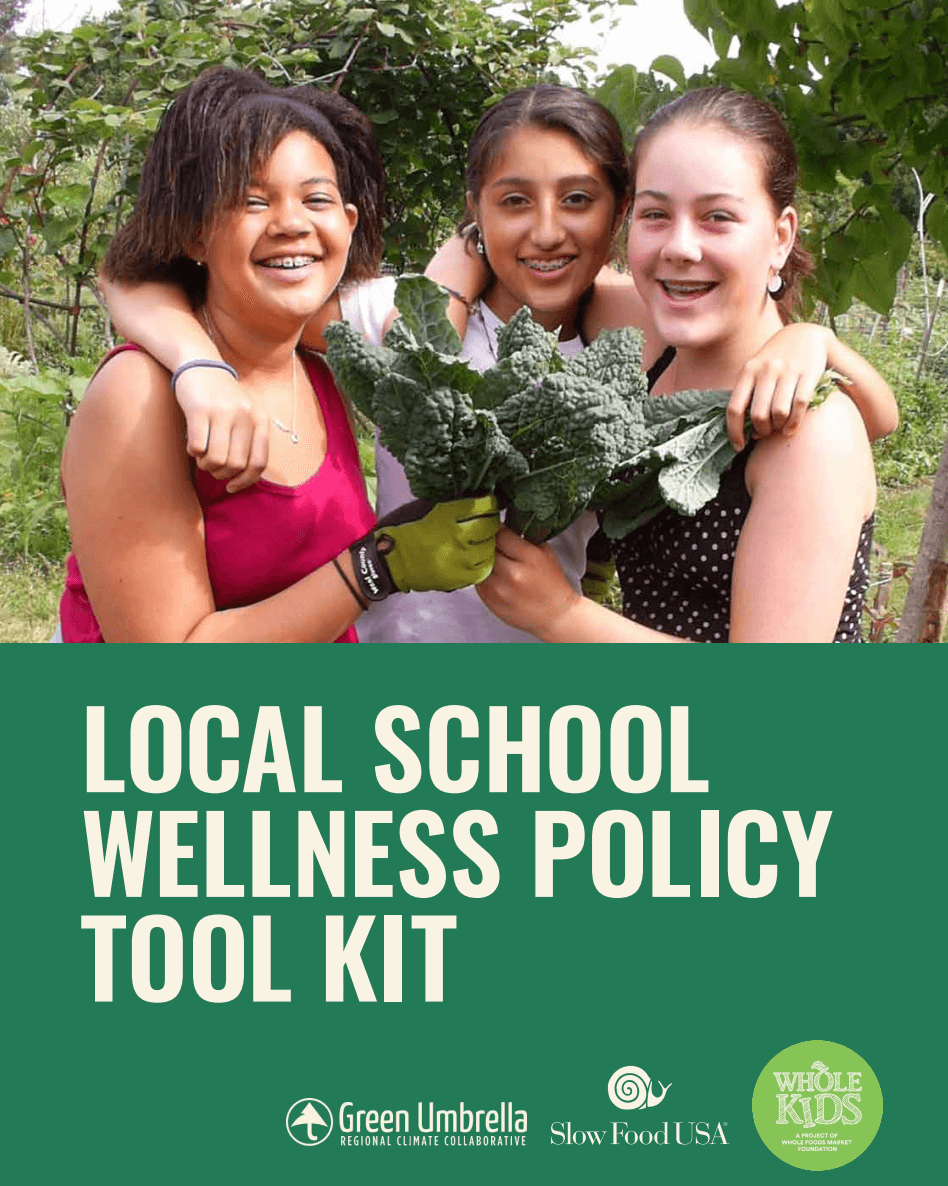
Green Schoolyards Action Network, in partnership with Slow Food USA and Whole Kids, developed a playbook to create a customized school district policy to support nutritious food security, disease prevention, physical activity, environmental stewardship, and mental wellness while creating a culture of care.
Growing grassroots efforts into city-wide policy and planning
Finally, the GSAN has established institutional linkages to align the school district’s green schoolyards initiatives with a range of strategic plans, policies, and practices across the city and greater Cincinnati region. Aligning the CPS agricultural pathway with the state’s career and technical education requirements and the city’s green workforce goals has secured broader political support to expand green schoolyards.
The strategic alignment of the CPS Sustainability Plan with the Green Cincinnati Plan also created the institutional framework necessary to secure funding and develop green infrastructure, resulting in tangible progress toward the goal of “100% schools have safe and accessible outdoor learning spaces.”
These local partnerships ultimately culminated in the City Council passing the Children’s Outdoor Bill of Rights in 2024, affirming nature access as a right for every child.
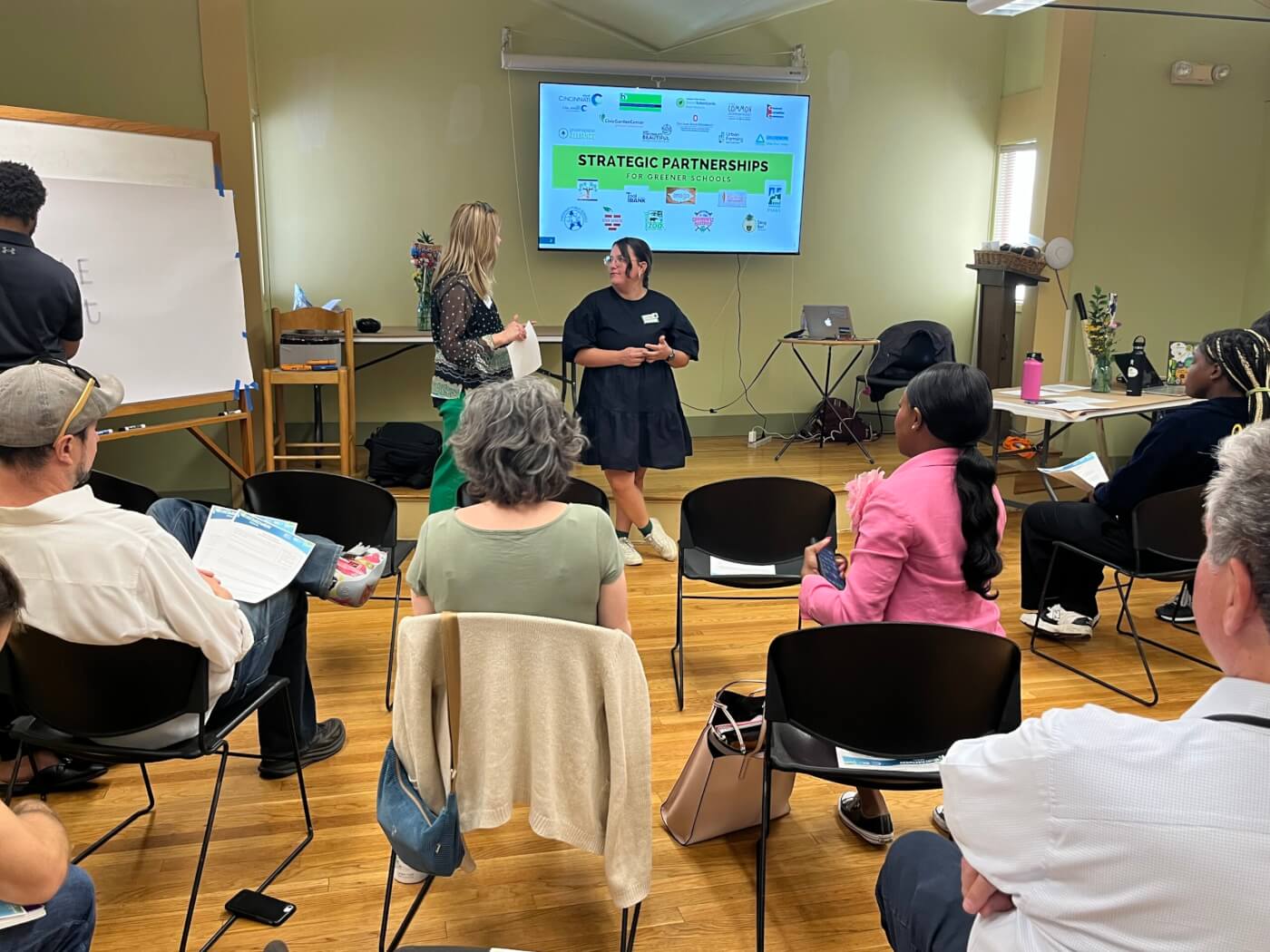
The steering committee for the Green Schoolyards Action Network, the Strategic Partnership for Green Schools, focuses on aligning city, school district and community strategic plans to ensure all Cincinnati Public School students and educators are connected to the benefits of outdoor teaching and learning. The Ripple Effects Mapping process demonstrated the essential role that this alignment played in the success of Cincinnati’s efforts.
Overcoming challenges to create systems change
Systems change takes time. Fortunately, Cincinnati’s extended participation in national initiatives to grow the children and nature movement has allowed the Green Schoolyards Action Network to overcome challenges and effect change at the structural, relational and transformational levels, including:
- Relational change: Establishing a formal network of reciprocal partnerships has encouraged resource sharing, shared funding, and cross-organizational relationships that overcome silos to get things done.
- Structural change: The GSAN has institutionalized multi-level support for green schoolyards by aligning them with the school district’s strategic plans, the city’s sustainable infrastructure and green workforce development plans, regional climate action initiatives and the state’s career and technical education requirements.
- Transformational change: The GSAN’s successes have shifted perceptions of outdoor education from an extracurricular add-on to a core part of education, and helped environmental organizations collaborate rather than compete for resources and partnerships with local schools.
In Cincinnati’s case, green schoolyards offered a strategic approach for creating more equitable access to nature for children while also advancing sustainable infrastructure and green workforce development. Other cities might learn from the successes of the GSAN’s robust partnerships to increase children’s access to nature everywhere they live, learn and play.
- Ripple Effects Mapping of Cincinnati’s Green Schoolyards Action Network (full report)
- Nature Everywhere Evaluation Executive Summary
- Nature Everywhere Communities Explore Resources
- Green Schoolyards Action Agenda
- Green Schoolyards for Healthy Communities Resources
- Green Umbrella Regional Climate Collaborative – Green Schoolyards Action Network
-
Richard Louv
THE "VITAMIN N" PRESCRIPTION - Some health professionals now recommending nature time for children and adults
-
Feature
A decade of ripples: What Nature Everywhere Communities reveal about systems change
-
Feature
Crossing invisible boundaries in the outdoors: A Q+A with Mason Branstrator
-
Feature
Forest bathing: Educators need nature connections, too
-
Feature
A future full of promise: Nature in early childhood