


Leave No Trace with little ones: Teaching kids outdoor ethics

You may have heard about the Leave No Trace movement, but what does it mean to “Leave No Trace”? Is that even possible when you have kids in tow? The answer is yes, sort of.
The mission of Leave No Trace is to educate and inspire everyone to protect the outdoors by teaching people to enjoy the outdoors responsibly. It isn’t about leaving zero trace; it’s about reducing our environmental impacts whenever possible.
That may seem daunting when attempting to wrangle a toddler on a trail, but we are here to help! We have listed each principle below, along with some tips and tricks for following them when you have little ones in tow.
Principle 1: Plan Ahead and Prepare – Know Before You Go
Getting lost on the trail or caught in a storm while hiking can be a stressful experience. Add a few little ones to the equation, and things can get downright harrowing. While these experiences aren’t always avoidable (like an unexpected rainstorm), planning ahead can help you avoid most of these stressful experiences.
Here are some tips to involve your kiddos in this step:
- Have your kids check the weather forecast with you and help them decide what clothing they should wear.
- Look at a trail map with your kiddos (a paper map, an online map or a phone app) and decide which route you want to take.
- If they are old enough, let them pick out their own snacks to bring along.
- Older kiddos can pack their own adventure pack to take along with things like a snack, water and adventure tools (like a journal and a pocket microscope).
Principle 2: Travel and Camp on Durable Surfaces – Stay on the Trail
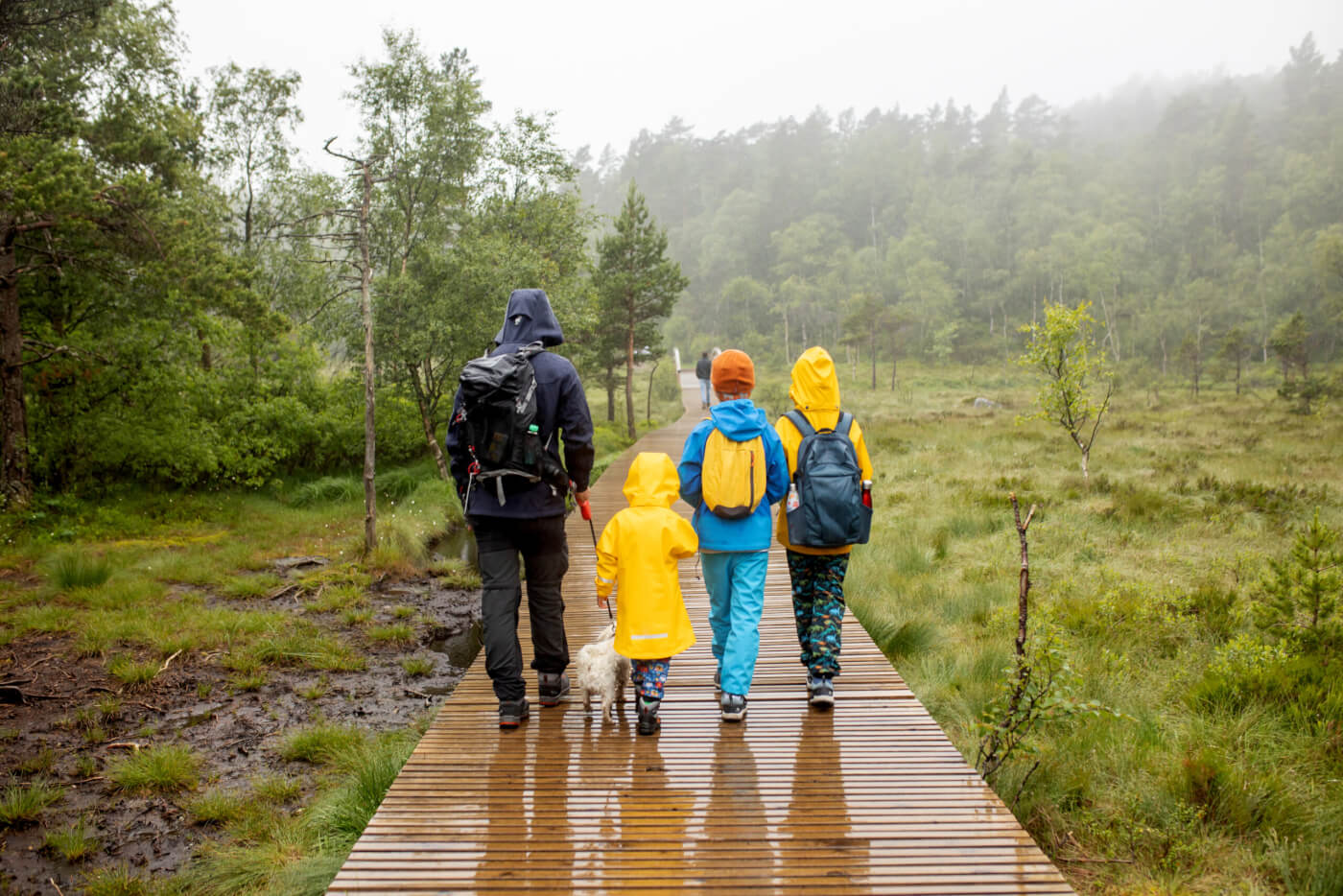
Keeping kiddos on the trail can be challenging. They are natural explorers and want to investigate every little thing they discover. However, exploring off trail can lead to trampled vegetation, increased erosion and damaged animal habitats. Try to stay on durable surfaces, which means established trails and campsites, as well as other areas with rock, sand, gravel, snow or dry grass. If you need to go off-trail (like for potty breaks that just can’t wait), seek out these durable surfaces whenever possible, walk lightly, and avoid walking on vegetation as much as possible.
Here are some tips for keeping kiddos on the trail and decreasing your impact on the trail:
- Take a potty break when you get to the trail to reduce the number of off-trail excursions.
- Play silly games with kiddos with the primary goal of staying on the trail. For example, you can pretend that the vegetation on either side of the trail is lava, and they have to stay as close to the trail’s center as possible to avoid the heat.
- You can also play the “ninja game” (sometimes referred to as “secret spy”), in which kids have to step as lightly and quietly as possible and disturb as little as possible to avoid “detection.”
- Have a conversation with your kids about what happens when many people go off-trail. Point out signs of erosion and destroyed vegetation along the trail.
Principle 3: Dispose of Waste Properly – Pack it in, Pack it Out
Kids are messy creatures. Aside from their affinity for mud puddles, there are also spilled snacks and the occasional diaper explosion. It’s a good thing to remember that anything that wasn’t found in nature (like the mud) should be packed out. This includes spilled snacks. It may seem harmless, but those snacks usually end up in the stomachs of wildlife. This can lead to illness (I doubt any animals have fishy crackers as part of their natural diet) and increased dependency on humans. Once animals depend more on humans, they lose their fear of humans, which can be dangerous for them and us.
Here are some tips for disposing of waste properly with kiddos in tow:
- Always have a bag on hand to collect your trash (and any other trash you may find) along the way. This could be as simple as a plastic grocery bag or a specific reusable trash bag.
- Whenever you stop for a snack or meal break, have everyone use their “owl eyes” to find any trash left behind before heading back out.
Principle 4: Leave What You Find
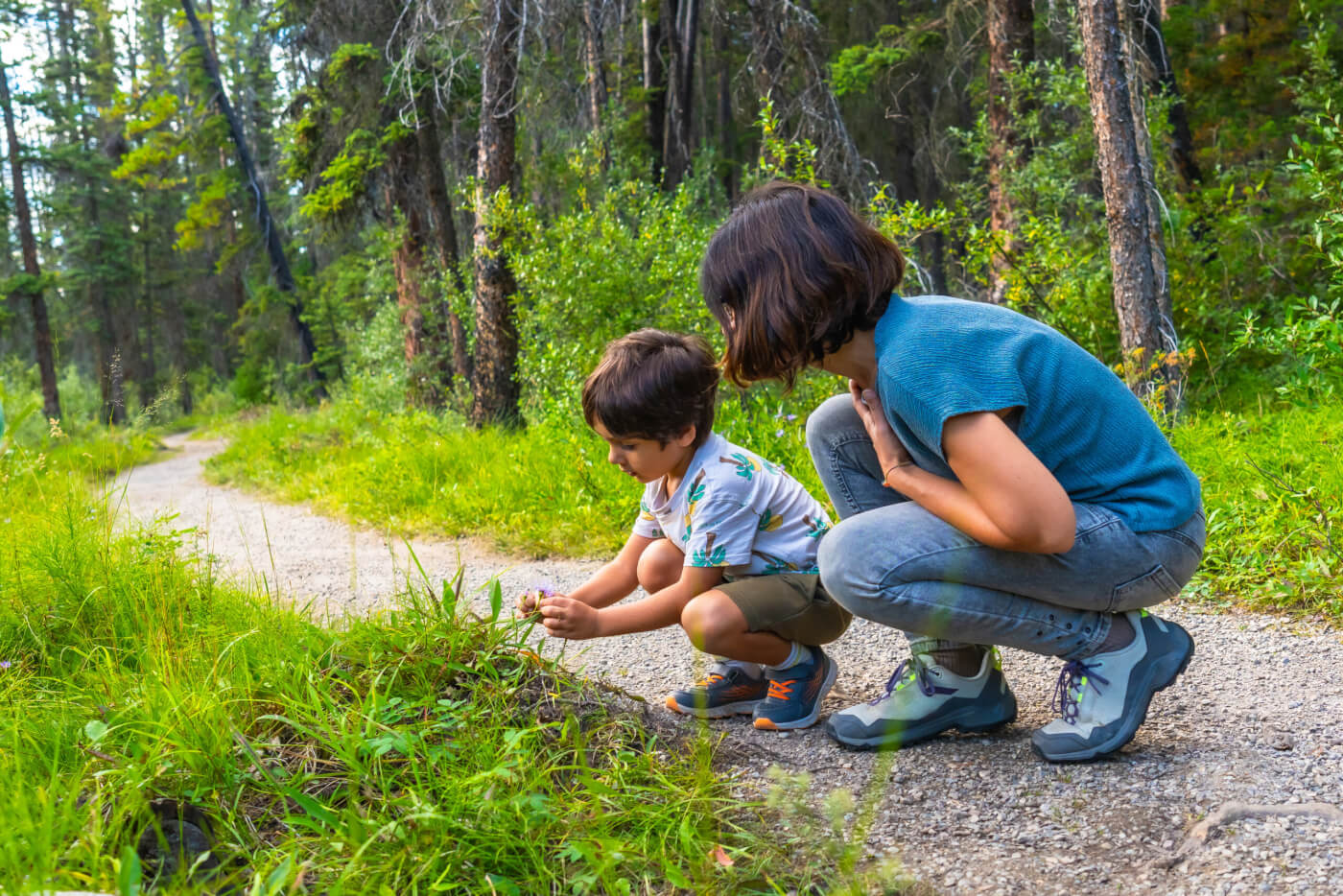
This is another tricky principle to follow with little ones. Especially if you have a rock collector like I do! While taking natural objects, picking flowers, carving on trees, and nabbing other treasures may seem harmless, it can damage the ecosystem, especially when a lot of people are doing it. Rocks, sticks, flowers and even pine cones serve as shelter and food sources for various organisms. If the plant you pick is invasive to the area, you could inadvertently spread the species as you transport it. That being said, you don’t want to stifle the curiosity of a budding geologist or botanist.
Here are some tips and alternatives for keeping your nature collector happy while leaving nature in nature (or at least most of it):
- Use “do” language to help little ones understand how to interact with nature. Use statements like, “Let’s be nice with the flowers” or, “Touch softly.”
- Encourage your kiddos to use their senses to experience the object IN nature. For example, let them take a few minutes to feel, see and even smell the object. You can talk about it and then have them replace the object where they found it.
- Take along some paper and crayons so they can do some leaf or bark rubbings.
- Have them draw a picture or take a photo of the object.
- When all else fails, allow them to choose one or two favorite nature finds to take home and replace the rest where they found them.
Principle 5: Minimize Campfire Impacts
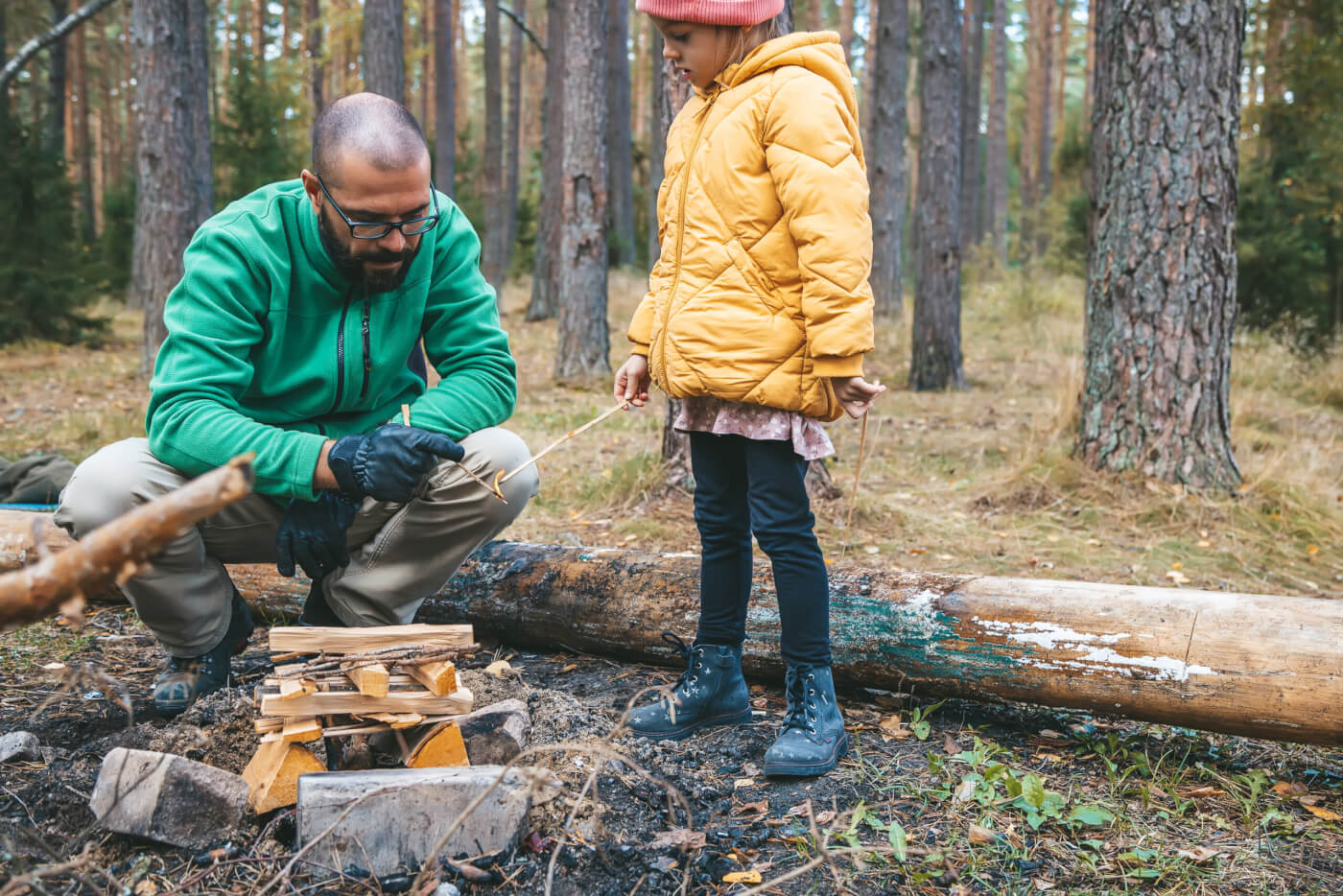
Improperly tended campfires are one of the leading unnatural causes of wildfires. If you are camping, be sure you know the current local regulations on fire, and seek out established fire rings when possible. If you need to gather wood, use dead and downed wood that is no larger than the diameter of your wrist and can be broken easily by hand. When leaving, douse the fire with water until it’s cool to the touch. A better alternative would be to use a camp stove for heat and cooking, or a simple lantern for light.
Here are a few tips for minimizing campfire impacts with kiddos:
- Keep flammable objects far away and out of reach from curious hands, and don’t allow kids to play with sticks near the fire.
- Have children help collect firewood. You can make it a game to see who can be the first to find five pieces of dry, downed firewood no larger than the diameter of their wrist.
Principle 6: Respect Wildlife
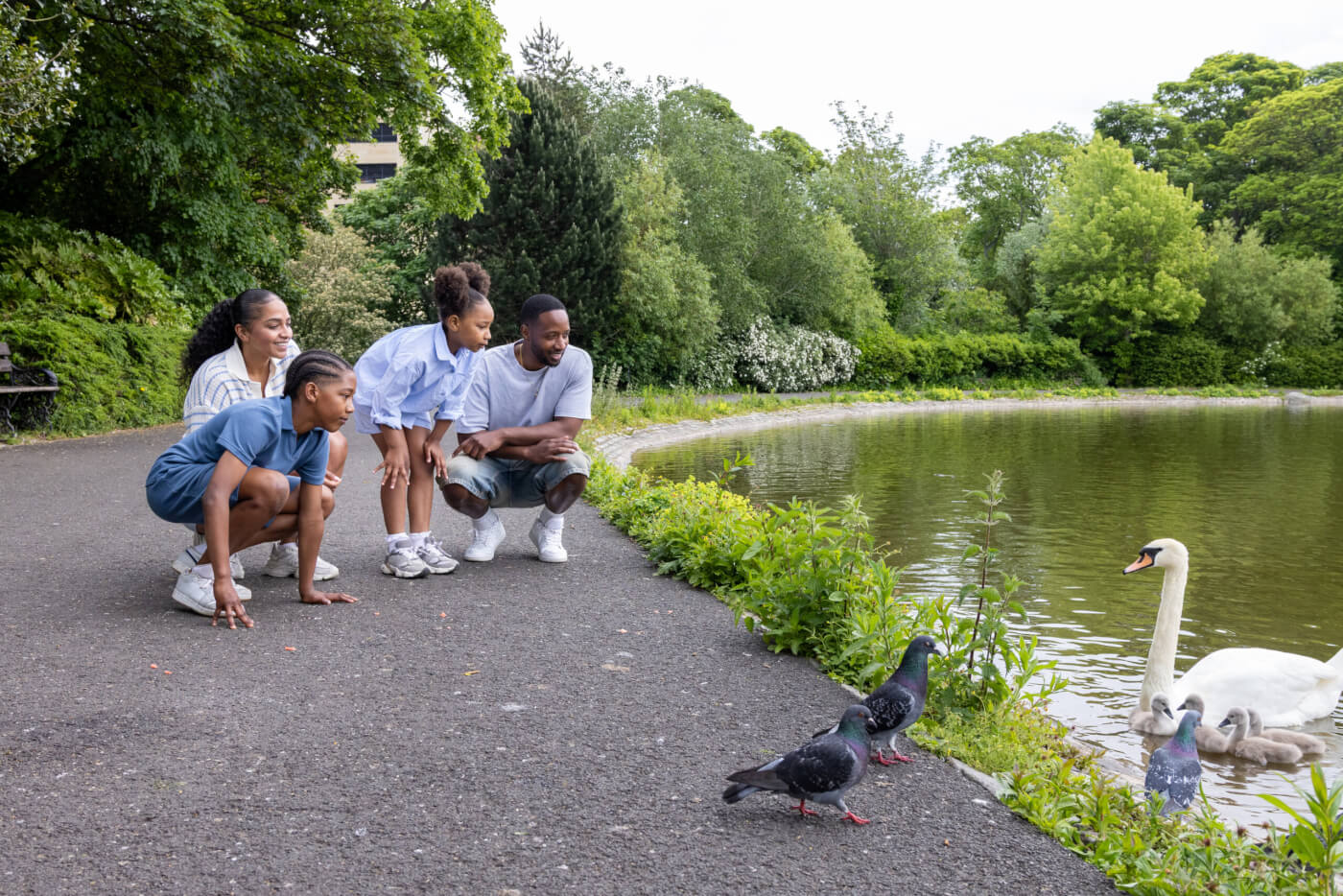
Observing animals in the wild is fascinating for both adults and kids alike. Whether you see a deer dash across the trail ahead of you or a woodpecker busily searching for food, there’s just something awe-inspiring about watching wildlife. To keep having these encounters safely, we need to teach our little ones how to respect wildlife. That means keeping a safe distance, never feeding wild animals, and storing food and odorous objects securely while camping.
Here are some tips for teaching our kiddos to respect the animals they encounter on their outdoor adventures and to keep the wildlife wild:
- To help young ones understand what it means to keep a “safe distance,” have them stand with an arm raised to shoulder height with their thumb pointing up. Then have them look at the animal with one eye closed and try to cover it with their thumb. If they are a safe distance away, their thumb should completely block sight of the animal.
- Remind your kids that insects are wildlife too, and we need to be careful not to harm them. We can admire an intricate spider web or a long line of ants without destroying what we find.
- Bring along some adventure items such as binoculars and a magnifying glass so that kiddos can observe wildlife safely.
- Contrary to popular belief, bird feeders can follow the Leave No Trace Principles IF they follow the Audubon Society Guidelines. These guidelines include avoiding seed mixtures and cleaning the bird feeders at least every season. If you want to attract a variety of bird species, it is best to have different bird feeders at different heights with different types of seed/food in each of them.
Principle 7: Be Considerate of Other Visitors
Respecting other people you meet on the trail helps ensure that all can enjoy nature. Modeling and encouraging behaviors — such as staying to the right on the trail to let others pass, or taking breaks on durable surfaces away from the trail — can go a long way to preserving the experience for other visitors. Other good practices include avoiding talking on cell phones or making excessively loud noises while on the trail (when possible).
Here are a few tips we use to encourage being kind to others on the trail:
- If your kids are like mine, they like to pretend to be wild animals when they are on the trail (particularly howling wolves). This can get extremely noisy, so I started challenging them to be quieter animals, such as a bunny or squirrel, or to pretend that they are sneaking around like a cheetah.
- Practice “moving to the right” with your kids while on the trail or on a neighborhood walk. When you practice ahead of time, it can avoid confusion when you ask them to move to the right to let other people or cyclists pass on the trail.
Have fun!
It is important to note that these principles are GUIDELINES, not strict rules. As parents, we know that it is extremely unlikely that we will be perfect at following these principles all the time, and that’s okay! The point is not to strive for perfection all the time. The goal is to decrease our impact on the environment whenever and wherever possible, and to teach our children to do the same. The tips above can help your family make fewer environmental impacts. You can also check out these other fun resources (below) from Leave No Trace to help your kiddos understand the impact their actions can make on the environment.
Fun resources from our friends at Leave No Trace:
- Learn the Leave No Trace Hand Motions to help kiddos remember the 7 Principles.
- Check out the Leave No Trace and Bigfoot Activity Booklet for some fun educational activities for older kids.
- Explore this free Online Awareness Course for parents and caregivers who want to learn more about Leave No Trace.
How do you practice the Leave No Trace Principles with your family? Let us know in the comments below!
This article was authored by Rebecca Hosley, originally published December 2023 by OutGrown. Learn more about OutGrown in the OutGrown toolkit.
Leave No Trace Hand Motions to help kiddos remember the 7 LNT Principles
Leave No Trace and Bigfoot Activity Booklet for fun educational activities for older kids
Free Leave No Trace 101 Course for an introduction to LNT
10 Ways to squeeze nature into your busy schedule
Simple, quick and easy outdoor activities for infants
-
RICHARD LOUV
Outdoors for All: Access to Nature is a Human Right
-
Feature
Waukegan, Illinois: Building a future where nature is for everyone
-
Feature
7 Ways communities can create lasting impact for children and nature
-
Feature
“Noticing” — An excerpt from Richard Louv’s new book, with a conversation between Louv and Ron Swaisgood
-
Voices
Returning to free play through a nature-based approach
