

A future full of promise: Nature in early childhood

In Louisville, Kentucky, a traveling box truck pulls into neighborhoods carrying mud kitchens, loose parts, and natural musical instruments. Children spill out of nearby homes and child care centers, eager to get their hands in the dirt, to bang on wooden chimes, to experiment and explore. “Cradle-to-career nature access” is not just a slogan here. It’s visible in motion.
In Boise, Idaho, young learners now have access to a city-run outdoor preschool and an urban garden school, both offering flexible schedules and affordable tuition. And in Los Angeles, bond funding is transforming the outdoor environments of 88 early childhood centers across the Los Angeles Unified School District, with more than two dozen already completed.
These snapshots reveal a movement taking shape across the country. Communities are beginning to recognize that nature is not simply a backdrop for childhood, but a critical ingredient for healthy development. Research has long shown that the first five years of life lay the groundwork for lifelong health, learning and emotional well-being. Yet too many children spend those years indoors, disconnected from the natural world.
However, a shift is underway: communities and caregivers are realizing that access to nature in the early years isn’t optional. It’s foundational. And the Children & Nature Network is committed to supporting this momentum by helping communities embed nature into the very systems that shape early childhood, ensuring that every child has the chance to grow, thrive and learn in connection with the natural world.
What it takes to create lasting change
Maria Durana/SF Children & Nature
As city agencies, early childhood educators and families look for ways to counter rising screen time, sedentary routines and limited outdoor play, the Children & Nature Network has seen a pattern emerge from more than a decade of work in collaboration with the National League of Cities and KABOOM!: lasting change requires layered, coordinated efforts that reach far beyond a single program or park renovation.
Community-led innovation
Maria Durana/SF Children & Nature
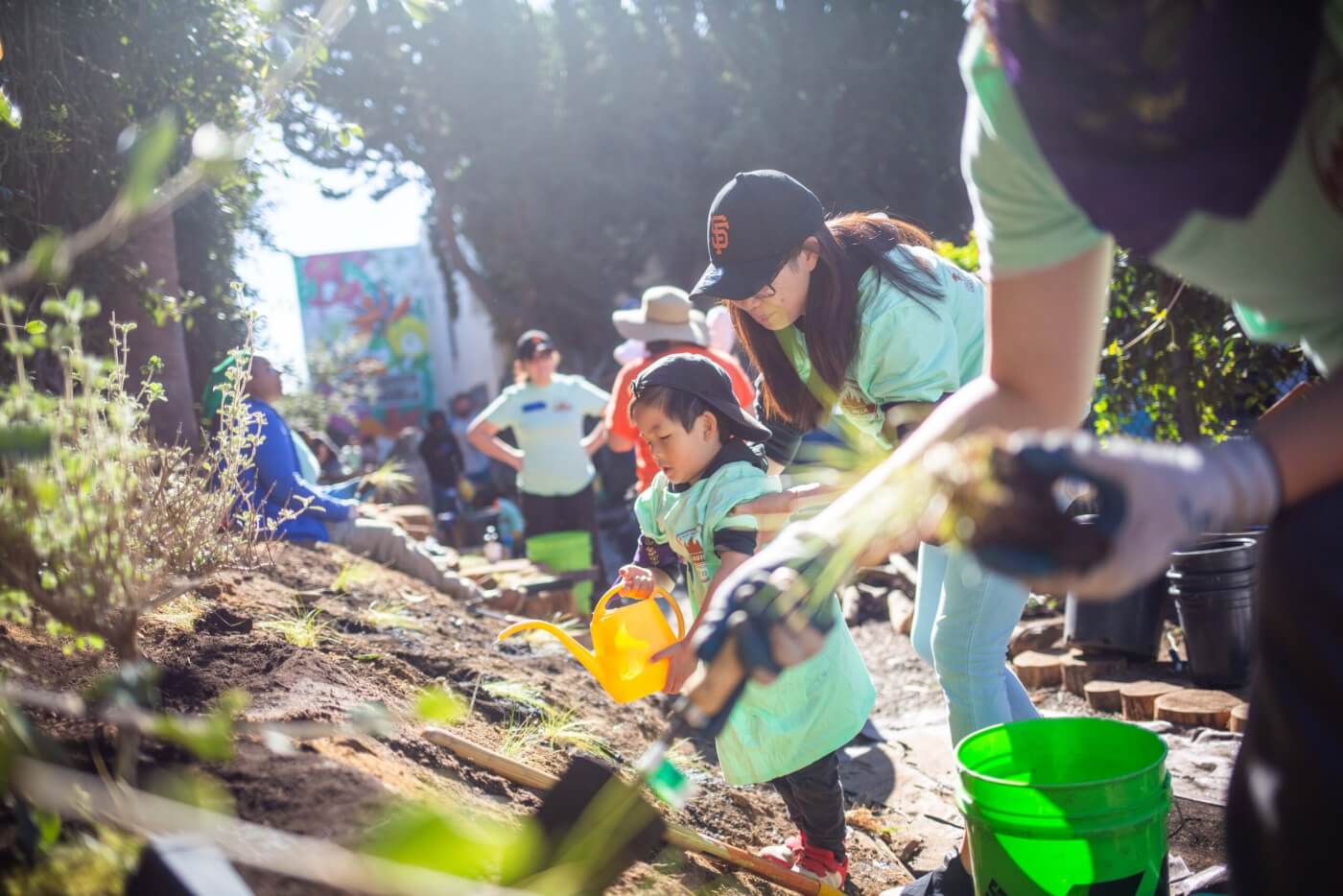
Change often begins with local visionaries: the child care center director who wants to redesign a barren yard, the parks department team experimenting with portable nature play kits, or the nonprofit leader rallying families to reclaim outdoor learning.
“When communities lead, solutions fit the culture, the landscape and the daily rhythms of families,” said Jennifer Salinas, program manager for the Children & Nature Network. “That local ownership is what makes early childhood nature access stick.”
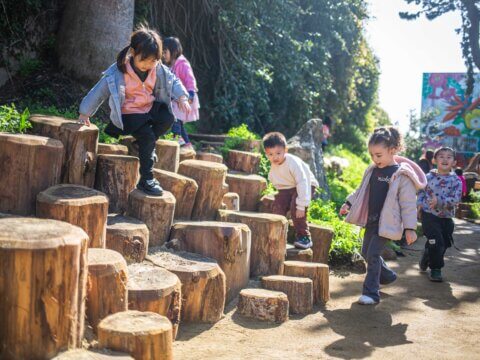
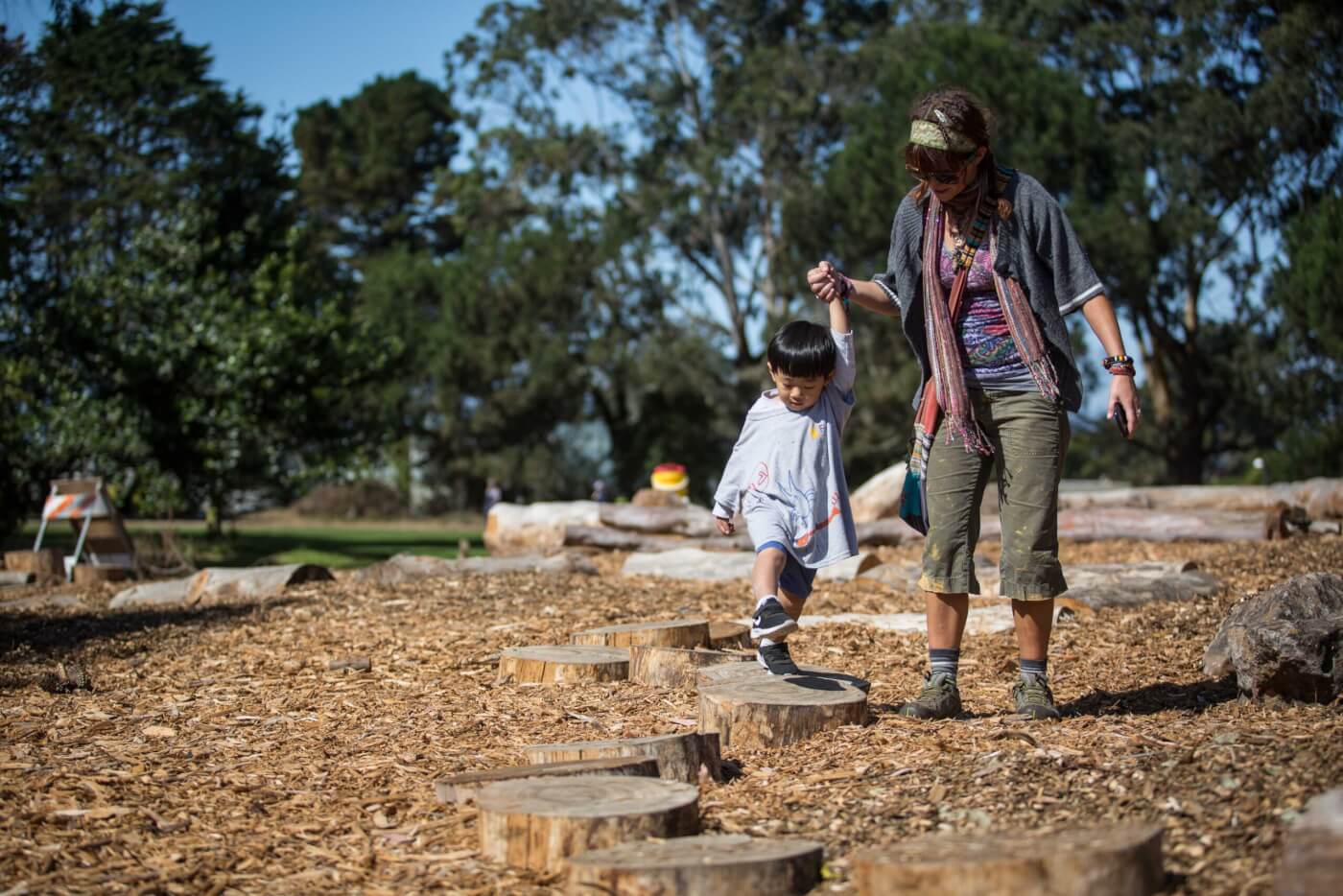
These community-driven approaches have taken many forms: turning underused outdoor areas into natural playscapes, embedding nature-based programming in libraries and family support centers, and developing neighborhood-specific strategies for reaching young children where they already spend their time.
Policies that open doors, and keep them open
Maria Durana/SF Children & Nature
While grassroots innovation sparks momentum, policies help sustain it. In 2024, the Children & Nature Network and the National League of Cities convened more than 40 organizations in Washington, D.C., launching the Outdoor and Nature-Based Early Care and Education Collaborative (ONB ECE). The aim was clear: identify the system levers that could move nature-based early childhood from isolated bright spots to widespread practice.
Policy conversations have zeroed in on issues like facilities and environments, prenatal-to-age-3 supports, and federal funding streams. These discussions lay the groundwork for state and national action. And, the ONB ECE Collaborative is working on ways to support policies that help communities advance these agendas.
“We can’t achieve equitable access to nature at scale without policy alignment,” said Andrew Moore, Director of Youth and Young Adult Connections at the National League of Cities. “Access increases when states and cities devote resources, public spaces and leadership attention.”
A skilled and supported workforce
Maria Durana/SF Children & Nature
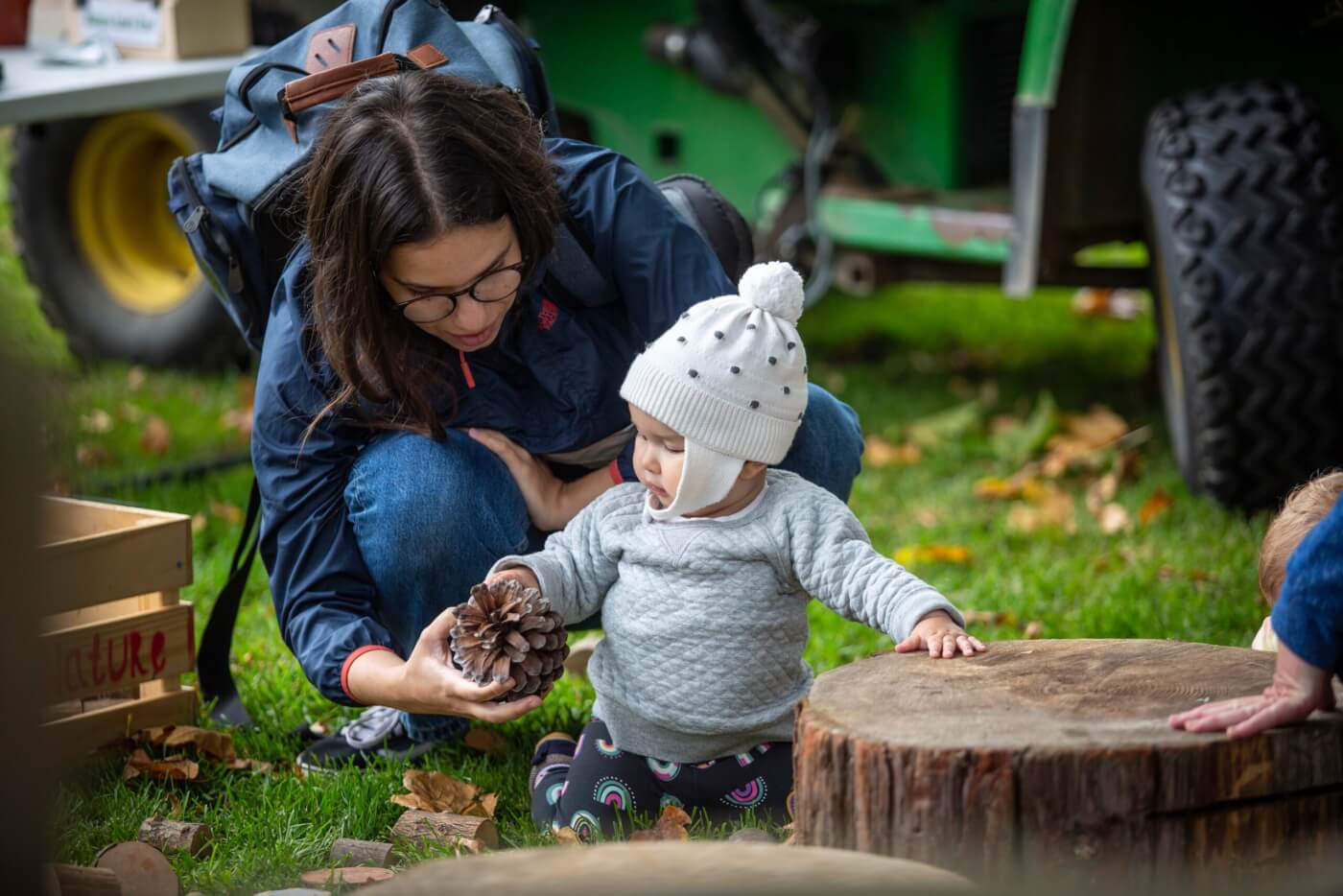
Early childhood educators are the bridge between nature-rich environments and meaningful learning experiences. Yet many have had little training or exposure to outdoor learning.
“Teachers tell us they love the idea of nature-based play but don’t always feel confident delivering it,” said Salinas. “When we invest in their skills and comfort, everything changes, for them and for the children.”
Communities are beginning to embrace multi-session professional development, train-the-trainer models, sector-specific coaching, and partnerships with higher education institutions. These deeper investments help educators build the confidence and pedagogical tools they need to take learning outdoors.
Public sector champions who see the bigger picture
Maria Durana/SF Children & Nature
City agencies, parks, early childhood offices, sustainability teams and public health departments often hold the keys to scaling success. When they understand nature’s developmental benefits, they can integrate it into their own policies, programs and capital planning.
This kind of alignment is already showing results. In Louisville, the “Louisville ECHO” partnership between Jefferson Memorial Forest, Louisville Parks & Recreation, and Wilderness Louisville, Inc. is working to ensure children encounter nature everywhere, from preschool classrooms to neighborhood green spaces.
“Public agencies bring staying power,” says Moore, who works to support city agencies and Mayoral offices. “When they’re on board, nature access becomes part of a community’s infrastructure.”
A new toolkit to support communities on the journey
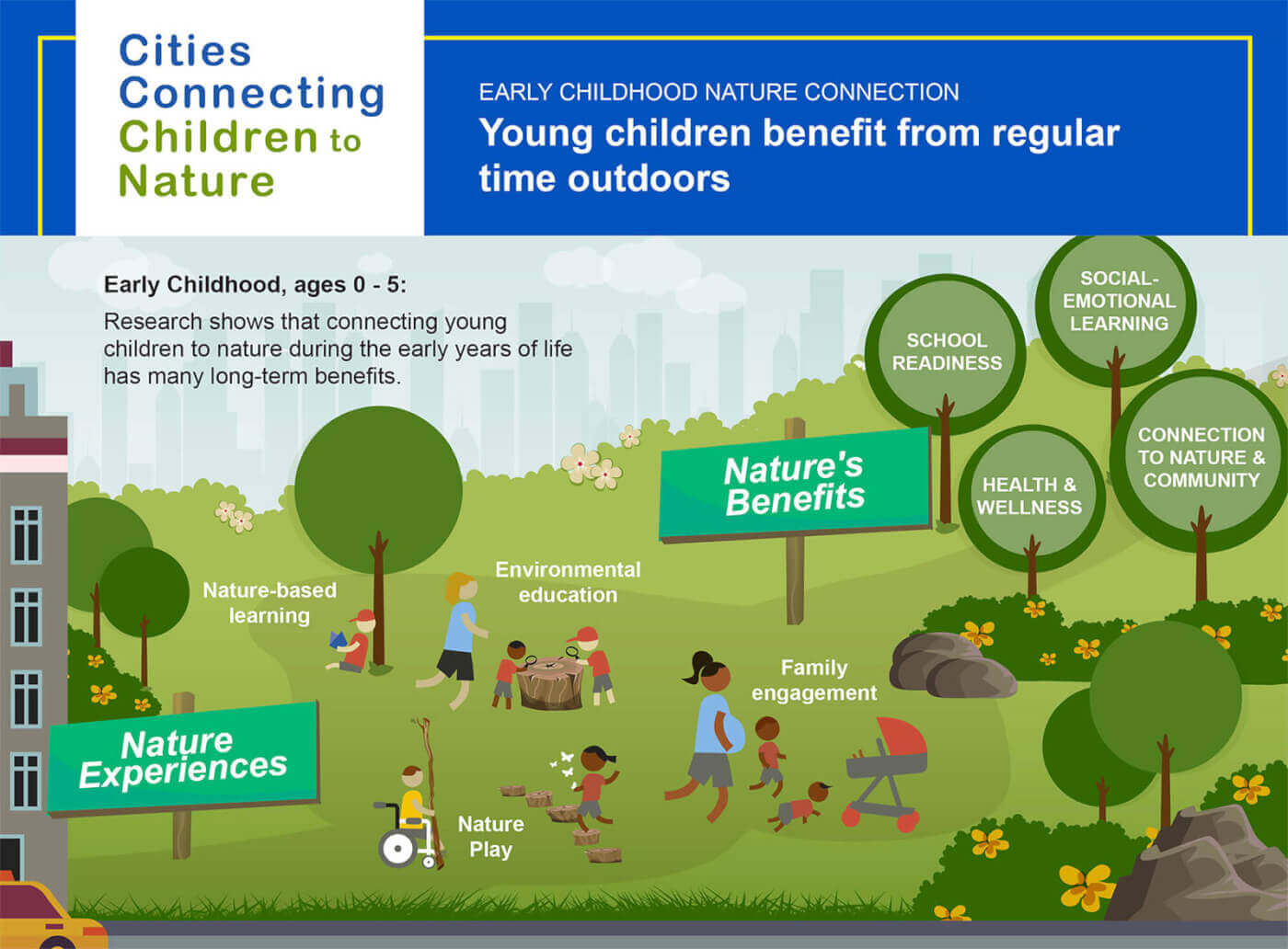
This infographic depicts the many benefits of nature during the foundational years of early childhood, ages 0 – 5.
To help communities understand how these forces work together, and how to act on them, Nature Everywhere Communities — a national initiative of the Children & Nature Network, the National League of Cities and KABOOM! — has developed the Nature in Early Childhood Toolkit. The resource offers case studies, policy examples, research summaries, strategies and real-world stories collected from communities at different stages of the journey.
The toolkit does not prescribe a single pathway. Instead, it illuminates what’s possible, showcasing examples of local programs, cross-sector collaborations, educator training innovations, and policy shifts that have opened new opportunities for young children.
“We created the toolkit because communities kept asking, ‘Where do we begin?’” said Vera Feeny, program manager for children and nature at the National League of Cities. “The answer is: begin where you are, and learn from others who have walked this path.”
Some of the toolkit expertise and learnings come from lessons learned during a two-year Community of Practice led by Feeny. Cities across the country received monthly support, including grant funding for equity maps and other technical assistance, to implement nature-based early childhood strategies.
Maria Durana/SF Children & Nature
“Across dozens of communities, most through the Nature Everywhere Communities initiative, we’ve observed four interconnected forces that seem to shape the conditions for success,” says David Beard, Director of Policy & Government Affairs. “We’re seeing that these cross-cutting elements lead communities to ensure that nature becomes a permanent part of early childhood, rather than a passing trend.”
While these aren’t formal steps or rigid processes, Beard and his colleagues at the Children & Nature Network see these elements as foundational pieces to the “underlying architecture of systems change.”
The toolkit brings together expertise and learnings that focus on more than a one-time intervention. Instead the approach builds long-term, self-sustaining nature access by working across four interconnected layers:
- Early childhood infrastructure, which includes adding nature to outdoor spaces in early childhood programs as well as building Nature Exploration Areas in parks and other public spaces.
- Programming and family or caregiver engagement, which looks at how communities can activate nature spaces through inclusive programming and family engagement efforts.
- Workforce capacity and professional development, which includes ensuring access to high-quality training, peer support and systems that recognize and value nature-based approaches.
- Public policy and funding which helps to amplify and sustain efforts and are essential to growth and sustainability.
In addition to these “four interconnected forces,” the toolkit also provides support with foundational steps that Nature Everywhere Communities has found essential for success of any project. These include adopting a systems change perspective, building cross-sector teams, assessing assets and gaps and setting clear visions and goals.
The future of our youngest nature stewards
Maria Durana/SF Children & Nature
“Over the last decade, through our work with 100 Nature Everywhere Communities, we’ve seen that systems change in early childhood is both complex and achievable,” said Beard. “We’ve seen that when community innovation, policy progress, workforce development and public-sector commitment align, a powerful transformation is possible.” Beard and his colleagues are betting on that combined approach to help ensure nature is embedded in early childhood systems across the country.
While the movement may still be young, much like the babies and toddlers it serves, its momentum is undeniable. More cities are investing in outdoor classrooms. More states are exploring nature-based early care and education policies. More educators are gaining the confidence to teach outdoors. And more families are seeing nature as central to their children’s well-being.
As this work grows, the Children & Nature Network envisions a future where nature-rich early childhood programs are accessible in every community, where policymakers recognize nature as a key driver of child development, and where young children begin their lives rooted in the natural world. It’s a future full of promise.
-
Richard Louv
VITAMIN N FOR THE SOUL: How Nature Can Nourish the Spirit of Children and Adults
-
Network News
Prescribe Outside: Progress moves at the speed of trust in Philadelphia
-
Voices
Nature to screens: How our built environment set the stage for the anxious generation
-
Feature
We’re all looking for the same moon
-
Feature
Forest bathing: Educators need nature connections, too