


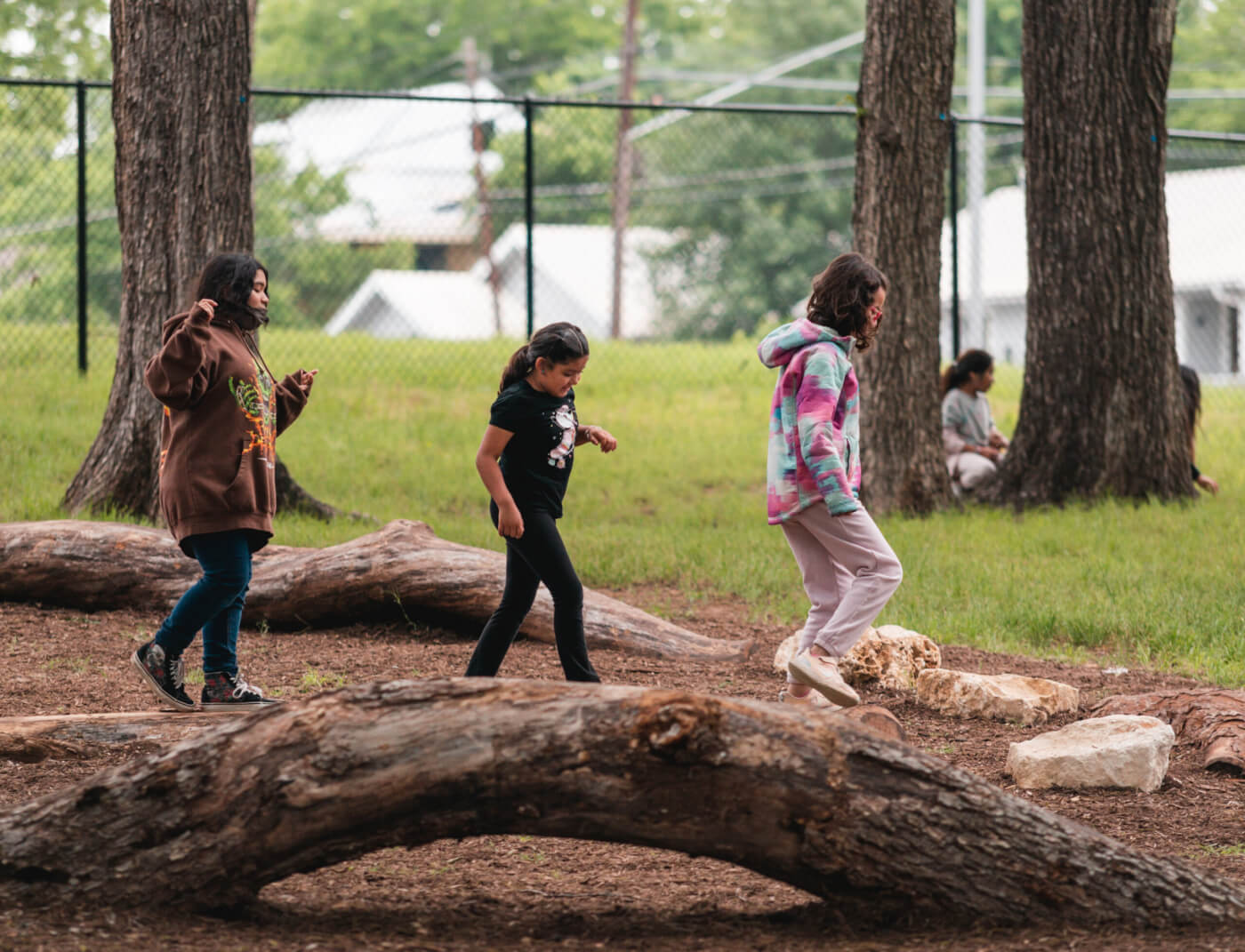
Green Schoolyards Action Agenda: A national roadmap for nature-rich school grounds

It can feel as though crises are everywhere we look: climate instability, youth mental health challenges, academic disparities and inequitable infrastructure. Moments like these demand attention to urgent needs, protecting safety, responding to harm and stabilizing communities.
But crises do not emerge in isolation; they arise from deeper systemic failures. As society addresses immediate impacts, we must also double down on shifting the conditions that perpetuate and exacerbate these harms. This is what we mean by “systems change.” It is not a single project, program or policy, nor the work of one organization. Systems change demands coordinated effort across sectors to alter policies, funding streams, practices and beliefs that shape daily reality for children.
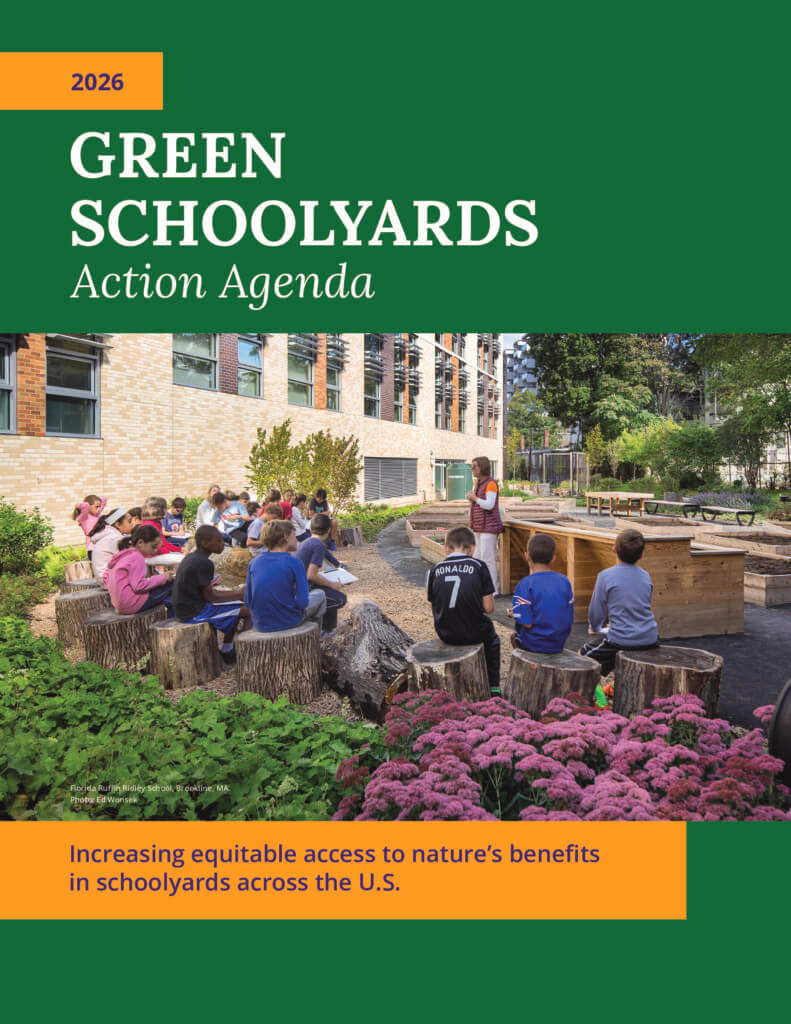
The Green Schoolyard Action Agenda encourages leaders to take actions in support of three overarching goals to ensure all students have access to green schoolyards by 2050.
This is what hundreds of individuals and organizations across the green schoolyards movement have set out to do through the Green Schoolyards Action Agenda, a national roadmap toward a bold and shared vision that by 2050, all U.S. school grounds will be green schoolyards.
Today’s convergence of climate volatility, youth mental health strain, and widening academic inequities demands integrated responses. Green schoolyards meet that standard. Championed by many names — community schoolyards, living schoolyards, blue-green schoolyards, or others — green schoolyards address a multitude of these issues. By designing school grounds as living, nature-rich community infrastructure, they can simultaneously strengthen learning, improve emotional well-being, reduce urban heat, manage stormwater, expand tree canopy, support biodiversity, strengthen hands-on learning, and deepen neighborhood connection.
The refreshed Green Schoolyards Action Agenda builds on the original 2017 version, which was shaped by national reports, summits and decades of leadership reconnecting children with nature. Facilitated by the Children & Nature Network in partnership with the Trust for Public Land and KABOOM!, the Action Agenda refresh engaged hundreds of leaders through advisory meetings, focus groups, surveys and interviews. Green schoolyards expansion and insights from Austin, Texas; Denver, Colorado; Boston, Massachusetts; Milwaukee, Wisconsin; Dearborn, Michigan; Chicago, Illinois; Philadelphia, Pennsylvania; Oakland and Los Angeles, California; Cincinnati, Ohio; Flagstaff, Arizona; and many other communities helped shape its direction.
The result is not theory. It is a field-tested roadmap grounded in hard-earned lessons from practitioners shifting policy, funding and practice across the country. This 2026 Action Agenda reflects learning, progress and the urgency to accelerate change.

In October, 2025, an advisory committee from across the movement came together to review and refresh the Green Schoolyards Action Agenda.
What we learned, and where we must act
The Action Agenda refresh process surfaced actions needing further emphasis in the agenda, such as:
- Advance climate-resilient schoolyards as essential community infrastructure. As temperatures rise and extreme weather intensifies, school grounds can cool neighborhoods, manage stormwater, expand tree canopy and support biodiversity. This is beyond beautification; it is protecting children who are particularly vulnerable to the harms of climate change.
- Elevate nature-based learning as a core academic strategy. Nature-rich environments support academic achievement, engagement, attendance directly, as well as behaviors that support learning. Outdoor learning must become a core part of educational pedagogy.
- Equip educators to lead this transformation. Green schoolyards reach their full potential only when educators are supported with professional development, aligned curriculum and systems-level backing to embed outdoor learning into daily practice.
The 2026 Action Agenda addresses these needs and others across three overarching goals:
- Strengthen cross-sector and community engagement to align districts, agencies, organizations, families and youth.
- Build and communicate a robust evidence base to demonstrate outcomes and secure sustained investment.
- Advance supportive policies and funding mechanisms so green schoolyards are embedded in standards, capital planning, climate strategies and education systems, not treated as optional add-ons.
Reaching a tipping point toward our shared vision for 2050 will take all of us.
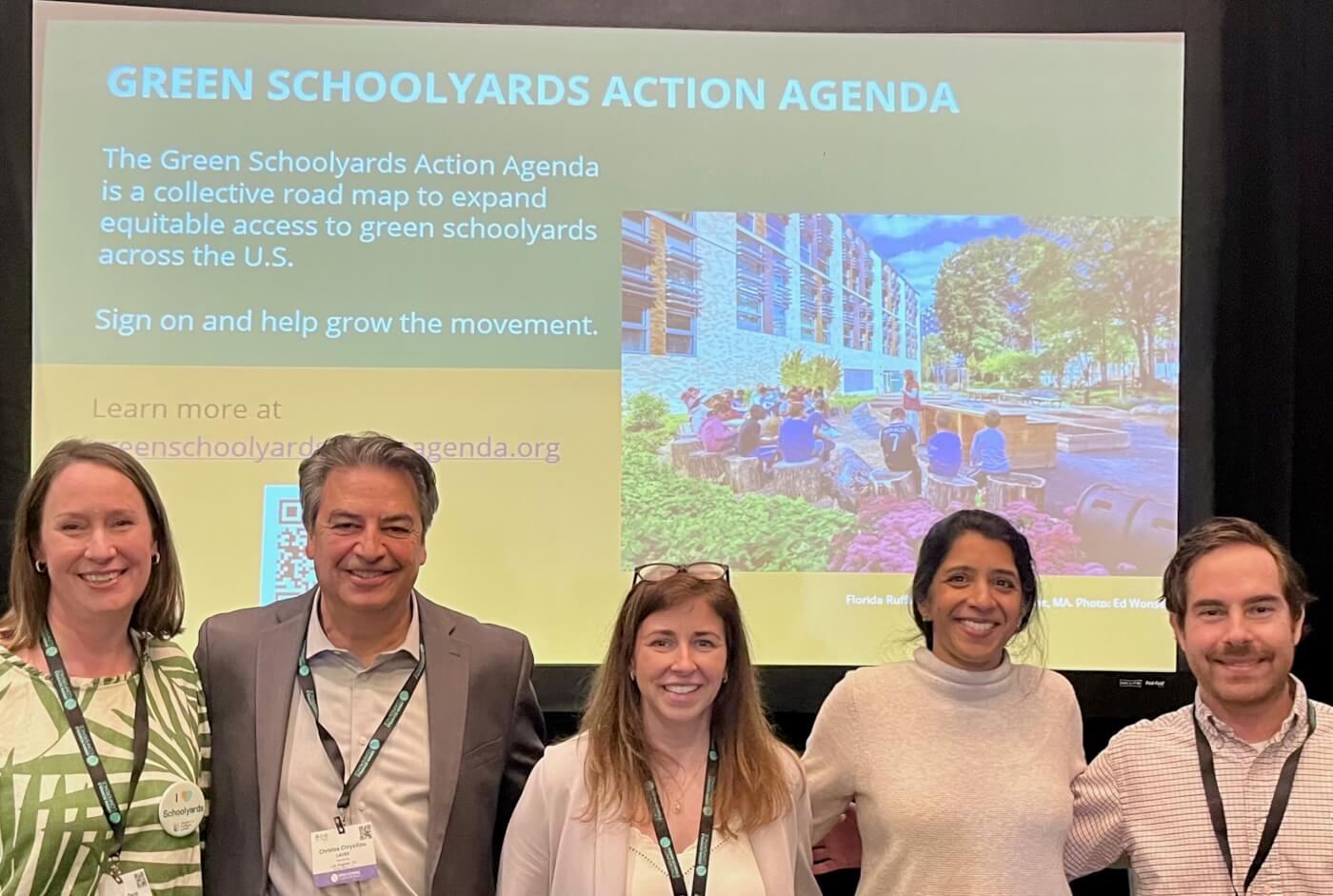
The refreshed Green Schoolyards Action Agenda was launched at the 2026 Green Schools Conference in San Diego, California, with leaders and advisors from across the field.

The refreshed Green Schoolyards Action Agenda was launched at the 2026 Green Schools Conference in San Diego, California, with leaders and advisors from across the field.
Read. Reflect. Join the movement.
- Read. Explore the full Green Schoolyards Action Agenda and its 43 recommended actions.
- Reflect. Consider how your organization, district, city or network already contributes — or could deepen its contribution — to the green schoolyards movement.
- Join the movement. Sign on and align your efforts with this national roadmap. Embed the actions into your plans, partnerships and policy priorities and stay connected with a national network. Reach out if you are interested in joint fundraising, policy advocacy or program development to strengthen and coordinate our shared impact.
I recall author and Children & Nature Network co-founder, Richard Louv, noting at our 2025 Nature Everywhere conference that “the thing about movements is … they move.” Concerted green schoolyards efforts that began with educators, designers and parents have broadened to include policymakers, engineers, economists and pediatricians. That widening circle — and the 2026 Green Schoolyards Action Agenda developed by its members — reflect a maturing movement.
The question is no longer whether green schoolyards matter. It is how we will continue to innovate, collaborate and channel collective resources to improve the conditions shaping children’s lives.
2 Comments
Submit a Comment
- Green Schoolyards Action Agenda
- Green Schoolyards and Outdoor Learning Resource Hubs
- “Rich soil: The economic benefits of green schoolyards” article reporting on the results of “How green schoolyards create economic value” economic analysis report
- Global Lessons on School Ground Greening
- “Using a data-driven approach to invest in Atlanta’s children,” a Finding Nature News story by Priya Cook
- “Leveling the playing field: Nature play for gender equity,” a Finding Nature News story by Priya Cook
-
Richard Louv
THE "VITAMIN N" PRESCRIPTION - Some health professionals now recommending nature time for children and adults
-
Feature
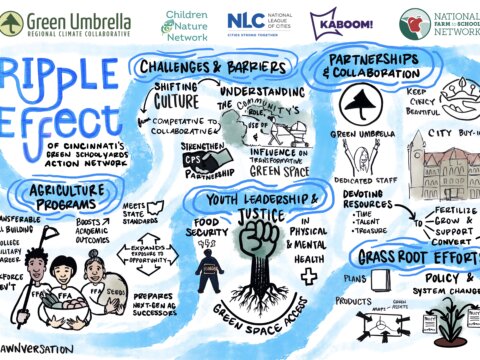
A decade of ripples: What Nature Everywhere Communities reveal about systems change
-
Feature
Crossing invisible boundaries in the outdoors: A Q+A with Mason Branstrator
-
Feature
Forest bathing: Educators need nature connections, too
-
Feature
A future full of promise: Nature in early childhood


Hello!
I work with a team at the University of Texas – Austin that trains teachers and schools on how to maintain school gardens and curricular integration with gardens and outdoor spaces. I’d love to know more about this movement and how we might be able to make connections.
Laura Thomas
laura.thomas@utexas.edu
Hi Laura, thanks for your comment! I reached out to you via email to connect. Thanks for your partnership in the movement.