
Lessons from Indigenous science: 5 ways to build a relationship with your local ecosystem
As disconnection from the natural world grows, how can we help our children foster a healthier and more intimate relationship to nature?
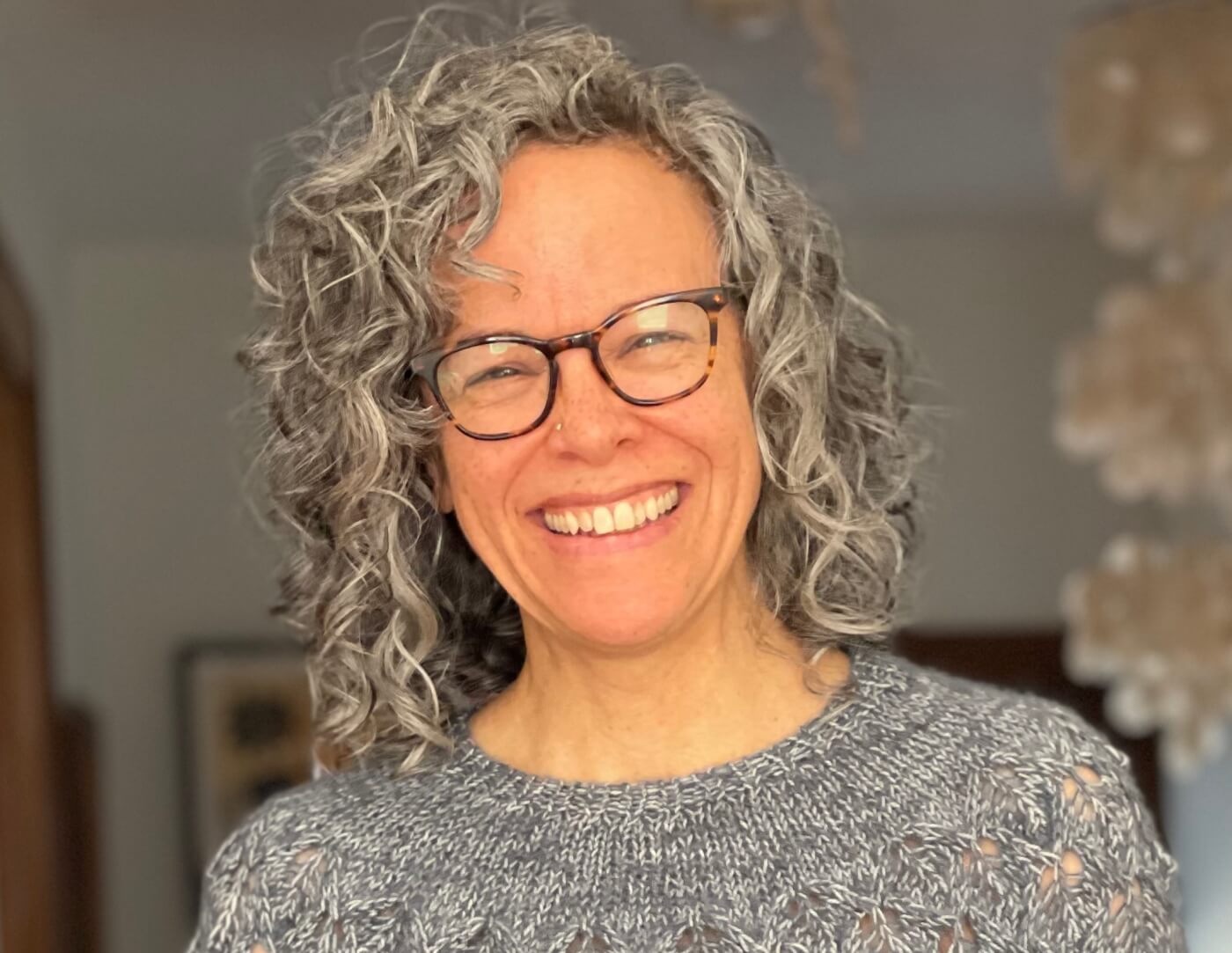
Since time immemorial, Indigenous communities across the world have built respectful and reciprocal relationships with the natural world. We sat down with Trelasa Baratta, education specialist at Redbud Resource Group, to learn more about how principles from Indigenous science can inform a better relationship to the land — for ourselves and for our children.
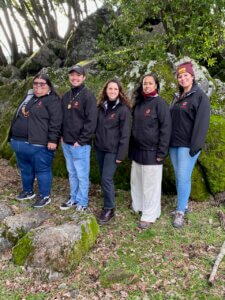
Redbud staff members left to right: Rose Hammock (Pomo, Maidu, Wailacki), Jonathan Kunkel (Yoeme-Hiaki), Taylor Pennewell (Maidu), Sheridan Enomoto (Kanaka Maoli) and Trelasa Baratta (Pomo, Lake Miwok, Wappo).
Redbud Resource Group is a Native- and women-led nonprofit that works to strengthen the health and sovereignty of Indigenous communities. Baratta, an enrolled Tribal member of Middletown Rancheria of Pomo Indians of California, focuses on developing curricula and training for teachers who want to incorporate Native history, science, foodways and perspectives into K-12 education.
“Anyone who becomes a part of the story of a place becomes responsible for taking care of that place,” says Baratta. “That, in my mind, is an Indigenous concept.”
“This history is living, so the question for kids, for anybody, is,” she adds. “How do you become a part of a living story? How do you become a steward of the land?”
It’s up to us to answer the question, but Baratta does have some suggestions for getting started.
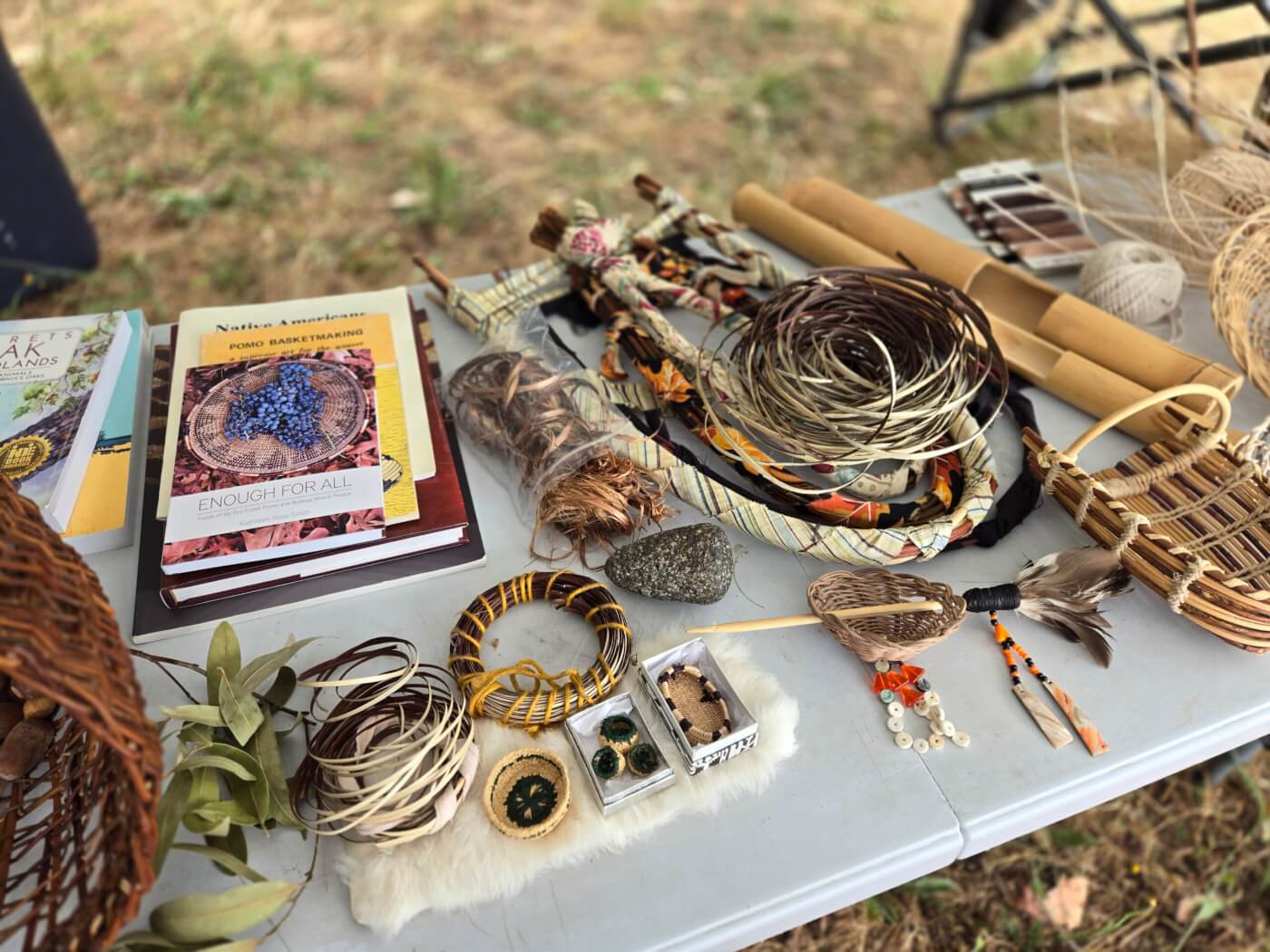
Cultural display showing miniature Pomo baskets, basket materials, traditional medicines, Pomo baby baskets, clapper sticks and plant books.
1. Take or teach Native Studies courses
Baratta recommends taking or teaching courses that help kids and families build relationships with the places they live. Redbud Resource Group is a great place to start — Baratta and her colleagues have developed a collection of teaching and professional development resources for educators and students. She suggests a couple of her favorites:
- “Healthy Ecosystems Feed Healthy Communities” teaches students how thriving ecosystems support food security and wildlife — and what happens when keystone species, like elk and grizzly bears disappear. (Note: This is a California-specific course that can be adapted to other places as needed.)
- “Native Perspectives, Everyday Lessons” is an interdisciplinary course that explores Indigenous history, science, foodways and health, and ends with writing a land acknowledgement — a good jumping off point.
Redbud has a variety of other curricula available on its site for free, as well as offering guided “Going Beyond Land Acknowledgments” workshops for non-Native people seeking to grow their allyship with Native peoples and Tribes.
2. Connect with nature often and deeply
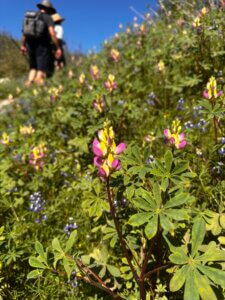
Lupines rise from ash. These fire-followers are blooming bright after the North Complex Fire of 2020. Their return is a promise: life finds a way, again and again.
When kids develop an understanding and love for nature, they want to take care of it. So, Baratta suggests that kids (and grown-ups) integrate nature connection practices into everyday life.
We can foster this connection by getting children (and ourselves) outside to play, explore and learn. This includes finding out what Tribal lands you occupy, identifying local ecosystems and wildlife — and building an awareness of the interconnectedness of life where you live. You can learn more about whose land you are on at Native-Land.ca and learn about local nature through community groups and identification apps.
3. Be a good guest
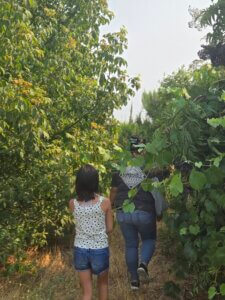
Intergenerational gathering of elderberry, rosehips and other traditional foods.
Going outdoors is like going to someone’s house. Acknowledge that it’s not your house — and act like you want to be invited back.
As Baratta says, think about how you’d expect visitors to behave in your home: “You definitely wouldn’t expect them to go pulling out plants and cutting down trees in your backyard that you worked really hard to take care of, yeah? And you’d want them to dispose of their waste in an appropriate manner that is in balance with the place that they’re in.”
4. Learn from Indigenous communities
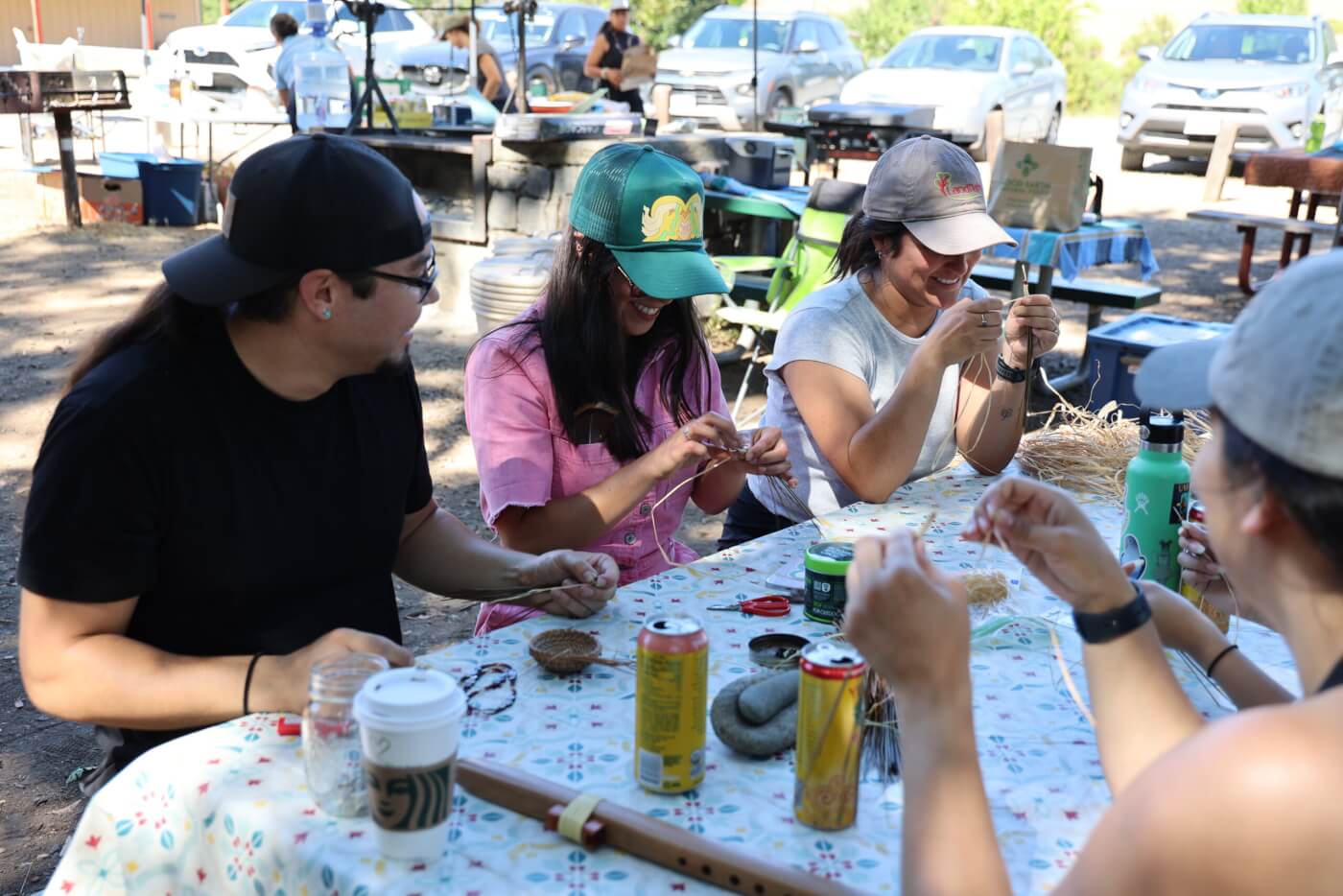
Pine needle basket weaving.
“It’s important to have a relationship with the Indigenous communities where you live,” Baratta says. “Invite their voices in whenever you can, knowing they’re busy, too, and they might not come.”
Non-Native people have a lot to learn from Indigenous science and local Indigenous communities — not only about how to care for the local ecosystem and wildlife but also about how our own health and wellness overlaps with nature, family and community.
It can take time and patience to build these relationships. “But if you have humility, if you’re respectful of their ancestral knowledge and practices,” Baratta says, “if you acknowledge what it’s done for you in the present here and now — and if you pay them for their time, yes — it can go a long way.”
5. Locate yourself in the story
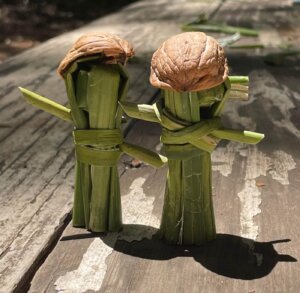
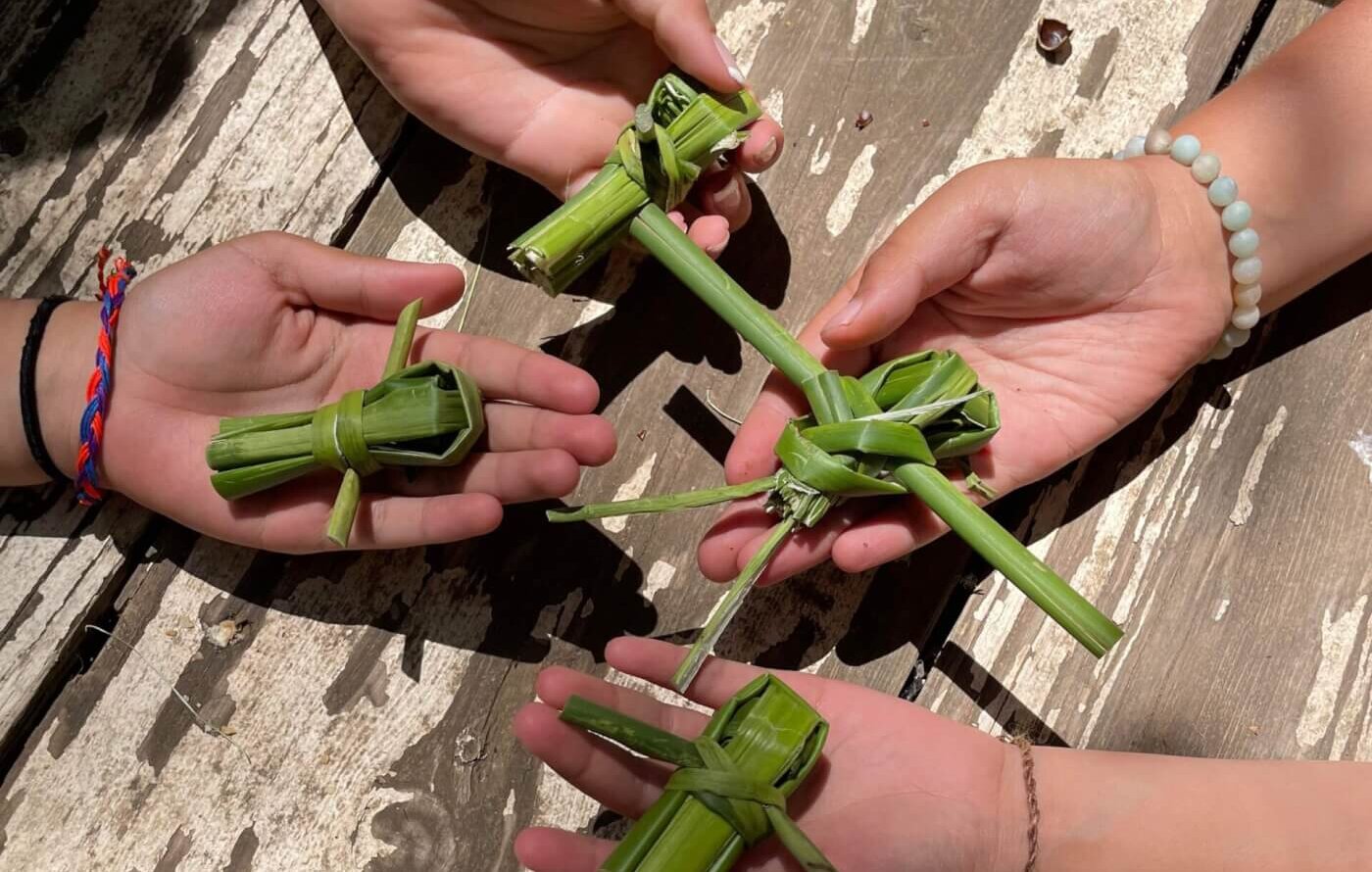
Tule dolls with walnut hats.
“You’re a part of this place, too,” Baratta says, “and you have things to contribute — everyone brings something special to this place.” So, she suggests exploring your family’s relationship with the place where you live.
She offers some prompts: What is your family history here — how did you come to be living here? What values did your ancestors bring with them? What do you value? How can you reorient those values so they’re more in line with the values of the land?
1 Comment
Submit a Comment
Whose land are you on? Interactive Native land map and teacher’s guide, Native-Land.ca
How lessons from Traditional Ecological Knowledge can support kids — and stave off climate anxiety, a Finding Nature News story
Honoring Indigenous people and land, a collection of resources
-
Richard Louv
VITAMIN N FOR THE SOUL: How Nature Can Nourish the Spirit of Children and Adults
-
Network News
Prescribe Outside: Progress moves at the speed of trust in Philadelphia
-
Voices
Nature to screens: How our built environment set the stage for the anxious generation
-
Feature
We’re all looking for the same moon
-
Feature
Forest bathing: Educators need nature connections, too
Thanks for these suggestions. Our outdoor winter sports community is always seeking ways to continue to express our Land stewardship values and I appreciate your ideas.