
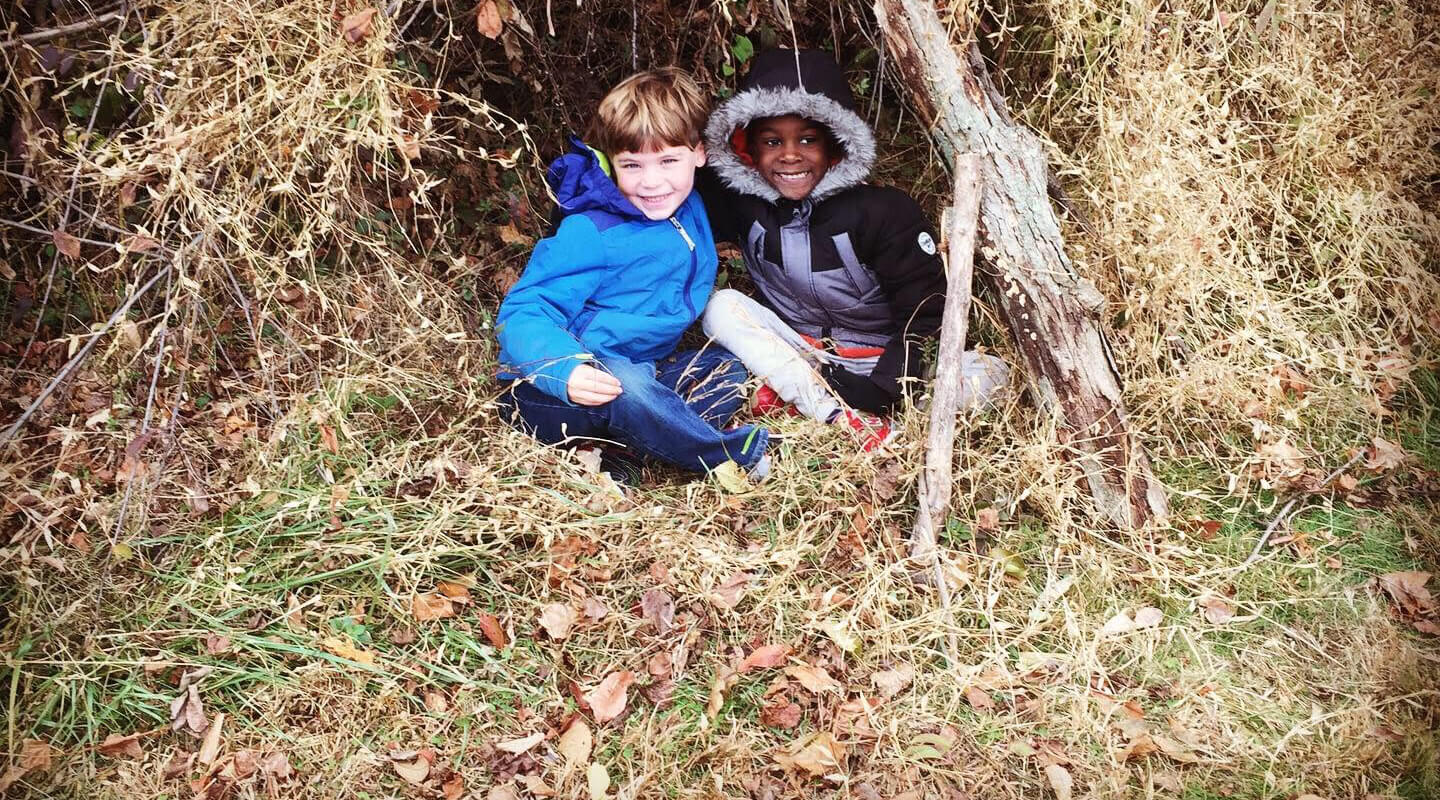
Watershed School keeps kids connected to nature, at home
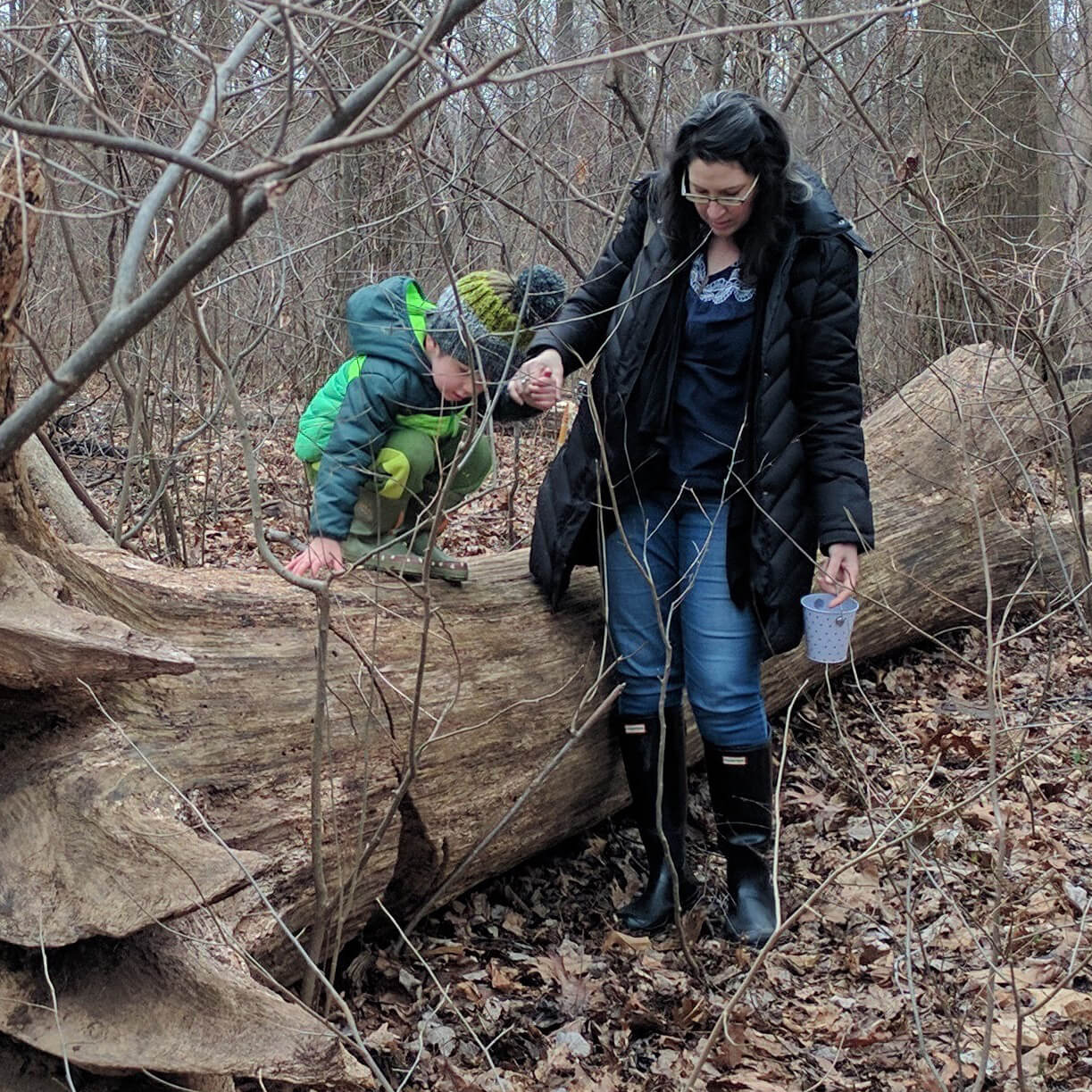
Watershed Charter School is redefining environmental arts learning and keeping kids connected to nature during COVID
Imagine that you’ve poured your heart into creating a charter school where a tremendously diverse group of children have access to educational greenspace, hands-on natural learning and shared responsibility for outdoor features like a henhouse and vegetable garden. Imagine harnessing your background as an artist and educator to integrate the power of art and nature to bring project-based learning to kids from truly varied backgrounds.
Then, in the blink of an eye, COVID-19 forces you to shift your school to virtual learning.
Our campus had been central to our students’ studies. Suddenly we had to rethink everything. How could we deliver hands-on, environmentally-focused projects to our kids so they could continue learning at home? We scrambled to write projects on the fly. We created a remote learning platform and gathered supplies to send home with students. We worked with partner organizations to locate plants, field guides, binoculars—anything that could bring our natural classroom into students’ homes.
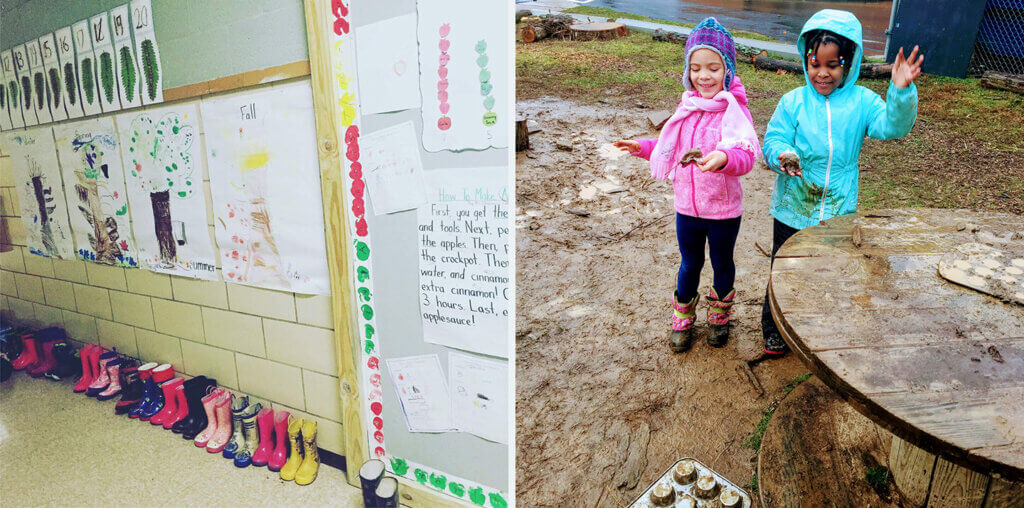
Photo credit: Jessie Lehson
With a mindful eye to parents’ own needs during the pandemic, we encouraged families to investigate urban parks and pockets of nature in their own neighborhoods. We actively worked to redefine expectations of “nature.” Trees growing along the street are nature; so are the plants growing in your sidewalk cracks. And while I hope all children can someday experience a walk in the woods, training yourself to notice the nature that is already around you is a practice that all of us can benefit from during this difficult time. Urban nature is everywhere, once you start using your eagle eyes to look for it!
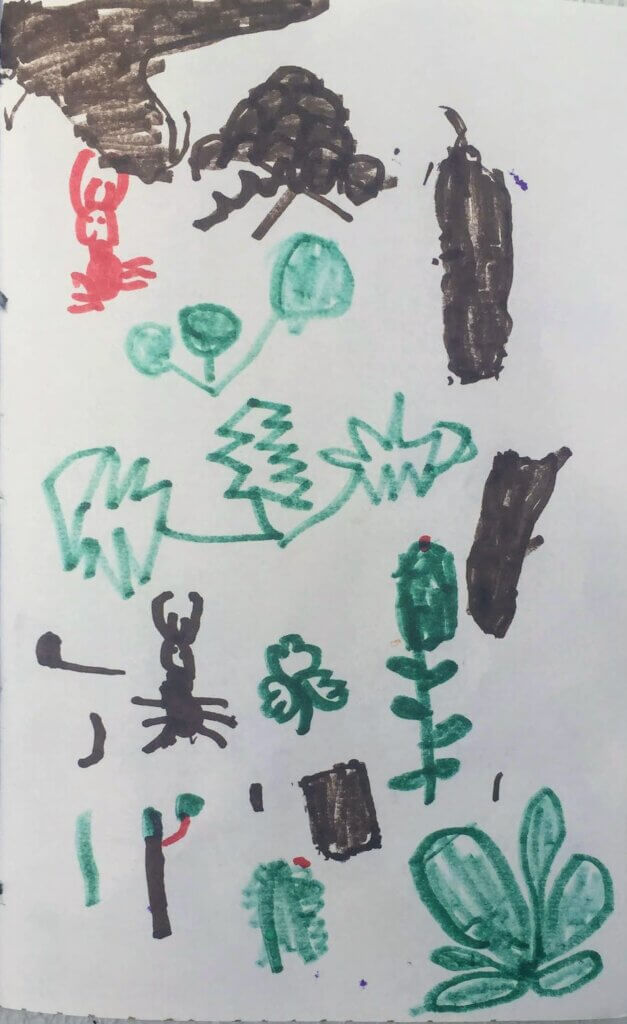
Photo credit: Jessie Lehson
While other Baltimore County Public Schools were sending home packets and worksheets, we knew that wasn’t right for us. Instead we designed multi-disciplinary projects that used recycled materials and items that people had on hand. It took awhile, but we developed a rhythm as administrators, teachers, parents and caregivers. The same parents who were initially reluctant to engage in nature-based and project-based learning from home became some of our biggest advocates.
We strove to make nature a consistent part of our students’ day, instituting a regular “Special Spot” practice and encouraging our school family to make use of both natural and recycled materials for art projects. We developed projects that incorporated and were inspired by contemporary art.

Photo credit: Jessie Lehson
Showing Gratitude for Trees was part of our school-wide Earth Week Celebration. Many urban dwellers have a street tree near their home, or a tree in a park nearby. We asked students to find a tree that they connected with in some way and to research and learn more about it. They were then encouraged to use recycled materials to decorate their tree and to celebrate it. We looked at special and ceremonial trees around the world for inspiration. Students were encouraged to sit with their trees and to record people’s reactions to them, hopefully bringing a little happiness to essential workers who were keeping us all safe.
Weed Graffiti draws connections between the viral trend to label plants in urban settings with their proper names and the tradition of street art. Students not only researched and labeled urban plants and weeds, but incorporated them into their artistic works. These projects served a number of purposes for our students, including forging a connection to the world around them in a time of extreme disconnect.
Knowing that many of our students didn’t have art supplies at home, we structured a number of projects around recycled and reused materials. Alchemy and the Transformation of Trash looked at contemporary artists who make artwork from what most others would consider trash. We encouraged students to think about the environmental impact of trash, but also the creative possibilities. We were especially inspired by Cyrus Kabiru’s elaborate goggle designs and many students opted to make trash goggles!
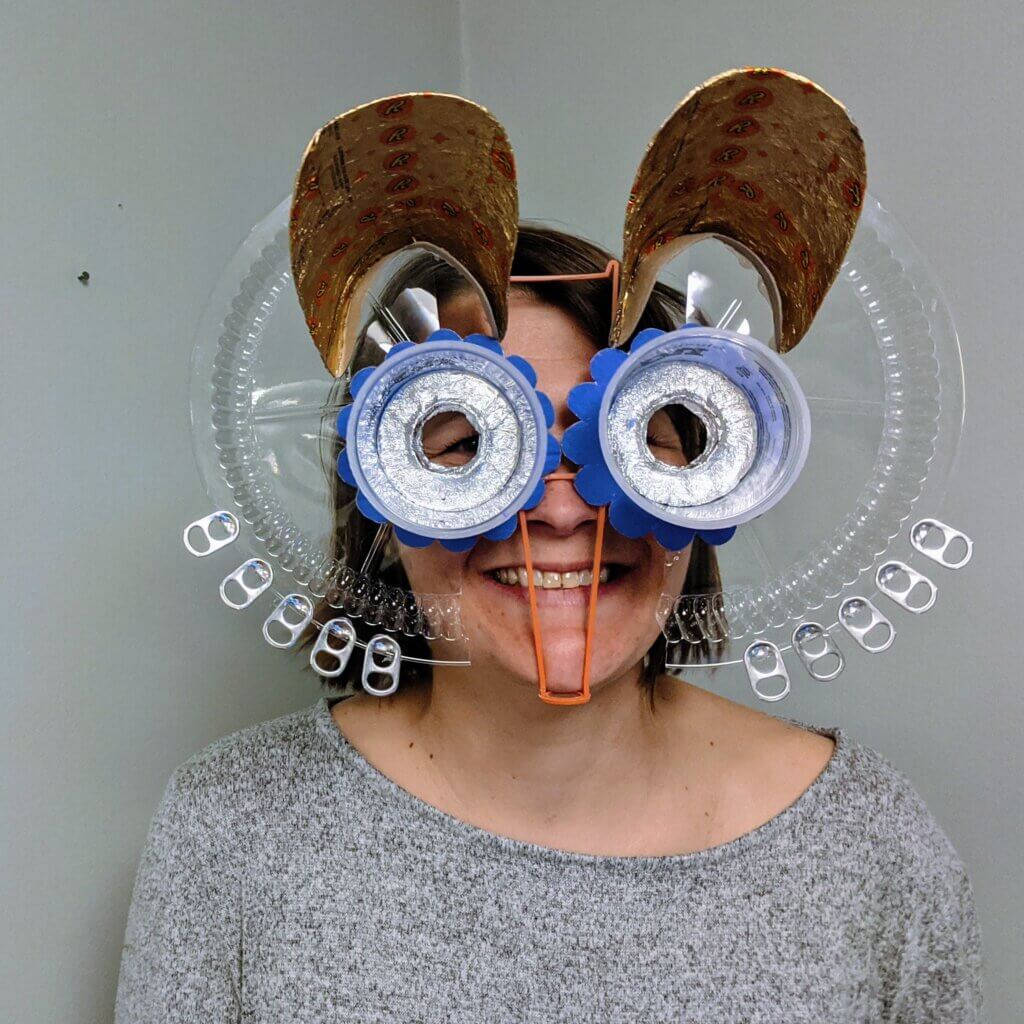
Photo credit Adrienne Newport
Plastic bags stuck in trees are a painfully common urban experience across the country. In Plastic Rainbow Weaving we learned about Isatou Ceesay and indigenous weavers in South America who pioneered the use of plastic bags as yarn (“plarn”). We looked at traditional and contemporary artists working with plarn and then tried our hand at making some. Finding appreciation and gratitude in what would normally be waste was an empowering discovery for our students.
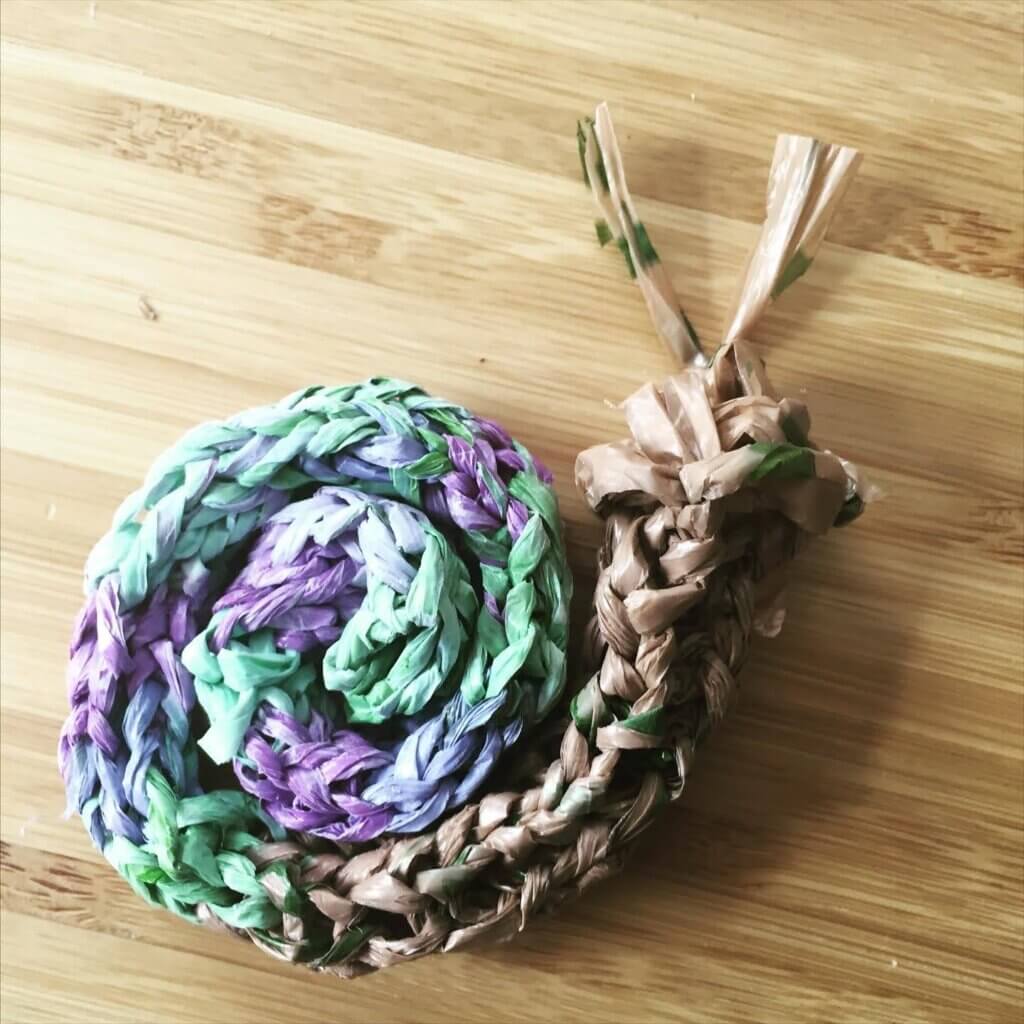
Photo credit: Jessie Lehson
Data Visualization is one of the places where art and science naturally combine. You’ll see a lot of references to it peppered through our remote learning site because it’s a creative way to collect and synthesize information. Students can demonstrate comprehension without quizzes or worksheets. In its simplest form, data visualization is the graphic representation of data using color, shape, symbols, length, thickness, placement etc. An example of a project that uses data visualization is here as well as a slideshow about data visualization and examples ranging from Incan Quipus (a complicated system of knotted ropes historically used to store data or knowledge) to Natalie Meibach (a contemporary artist who makes large woven sculptures with climate data).
At the end of last spring, our project Band Together helped us to solidify who we are as a school. We used visual art, music, nature and recycled materials to learn about science, social studies and social-emotional health and to come together to make something bigger than ourselves. This final project ended with a virtual school-wide performance using our homemade instruments. It wasn’t perfect, but it was Watershed.
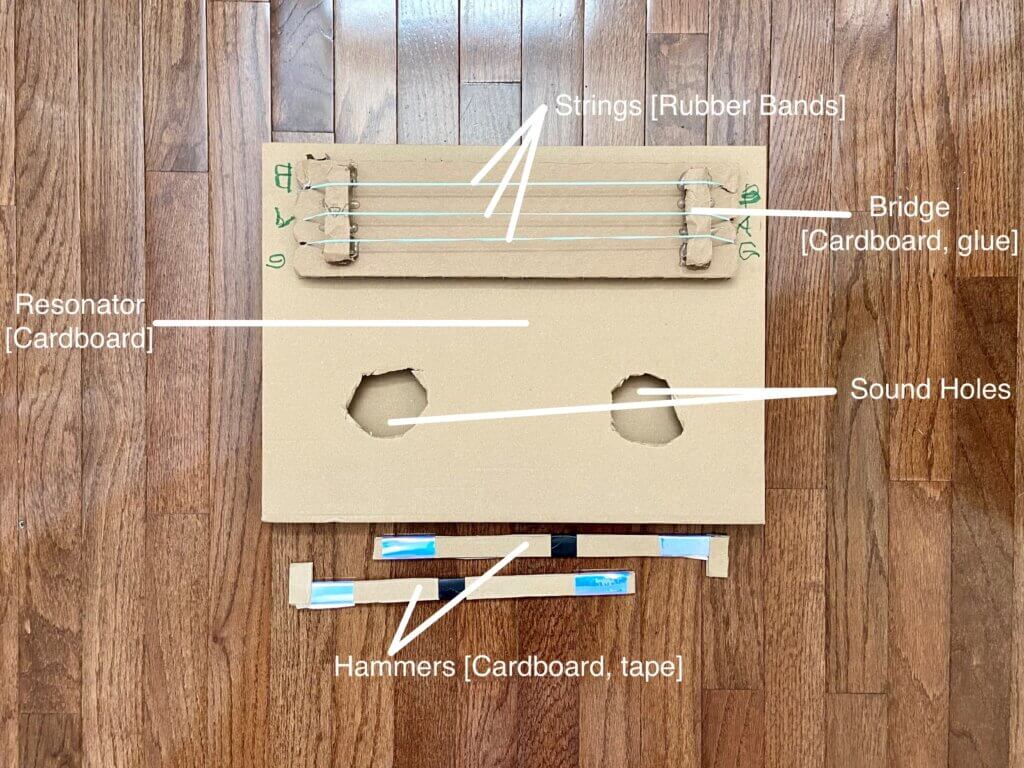
Photo credit: Joshua Pallante
Virtual learning was no doubt a curveball, but we continue to see positive student outcomes and an incredible level of creativity from staff, students, parents and caregivers alike that we are excited to bring back to the schoolhouse when we return.
As lockdowns and closures drag on and we all tire of developing creative ways to engage our students and our children while limiting their screen time, take a moment to remember the importance of art and nature. I encourage everyone reading this to get outside every day, even if you don’t have the energy for a big project—just observing whatever bits of nature you have around you can lead to beautiful, creative things. At Watershed we continue to expand our definition of what environmental arts learning looks like, and more importantly we continue to create.
A special thanks to my colleagues Laura Guelcher, Adrienne Newport, Sarah Chapman and Karen Norton-Smith for helping to write our last minute virtual projects!
More Outdoor Learning Resources
Cities Connecting Children to Nature
Baltimore, MD is one of 18 innovative US cities taking part in Cities Connecting Children to Nature (CCCN), a joint initiative of the National League of Cities and the Children & Nature Network designed to help communities increase equitable access to nature. Baltimore CCCN leads the nation in finding ways to allow all children to play, learn and grow in nature. The city has launched a Children’s Outdoor Bill of Rights, increased green job opportunities and green career development for Baltimore youth, and trained over 150 practitioners in nature and trauma-informed care.
-
Richard Louv
VITAMIN N FOR THE SOUL: How Nature Can Nourish the Spirit of Children and Adults
-
Network News
Prescribe Outside: Progress moves at the speed of trust in Philadelphia
-
Voices
Nature to screens: How our built environment set the stage for the anxious generation
-
Feature
We’re all looking for the same moon
-
Feature
Forest bathing: Educators need nature connections, too