
Lower Columbia Nature Network: Fostering partnerships to connect communities to nearby nature and public lands
Communities trying to increase equitable access to nature face many barriers. Still, some cities and organizations have found ways to connect children to nature and public lands in spite of these challenges.
Like the Lower Columbia Nature Network in the southwestern region of Washington state.
The Lower Columbia Nature Network (LCNN) is a coalition of agencies and partners committed to “equitable and welcoming access to nature for everyone.” Working with the U.S. Fish and Wildlife Service Ridgefield National Wildlife Refuge Complex, the LCNN promotes its partner organizations while helping the public connect with nearby nature and public lands.
Everyone in the network values access to nature for all kids and wants them to benefit from the rich natural resources in their region. On top of promoting visits to the region’s vast network of wildlife refuges, they’ve focused on green schoolyards, nature-based education, youth leadership development, Green Career exposure and early childhood nature connections.
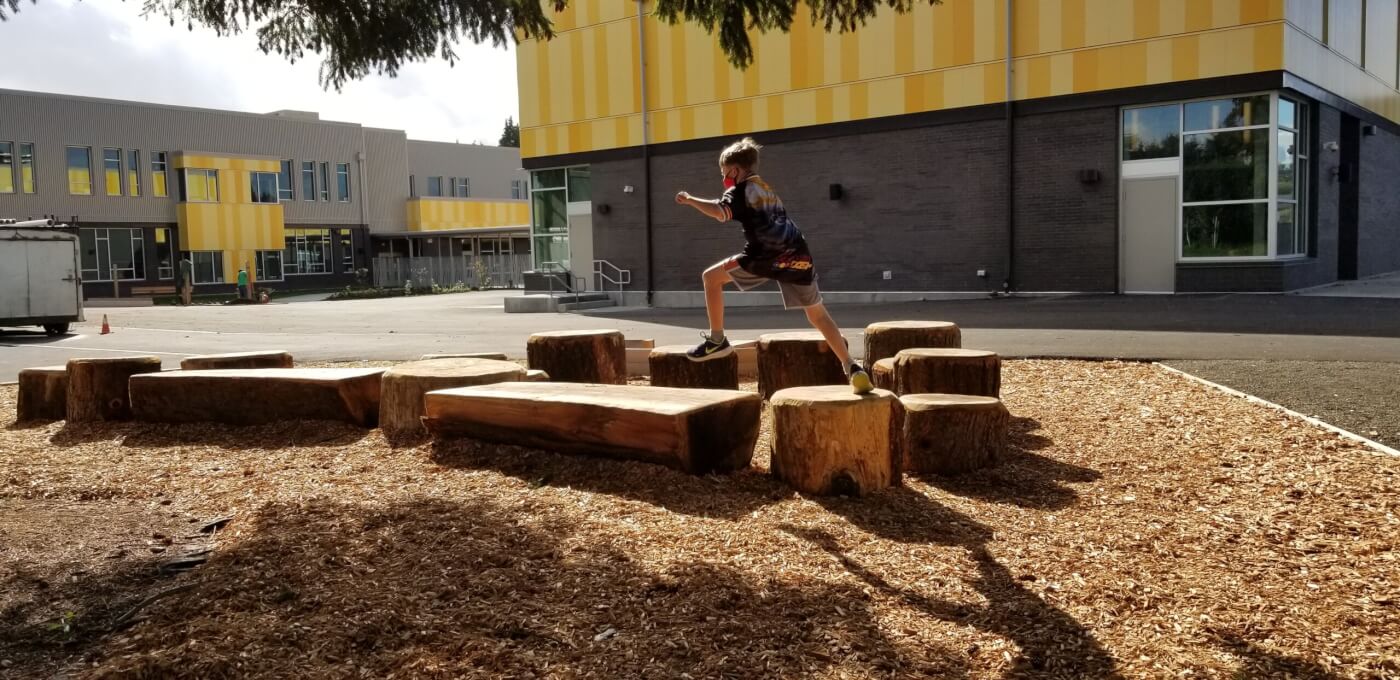
Green schoolyard elements, including nature play and outdoor classrooms, ensure that all kids have access to the benefits of nature as part of their school day. This example from Truman Elementary School in Vancouver Public Schools illustrates how natural materials enhance schoolyards throughout the southwest Washington region. Photo credit: Jane Tesner Kleiner
The LCNN partners support collaborative efforts in connecting their communities to nature and public lands in the following ways:
- More than 75 schools in southwest Washington have a green schoolyard component — including more than ten new or replacement schoolyards — extending nature access to more than 36,000 students.
- An LCNN collaborative program, Take Learning Outside, has provided resources and professional development to over 300 educators to support outdoor teaching and learning.
- The Fort Vancouver Regional Library system provides “Check Out Washington” backpacks for families at all 18 locations across 4,200 square miles, hosts story time in nature settings, and makes StoryWalksⓇ available to partner sites and the region’s National Wildlife Refuges.
This video highlights the discussion, shared learning and awareness-building that emerged from southwest Washington’s Lower Columbia Nature Network Ripple Effects Mapping session in September 2025, with a focus on advancing green schoolyards, strengthening authentic relationships and advancing ADA-aligned accessibility at a community-wide scale.
The LCNN recently participated in Ripple Effects Mapping to understand how they’ve expanded equitable access to nature. Ripple Effects Mapping is a participatory evaluation process that generates community data and stories to understand the impacts of programs and partnerships. This process yielded four key themes that explain how the Lower Columbia Nature Network has been able to effect systems change:
- Strengthening partnerships and collaborative programs rooted in authentic relationships to increase equitable access to nature.
- Enhancing communications through a shared website, monthly workshops and community-driven projects that engage youth in environmental discussions and mentor networks.
- Addressing funding challenges through knowledge and resource sharing among partners.
- Embedding greenspaces and nature-based initiatives within the policies, strategic plans and projects of organizations and municipalities.
First, the Lower Columbia Nature Network has extended and strengthened its partnerships. The network started out in 2015 as a project of the Intertwine Alliance, a Portland-based regional nonprofit. Fueled in part by seed funding and technical support from the Cities Connecting Children to Nature and Nature Everywhere Communities initiatives, the LCNN has since expanded into partnerships with nearly 50 outdoor and environmental organizations that serve southwest Washington.
This expansion has been accompanied by a sense of deeper relationships and interconnectivity among diverse organizations, individuals and agencies. Multiple partners in the Lower Columbia Nature Network have overcome silos, forging collaborations to reach the community more effectively. As LCNN Program Manager Jane Tesner Kleiner said,
No one organization can carry the weight of getting every student a chance to visit nature, but together we can identify gaps in connecting with people, craft a set of solutions and portfolio of opportunities, and build a collection of engagements that reflect our community’s needs and interests.
Enhancing online and face-to-face communications has been another key. The LCNN website has become an important hub for both network partners and the community. It keeps partners connected while serving as a “one-stop shop for nature-based activities” for the community, thanks to a single events calendar that promotes partner organizations’ events and programs. This has made it easier for community members, parents and schools to plan nature events for children.
Monthly meetings have enabled network members to develop face-to-face relationships and learn from one another about grant writing, coordinating volunteers and collaborating on shared projects and concerns. In one workshop, for example, participants learned how to conduct site assessments to serve students with accessibility needs. The accessibility site study workshop helped the City of Vancouver and Clark County Parks & Nature update their Americans with Disabilities Act transition plans for their park systems to make nearby nature more accessible.
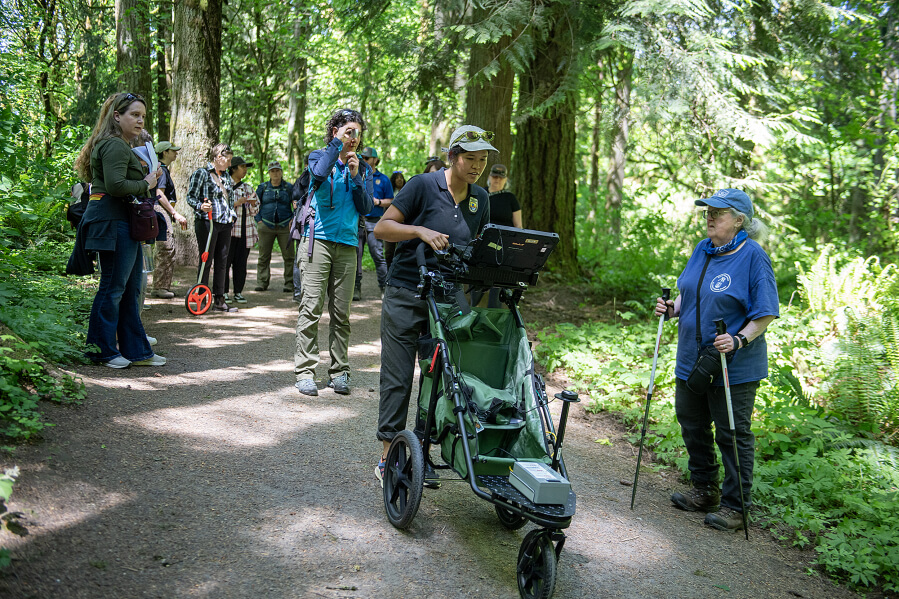
Lower Columbia Nature Network partners participate in a workshop on improving trail accessibility features and providing information about trail conditions. The workshop was led by Portland committee Access Recreation and the U.S. Fish & Wildlife Service at Whipple Creek Regional Park. Lower Columbia Nature Network partners created an accessibility guide for school field trips and include accessibility information in their calendar events so people of all abilities can make informed decisions about their participation.
The network has also involved youth in new and expanded ways. Community-driven projects, such as ProjectVOICE and the Clark County Green School Student Summits, have engaged youth in important discussions of environmental issues. LCNN’s efforts have also established a supportive culture that encourages students and young professionals to join the green workforce through networking, mentoring and professional development through partner organizations.
A video featuring the 2025 Climetime Project VOICE Community Event at Fort Vancouver High School, featuring student projects focused on “What does it mean to live in a healthy and vibrant community?” and keynote speaker Monique Gray Smith, author of Braiding Sweetgrass for Young Readers.
In addition to building a stronger sense of community, the LCNN has facilitated collaborative approaches to funding challenges. When faced with potential funding cuts, such as those experienced by The Canopy Collective, members rallied to explore alternative financial sources to sustain its programs. In this sense, the LCNN’s shared knowledge and resources have provided the region’s grant-funded organizations a crucial “safety net” to survive the ebbs and flows of funding.
Rather than competing with each other for scarce resources, LCNN partners have cultivated joint programs and grant applications. Such collaborations have allowed this smaller region to compete with larger cities for some funding wins. As one participant said, “Many times, two or more organizations working together can create something that is more competitive as a project to be funded.” These collaborations reduce the competitiveness for limited grants and build capacity to access to statewide funds for southwest Washington.
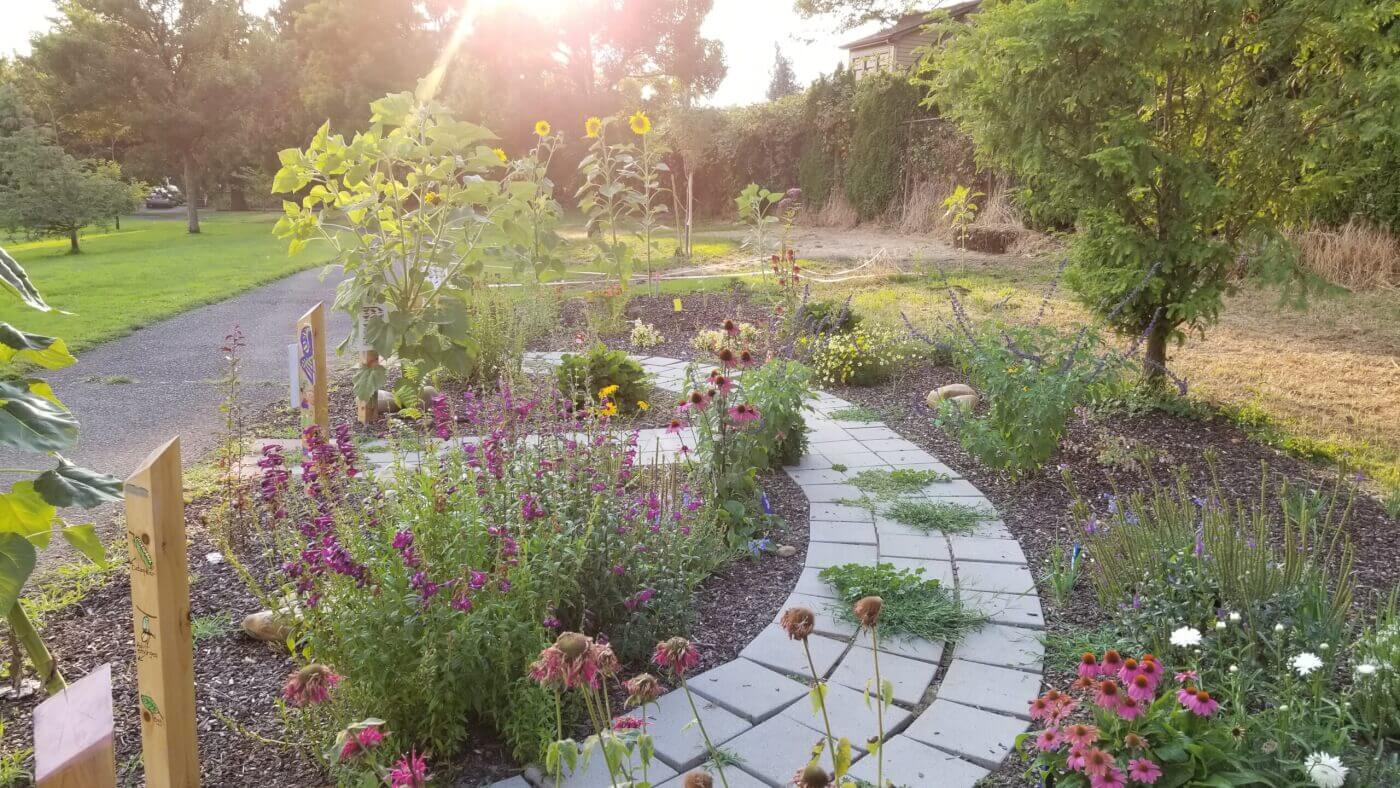
Partnerships across the region led to climate-resilient native plantings and nature spaces at schools that integrate climate action with educational goals. This photo shows the beauty of trails and walking paths at Hough Elementary School in Vancouver, Washington. Photo: Jane Tesner Kleiner
Relationship building and collaboration through LCNN have led to systemic changes, baking nature access into policies and aligning greenspaces with broader initiatives. In this case, the LCNN’s Southwest Washington Green Schoolyards Action Plan has garnered support from multiple stakeholders by integrating climate action goals with educational programs. Local schools included outdoor learning spaces and gardens in their capital bond projects and aligned them with the Washington Sustainable Schools Protocol. The Action Plan builds on this important work to activate green schoolyards for outdoor learning, play and wellness.
City and county plans have also prioritized access to parks and green spaces. For example, the City of Vancouver’s Climate Action Plan now ties into the Urban Tree Canopy Plan and the Park & Recreation Department’s Comprehensive Plan, which calls for parks and green spaces within a 10-minute walk of all residences. These correlate with the Clark County Climate Action Plan and Fourth Plain Forward’s Climate Action Work.
-
Richard Louv
ON THE RIVER: The Restorative Power of Nature in Difficult Times
-
Feature
We’re all looking for the same moon
-
Voices
Green Schoolyards Action Agenda: A national roadmap for nature-rich school grounds
-
Feature
A decade of ripples: What Nature Everywhere Communities reveal about systems change
-
Feature
Forest bathing: Educators need nature connections, too