
My grandparents taught me about nature. Nature taught me about my grandparents.
I come from a long line of walkers. My family walks to think, to discuss hard or happy matters, to make decisions, to celebrate nature and, of course, to get places.
Some of my earliest memories are of charging down the paths of San Mateo Central Park in California with Wilda, my paternal grandmother. We entered the park via a gate behind her apartment building, and perhaps because of this proximity — or maybe it was just the times — we never changed our clothes to go into nature. Wilda, who insisted on being called by her given name, wore her gray wool pencil skirt, pearls and pumps; I wore my Mary Janes.
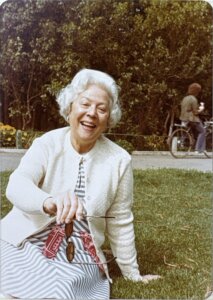
Wilda sitting on the lawn in San Mateo Central Park. There was probably a picnic just outside the shot.
Wilda walked in long, energetic steps and, as a child of 5 or 6, I had to skip beside her to keep pace. It was worth it because she had a wonderful knowledge of songbirds and plants, and a long, amusing narrative of all she could see poured from her as she strode along. She told me more than once that I, too, should try to learn the names of all the wild things. “It will make your world bigger,” she’d say.
Imagine looking into a crowd of people, seemingly strangers, and seeing the face of an old friend come into focus. I think that’s how Wilda looked into her neighborhood park. “Look,” she’d say, “the yellow rhododendrons are finally blooming. Don’t touch, very sticky. Oh, there’s the rotten scrub jay that’s been harassing my hummingbirds. On the ranch, my mother used to shoot them with a potato gun. We don’t shoot birds, Susan, but I really am half-tempted. I’m told this fig tree is over 200 years old — it came all the way from Australia … .”
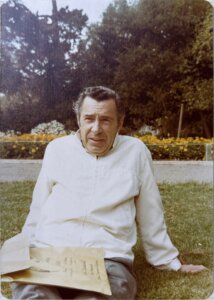
John enjoying a picnic at San Mateo Central Park.
My grandfather John also loved Central Park, but our walks together were less rambling, our conversations less focused on the nature around us — though we stopped to appreciate it. He talked about the goings on at his ophthalmology office, where he specialized in fitting contacts to odd-shaped eyeballs. He recounted, in great detail, the plots of books and operas. Sometimes, he whistled entire arias or an Ella Fitzgerald tune. Sometimes, John said very little at all. I didn’t mind. He’d buy us ice cream cones, and they made the silence companionable as we walked the length of the park, stopping at our favorite bits.
I’d take us to a life-size statue of a dog that had been placed way back at the turn of the last century, when the park was a private estate — a tribute to a faithful guardian. In summer, its shaggy fur absorbed the sunshine, and I liked to put my small hands on the warm cast iron. John led us around the tiny, well-groomed paths of the Japanese garden. For me, this was a treasure hunt: Turtles napped on logs, pagodas rose out of the shrubbery and, many days, Buddha had fresh-cut flowers in his lap. A wooden bridge arched steeply over the pond, and we’d pause at the peak to watch the koi slowly wagging through the water. The gardeners showed me how to tempt them to the surface with the pads of my fingers. I remember their spots as gold and orange and red, their touch as gentle as a kiss and their whiskers as fearsome. If I screamed, it was equal parts fear and delight.
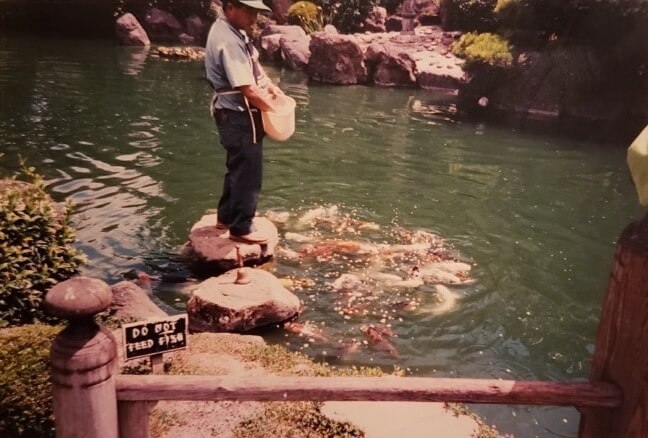
A gardener feeds the koi at the Japanese Garden in San Mateo Central Park, California. Photo taken by John in the mid-1970s.
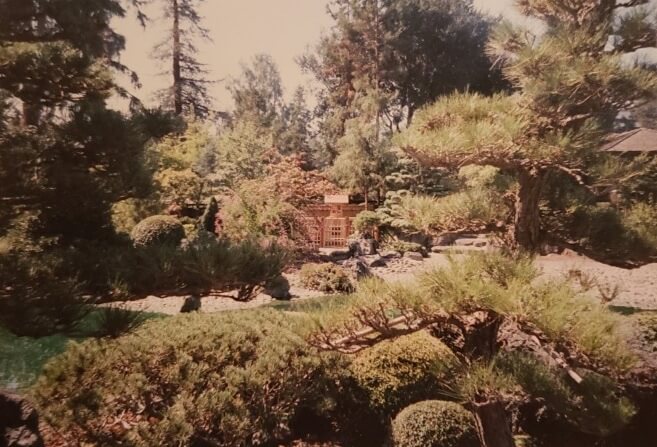
A view of the Japanese Garden, as captured by John in the mid-1970s.
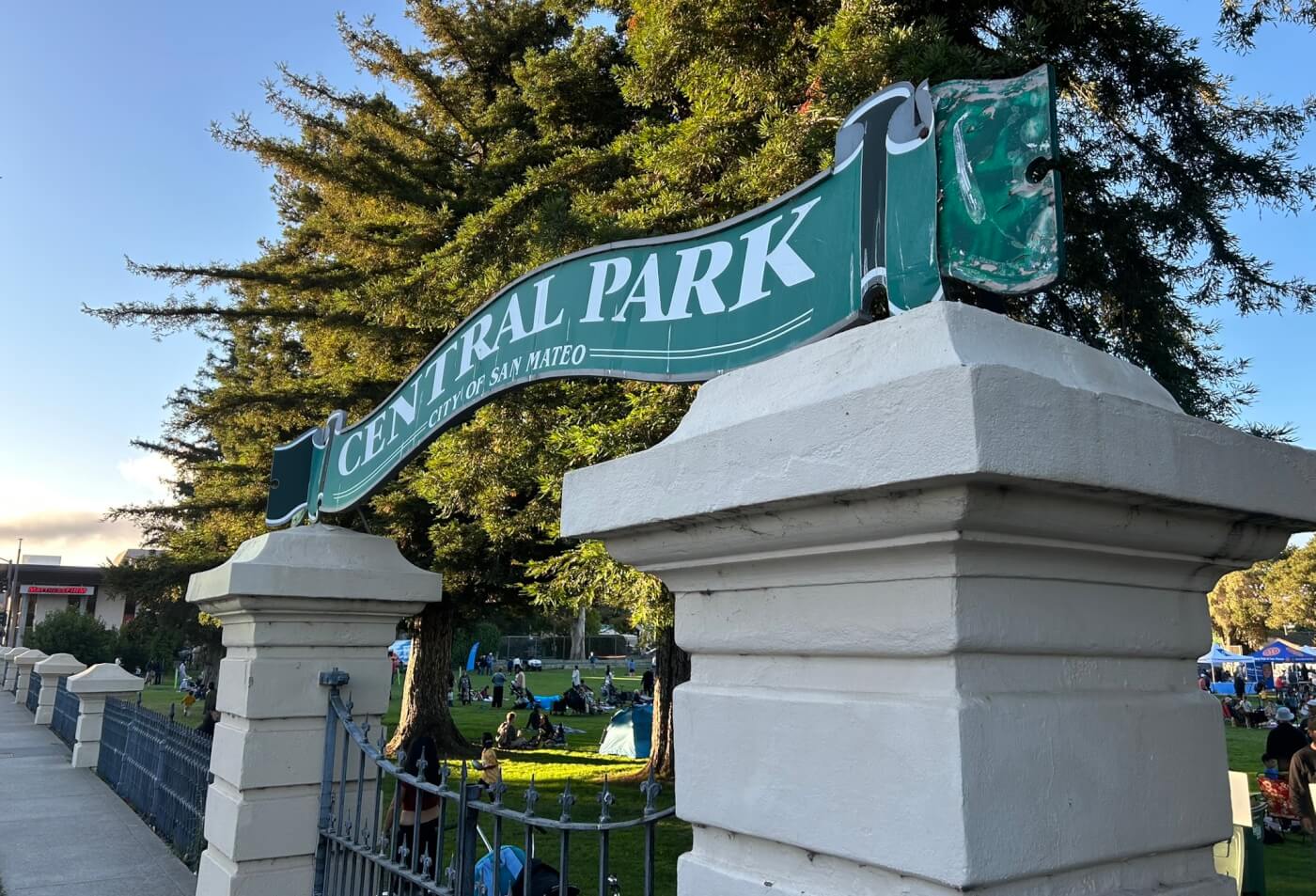
A more recent photo depicting the gates of Central Park in San Mateo, California. Photo courtesy of City of San Mateo Parks and Recreation.
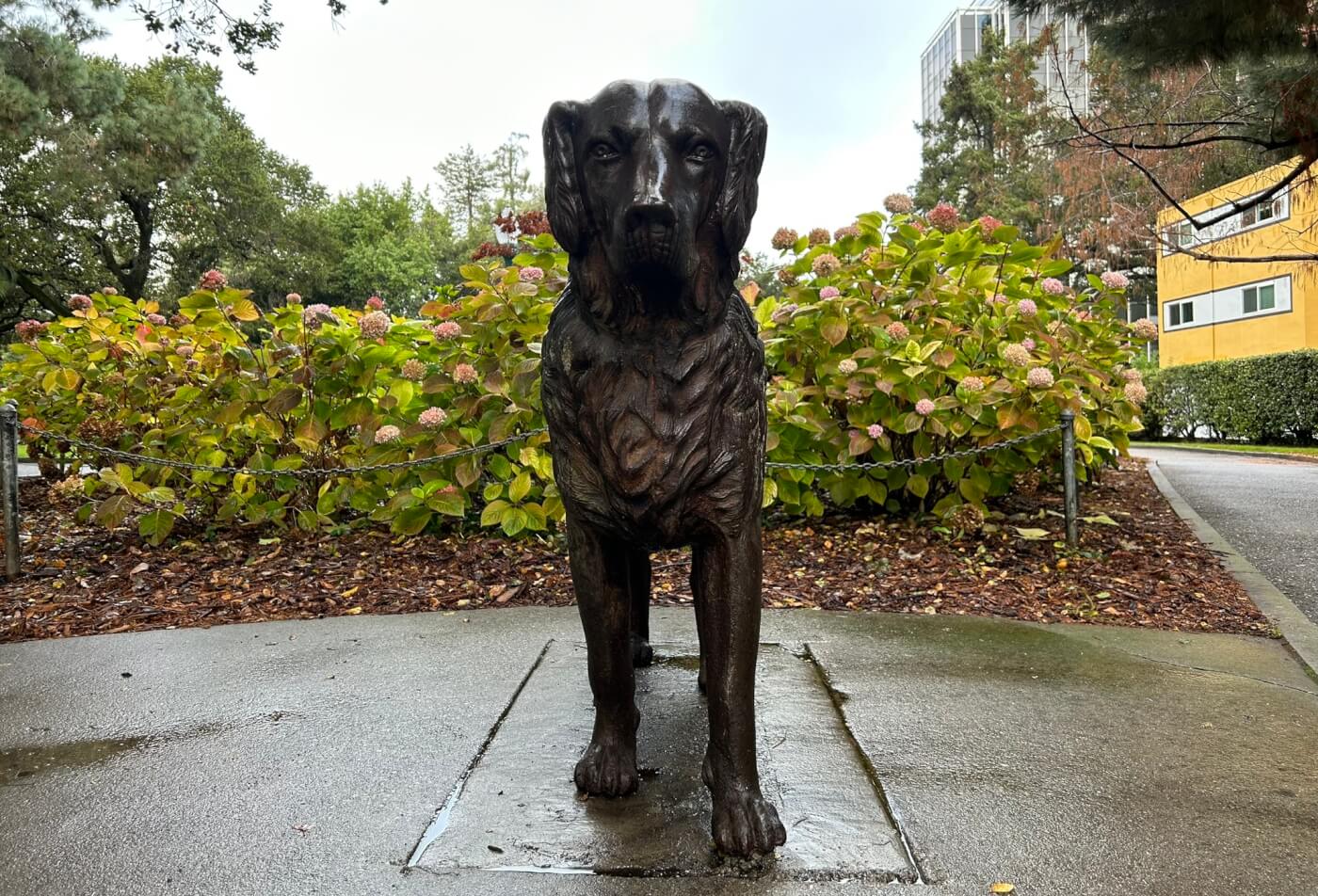
The shaggy dog statue stands guard in San Mateo’s Central Park to this day. Photo courtesy of City of San Mateo Parks and Recreation.
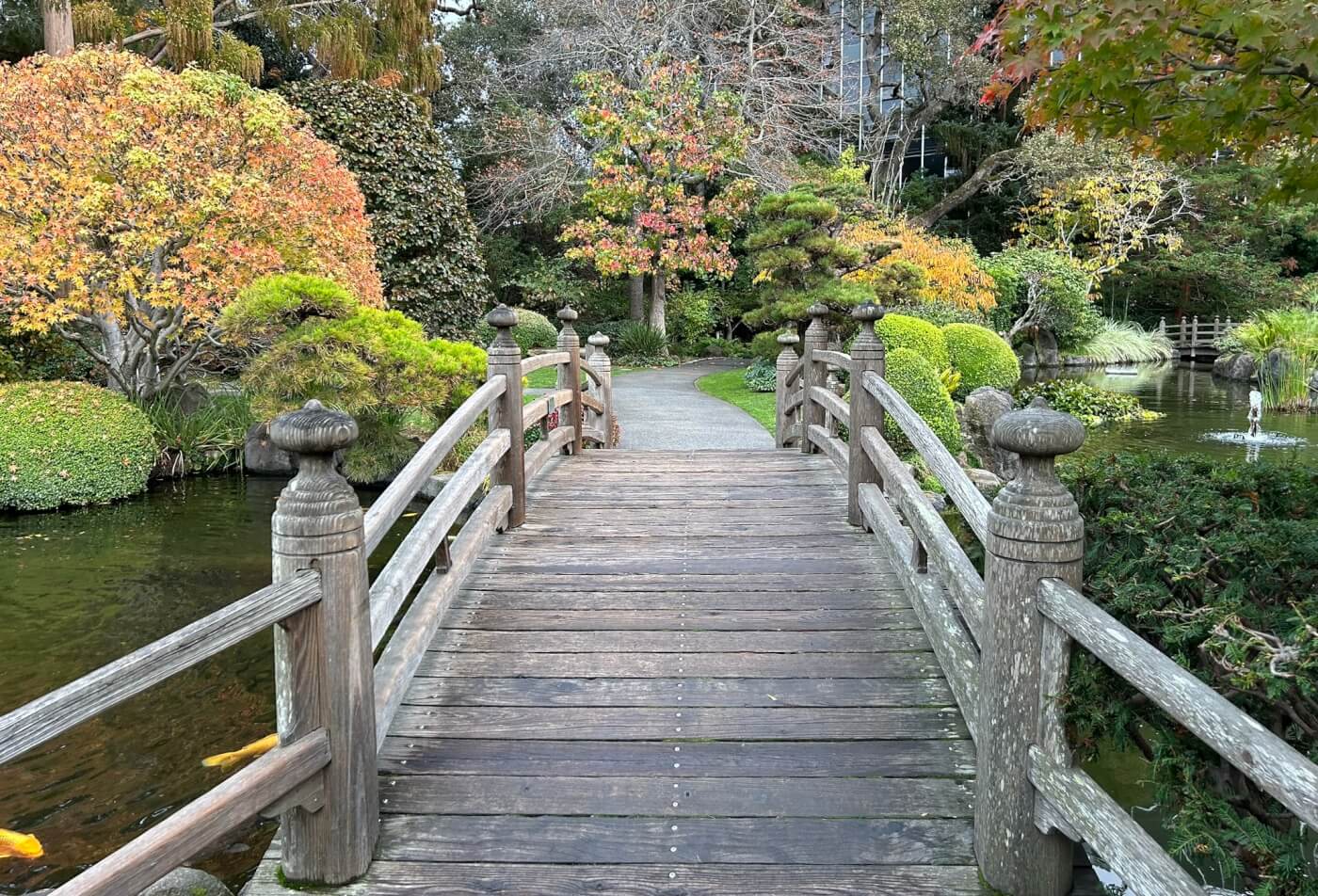
The Japanese Garden with its wooden bridge is still well groomed and inviting. Photo courtesy of City of San Mateo Parks and Recreation.
There is an element of the ritual to these walks that might sound stodgy. But like many children, I loved a routine, and I never tired of the park’s paths. My family moved often — 27 times before I left for college — but every summer I’d visit San Mateo. Finding the turtles again was joyful and comforting, a kind of homecoming. These walks helped me see my grandparents as whole humans with interesting lives, and they gave our friendships a richness that otherwise might have been hard to develop.
My father had walked with John and Wilda too, and what he carried forward from his childhood was the mood-boosting benefit of pausing the day to go outside — and how fresh air, movement and, maybe, lack of direct eye contact, can ease conversation.
When I was a teenager, my family moved to San Francisco, California, and rented an apartment just outside Golden Gate Park. I was terribly lonely for my friends. My father’s answer was to take me for a stroll in the park every day after work. If there was live music on the concourse, and we’d sit on a bench there and listen — in the cool evening air, even the oom-pa-pa of a marching band was relaxing. Occasionally, we flew balsa wood gliders on the lawn of the botanical gardens. But mostly, we’d walk over to Blue Heron Lake, where we’d watch the mud hens skitter across the water, and then turn back home, talking and talking all the way.
What did we talk about? Everything and nothing — a lot of high school ennui and dreams, likely. My poor, generous Pop. Wait, here’s a conversation: I worked at the Steinhart Aquarium gift shop, where I got into trouble for talking too longwindedly with the public. Give ‘em a chance to spend some money, Pagani! The trouble was, I didn’t know how to small talk. So my father and I spent one stroll exchanging pleasantries about the weather and bus schedules. How boring, I said; you’ll get used to it, he said.
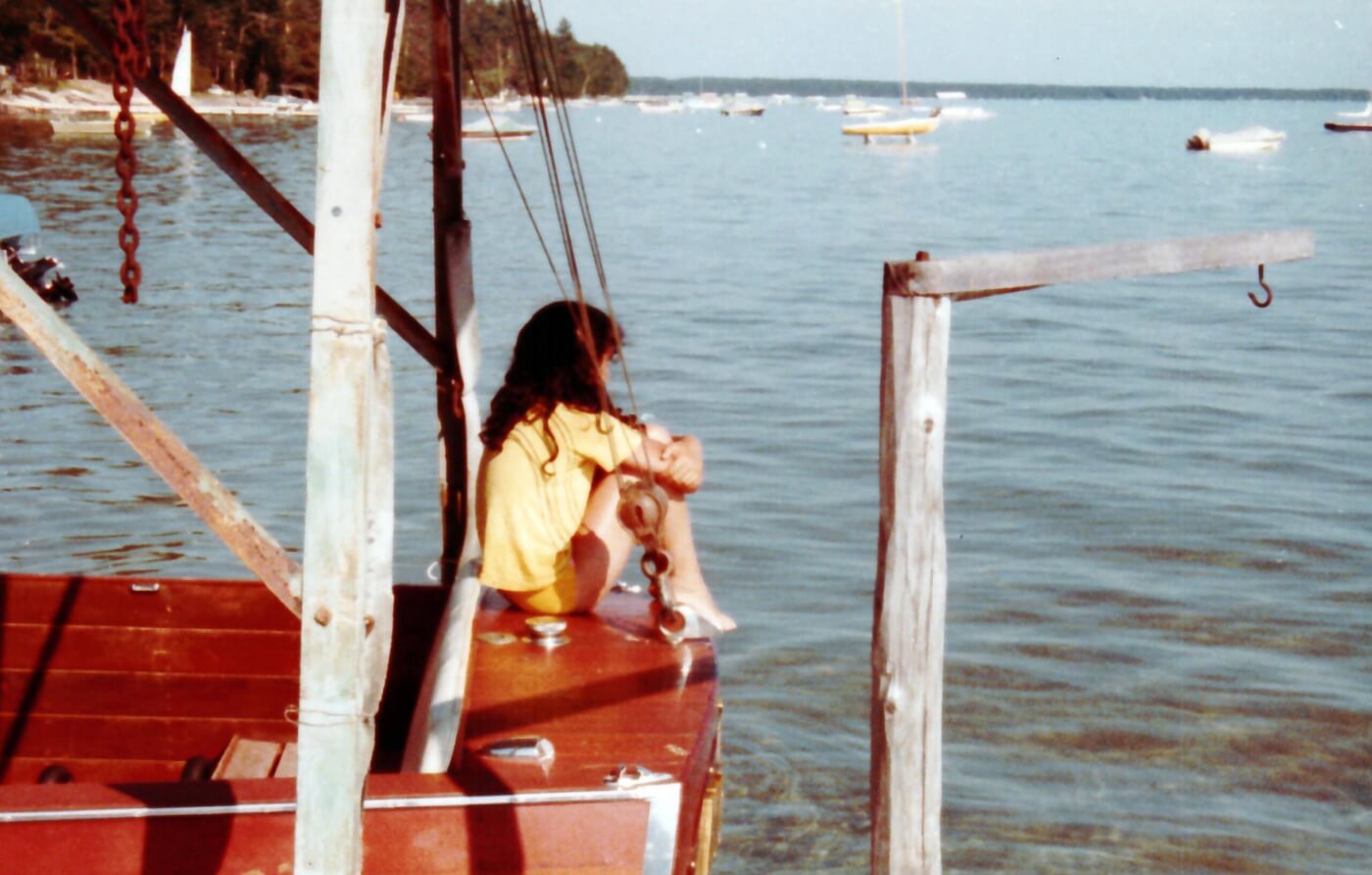
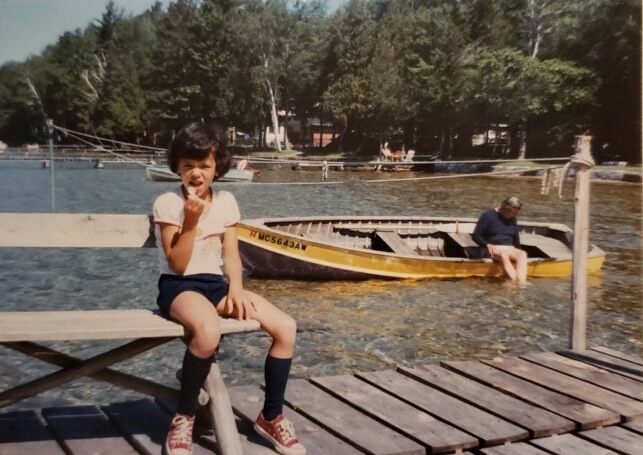
Hanging in the boat lift or out on the lake, the back of Chris-Craft was always a favorite spot for youthful contemplation.
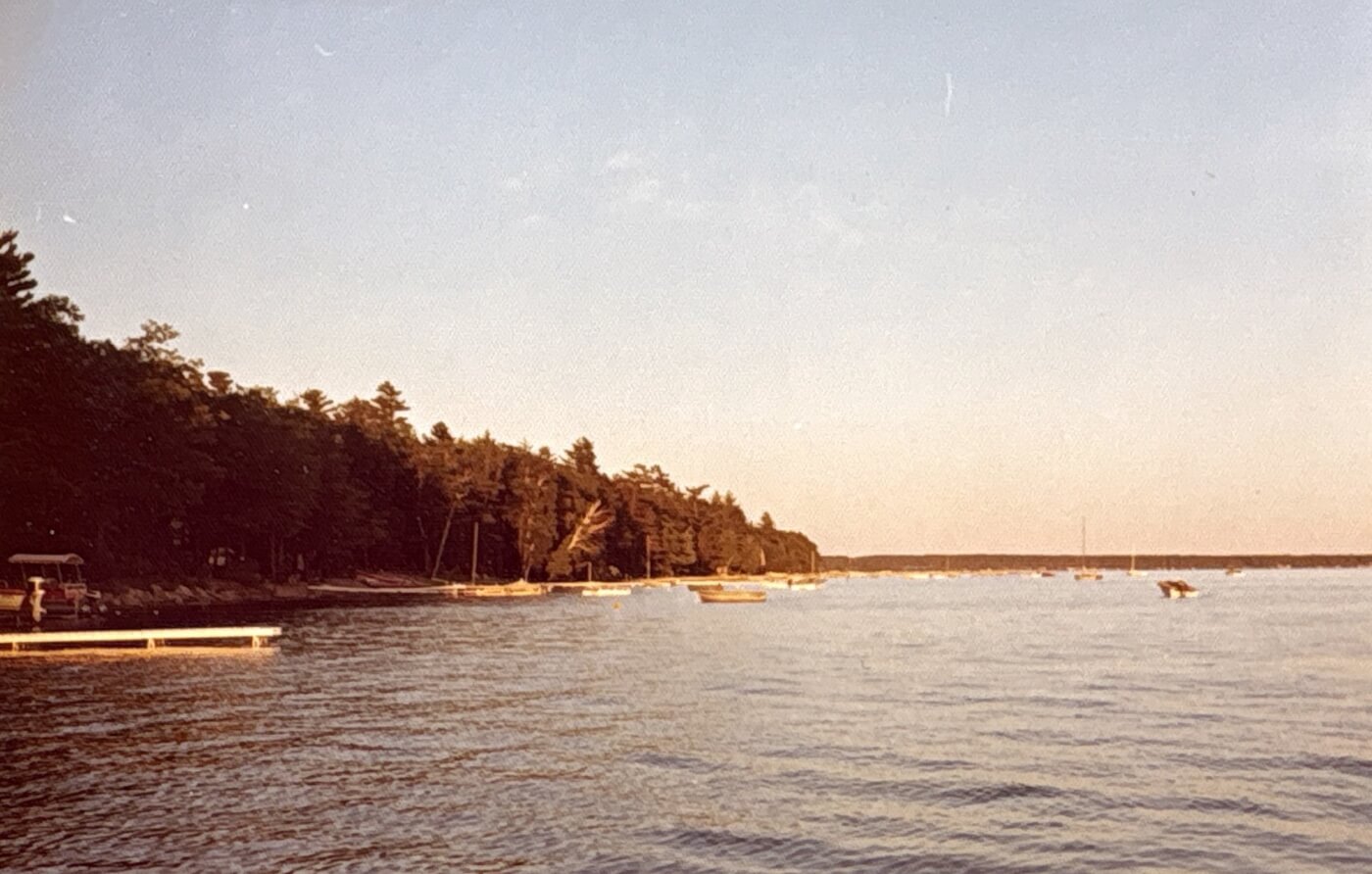
A view down the shore of Majinabeesh (Higgins Lake) in Michigan.
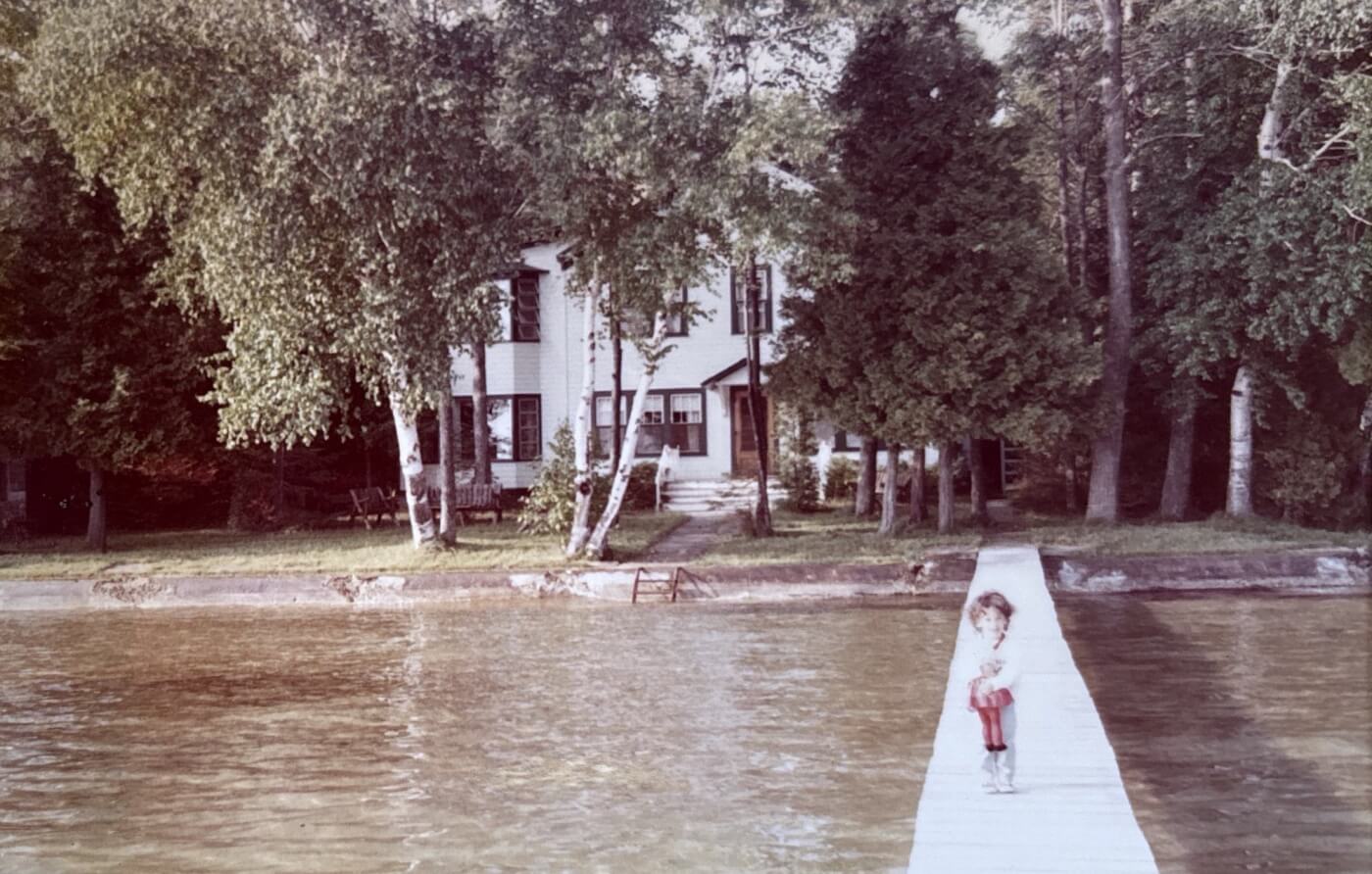
My grandparents’ lake cabin was a magical place, where the only plan for the day was eat, swim, eat, swim, nap, eat, swim.
There’s another grandparent I should mention, one who came into my life with my adoptive mother but who I always called Grandpa just the same — one who filled the gaps in my bustling nature education with stillness and quietude.
My Grandpa and Grandma spent summers on Majinabeesh (Higgins Lake) in Michigan, a lake so clean and clear you could see the sandy ridges on the lakebed — and all the minnows swimming up to investigate your toes. In the afternoon, Grandpa and I liked to sit on a bench in the front yard. We’d tie peanuts to our sneakers and sit very still, not talking. In the quiet, I noticed the water gently lapping against the seawall, the breeze shushing through the tops of the birch trees and the farther off sounds — screen doors slamming, ring-billed gulls laughing, boats whining like mosquitoes. How lulling these sounds were: Grandpa would close his eyes and drift off to sleep. I stayed awake to watch the chipmunks tiptoe up to our feet and eat the peanuts right out of our shoe laces.
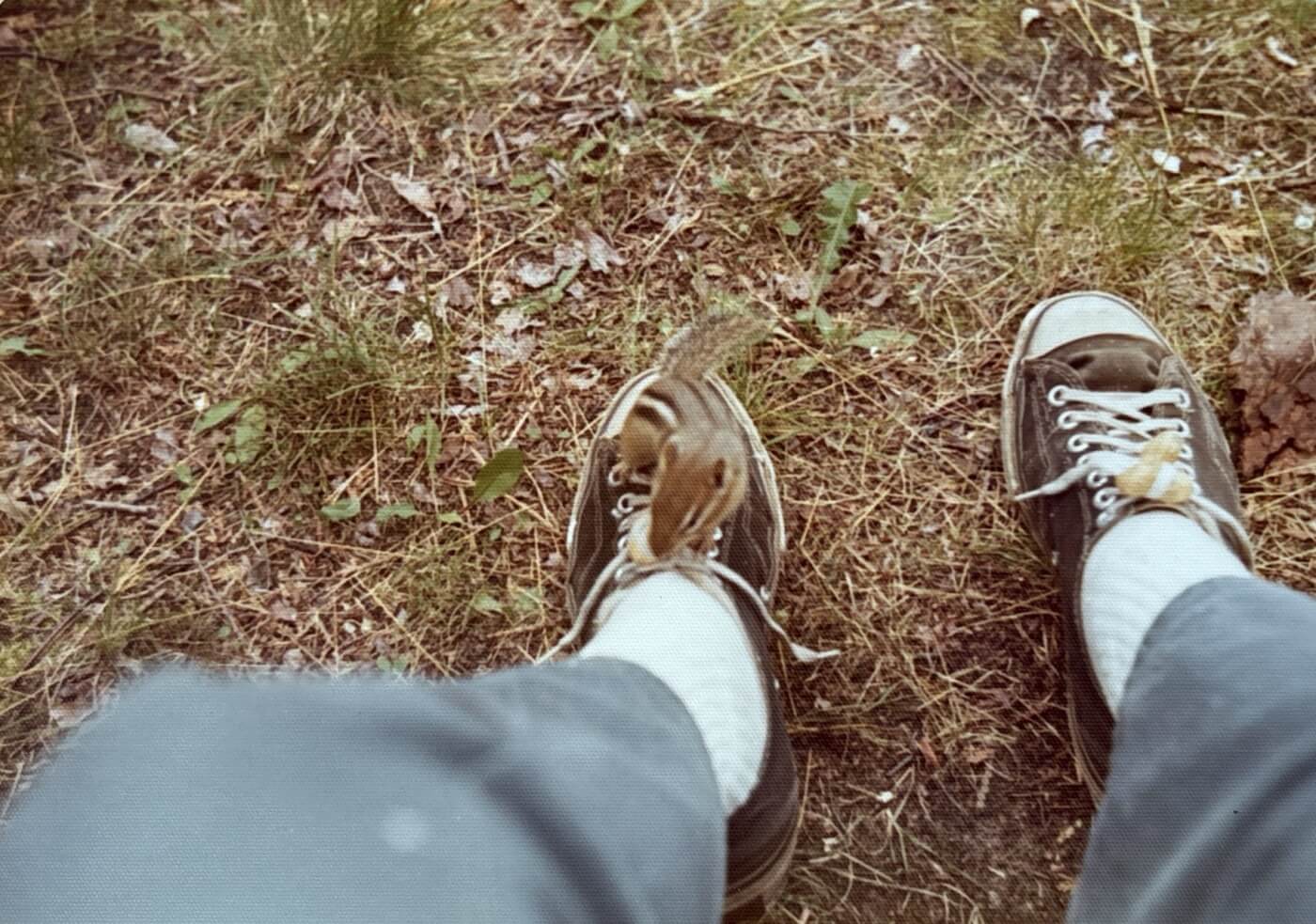
A chipmunk eating peanuts out of my grandpa’s shoes.
Another thing we did: Get up at dawn, tell everyone we were going fishing, row out to the middle of the lake, eat fried-egg sandwiches and take a nap. But not before enjoying the solace of a long, unimpeded view of the empty lake, glassy in the early morning light.
I do make him sound slumberous, but in truth he was always puttering around outside in his ‘overhauls,’ as he called them, holding off entropy with sandpaper and paint. In this way, he kept an eye on us kids. Once, during a family reunion, he caught one of my cousins smashing mussels against the seawall with a rock. They put the bodies in a coffee can and, later, Grandpa held a funeral in the woods next to the house. All creatures, great and small.
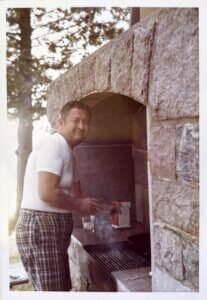
Grandpa was famous for his pan-fried potatoes, which he only made once a summer on this grill at the lake.
I can’t ask Grandpa how he experienced these moments in nature, he — like John and Wilda and my dad — is gone now. During World War II, he had been interned in a camp in France under German occupation. He came home, had my mom and her sisters, and worked at a Ford dealership. I can only wonder. But looking back at the little bit we shared, he seemed to exude quiet contentment, and I felt his deep sense of gratitude for all of us and for all the goodness in his life, and especially for nature and the peace of the lake.
All these years later, my partner and I live in a neighborhood that runs along Haha Tanka (Mississippi River Gorge) in Mni Sóta Makoce (Minnesota). We’ve lived here for 18 years, which is longer than I’ve lived anywhere else in my life.
We walk nearly every day, and after so many seasons of watching the light change, the leaves and the birds come and go, the paths along Haha Wakpa (Mississippi River) feel as familiar to me as the parks of my childhood. I see the black-capped chickadees, the honey locust trees, the eagle’s nest and Bonne Chance, the affable mini schnauzer who often walks at the same time we do — and still every season, my world, my community, gets bigger.
Walking through a floodplain forest this spring, I heard a quack from on high and looked up into a bur oak to see, for the first time, a pair of wood ducks standing on its still-bare branches. It turns out they forage and nest in the tree hollows. More wonders: Their fledglings leap some 50 feet to the ground, surviving because their bones are loose, their feathers are fluffy and the tree provides a bed of leaves.
Like my grandpa, I have learned the joy of puttering around outside. Our garden is a messy place, full of life, and I am the interloper. I settle down amongst the weeds and wait for the birds to come back. When they do, their voices are so familiar I don’t have to look up to see them — the goldfinch perched and wagging on a slim lavender stem, the hummingbird humming deep in the trumpet vine, the neighbor’s hens quietly cooing hello to the morning. It is extremely pleasant, and if the urge to close my eyes comes over me, well, there is no better time or place.
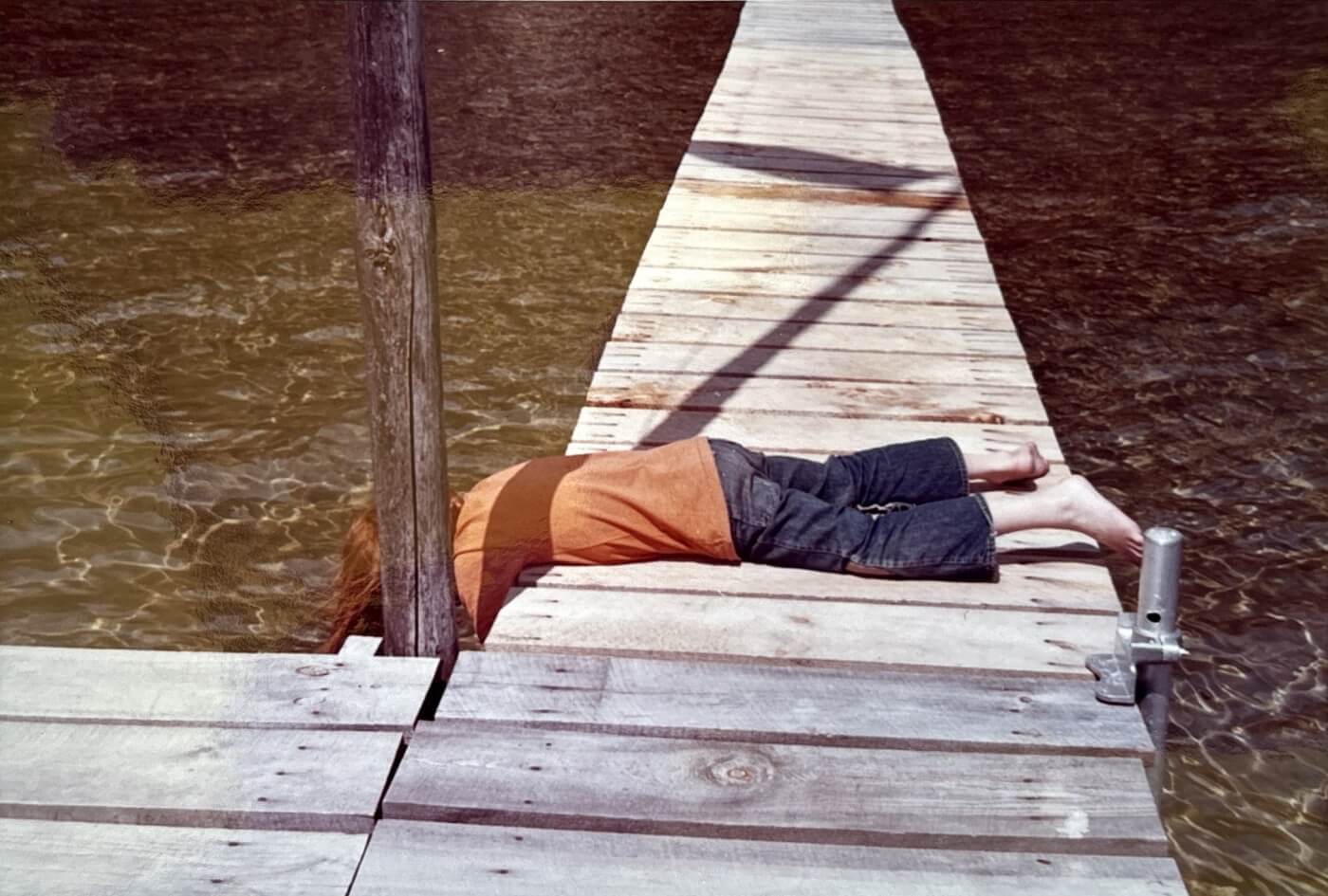
My brother David also loved the lake. He was obsessed with all the critters, and most especially the fish — which liked to hang out under the dock, perhaps because it was cooler and safe from (some) predators.
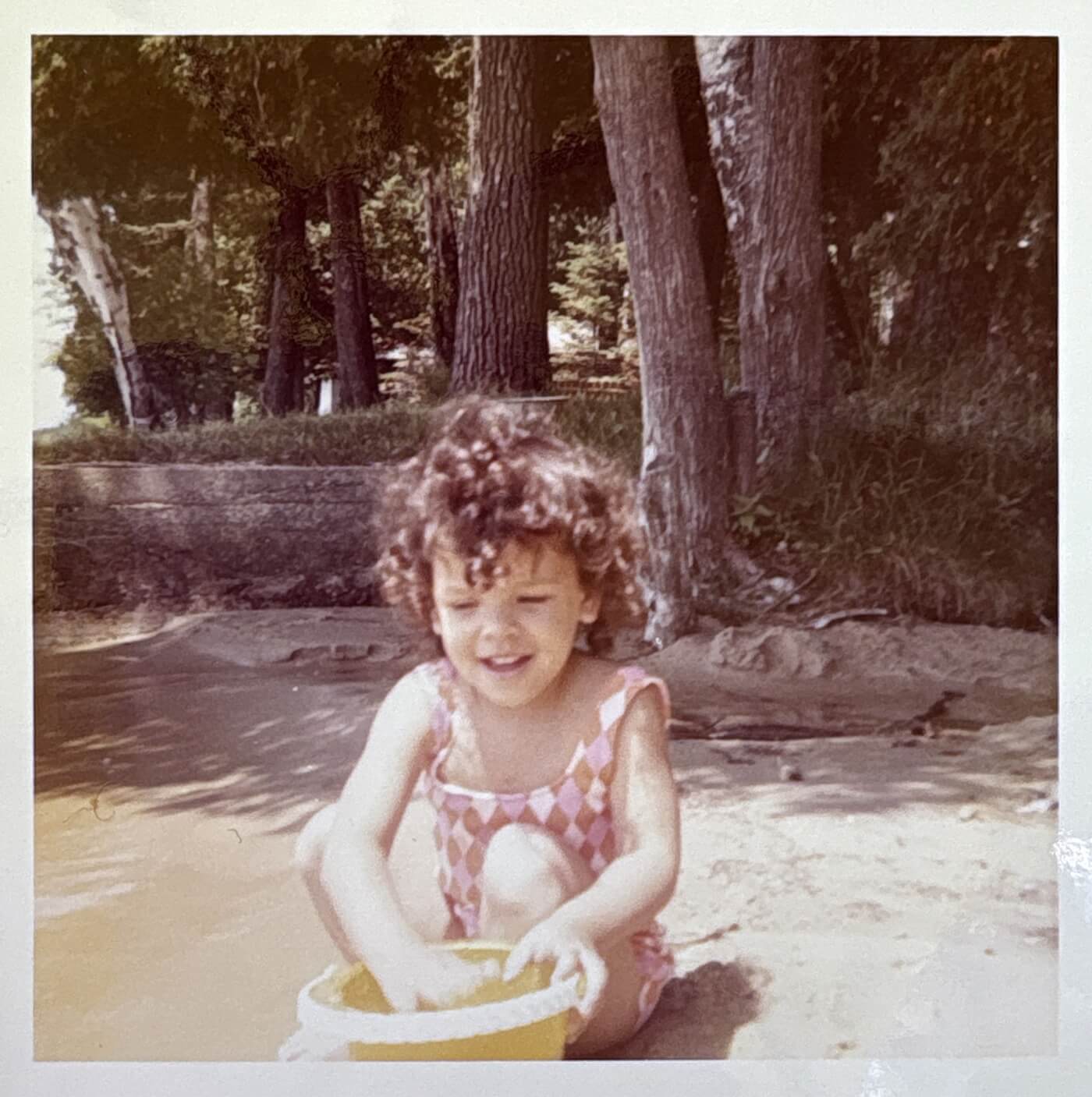
This little beach was on the neighbor’s land, but they let us kids play in the sand — and even loaned us buckets and shovels.
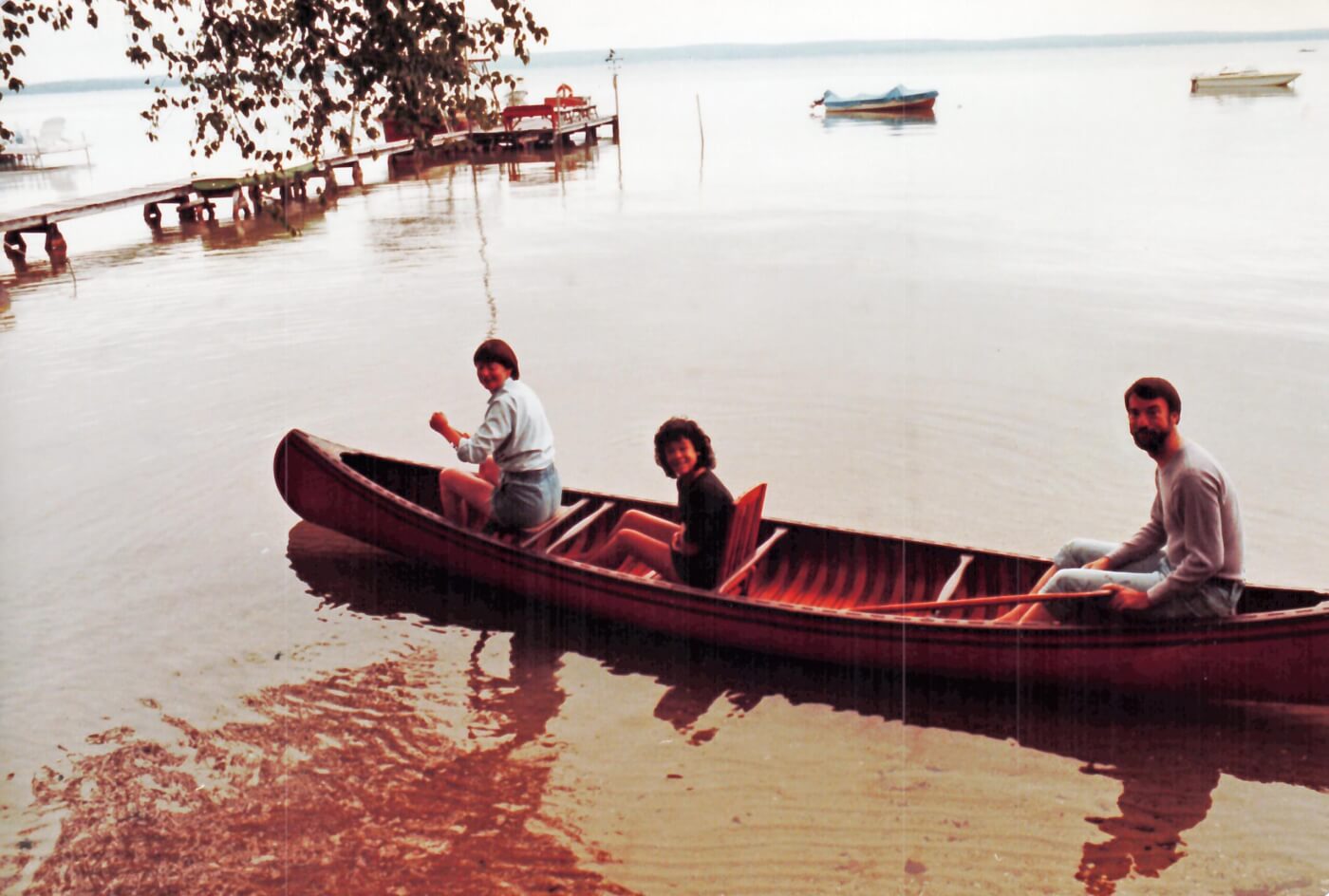
Setting out on a canoe ride with my folks. It was fun to go with my mom, who knew all the houses and families along the shore.
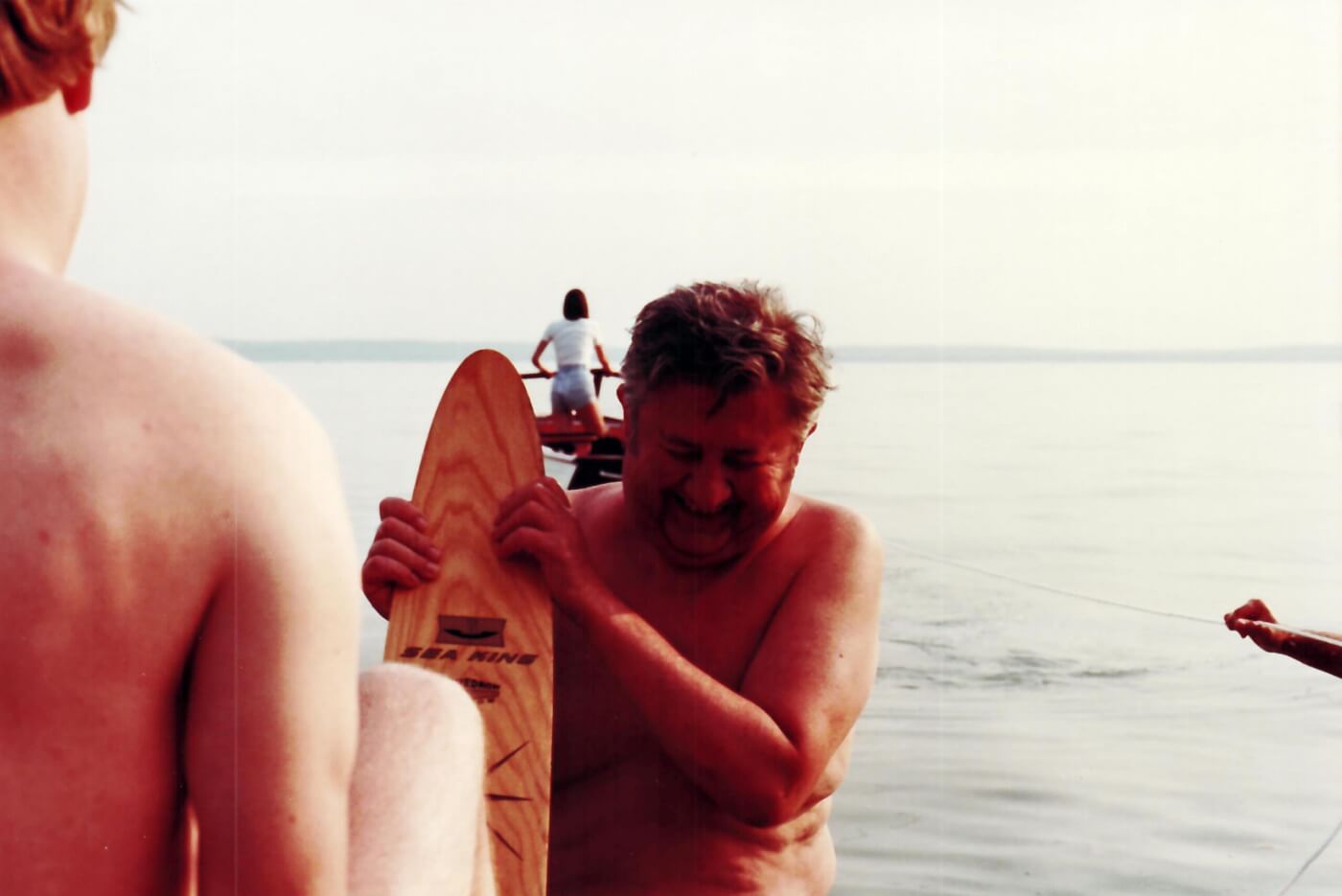
Grandpa helping my brother David into a pair of wooden water skis.
4 Comments
Submit a Comment
RICHARD LOUV GRAND IDEAS! 21 great ways grandparents and grandfriends can connect kids to nature
VOICES Creating a stronger family culture through “friluftsliv”
FEATURE Bridging generations: Intergenerational connections to nature in Minnesota
STUDY The prevalence and use of walking loops in neighborhood parks
FEATURE Birds in My Neighborhood: Connecting kids to the joy of birding — and nature
-
Richard Louv
THE CRIMINALIZATION OF NATURAL PLAY: It's time to look for solutions
-
Network News
Cincinnati: From green schoolyards to city-wide green initiatives
-
Feature
A decade of ripples: What Nature Everywhere Communities reveal about systems change
-
Feature
Crossing invisible boundaries in the outdoors: A Q+A with Mason Branstrator
-
Feature
Forest bathing: Educators need nature connections, too

I really enjoyed reading this article about how nature came to be so important to you. Your family and memories sounded wonderful. Thank you for sharing this joy.
What a beautiful series of memories. I loved going back in time and sharing the experience!
Great story. Loved the pictures!
Beautiful piece.