
Birds in My Neighborhood: Connecting kids to the joy of birding — and nature
If you’re into birding, maybe you’ve heard of the “spark bird.” It’s the very first bird that ignites a person’s lifelong curiosity about them. Whether it’s a hummingbird or a great big sandhill crane, the spark bird has the power to bring all birds into focus — you learn about one bird, and suddenly you’re seeing them everywhere.
“Birds in My Neighborhood creates opportunities for urban public school children to get out into their neighborhoods and parks and see their spark bird,” says Jessica Fong, education director for Openlands, the Chicago-based regional conservation nonprofit that founded the program. “The goal is to use birds as little ambassadors to open children’s eyes to all of nature.”
Since 2013, Birds in My Neighborhood® has introduced more than 12,000 elementary students in over 300 Chicago public schools to the joys of bird-watching. The program focuses primarily on schools on the south and west sides of the city. According to the Climate and Economic Justice Tool created by President Biden’s Justice40 Initiative, many of these communities are heavily burdened by environmental challenges, such as air pollution, toxic water and wastewater, and the localized effects of climate change. “Most of Openlands’ work is in those areas, and we’re very intentional about bringing Birds in My Neighborhood to these schools,” says Fong, “because we know that those children are impacted by lack of access to the lakefront, to green spaces and, really, just to nature.”
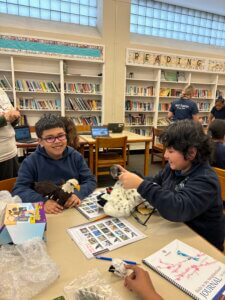
Students at Hearst Elementary School investigate feather and fowl during a Birds in My Neighborhood classroom visit. Photo by Jessica Fong, courtesy of Openlands.
What makes birds such incredible ambassadors for nature in urban settings? They’re everywhere. “As a city kid, I’m most likely never going to see a coyote or a fox or a deer or any of the classic Midwestern animals in my neighborhood,” Fong explains, “but if you step outside your door, you will see a pigeon, a sparrow or some other common city bird.”
“Young children connect to all the living creatures on our planet, but animals really spark something in them,” Fong adds, noting how children are captivated by the freedom that birds have — perching in trees and soaring across the sky. “There’s this kinship that can create a kind of spiritual connection to nature.”
Enthusiastic adults also play a big role in fostering nature connection. Birds in My Neighborhood is largely run by community volunteers. Openlands recruits not only bird-watchers — who have traditionally tended to be a smaller demographic of older retirees — but also people who appreciate nature or love working with kids. That wide lens has helped to attract volunteers of different ages, backgrounds and perspectives. “We really want the volunteers to reflect the population of Chicago Public Schools, which is almost 90% students of color,” explains Fong. “That’s another point of inspiration for the students. You know, ‘Oh cool, this adult who looks like me, really loves birds or nature. Maybe I should get into that, too.’”
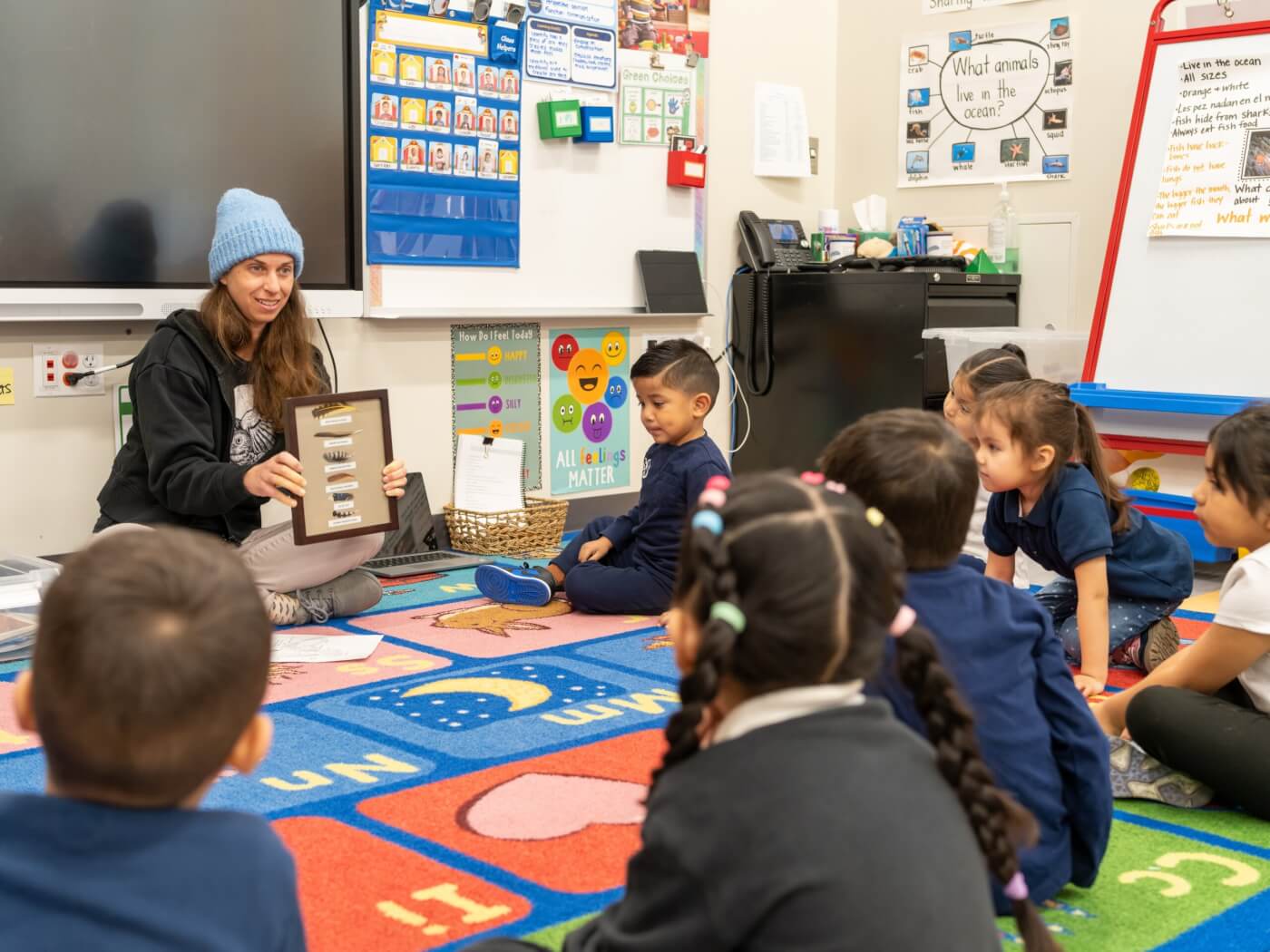
A volunteer shares bird feathers with children from Locke Elementary School. Photo by Jorge Garcia, courtesy of Openlands.
The Birds in My Neighborhood program is seasonal, running from March to May each year — the peak spring bird migration in Eastern Illinois. Openlands trains volunteers on both birds and outdoor education strategies in February, preparing them to lead students through three monthly visits: a classroom day, a neighborhood day and a day in one of Chicago’s many natural areas. Fong says Openlands recently began providing bird-related professional development for teachers, too. This gives them the context needed to support the Birds in My Neighborhood visits — and to continue teaching their students about birds throughout the school year.
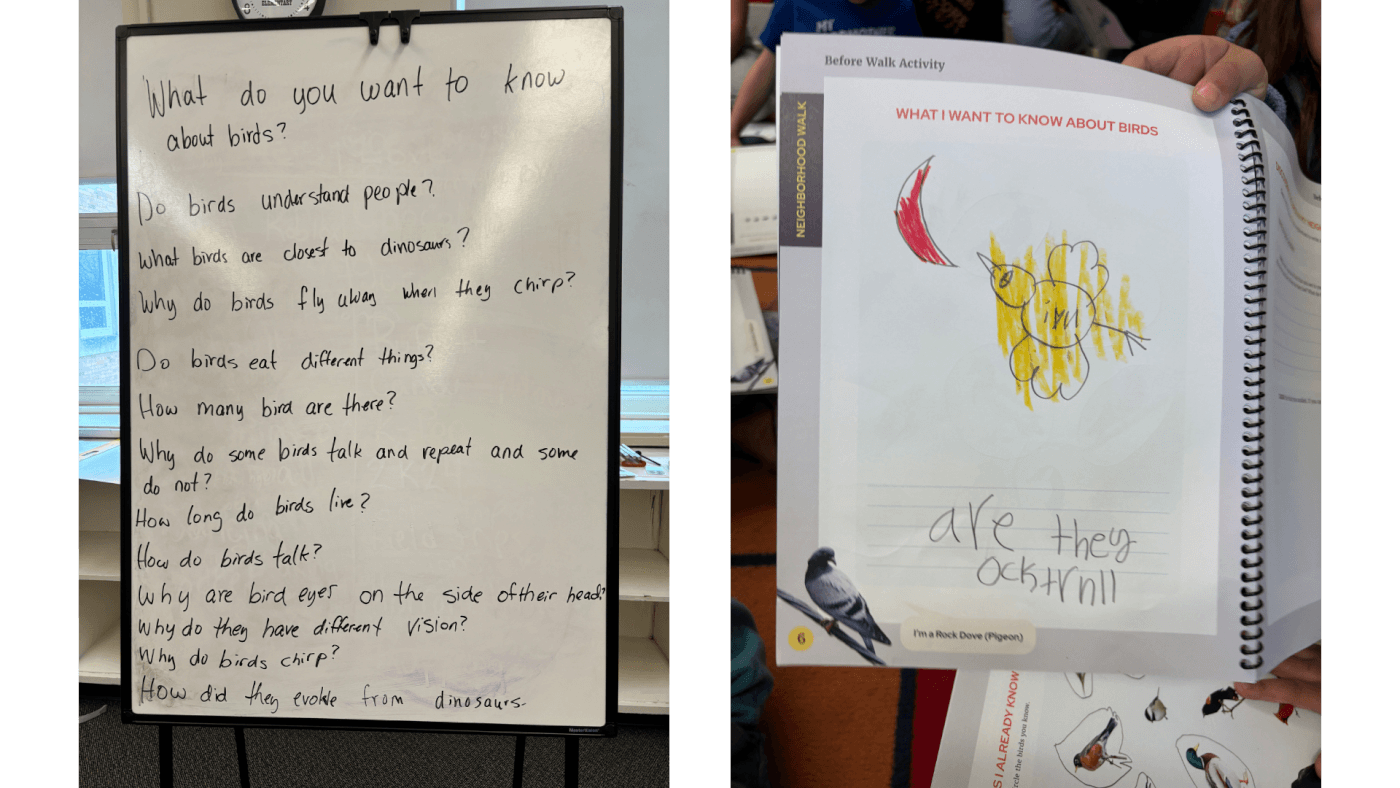
During classroom visits with volunteers, students share what they know and want to know about birds. Each student then receives a birding notebook, so they can keep track of their birding experiences. Photo by Jessica Fong, courtesy of Openlands.
In March, volunteers visit participating classrooms for the first Birds in My Neighborhood lesson. They bring show-and-tell tools, like stuffed birds, a variety of nests and feathers of all sizes — from a long red-tailed hawk feather to a tiny finch feather. While the children explore the materials, the volunteers ask them what they know about birds, what birds they know and what birds they want to know. “This gets their brains thinking about birds, and it starts to build some collective knowledge,” says Fong. “Everyone knows something about birds, and when they hear their classmates say ‘bald eagle’ or ‘American robin,’ their wheels start turning — ‘Wait a minute, I want to know about that bird!’”
Each student gets a birding notebook, where they can record their answers to the questions above. There’s also space to draw and write about their favorite bird and a checklist to keep track of all the birds they see — a classic bird-watching activity. “We create a graph of the birds they’ve seen,” explains Fong. “So if we’ve seen 10 sparrows but only one bald eagle, we can ask, ‘Why do you think that is?’”
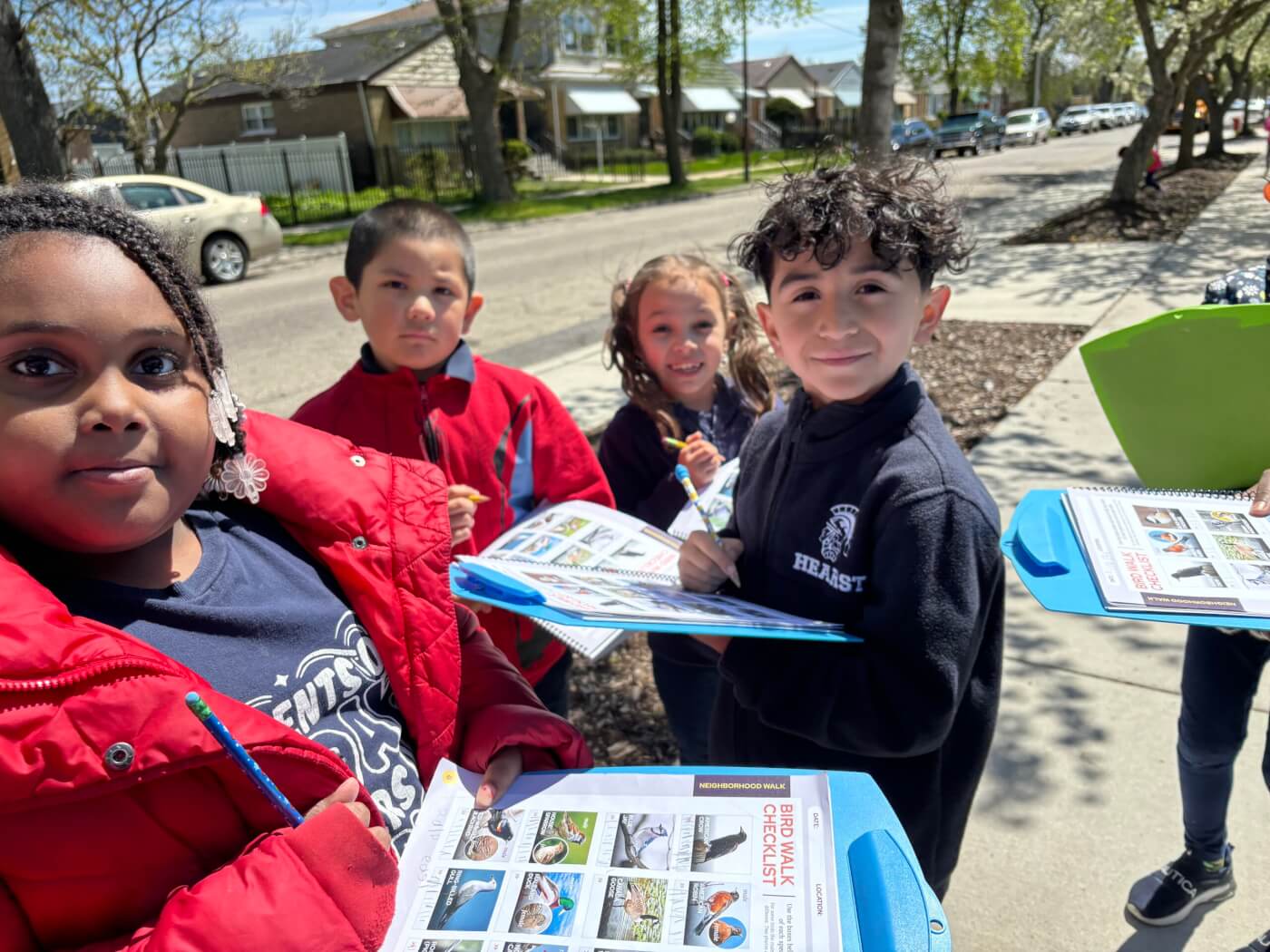
On a neighborhood bird walk, Hearst Elementary School students keep track of all the birds they see. Photo by Jessica Fong, courtesy of Openlands.
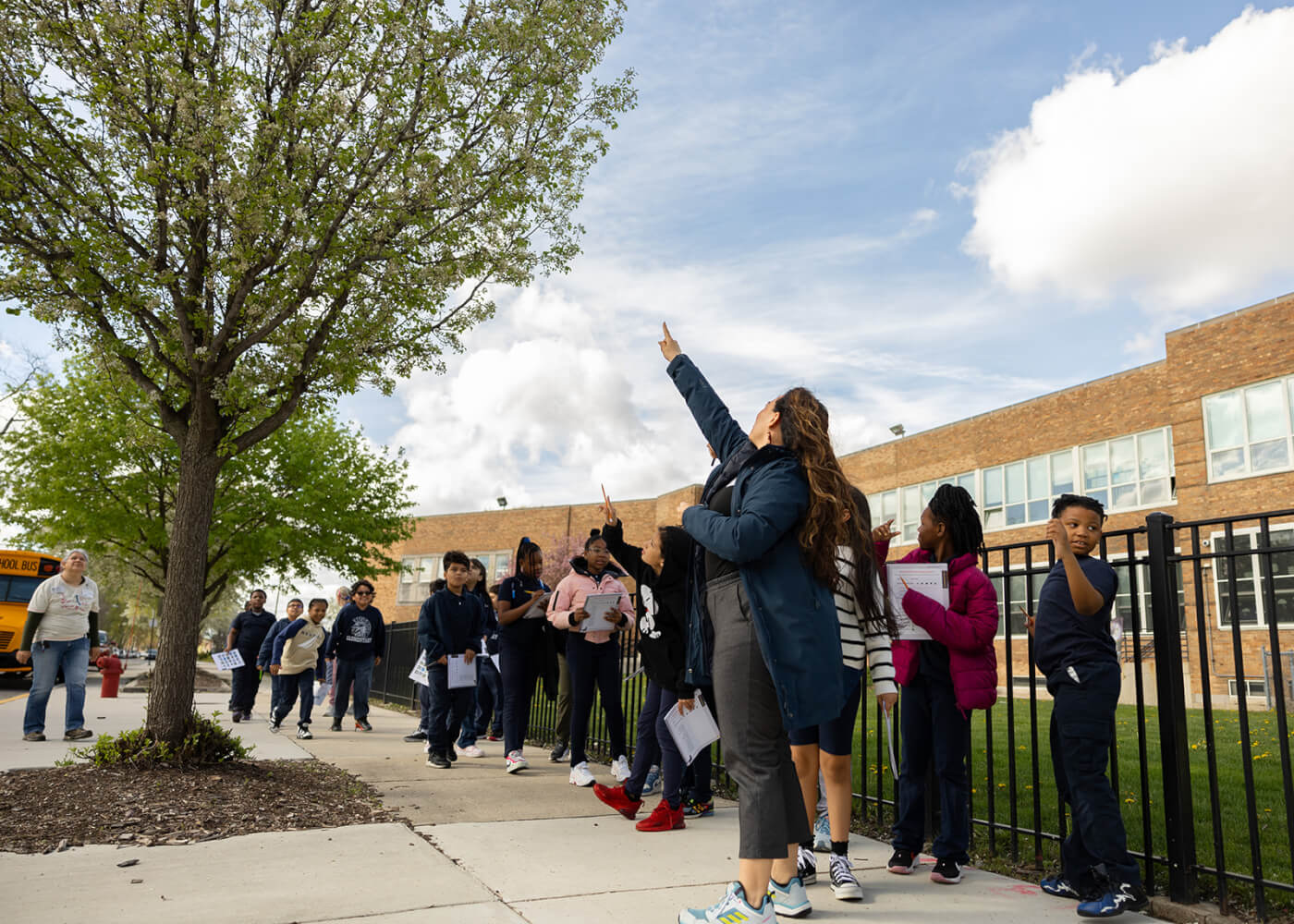
Birds are everywhere — even in the trees just outside urban schoolyards. Photo by Eduardo Cornejo, courtesy of Openlands.
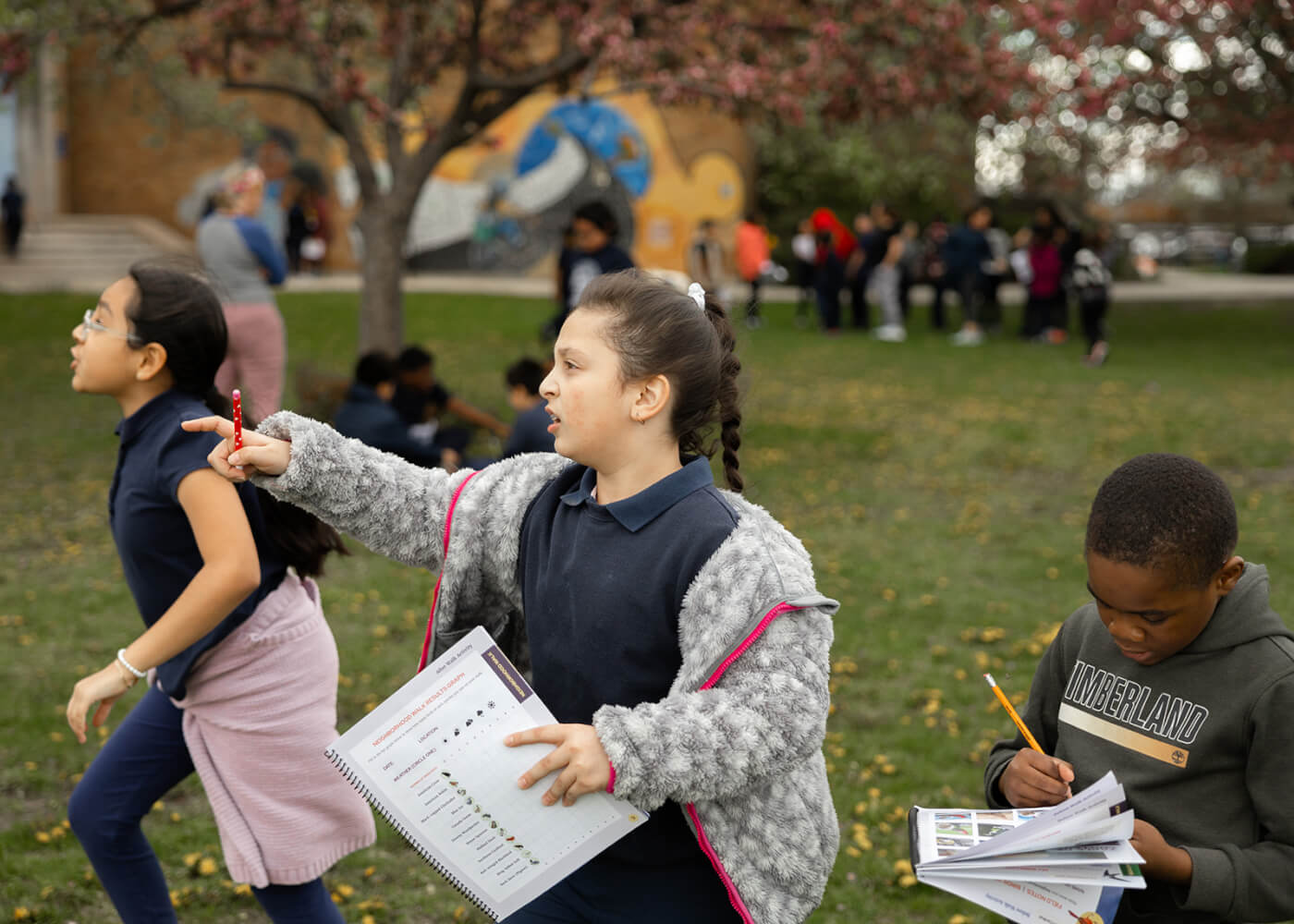
What do you do when you spot a bird? Let your fellow bird-watchers know — and put it on your life list! Photo by Eduardo Cornejo, courtesy of Openlands.
The neighborhood walk, in April, is a field trip of about three blocks, but it yields plenty of birds to crow about. “Last year, we saw a huge flock of goldfinches,” Fong laughs. “Right here in the city of Chicago! It just boggled my mind — they were up in these urban trees, just chitter-chattering back and forth, having a conversation.”
Fong acknowledges that some schools are located in neighborhoods where the students can’t go for a walk without safety precautions, like additional chaperones. This highlights the endemic issues that make engaging in outdoor learning challenging for teachers, school communities and students with limited outdoor access. “When we have to get creative, we’ll go out to the schoolyard or parking lot,” she explains. “Again, that’s what makes this program so special — birds are everywhere. You don’t need to be in a special place to see them.”
Fong adds that many of the schools that participate in Birds in My Neighborhood are also a part of the Space to Grow® green schoolyards program. Founded by Openlands and Healthy Schools Campaign in 2013, Space to Grow has since transformed 36 playgrounds on the south and west sides of Chicago by putting in stormwater management features to reduce neighborhood flooding — and creating green spaces to play, learn and be outside. “There’s a beautiful connection between these two programs,” says Fong. “Birds in My Neighborhood students can really take advantage of these newly created green spaces to bird-watch.”
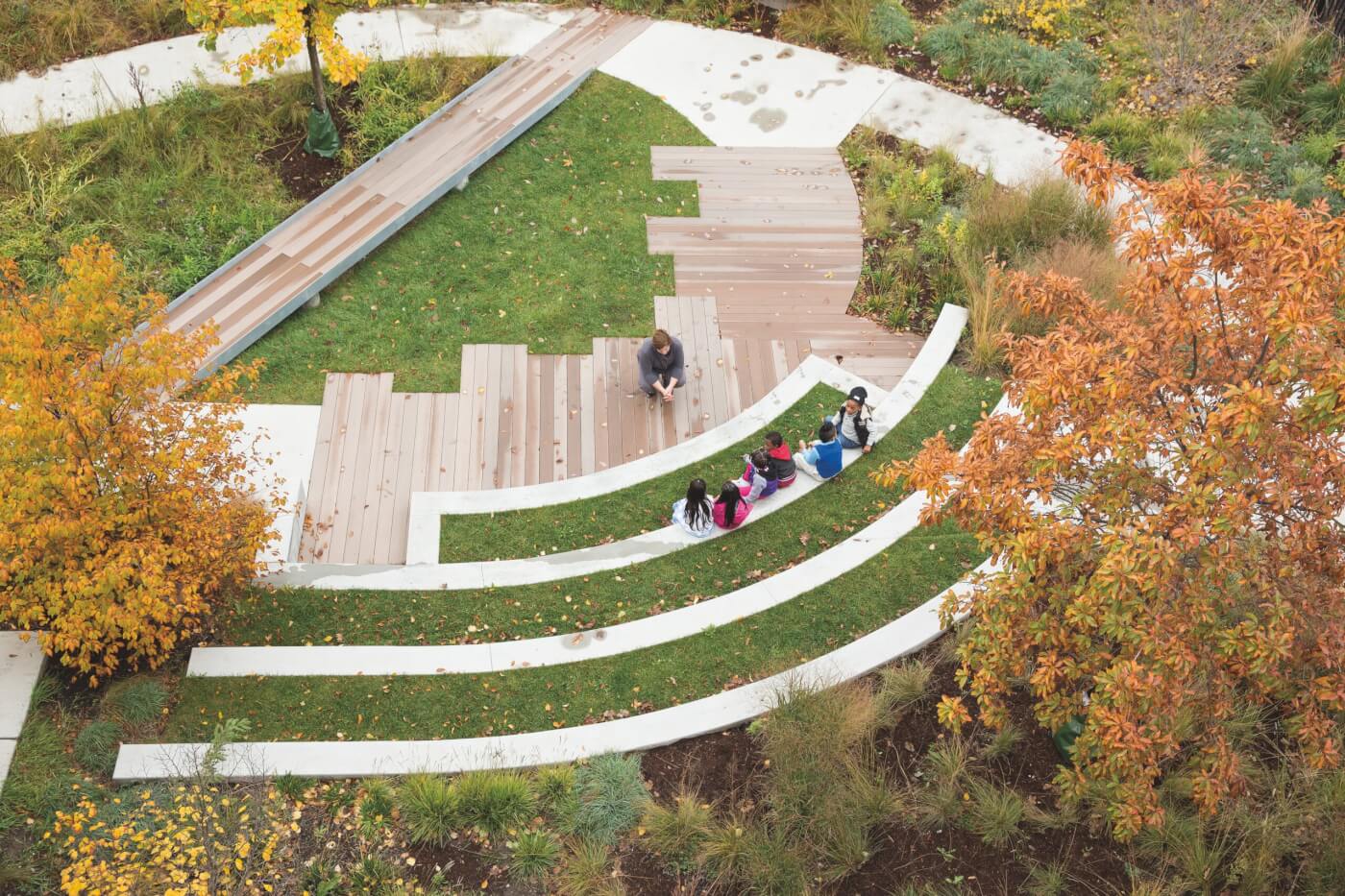
Green schoolyards, like this one created by Space to Grow in Chicago, Illinois, can be wonderful places to bird — as well as to play and learn. Photo courtesy of Openlands.
In May, the students get to visit a local birding hotspot. While Chicago has beautiful, large natural areas, many of them are on the north side of the city or on the shores of Lake Michigan — places that many participating students might not otherwise visit. “Introducing our students to these spaces is really special and such an important part of Birds in My Neighborhood,” says Fong. “If the schools decide to go to a lakefront nature area to do their birding, it will be the first time that some of the kids have ever seen the lake.”
“And they’re not just seeing the lake,” adds Fong. “They’re seeing 65-acre nature areas, they’re seeing lagoons and they’re seeing all the birds that live there, like egrets, geese and bald eagles — birds that, for urban kids, aren’t in their immediate neighborhood.”
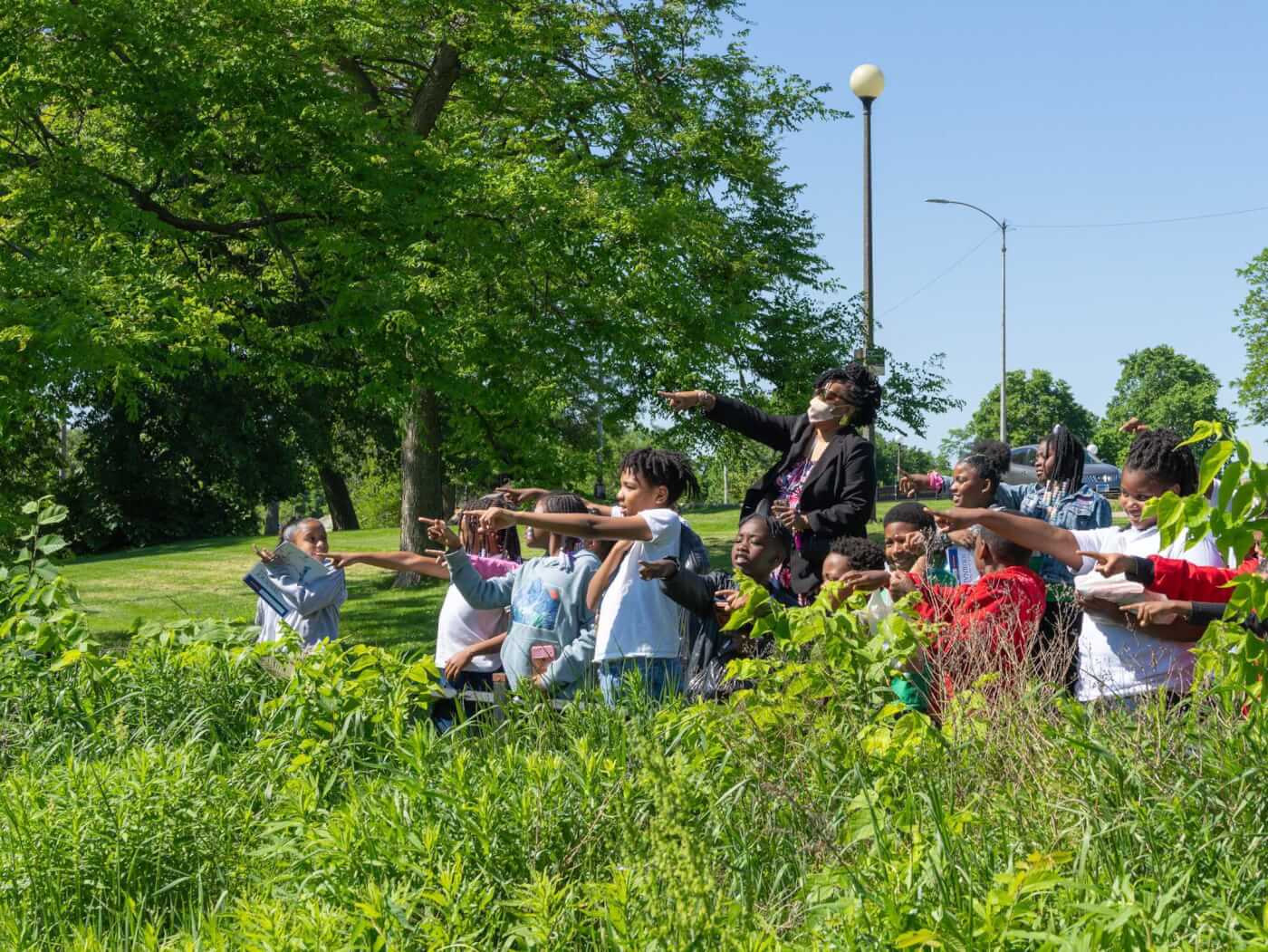
One of the first things Birds in My Neighborhood teaches students about bird-watching is that it’s a quiet activity: first, you listen for bird songs and calls, next, you see a bird with your eyes, then you point up at it with your hand. “There’s this ripple of excitement when one kid points up. Everyone comes in closer, and then all the kids are pointing up,” laughs Fong. “That’s not only the connection to animals, but the connection to each other as humans, right? The sharing of joy, the sharing of a passion — it’s infectious!”
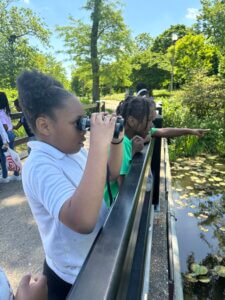
Students from Beidler Elementary School share the thrill of a bird sighting while exploring a water habitat. Photo by Jessica Fong, courtesy of Openlands.
Studies show that urban children who spend more time learning about nature and engaging in outdoor activities, like looking for wild animals or going for long walks, demonstrate significantly higher levels of connection to nature. Children with higher levels of connection to nature also report a greater willingness to participate in conservation and environmentally responsible behaviors.
With the Birds in My Neighborhood program, Openlands hopes to turn students into stewards of nature. “Our ultimate goal would be that they feel this joy for birds, they tell their families and that shared excitement takes them further,” Fong says. “You know, ‘Birds need this, that and the other thing to live, so we should clean up the neighborhood, plant these trees and protect our bird friends.’”
Fong also hopes that in the quietude of bird-watching, the children experience the mental and physical benefits that time in nature provides. “Sometimes that solace or respite that comes from being in nature is missing for urban kids,” she says. “Maybe seeing a couple sparrows in the park, sitting down to watch them, feeling the breezes and breathing the fresh air can connect them to that sense of calm.”
Birds in My Neighborhood program web page on the Openlands website
Space to Grow: Chicago-based green schoolyards program website
Birds in the playground, a study on how urban children experience connection with local wildlife while participating in a bird feeding and monitoring project
Research Digest: Nature & Children’s Spirituality
All About Birds: An online guide by Cornell Lab of Ornithology on birding and birds
BirdNote: 2-minute sound-rich radio shows and podcasts about birds and their superpowers
-
Richard Louv
ON THE RIVER: The Restorative Power of Nature in Difficult Times
-
Feature
We’re all looking for the same moon
-
Voices
Green Schoolyards Action Agenda: A national roadmap for nature-rich school grounds
-
Feature
A decade of ripples: What Nature Everywhere Communities reveal about systems change
-
Feature
Forest bathing: Educators need nature connections, too