
How lessons from Traditional Ecological Knowledge can support kids — and stave off climate anxiety
As the planet continues to warm and natural disasters like wildfires and flooding become more frequent, 59% of youth and young adults surveyed globally say they’re very or extremely worried about human-caused climate change. This is climate anxiety: Young people are worried that the adults in charge, their governments, aren’t taking action, and they’re fearful for their futures — and for their families and communities.
Trelasa Baratta says the solution is getting kids outdoors and actively caring for — and learning from — nature.
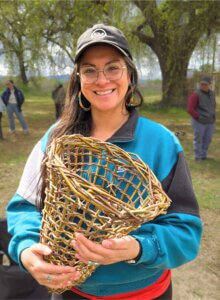
Trelasa Baratta is the Education Specialist at Redbud Resource Group and an enrolled Tribal member of Middletown Rancheria of Pomo Indians of California.
“We have to see nature as a teacher, an Elder, and we have to have the humility, the respect, to be open to those lessons,” she explains. “Indigenous communities have learned from the land, which is why we know what we’re supposed to do. I think that all communities can do the same.”
“Indigenous scientists are here to help,” adds Baratta. “The knowledge isn’t quite as valued in the scientific community yet, but it’s getting there — I see momentum.”
A growing body of research shows that conservation and biodiversity management are most effective when Native communities are the environmental stewards. Indigenous people manage more than 21% of the world’s land and protect a substantial portion of its remaining biodiversity. As a result, governments and Western-trained scientists are taking an increased interest in Traditional Ecological Knowledge (TEK). Centered on the deeply place-based relationship Indigenous people have with the lands where they live, TEK is grounded in a holistic understanding of ecosystems. It guides stewardship in a way that ensures ongoing access to important resources, medicine and food.
“We care for the land in a way that we’ve done for thousands of years,” Baratta says. “In a way that is spiritual, sacred and in harmony with not only the land and animals, but the water, mountains, and the things that we consider to be inanimate objects. Every relative has a role to play in our ecosystems.”
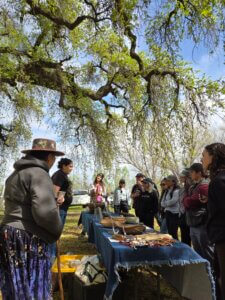
Redbud Resource Group provides programs and curricula that support both Native and non-Native groups.
An enrolled Tribal member of Middletown Rancheria of Pomo Indians of California, Baratta is the Education Specialist at Redbud Resource Group, a Native- and women-led nonprofit that works to strengthen the health and sovereignty of Indigenous communities.
The organization helps non-Native teams create meaningful alliances with Tribes and builds capacity among emerging Native leaders by developing their skills, knowledge and community. Baratta’s work focuses on developing curricula and training for teachers who want to incorporate Native history, science, foodways and perspectives into K-12 education.
Baratta bases Redbud’s Indigenous science-related courses on her conversations with Tribal Elders and TEK practitioners. She makes a distinction between TEK and Indigenous science: TEK is deeply entwined with Native culture, cumulative across generations and highly specific to place and ecosystem. Indigenous science, on the other hand, is a more general practice — something that anyone, anywhere can learn and apply.
In particular, teaching kids about Indigenous science can help them build a closer relationship with nature and their local ecosystems — and begin to understand their role in its resilience.
Eco-anxiety is not just about fear for the future. Kids also experience fear around present-day challenges, like the loss of access to place-based foods and medicines, and meaningful time outside. When communities reclaim connection to these resources, it’s empowering: They see that they can take control of their health and well-being, and are no longer dependent on existing systems that may be unsupportive.
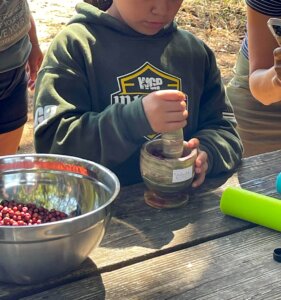
Grinding manzanita berries, a traditional food that benefits our immune system, and provides a high level of Vitamin C and antioxidants.
“The sooner we can all figure out what the land needs, the sooner we can relieve the eco-anxiety that kids face,” Baratta says, “because they’ll know what to do — and they’ll know that Mother Earth is going to recover.”
Introducing Indigenous science and perspectives to young people has to start with Native values. “When it comes to environmental science and education,” Baratta explains, “you have to make sure that the right values are guiding your practice — because there’s no such thing as value-neutral science.”
Indigenous values are often referred to as The Three Rs: Respect, Reciprocity and Relationships. Here, Baratta shares her insights on each one, and asks us to keep in mind that they may be defined differently by different Indigenous communities.
Respect
In Western culture, Baratta explains, “we tend to think about respect in terms of our human-to-human relationships.” It’s rare to consider respect as something that we could and should offer to nature.
Historically, Western scientists have put humans as the top of the evolutionary ladder — with all the rest of nature below us. From that vantage point, nature doesn’t hold knowledge, it’s something for humans to study and explain.
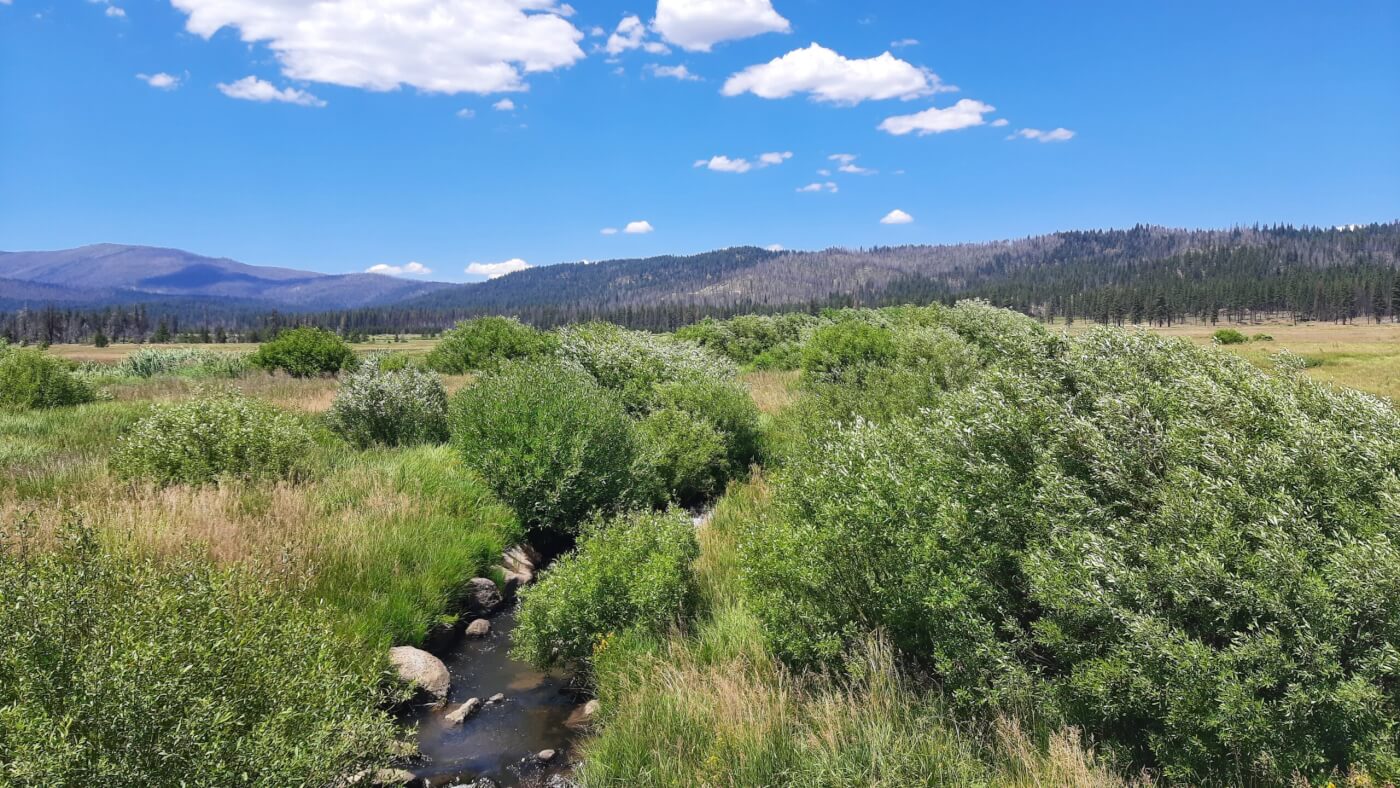
In partnership with the Maidu Summit Consortium, Redbud helps teach the importance of Native species and Indigenous Knowledge in ecosystem recovery. Beavers, a keystone species that was nearly decimated to extinction during the Fur Rush of the 1800s, were recently released back into their native habitat on this piece of land in northern California.
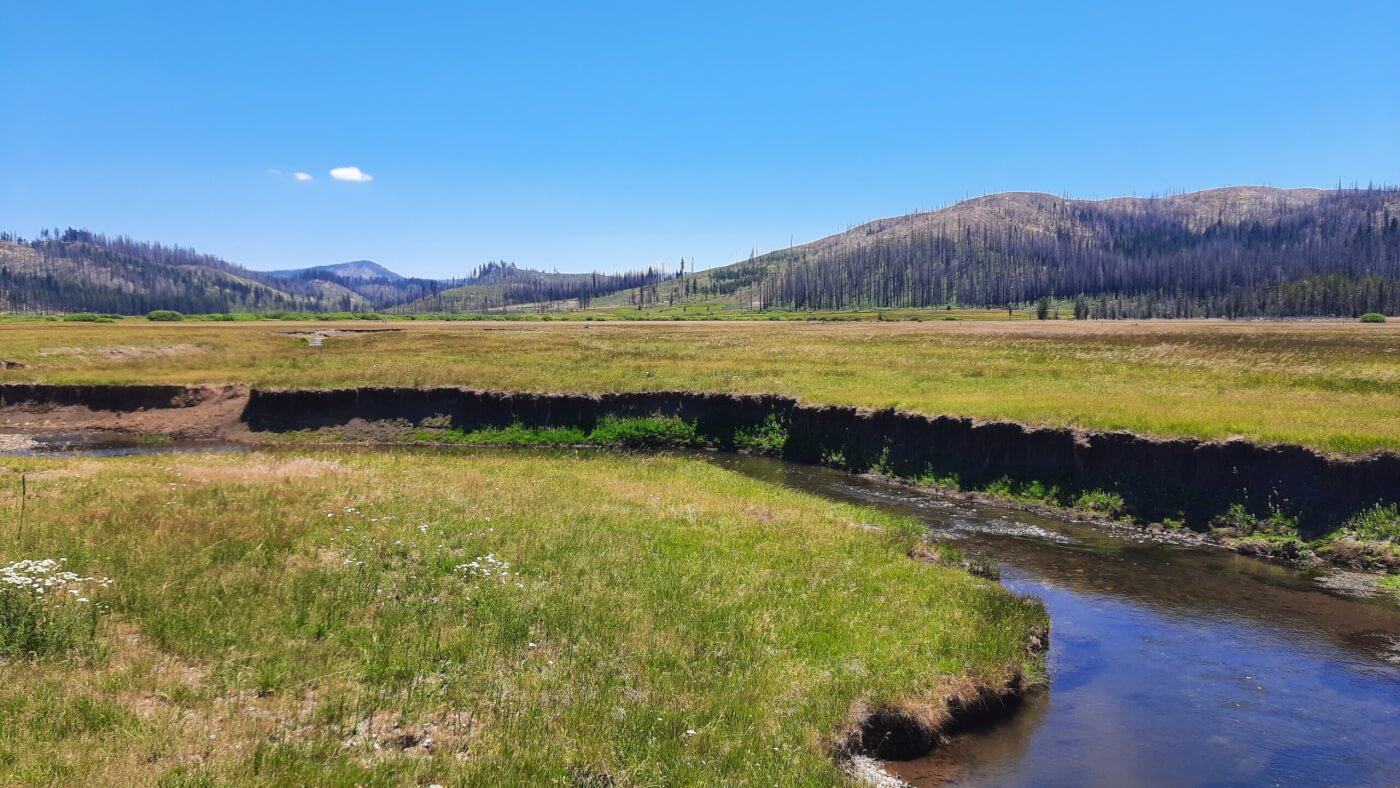
In contrast, this habitat, within 20 feet of the prior image, is privately owned and used for grazing cattle. The land shows evidence of the cattle’s effect — they flatten the plants and cause erosion on the banks of the creek.
Indigenous science tells a different story: Humans look up to and respect the land, water and all living things, human and non-human that have come before us.
“When you have respect for something, you recognize that it has value, that it has purpose, that it has something to offer you, right? It has a high, high esteem,” Baratta explains. “Humans are a relatively new species, and the plants and animals and the land and water have been here even longer than we have, and so they have even more knowledge to offer than we do.”
According to Traditional Ecological Knowledge, the land offers the knowledge Indigenous practitioners need to care for it — a sacred gift. “This is where ceremony comes in,” says Baratta. “It’s about practicing that gratitude with the land, for offering us what we need to know to take care of it and ourselves.”
Reciprocity
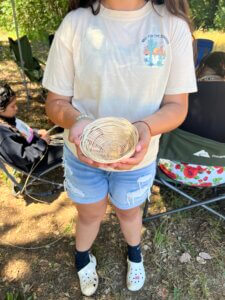
Native youth learn how to best care for the land through basketweaving.
“The land gives and gives,” says Baratta, “and the mistake that Western societies made in colonizing the lands is that they took and took without giving back — that’s the dark side of value-neutral science.”
In Indigenous science, reciprocity is the process of taking care of the ecosystem, the community, the being that takes care of you. It means not only giving back, but thinking beyond the present moment.
Baratta explains: “Practitioners have to think about the season cycles in terms of what the ancestors left for them and how the actions they’re taking now are going to affect the next generations.”
A related value is taking only what you need — of medicine, food or resources. “TEK practitioners have found a way to balance what’s okay to take and how much to leave,” Baratta says. “Otherwise, greed steps in, and you start taking without giving back — you lose sight of reciprocity.”
Relationships
Indigenous Knowledge calls for us to expand our notion of “relationship” beyond our interspecies relatives. “Indigenous communities have relationships with our non-human relatives. They’re not just inanimate objects,” Baratta explains. “They all have spirit, they were all put on this earth by Creator — before us — and they’re a part of our communities.”
Humans are not separate from nature. In fact, to use Western science terminology, humans are a keystone species, and we have an important role to play in the ecosystem. Baratta explains that this role is not to develop, to construct, or to divert in the name of human progress — actions that are not in harmony with the rest of nature. Rather, our role is to build a relationship with our ecosystems, learn what they need to flourish and actively tend them.
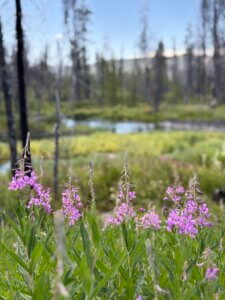
Fireweed flourishes in areas that have recently burned.
In dominant historical narratives, the lands were pristine when settler colonists arrived in the Americas. Baratta challenges this. “They were not untouched,” she says. “They were our front yard, and we took care of the place where we lived — now we can see how the land suffers when you let things go.”
Baratta points to untended, conserved land in Northern California, where wildfires have consumed thousands of acres of protected forest. “The keystone species, Indigenous communities, were taken from the land, so there’s been no intentional fire applied — another sacred TEK practice,” she explains. “So all of the invasive shrubs and grasses grew in and filled the forest floor around the conifers, and now it just burns too hot.”
Yet among the burn scars, there’s a bright side: The return of drought resistant Native species that have long been dormant without the presence of regular controlled burns. Nature, it seems, is resilient.
Resilience for nature — and our children
This is Baratta’s message of hope for the youth who will inherit the challenges of today’s world, with climate change, increasing natural disasters and declining wildlife populations: When nature has what it needs, it recovers quickly.
When nature has what it needs, it recovers quickly.
Youth can take heart in this lesson — and build their resilience, too, by going outside, observing nature in all its seasons and learning about their local ecosystems and wildlife.
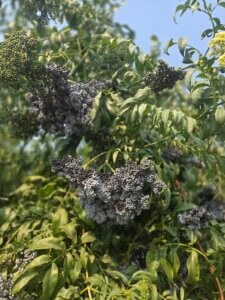
Blue elderberry, a medicinal food used in traditional health practices.
This is how we alleviate climate anxiety. When we know what nature needs to heal and thrive, and we understand our role in supporting it, we’ll feel less fearful for the future of the land and the humans who live on it.
Indigenous science practitioners can help, says Baratta, but all of us — as ancestors, guests, children and adults — have a responsibility to learn how to be good stewards of the land.
“Indigenous communities have always taken this seriously, because they don’t want future generations to feel like kids — and this includes Native kids — feel today. Eco-anxiety is real, and it’s scary because the land is mad.”
Integrating The Three Rs and learning about Indigenous science is a great place to start. If you want more suggestions for how to take action, check out our companion piece, “Lessons from Indigenous science: 5 ways to build a relationship with your local ecosystem” — it offers more tips and resources from Trelasa Baratta and Redbud Resource Group.
Education Resources from Redbud
Lessons from Indigenous science: 5 ways to build a relationship with your local ecosystem, a Finding Nature News story
Indigenous Critical Reflections on Traditional Ecological Knowledge, learn more about Traditional Ecological Knowledge and Indigenous value systems
Research Digest: Climate change and Children’s Mental Health
Research Digest: Children and Climate Change Activism
Research Digest: The healing power of nature for Indigenous children and youth
Research Digest: Indigenous studies for Native American Heritage Month
Research Digest: Translating Traditional Ecological Knowledge
Ecological grief and hope in a changing world, a Finding Nature News story
Honoring Indigenous people and land, a collection of resources
When buried water sees the light of day, communities thrive, a Finding Nature News story
A common thread: Indigenous-led foundation weaves together activism and art, climate and community, a Finding Nature News story
Video: The Rights of Nature with Samantha Skenandore of the Ho-Chunk Nation
-
Richard Louv
THE "VITAMIN N" PRESCRIPTION - Some health professionals now recommending nature time for children and adults
-
Feature
A decade of ripples: What Nature Everywhere Communities reveal about systems change
-
Feature
Crossing invisible boundaries in the outdoors: A Q+A with Mason Branstrator
-
Feature
Forest bathing: Educators need nature connections, too
-
Feature
A future full of promise: Nature in early childhood