
When nature thrives, so do kids: Weaving climate resilience into the places children play and learn

“Climate change has seeped into everything that we do,” says Brigid Deegan, Senior Climate Specialist at the National League of Cities. “It impacts the air we breathe and the price we pay for food. It impacts nature. For kids especially, it impacts their ability to play outside, to have lively childhoods, without experiencing extreme heat or other severe weather events.”
In response, communities around the world are taking action to build climate resilience, with the goal of helping their communities withstand and recover from the effects of climate change — from hotter summers to heavy rains and flooding.
In Nature Everywhere Communities, urban leaders are finding that one of the most practical and cost-effective ways to strengthen climate resilience is to weave it into the design of the green spaces where children learn and play, like schoolyards, libraries and parks.
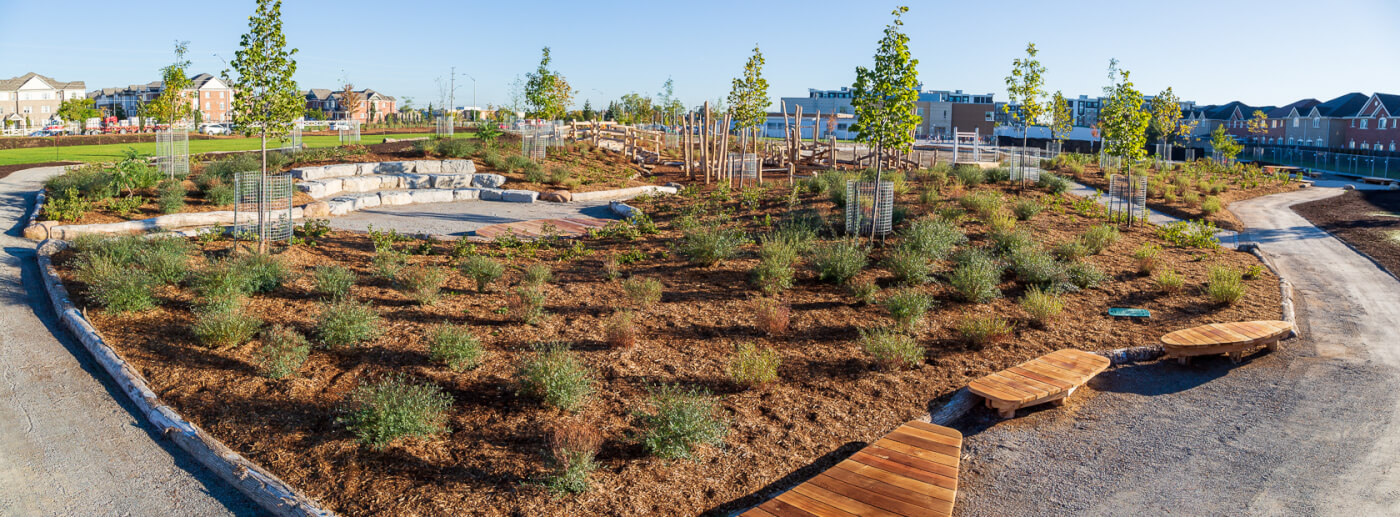
In collaboration with Berlin-based landscape architect Birgit Teichmann, along with local Canadian landscape architects, the Irma Coulson Public School Pilot is designed to ensure that school grounds can absorb 100% of rainfall on the school site. Photo by Evergreen.
Green infrastructure and nature-based solutions that increase tree canopy, capture stormwater and cool urban heat islands transform these community hubs into resilient landscapes. Climate resilient features improve air quality and provide respite from hot weather — allowing children to stay outside longer and play harder.
“That’s the great thing about applying climate resilience strategies within the lens of expanding access to nature,” says Deegan. “You’re getting all these environmental gains for the community — and you’re also creating an engaging green space for children to learn and play in. Studies show that has these big benefits for their health, development, creativity — and even their grades at school.”
Climate resilient green spaces benefit the whole community, often providing a cooler neighborhood and a welcoming place for people of all ages to gather, recreate and play with neighbors and other families.
Here are four real-life examples demonstrating how cities are combining climate resilience features with proven nature connection strategies.
Nature in early childhood
Children under five are increasingly at risk from extreme heat, flooding and other climate impacts. Strategies for furthering nature in early childhood like green infrastructure, gardens and natural play elements can protect children and caregivers — while creating more engaging spaces for play and learning.
In Colorado, Denver Parks & Recreation (DPR) has been working with community and city partners to drive early childhood nature connection initiatives.
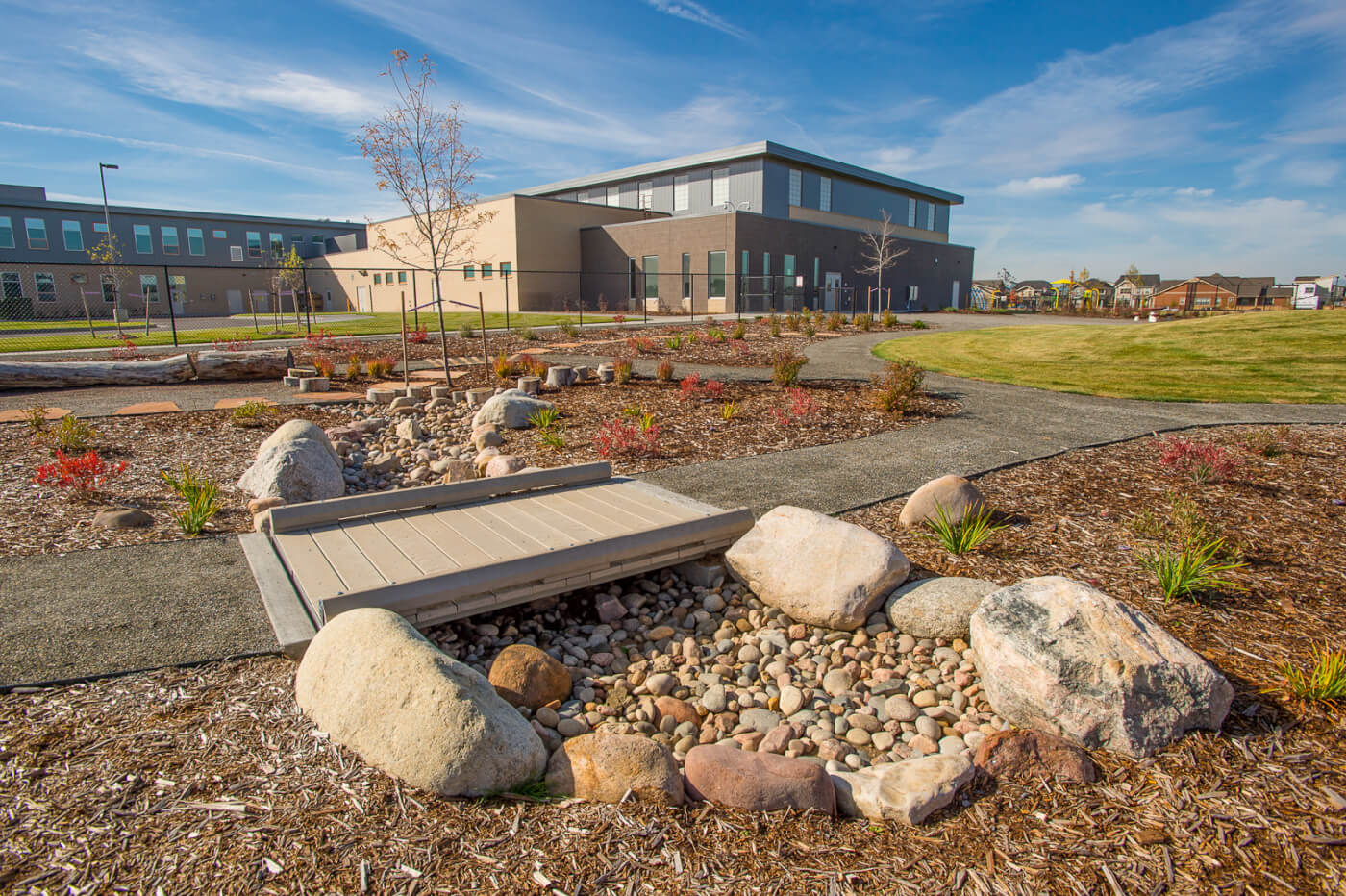
The Learning Landscape at Conservatory Green Middle School includes nature-themed play equipment with green stormwater infrastructure that helps mitigate flooding while integrating outdoor adventure areas. Photo by Design Concepts.
DPR’s master plan, Game Plan for a Healthy City, prioritizes 10-minute walks to parks and equitable access to greenspaces and nature play. To support this, DPR partnered with the Mile High Flood District to create guidelines for all new nature play spaces in Denver. The guidelines streamline permitting and promote landscapes that encourage exploration, physical activity and cognitive development — while doubling as flood mitigation.
DPR is also integrating green infrastructure in several parks within Denver’s historically underserved communities. At Herron Pond, one of the city’s most polluted zip codes, they have added a new park and playground that will expand ecological learning and nature access, while reducing flooding, mitigating soil contamination and improving water quality.
Green schoolyards
Green schoolyards are nature-rich spaces designed by and for the entire school community. They give students a place to play, explore and learn, teachers an outdoor classroom — and communities a powerful tool for climate resilience.
Perched alongside Lake Michigan, the city of Milwaukee, Wisconsin, faces increasing flooding, storm surges and a combined sewer system that spills untreated water during heavy rain events. At the same time, many schoolyards are asphalt-heavy and lack green space — creating heat islands that limit the time children can spend outside.
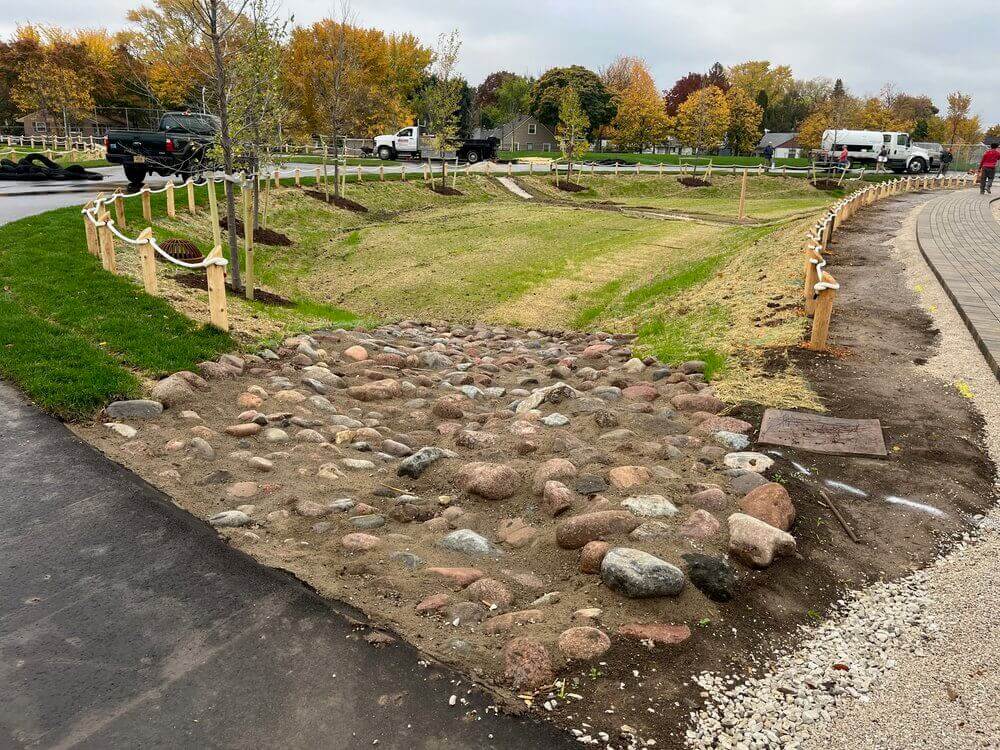
This green schoolyard incorporates a “bioswale” — a landscape depression designed to capture and filter stormwater runoff. Photo by Reflo.
Since 2015, environmental nonprofit Reflo has partnered with Milwaukee Public Schools and the Metropolitan Sewerage District to redesign schoolyards in historically underserved communities. Milwaukee’s green schoolyards include trees, pollinator gardens and interactive water systems — strategies that manage stormwater runoff, improve biodiversity and create hands-on education.
Led by Reflo and UW-Milwaukee, outdoor classes are co-designed by staff and students through workshops, exposing young people to lessons in garden design, agriculture and forestry. Now, children can sit in the cool shade and learn from the nature all around them, while older youth explore pathways to green careers.
Children can sit in the cool shade and learn from the nature all around them, while older youth explore pathways to green careers.
Nature-Smart Libraries
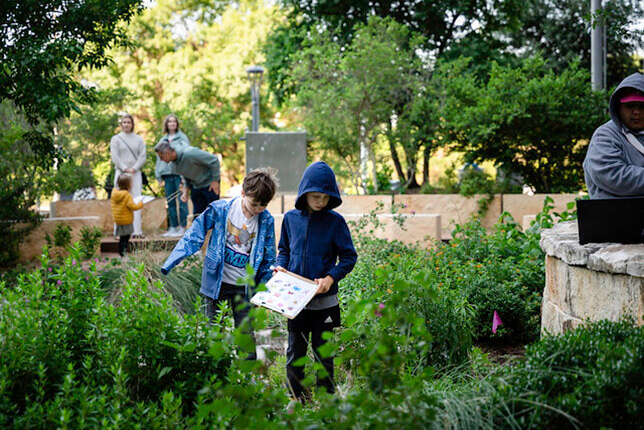
Nature-Smart Libraries give communities a way to boost climate resilience while connecting children with nature, right in their own neighborhoods. With most people living within two miles of a library, these hubs offer heat respite and safe, engaging nature experiences through outdoor spaces, curated collections and environmental programming.
In Austin, Texas, the Austin Public Library launched its Nature-Smart Library initiative in 2014 to close gaps in nature access and advance the city’s climate goals. Today, Austin’s libraries feature StoryWalks®, nature exploration lending kits and walking paths lined with native plants.
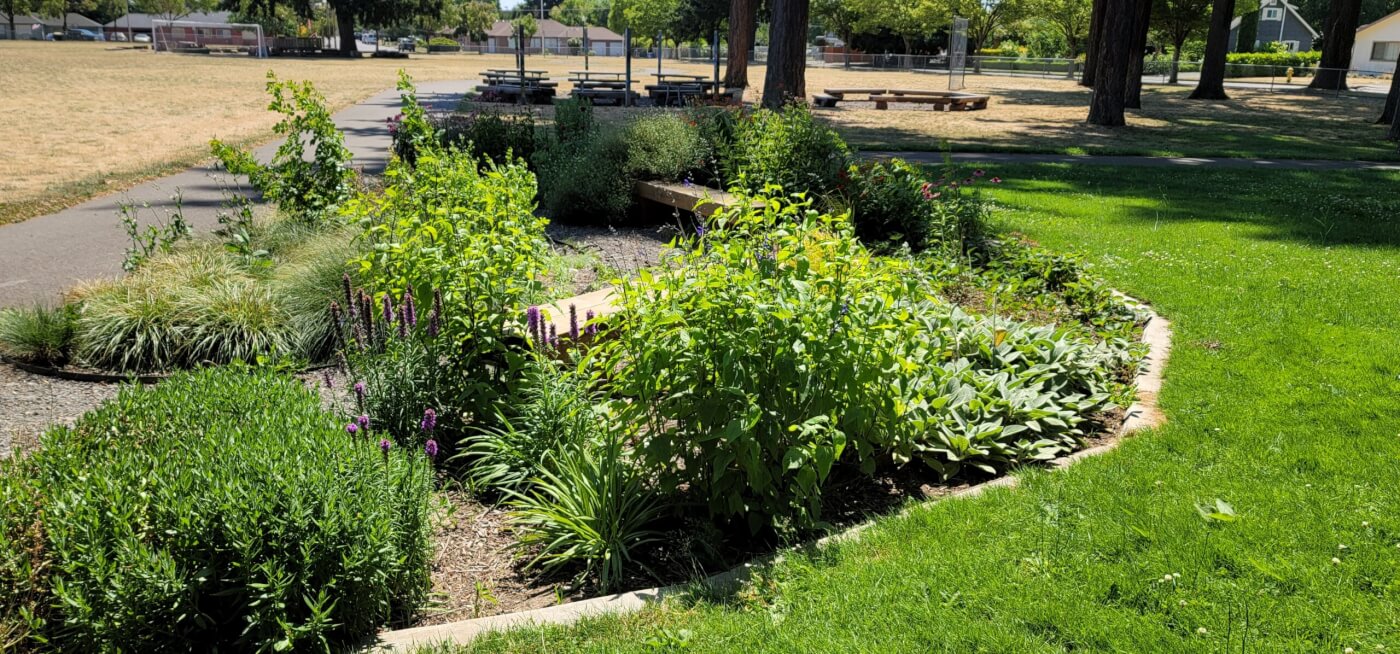
A butterfly, sensory and strawberry garden at Edgewood Elementary in Vancouver, Washington, is filled with vegetation such as native plants, bushes, trees and edible plants — offering a wide range of learning opportunities. Photo by Jane Tesner Kleiner.
Austin’s Central Library, built on a former brownfield, is a LEED Platinum-certified building and a model of sustainable design. It features a rooftop butterfly garden, where children can read, learn and dream, shaded by native plants and trees — and solar photovoltaic panels. Outside, 33% of the grounds are now vegetated open space, and there’s been a 36% reduction in impervious cover, or hard surfaces, for improved stormwater management. These spaces invite the community to cool off and connect with nature — while learning about the library’s abundant environmental benefits.
Nature Exploration Areas
As cities grow and green spaces shrink, Nature Exploration Areas (NEAs) provide children and communities with nearby, equitable access to nature — while enhancing climate resilience. Often built with local, natural materials, NEAs are spaces that are designed to incorporate natural elements while encouraging active, creative and adventurous play. This design strategy can transform even the smallest pocket parks into sustainable spaces.
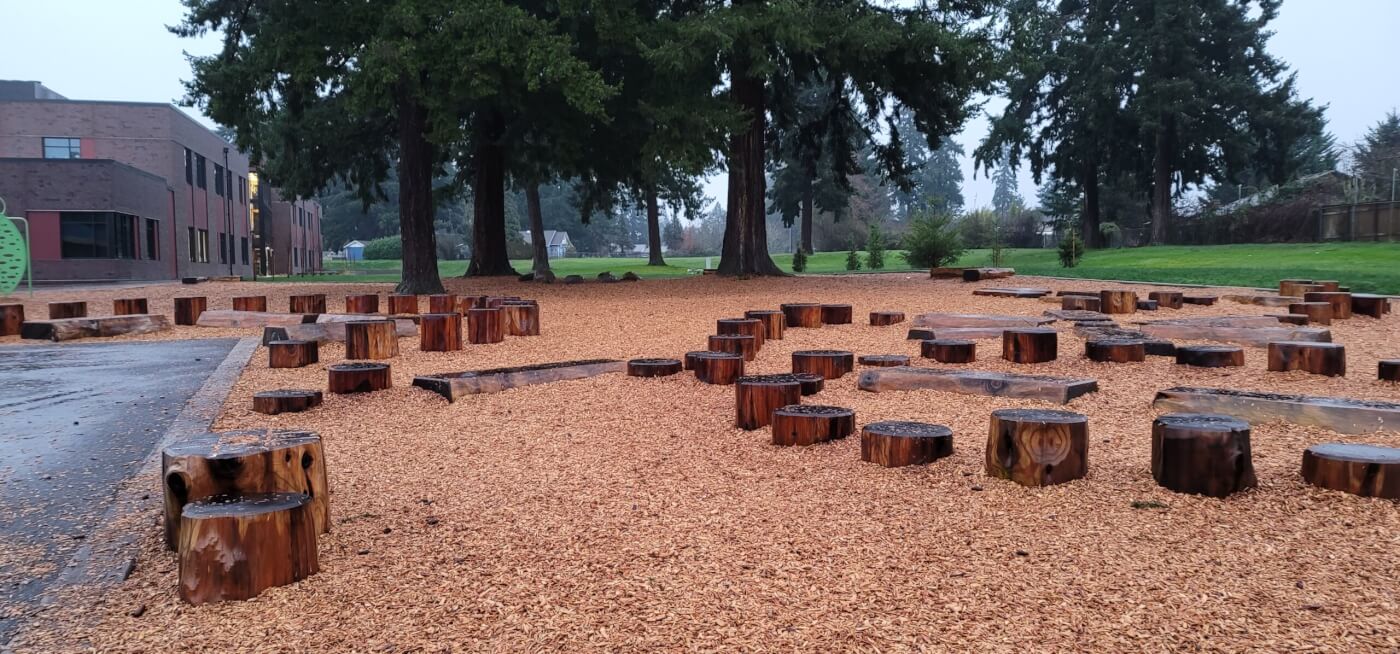
In Vancouver, Washington, Marrion Elementary’s Nature Exploration Area encourages children to play with natural elements and invites teachers to take their lessons outdoors. Photo by Jane Tesner Kleiner.
Providence, Rhode Island, provides a rich example. Since 2016, a partnership of the Providence Parks Department, Providence Public School District, neighborhood groups and city departments has renovated 97% of the city’s 125 parks to include NEAs.
Through thoughtful design and maintenance, Providence has used NEAs to address environmental justice and climate change. For example, biodiversity has increased through the introduction of urban meadows, native grasses and herbaceous flowering plants — and suspending mowing to support pollinators and other organisms. Some of Providence’s NEAs also feature outdoor classrooms, where features like rain gardens provide stormwater management and facilitate STEM learning.
Introducing the Climate Resilience Toolkit
“What these examples show us is that, yes, climate change is happening, but there’s hope — meaningful climate action can be implemented locally and it can create healthier environments for children,” says Deegan. “And what’s inspiring is that all of these solutions already exist and can be implemented now, not in some distant future.”
To help cities take the first step, the National League of Cities, in partnership with the Children & Nature Network, has developed the Climate Resilience and Children’s Connection to Nature Toolkit. A detailed, practical guide to creating healthier, more resilient communities where children thrive and ecosystems are protected, the toolkit includes:
- Community engagement approaches
- Policy drivers and permitting regulations
- Infrastructure strategies, like rain gardens, shade structure and cooler asphalt
The Climate Resilience Toolkit offers more than just strategies. It offers ideas for how public spaces can invite children and communities to connect with the natural world, and learn their role in conserving it.
“When you improve climate resilience, you’re giving kids more time outside to explore their local ecosystems,” Deegan says. “When a library or a school garden is filled with native plants, when children can touch and smell them, when they can make art with them, they develop a sense of belonging in those spaces — and that’s how you create little environmental stewards who will carry that comfort in nature forward into the rest of their life.”
Climate Resilience and Children’s Nature Connection: A Toolkit
Other relevant toolkits:
Nature in Early Childhood Toolkit
Nature-Smart Libraries Toolkit
Nature Exploration Areas Toolkit
Stories behind the strategies:
Cross-sector leaders launch national effort to advance nature-based play and learning in early childhood, a Finding Nature News story
In search of a greener schoolyard, a Finding Nature News story
Libraries and parks: A nature-smart partnership, a Finding Nature News story
Nature Exploration Areas connect children to outdoor play, a Finding Nature News story
-
Richard Louv
ON THE RIVER: The Restorative Power of Nature in Difficult Times
-
Feature
We’re all looking for the same moon
-
Voices
Green Schoolyards Action Agenda: A national roadmap for nature-rich school grounds
-
Feature
A decade of ripples: What Nature Everywhere Communities reveal about systems change
-
Feature
Forest bathing: Educators need nature connections, too