

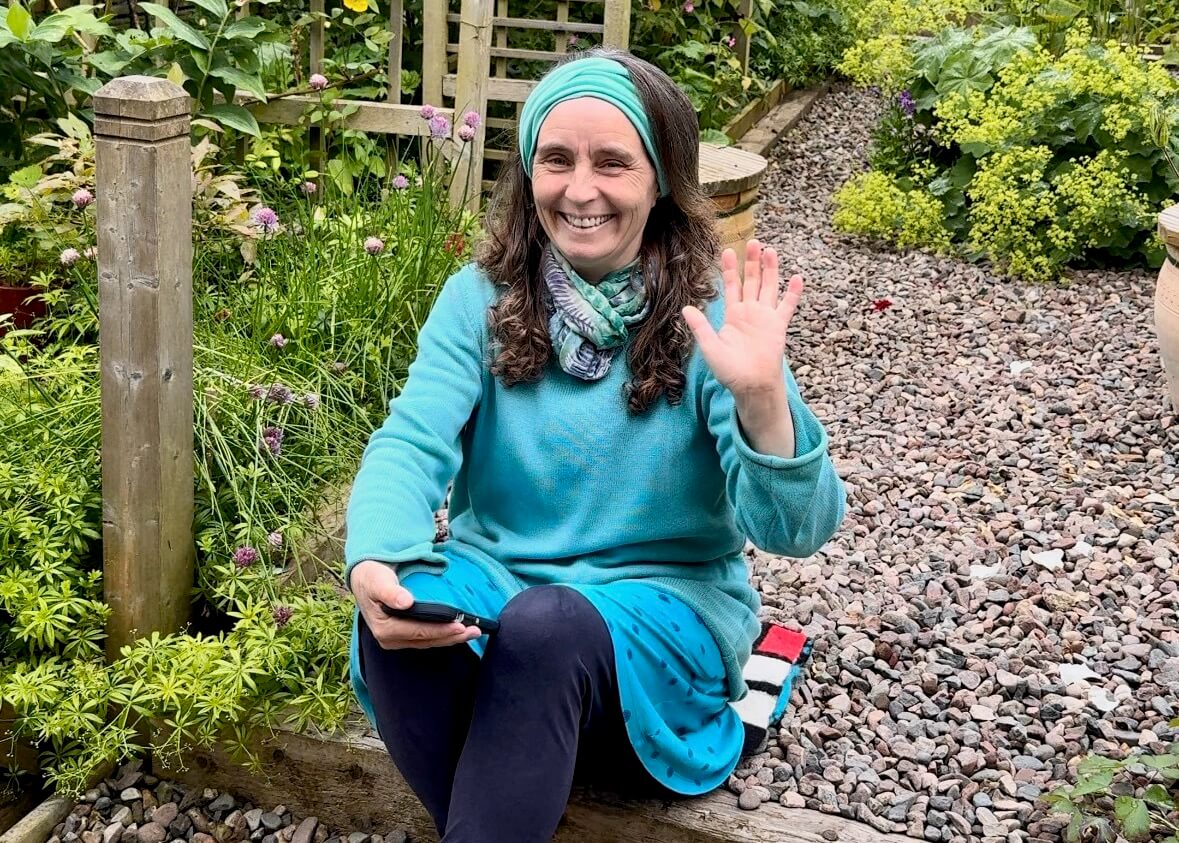
Juliet Robertson: Trailblazer for outdoor learning & play
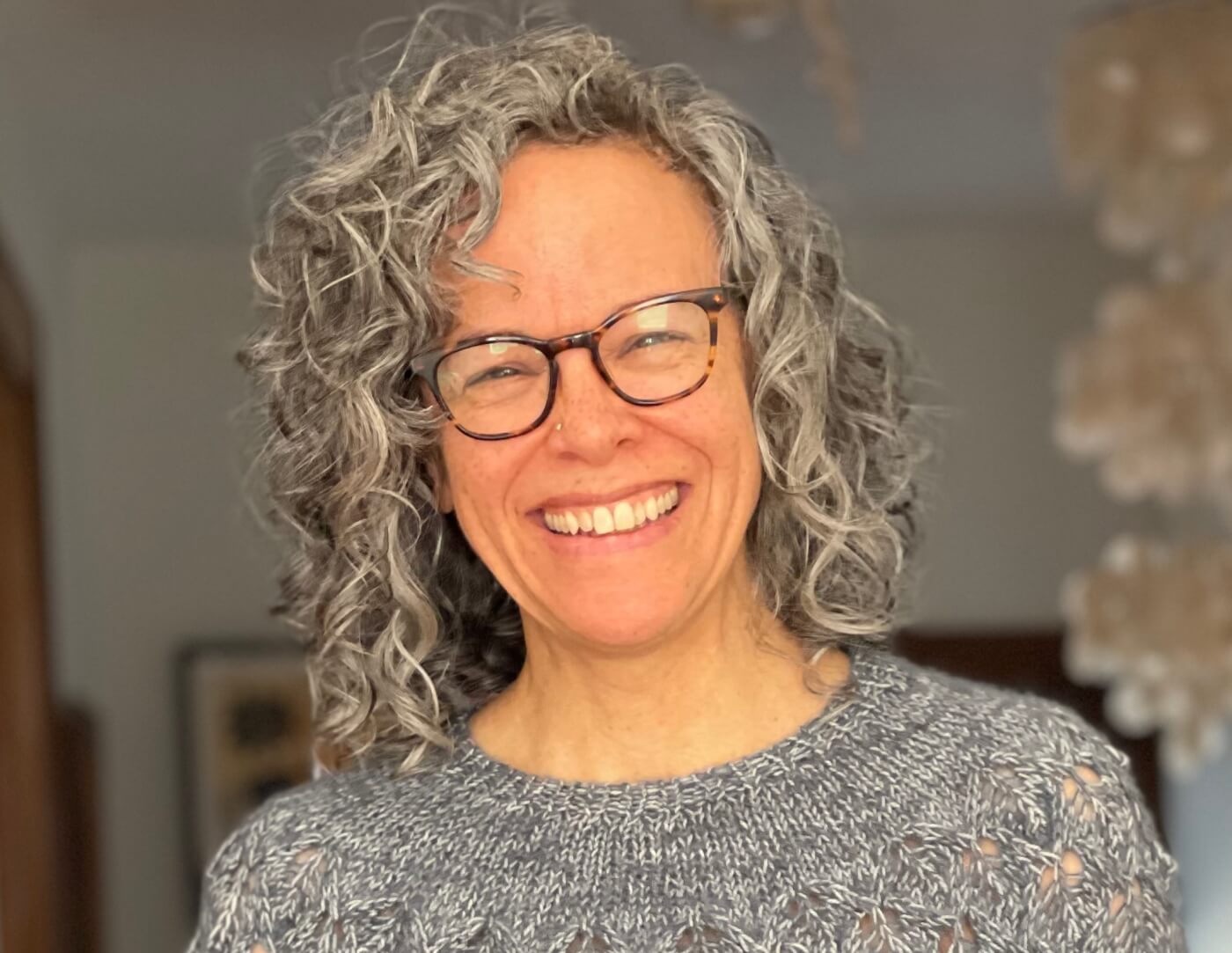
“My life’s work has been about developing play and learning outdoors, encouraging everyone to enjoy the creativity, the awe and the wonder of the world beyond the walls of a traditional classroom,” Juliet Robertson recently told the 2024 graduates of Queen Margaret University, Edinburgh, at a special graduation ceremony in the university’s outdoor learning hub. “In my experience, it is a more effective and engaging way of enabling children to learn experientially. It is naturally interdisciplinary and improved. Well-being is an almost effortless benefit.”
Juliet is one of Scotland’s leading educators, known internationally for being a trailblazer in the field of outdoor learning and play for children. At the graduation ceremony, Queen Margaret University awarded her with an Honorary Degree of Doctor of Education in recognition of her many contributions to learning.
The Children & Nature Network is delighted to see Juliet honored. We’re taking this opportunity to recognize her life’s work and to send her our warmest congratulations — as a colleague and a tireless advocate for both children and nature.
“It’s hard to quantify Juliet’s impact,” says Richard Louv, author and Children & Nature Network co-founder. “Through her work as an educator — and in creating the tools that train teachers to teach outdoors — she has helped untold numbers of Scottish children experience not only the benefits of learning and playing in nature, but the pure joy of it.”
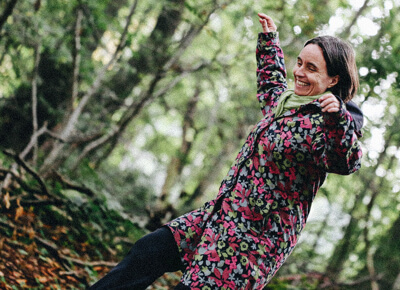
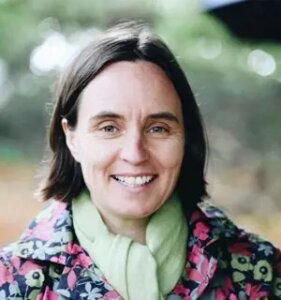
Juliet Robertson. Photo courtesy of Jane Hewitt.
Juliet joined the children and nature movement early on in her career. In college, she majored in environmental studies. During a gap year in 1986, she worked with the Norris Square Neighbourhood Project in Philadelphia, Pennsylvania. Started by a group of volunteer teachers, artists and a local Puerto Rican women’s group (Grupo Motivos), the project transformed empty lots that had been an open-air drug market into six Latinx culturally-themed gardens, where children learn about everything from gardening and art to bee-keeping and community.
Thus began a lifelong passion for teaching in the outdoors. “Juliet has been a beacon of good sense, inspiration and high standards in her field,” says Bonnie Maggio, education and skills policy advisor at Scottish Forestry. “Throughout her career, Juliet has worked to ensure that all children, and the adults who work with them, have positive and enjoyable outdoor experiences. She has single-handedly transformed early years nature education in Scotland.”
As a primary school teacher, Juliet integrated outdoor activities into her curriculum, taking children for weekly visits to local woods, working with rangers to set up a lunchtime Wildlife Watch Club and kickstarting school grounds development work.
During and after her teaching career, Juliet continued her international work with research trips to Canada, Sweden, Czech Republic, Norway and Bulgaria that focused on outdoor, environmental and sustainable development themes. She won a Developing Effective International Education research award for her report on Sustainable Development Education in the Czech Republic. She was also the recipient of a Winston Churchill Travelling Fellowship to study technologies outdoors.
In 2007, Juliet launched Creative STAR Learning Ltd., an independent consultancy dedicated to providing training for educators and diverse outdoor learning opportunities for children. She has played a significant role in shaping national outdoor education initiatives in Scotland and internationally. “Her advice for government officials and ministers is always directed at enabling and encouraging those who care for children to get outside,” says Bonnie, “even in the most urban spaces, with as little cost as possible but with the highest value of experience.”
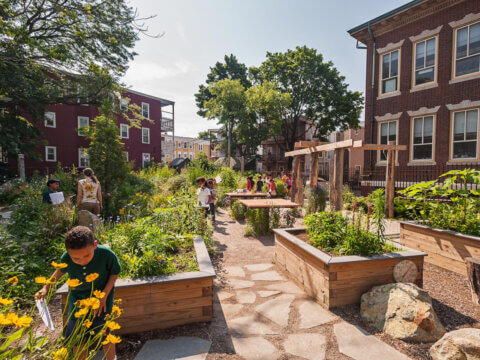
 Of note, she created a Forest Kindergarten in-service training course and qualification for the Forestry Commission Scotland, which was rolled out across Scotland. Based on child-centered learning through play, Forest Kindergarten offers young children frequent, scheduled play opportunities outdoors in a natural setting, often woodland, in almost all weather throughout the year. “Most colleges in Scotland now include the Forest Kindergarten training as a module in the Early Years training courses,” says Bonnie. “As a result, schools, play organizations and early years settings are now able to offer quality outdoor learning and play opportunities — which have become an essential part of the Scottish education curriculum.”
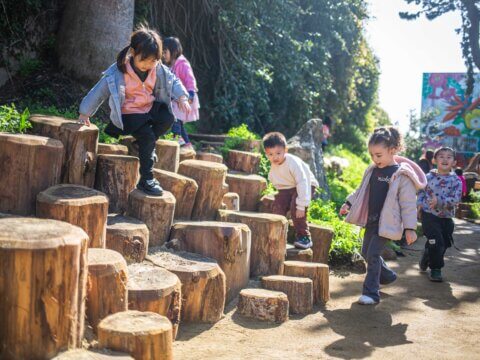
Juliet also played a pivotal role in the creation of the outdoor education “Loose Parts Play Toolkit” for Inspiring Scotland (Thrive Outdoors). The toolkit aims to encourage and facilitate loose parts play — and it’s the organization’s most consistently downloaded resource and a foundation for similar resources throughout Scotland. “Loose parts” are a collection of everyday objects that children can use for open-ended, adventuresome play, like sticks, leaves and stones. They inspire children to explore their world, fostering confidence, critical thinking, problem-solving and cognitive skills.
Theresa Casey, an independent consultant and writer focusing on children’s human rights, inclusion and play, worked on the “Loose Parts Play Toolkit” with Juliet. “Juliet brought a keen eye for what was practical to suggest in schools — and also what was reasonable to expect could be done where the will, enthusiasm and commitment to children existed,” she says. “On the one hand, she was encouraging and motivating, while recognizing genuine constraints, on the other hand, she expected adults to properly step up to the mark!”
“We’re fortunate to be working in a period when attention to children’s rights is strong in Scotland, with the UN Convention on the Rights of the Child incorporated into domestic Scots law in 2024,” Casey adds. “Within this context, Juliet’s work is contributing a vital dimension of recognizing children’s right to a deep connection with the earth we live on, the lives we coexist with — and the importance of children’s experience of nature, mud, sticks, weather and the elements in all their sensory, fun and messy glory!”
Juliet is also the author of the books “Dirty Teaching” (Crown House, 2014) and “Messy Maths,” (Crown House, 2017) which have become core texts in undergraduate courses at Queen Mary University. Most recently, she wrote the new “Out to Play – Caring for our Outdoor Spaces” guidance for the Scottish Government.
“What Juliet has done for those of us who work with children in nature, and those who are learning how to get outdoors, is beyond words,” says Bonnie. “People out there working with children in their nature — whether it be on a scrappy piece of urban land or a stunning area of woodland — will be using the methodologies laid down by Juliet for years to come and for the benefit of both nature and humans. We are all indebted to Juliet.”
2 Comments
Submit a Comment
Juliet Robertson’s Outdoor Play Ideas and Resources
“Dirty Teaching,” by Juliet Robertson
“Messy Maths,” by Juliet Robertson
-
Richard Louv
VITAMIN N FOR THE SOUL: How Nature Can Nourish the Spirit of Children and Adults
-
Network News
Prescribe Outside: Progress moves at the speed of trust in Philadelphia
-
Voices
Nature to screens: How our built environment set the stage for the anxious generation
-
Feature
We’re all looking for the same moon
-
Feature
Forest bathing: Educators need nature connections, too

Hi, I just came across this article and I see that you, Susan Pagani and I, Deb Schein live in the same city. I wanted to share two important nature related highlights in my life that I believe are worth sharing with others.
First, there is the rock garden at Bass Lake, Saint Louis Park. It was started at the suggestion of my husband in an attempt to rid our small apartment of rocks I have used over the years for workshops for early childhood educators.
Second is the Loose Parts Laboratory located at the Lenox Community Center, Saint Louis Park. It is supported by the Reggio Inspired Network of MN and modeled after Remida, a recycling center in Reggio Emilia, Italy, the home of a world famous early childhood philosophy that prides itself on the 100 languages of children. respect for children, nature, etc.
Hope to hear from you!
Deb
Please feel free to contact me and I will be happy to share more.
Hi Deb, thank you so much for reaching out to us! I shared your comment and contact information with Susan — I think she will be following up with you 🙂