
Nature Exploration Areas connect kids to outdoor play

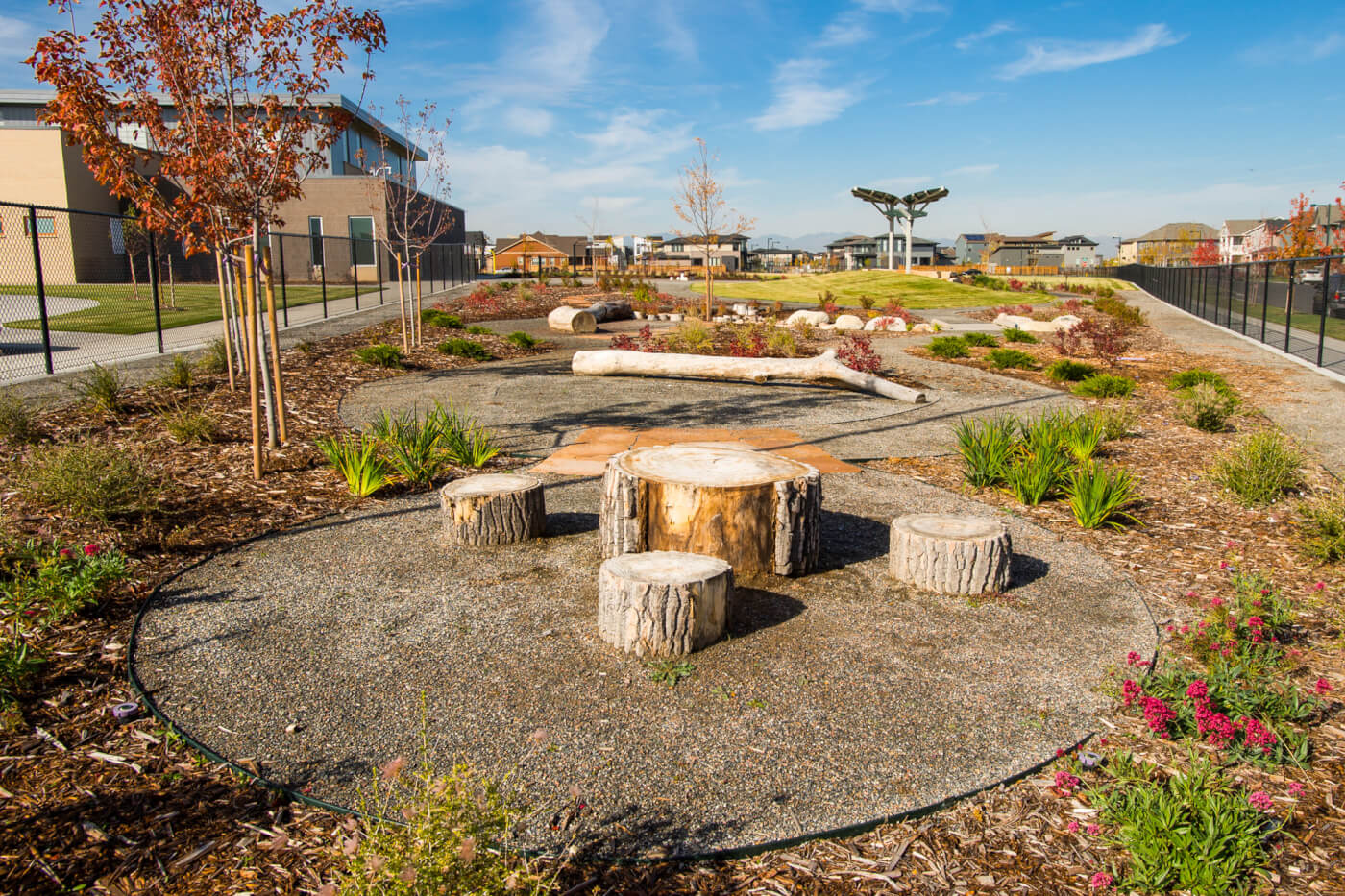
To an adult, tree rounds scattered around a schoolyard may seem a little boring. But through the eyes of a child, stumps can be magical.
“The kids love them,” says Megan Allegretti, Director of Program Improvement, Oakland Unified School District. “They use them as stages, they use them as tables for their loose parts and they use them to gather — they like sitting in circles on them.”
“That’s why we call it a Nature Exploration Area,” she adds, “because kids are meant to be creative and enjoy these spaces.”
A Nature Exploration Area with a foot bridge over dry creek bed, natural log table and seating, a log balance course and an interpretive stepping stone path. Photo by Design Concepts.
Nature Exploration Areas (NEAs) are outdoor spaces that are designed to encourage people of all ages, but especially children, to actively engage with a variety of natural elements, like stumps, boulders, native plants, pollinator gardens, vegetable gardens and fruit trees. They’re places where children can connect with nature through hands-on play and learning.
Nature Exploration Areas (NEAs) are outdoor spaces that are designed to encourage people to engage with natural elements, like stumps, boulders and gardens.
In cities across the U.S., urban leaders are increasingly investing in NEAs for parks, schools and early childhood centers as a strategy to address disparities in nature access.
Engaging, high-quality green spaces can improve quality of life for the whole community. They integrate features that support climate resilience by reducing heat, managing stormwater and improving air quality. They are welcoming places, where families and people of all ages gather and play. And they can inspire a lifelong connection to nature.
“Kids growing up in cities, especially in under-resourced neighborhoods, often lack access to parks and green spaces,” says Abbe Ewell Longstein, Associate Director of Program Management at KABOOM!. “Many do not even have the benefit of tree canopy, let alone nature-rich features they can touch, explore and play in. NEAs are one way cities can begin to close that gap by creating vibrant, joyful spaces where all kids can connect with nature.”
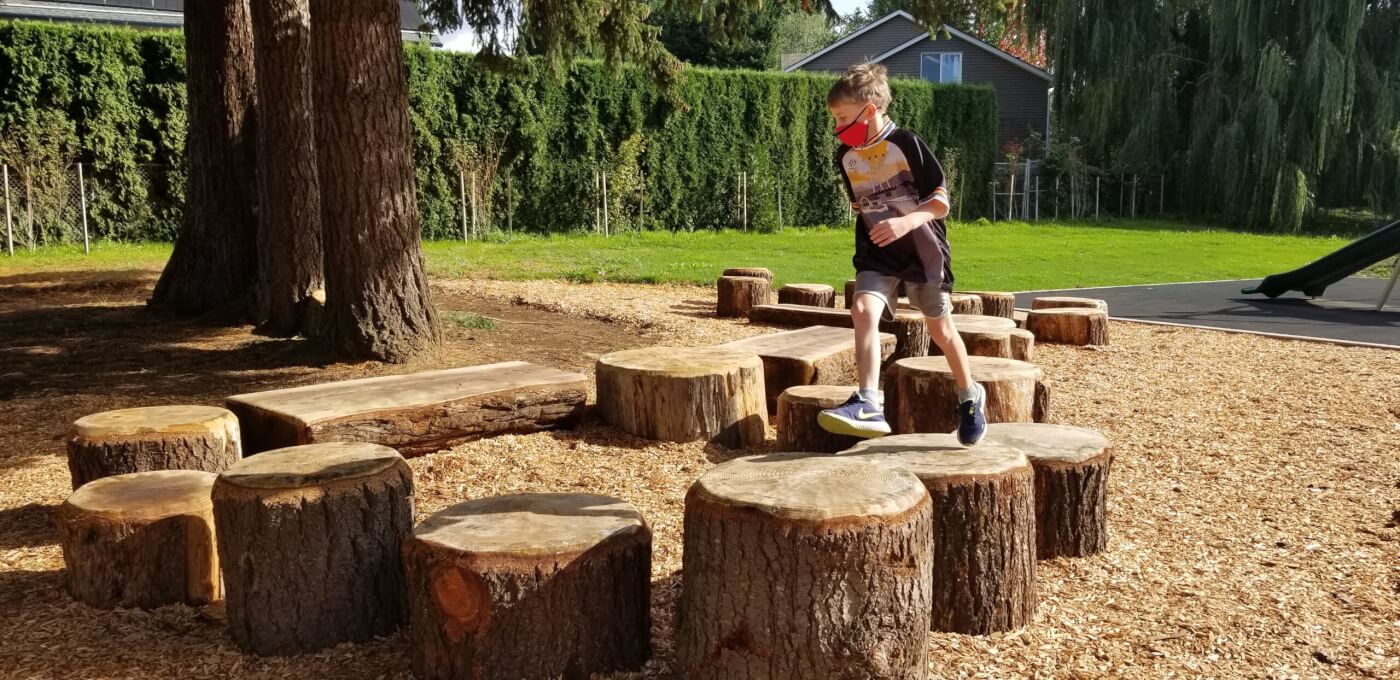
Incorporating tree stumps into play features facilitates physical activity (like balancing and jumping), while also serving as seating during outdoor lessons.Photo by Jane Tesner Kleiner.
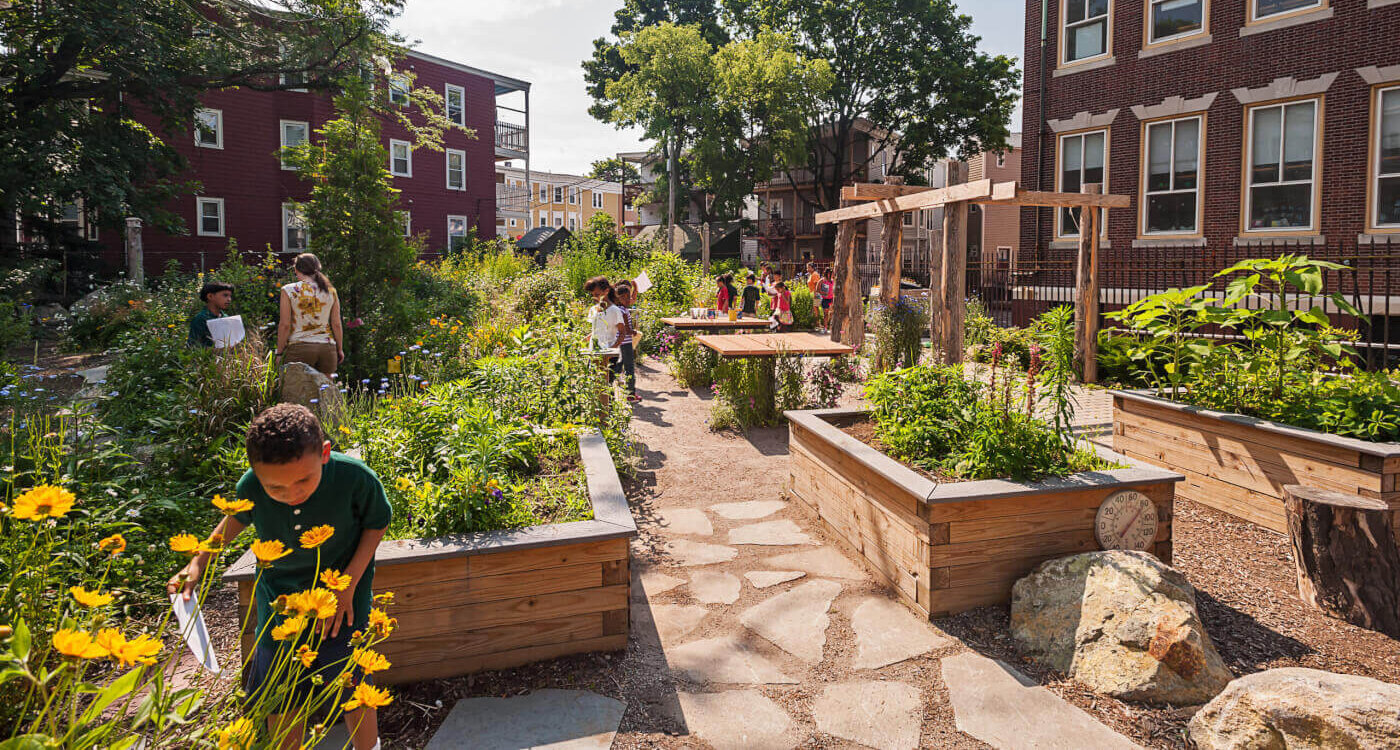
NEAs are thoughtfully designed to inspire children to explore and interact with the play space, using all their senses. Visit an NEA, and you’ll see kids playing “Follow the Leader” on a log — arms stretched wide for balance. Kids artfully stacking pine cones, rocks and wood cookies on stump tables. Kids running their hands through tall grasses, getting muddy in flower gardens and building forts out of sticks.
A growing body of research shows that this kind of unstructured play comes with a lot of benefits for kids. For example, studies show that children are more active in nature-based settings, and the physical challenges of “beneficial risks” like leaping, climbing and balancing improve motor skills. Creative play outside fosters social skills, like problem-solving and cooperation. It also boosts well-being and learning for children, increasing mood regulation, reducing stress and longer attention spans.
Here are just a few examples of NEAs in action.
Oakland, California: Tearing down fences
Over the last three years, the Nature Everywhere Community in Oakland, California — a partnership of the Oakland Unified School District, KABOOM!, Trust for Public Land and Growing Together — has installed 20 NEAs in schoolyards. To choose the project schools, the team looked at demographics, tree cover and the quality of existing schoolyards, prioritizing the most underserved sites.
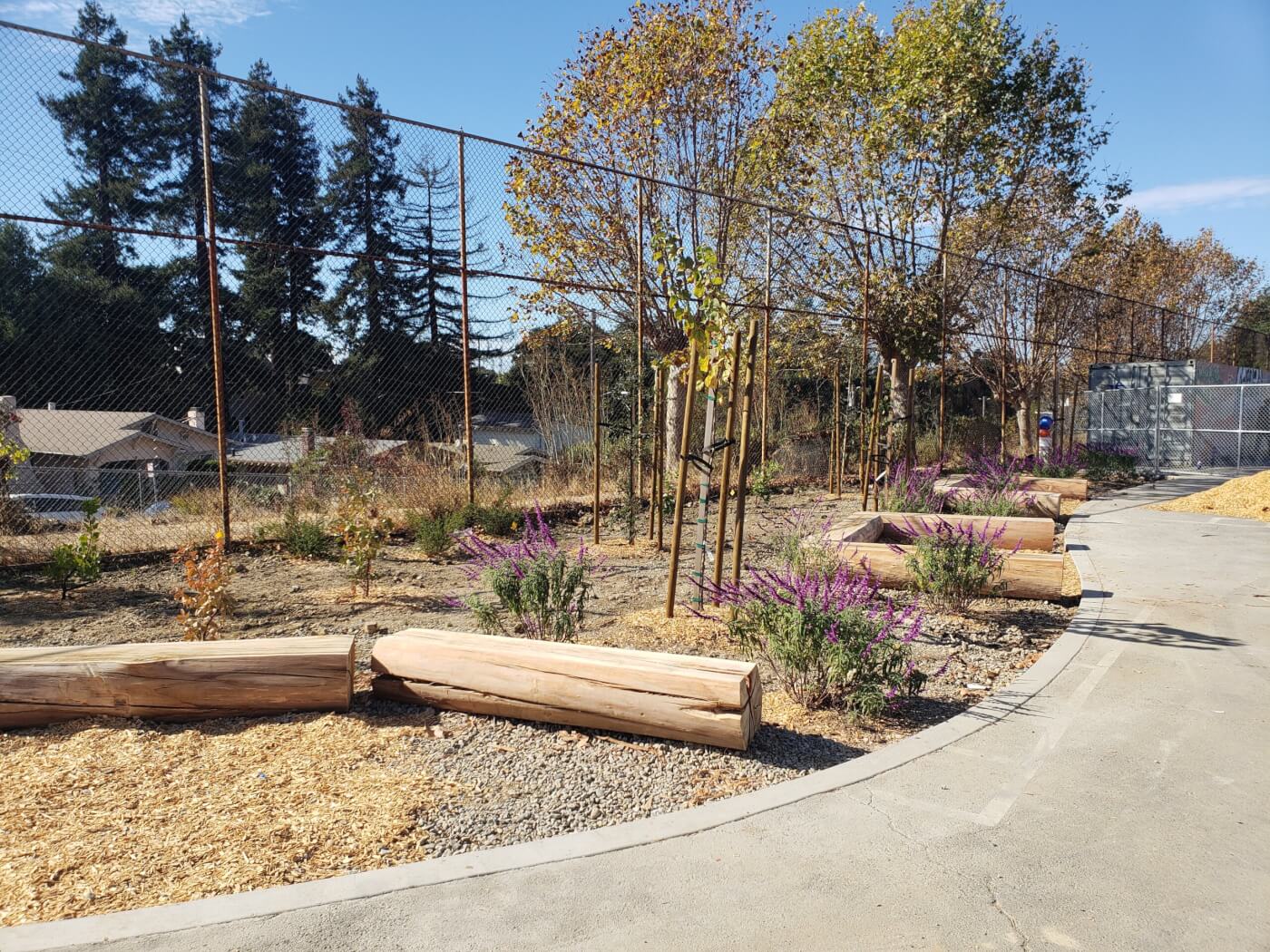
In Oakland, California, Melrose Leadership Academy underwent a schoolyard redesign project that included the construction of swales and natural play areas that support stormwater capture.Photo by Jaime Zaplatosch Ehrenberg.
NEAs are intentionally designed to center the unique character and needs of the community — and its children. “First and foremost,” says Longstein, “kids are at the table, and kids are weighing in on what they want to see in their playground.”
For example, the Oakland team invites educators, families and children to “design days,” an opportunity to draw their dream spaces, which are used to inspire the next phase of schoolyard designs. These designs are then shared with the school community for buy-in — and, in many cases, parents and community volunteers build out the spaces. It’s uplifting for kids to see the adults in their neighborhood working to bring their drawings to life.
Prior to the NEA projects, Oakland schoolyards were predominantly composed of asphalt and basketball courts. To green these areas, trees are planted around the courts to disrupt “heat islands” and shade students. Gardens, redwood rounds and logs, and loose parts are added. New granite pathways help manage water, welcome the students into the schoolyard and, critically, connect different play areas — allowing students to choose their own adventures.
“I’ve been fortunate enough to welcome both adults and students into our NEAs,” Allegretti says. “Students smile, explore and create almost immediately. They don’t need a guide. Adults often are moved to tears just by standing in the spaces.”
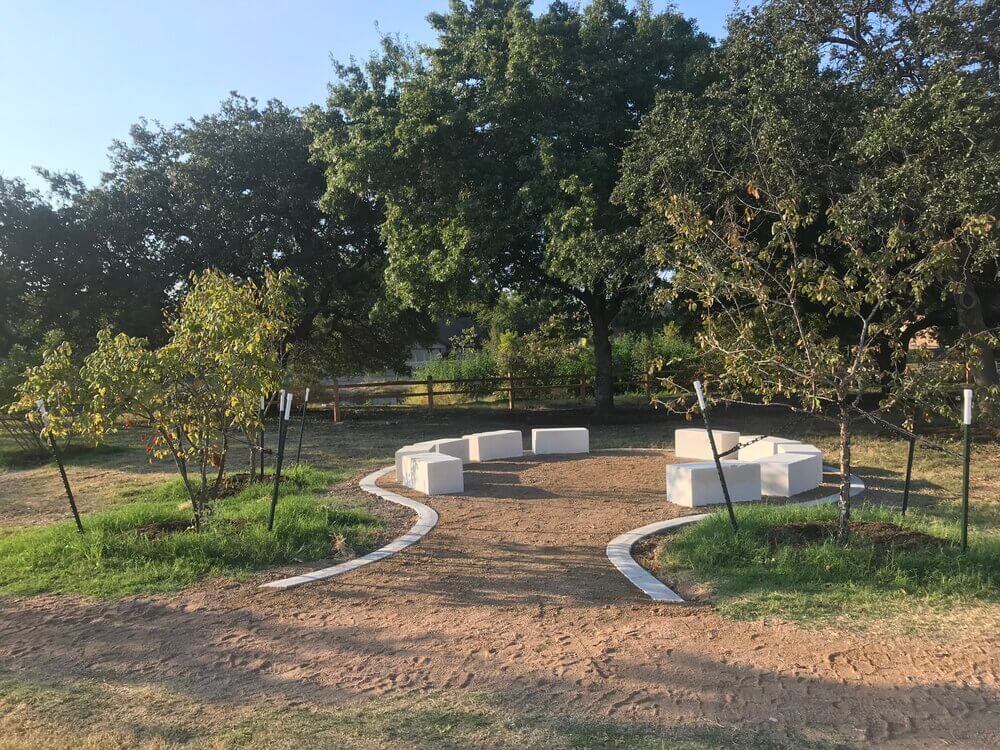
The partnership between Austin Independent School District and the Austin Parks and Recreation Department has created quality spaces that offer outdoor learning and recreational opportunities for students. Photo by Laura Newman.
Austin, Texas: Systems change in action
Cities Connecting Children to Nature (CCCN) Austin, Texas, has created NEA sites in 24 parks, two schools and four early childhood education centers. A Nature Everywhere Community, the CCCN Austin team is a partnership of seven organizations, including Austin Parks and Recreation, Austin Independent School District (AISD) and the Lady Bird Johnson Wildflower Center.
More than 10 years into their goal of “equitable access to nature for every Austin child,” the team’s success is an inspiring example of a long-term systems change approach.
Early on, CCCN Austin hosted a training event with nature play expert Adam Bienenstock, and invited diverse partners, from on-the-ground facility construction teams to city leadership. The training expanded the team’s network, garnering buy-in among key stakeholders — many of whom are strong advocates for NEAs to this day.
Additionally, the Austin team has worked to ensure NEAs and nature play are woven into city policies. Both AISD and Austin Parks and Recreation have made it a standard policy to include NEAs in their designs for new or renovated play areas. Many city departments have added nature play to their plans, including climate initiatives, community health improvement plans, library facilities — and a Children’s Outdoor Bill of Rights.
This support is echoed in changing community attitudes: As more NEAs are built, more families are requesting nature play in their parks, sometimes over traditional playgrounds.
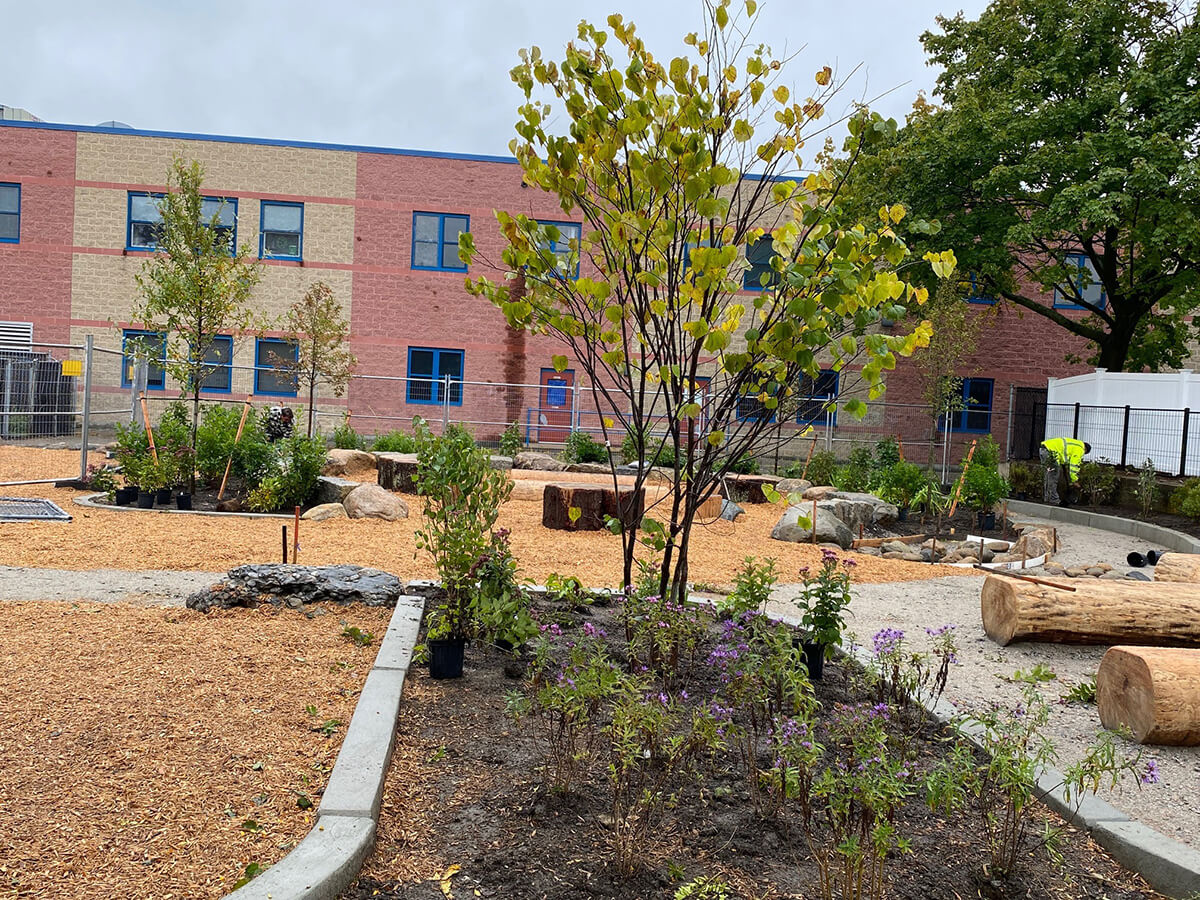
Bailey Baxter Play Space and Green Schoolyard, the first official green schoolyard in Providence, Rhode Island.
Providence, Rhode Island: Environmental equity
Since 2016, Nature Everywhere Providence, Rhode Island — a partnership of the Providence Parks Department, Providence School District, and diverse neighborhood groups and city departments — has successfully renovated 97% of its 125 city parks to include NEAs.
Through thoughtful design and maintenance practices, Providence has used NEAs to address environmental justice and climate change issues. For example, the team has increased biodiversity by establishing urban meadows, native grasses and herbaceous flowering plants — and suspending mowing to increase pollinators and other organisms. Some Providence NEAs also include outdoor classrooms, where creative stormwater management features, like rain gardens, facilitate STEM learning.
And, some of their NEAs include areas for community gardens and skateboarding — spaces that teens and families can enjoy too.
Helping parents and other community members understand the value of NEAs can be challenging. “In the beginning, it’s explaining that boulders and logs are going to give them a safe place for their kids to play, a place that feels really good and helps them connect,” says Wendy Nilsson, Superintendent of Parks, City of Providence Parks. “Now, having living examples, we can say, ‘That was successful! It was what you wanted, it just didn’t look like what you wanted.’”
In terms of risk management, Nilsson notes that all documented injuries over the last 10 years have been on traditional play equipment — not on NEAs.
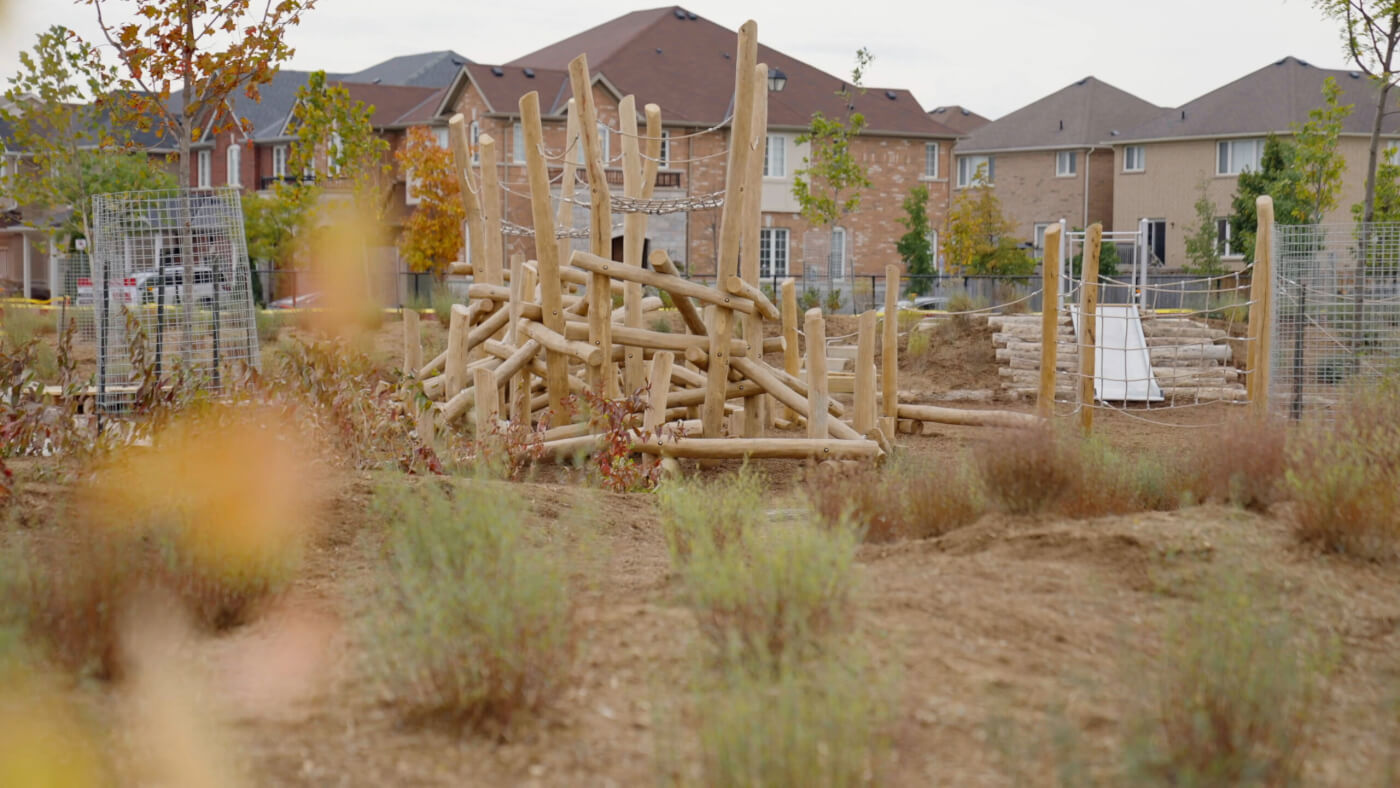
Situated in Milton, Ontario, Irma Coulson Public School’s schoolyard has been transformed into a climate adaptive landscape for outdoor learning and community use, becoming Canada’s first ever climate ready school.Photo by Evergreen.
Introducing: The Nature Exploration Area Toolkit
If you want to learn more about how and why to implement NEAs in your community, we can help. Over the last three years, the Nature Everywhere Communities initiative — a collaborative effort led by KABOOM!, the Children & Nature Network and the National League of Cities — has worked alongside cities nationwide as they’ve developed NEAs. Along the way, the cities have documented lessons learned and best practices. We’re excited to announce that those insights have now been incorporated into a new Nature Exploration Area toolkit.
The Nature Exploration Area toolkit has interviews, case studies, policy recommendations, and an actionable roadmap for planning, funding and maintaining NEAs. It complements existing Nature Everywhere Communities toolkits, including the Green Schoolyards Toolkit and Nature-Smart Libraries Toolkit.
“We designed the toolkit for cities, to help them increase access to nature for kids everywhere they live, learn and play, including cityscapes, parks and neighborhoods.” says Longstein. “I am hoping it’s something that will inspire cities and help them see, ‘yes, this is attainable and we can do it.’”
1 Comment
Submit a Comment
Nature Exploration Areas Toolkit
Early Childhood Nature Connection Toolkit
Stumps, jumps and tree cookies, a Finding Nature News story
Libraries and Parks: A nature-smart partnership, a Finding Nature News story
Green Schoolyard Design Features, a photo gallery
-
Richard Louv
VITAMIN N FOR THE SOUL: How Nature Can Nourish the Spirit of Children and Adults
-
Network News
Prescribe Outside: Progress moves at the speed of trust in Philadelphia
-
Voices
Nature to screens: How our built environment set the stage for the anxious generation
-
Feature
We’re all looking for the same moon
-
Feature
Forest bathing: Educators need nature connections, too
A brilliant article! Thank you. I will share it with our Forest School community in Greece.