
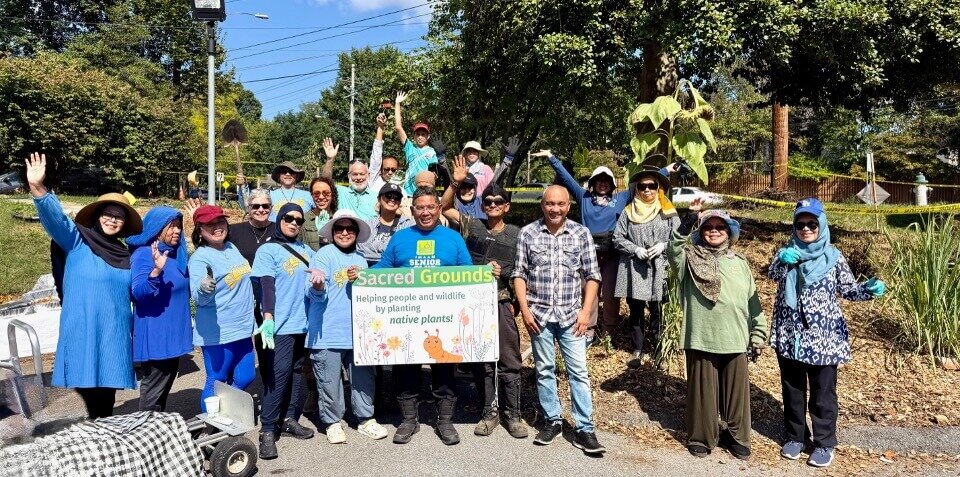
Sacred Grounds: Where faith communities and nature meet
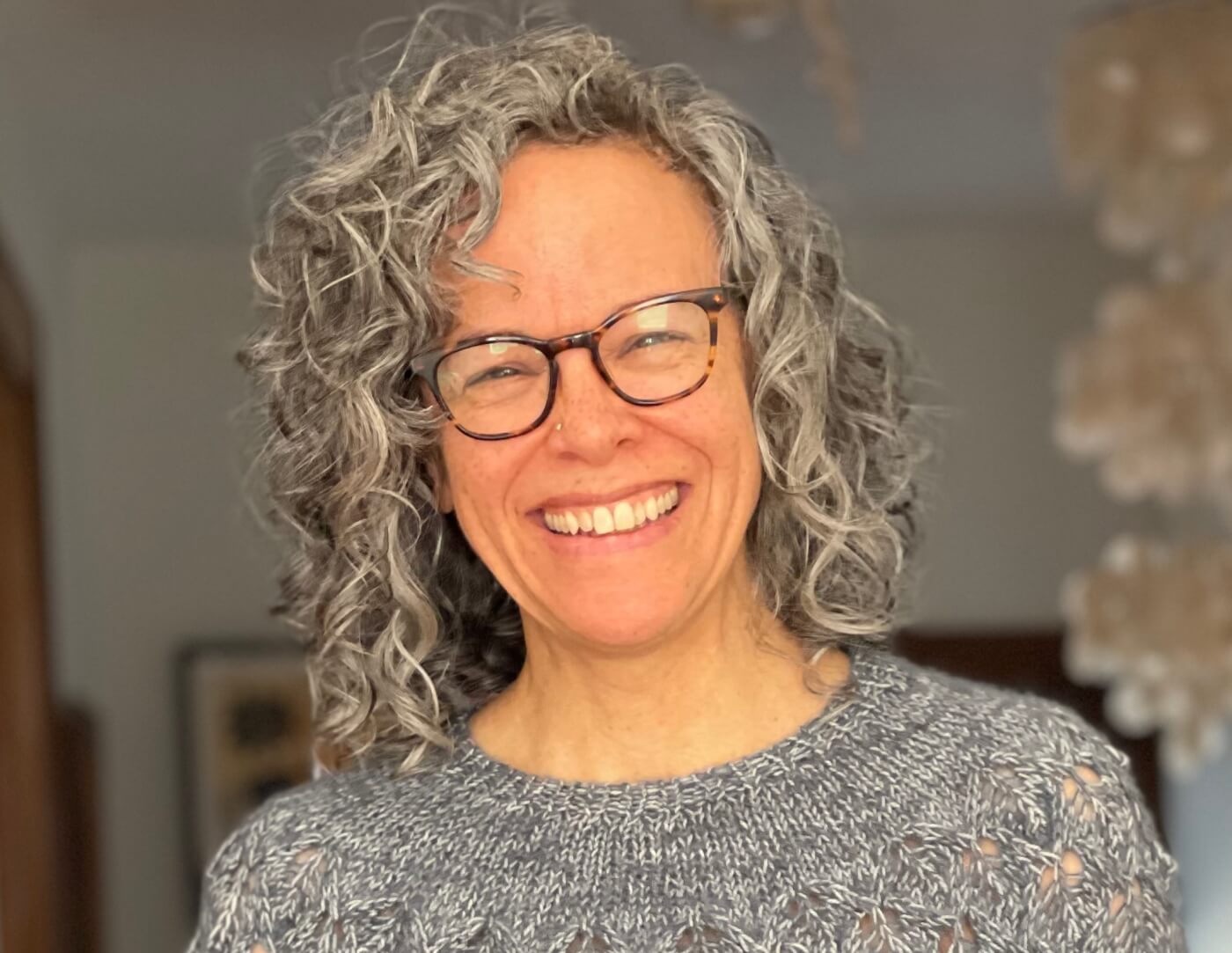
Few institutions sit at the heart of a neighborhood quite like places of worship. They nourish our spiritual lives, run food pantries and clothing drives and quietly steward some of the largest patches of greenspace in town. That combination of moral authority and land, says Naomi Edelson, makes them a powerful partner for addressing climate challenges — and inspiring nature connection.
“Congregations are both part of the problem and part of the solution,” says Edelson, Senior Director for Wildlife Partnerships, National Wildlife Federation, who uses “congregations” as a nondenominational word to describe the places where people worship.
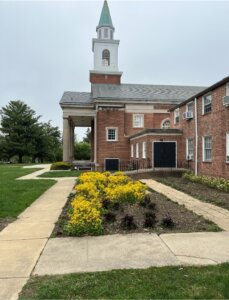
East Washington Heights Baptist Church in Washington, D.C., was among the three pilot congregations for Sacred Grounds in 2012.
In the U.S. alone, religious and faith-based groups own approximately 2.6 million acres of land with various zoning, including congregations, schools, cemeteries, housing and greenspace. Congregations often sit on large parcels of land, and though their religious traditions may vary, their properties often have a few features in common: Big lawns, steep rooftops and large parking lots. As climate change increases both heavy rainfall and extreme high temperatures, these features can worsen flooding and create heat islands, especially in urban areas.
“They might look like open space, they might look green and beautiful,” Edelson says. “But lawns have little roots, and water just runs off them like concrete. It comes down, captures whatever pesticides and fertilizers are on the lawn and then it runs right into the streets and our creeks.”
Yet as important community hubs, congregations are also in a unique position to inspire a ripple of environmental stewardship. As Edelson says: “When congregations transform how they manage their grounds so they’re more environmentally sustainable, it becomes a signal to the community — this is a good thing to do.”
“People see that,” she adds, “and they want to replicate it.”
Sacred space as greenspace in neighborhoods around the world
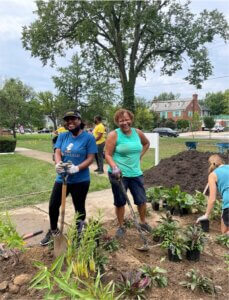
Volunteers are an essential part of the Sacred Grounds program. Here, Dolly Banks, the pastor’s wife, is one of many volunteers who are working together to install a garden at their church.
Edelson founded the National Wildlife Federation’s (NWF) Sacred Grounds program and leads its work in the Washington, D.C., metropolitan area, where it was first piloted. Currently active in the Mid-Atlantic and Great Lakes regions, the initiative works alongside houses of worship to help them plan and install native plants as wildlife habitat on their grounds — while inspiring congregants to plant sustainable gardens at home too. The native gardens help congregations meet goals ranging from community building and cooler outdoor gathering spaces to improved water quality and expanded habitat for birds, bees and butterflies.
Sacred Grounds is just one example of a growing number of programs and research projects around the world that are interested in congregational lands as not only places of environmental mitigation, but greenspaces where plants and creatures flourish and people connect to nature.
For example, in Wehrheim, Germany, landscape gardeners activated a dormant churchyard, transforming it into an intergenerational community greenspace, where kids climb an ark, adults gather in the shade, teens add graffiti art to cement columns — and everyone enjoys an edible garden. In the U.S., the Green Houses of Worship program is an initiative from Connecticut’s Interreligious Eco-Justice Network that recognizes congregations for adopting sustainable land and energy practices and integrating environmental stewardship into worship. It also offers small grants for pollinator and vegetable gardens.
Sometimes, it’s not about mitigation but embracing what is there: Researchers have found that religious sites — often protected from development for generations — act as important urban greenspaces. In England, churchyards provide sanctuary for everything from bees to liverworts. Studies in Japan document how bird species are more varied in the lush gardens of urban temples than in parks, while researchers in Bucharest wonder if small, widely distributed church gardens can help balance inequities in access to nature.
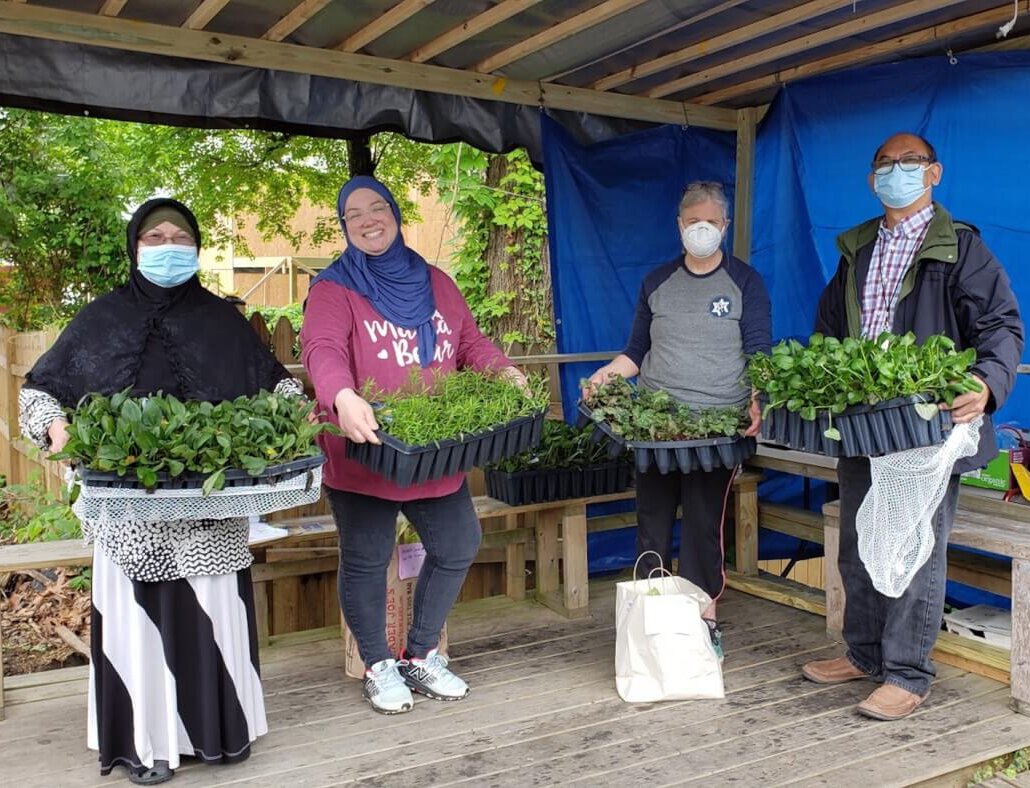
IMAAM Center volunteers get ready to host their native plant giveaway event.
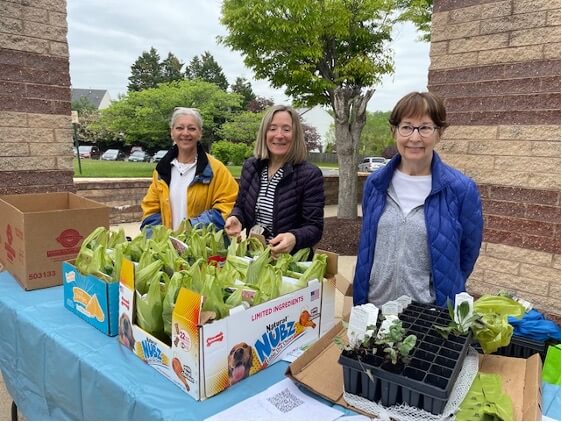
To help congregants try out native plant gardening at home, Sacred Grounds provides starter kits of three native plants. These remove the barrier of not knowing what plants are native and where to buy them.
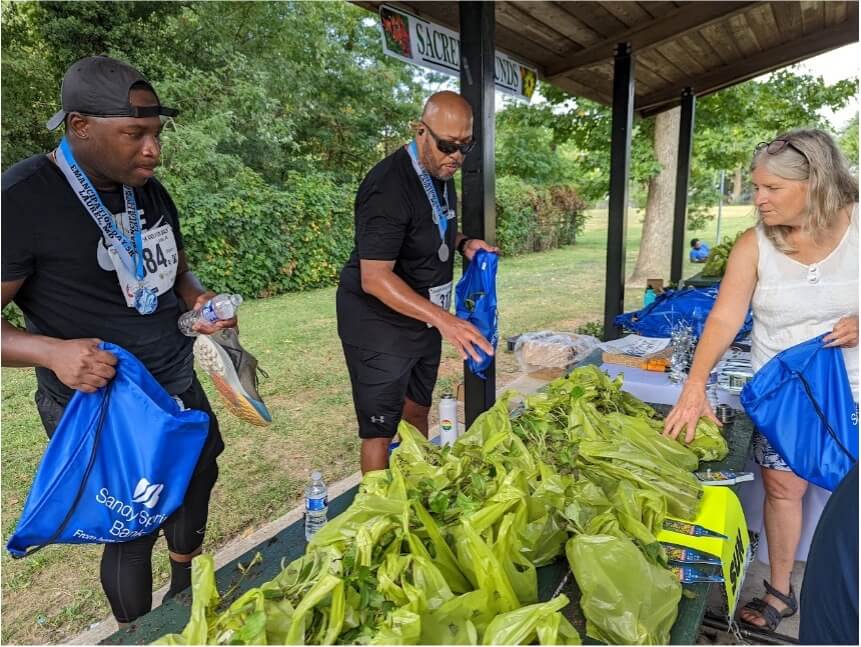
St. Mark’s United Methodist Church in Laurel, Maryland, hosts an annual 5K charity run/walk along the Patuxent River. They used the race as an opportunity to give away their native plant starter kits to community members.
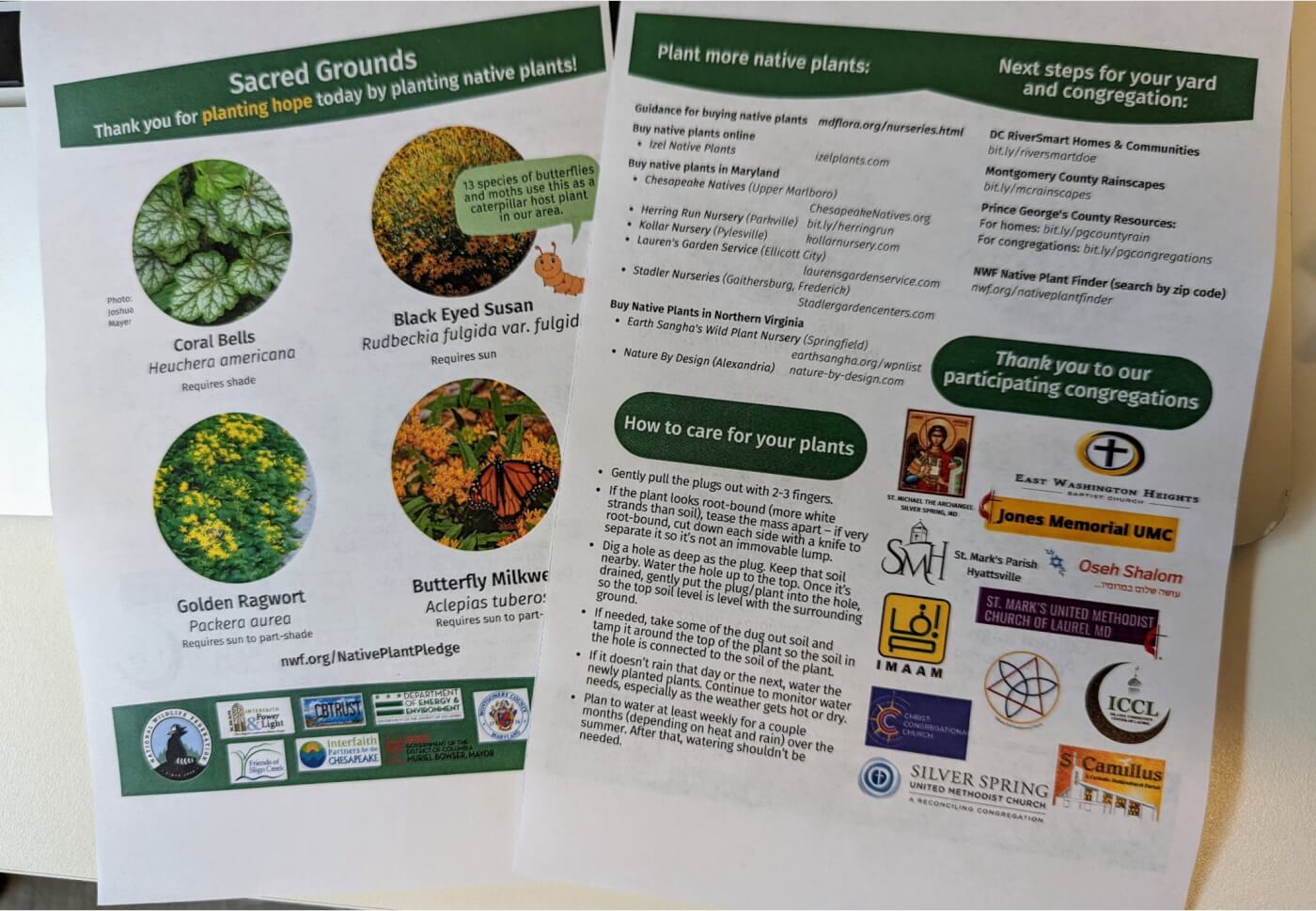
Each starter kit includes information on what plants are native to the local landscape and where to obtain more native plants, as well as where to apply for municipal rebates that could fund additional conservation landscaping and rain gardens.
Planting native gardens where we worship and where we live
The Sacred Grounds program is framed around three steps. The first is to create wildlife habitat on congregational grounds using native plants. In the Washington, D.C., metropolitan area, the program provides presentations on the why and how of native plant gardening for congregation members and helps train leaders to host native plant giveaways.
“Usually congregations have a little bit of space, and even putting in a small plot can be a great demonstration garden,” Edelson says. “They can also put a container garden in a parking lot and fill it with plants that are good for bees and hummingbirds. Our data shows that every little bit adds up.”
Native plants often have deep root systems that help absorb and filter rainwater, and they also help rebuild the food web. For example, Edelson cites entomologist Doug Tallamy’s research. “Native caterpillars are food for birds and other wildlife, and they need native plants for food and shelter,” she explains. “In three weeks, a nesting chickadee will need up to 9,000 caterpillars to raise babies. So if you don’t have native plants, you don’t have birds. ”
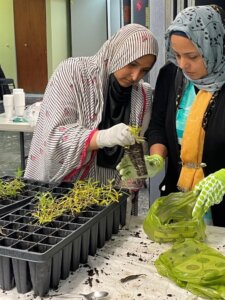
Volunteers from the Islamic Community Center of Laurel create starter kits for community members to plant at home.
The next step of the Sacred Grounds program is for the congregation’s leadership to make an explicit connection between faith and caring for the environment. “That could be through a sermon or a children’s class about care for creation,” Edelsen says, “or it could be something outside, like a blessing of the garden or the creation of outdoor meditations spaces.”
In the final step, the congregation engages their members to plant native plants at home. In the Washington, D.C., metropolitan area, that includes hosting a plant giveaway, offering starter kits with three native plugs in exchange for a pledge to plant them in their yard. “We usually have 30-50 or so families take the pledge,” Edeleson says. “The kits lower the barrier to entry, and people feel inspired. It’s a very positive thing.”
Congregations that complete all three steps of the Sacred Grounds program earn official designation as a Sacred Grounds site that comes with a certificate and signs for their grounds. “It’s a point of pride,” Edeleson notes, “but also of education. The signs help build understanding in the community and keep gardeners from mowing down the native plants.”
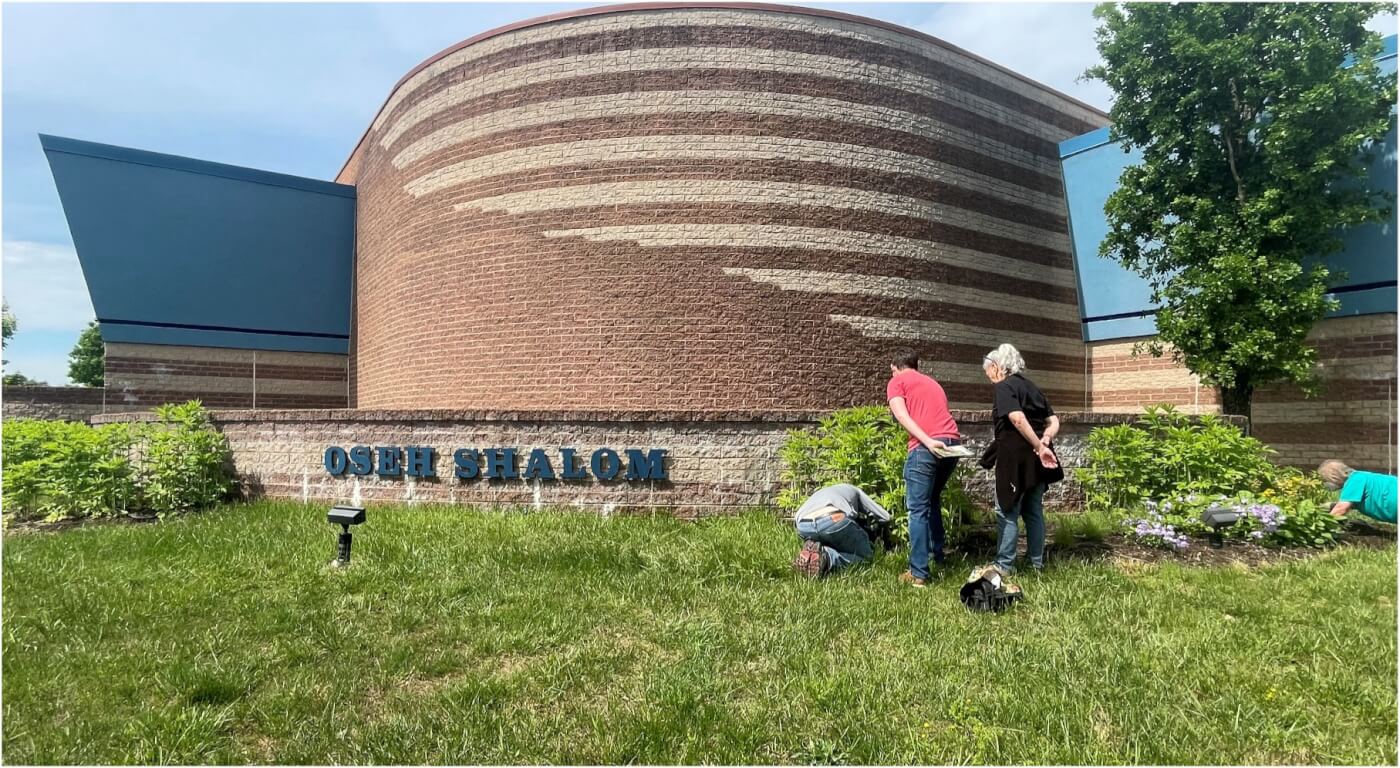
Volunteers gardening and planting flowers outside the Oseh Shalom building.
Creating a community — and a world — where butterflies and birds exist
That inspiration is visible at Oseh Shalom, a Reconstructionist Jewish congregation in Laurel, Maryland, that has spent the last four years transforming its grounds through Sacred Grounds.
“In Judaism, there’s a concept called tikkun olam,” says Susan Burger, a member of the Sacred Grounds committee at Oseh Shalom. “It means healing the world.”
The Sacred Grounds program aligned naturally with that value, offering the synagogue a way “to do what little bit we could to heal our part of the world,” as Burger says. Grants from the program paid for professional garden designs, native plant plugs, native plant training sessions with the congregants — and the annual plant giveaways.
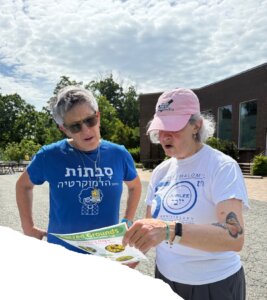
Temple Shalom hosting a native plant giveaway. Each congregation can use their own creativity to personalize the event.
The synagogue’s first native garden covered about 100 square feet, and was planted entirely by volunteers. Congregants used a ‘lasagna’ method to prepare their garden plot, layering cardboard and mulch to smother turf and weeds. “And then we got down in there with our bare hands,” says Burger, “and really dug into the earth to break everything up and prepare the soil to receive the plants.”
Planting days became community events. Even in heat and humidity, volunteers showed up to move wheelbarrows of mulch and dig planting holes. Teens worked beside the adults; younger children helped to place plants. “It’s important for kids to understand that it makes a difference if they show up,” congregant Heidi Hess-Webber says. “If you participate in projects that make the world a better place, you feel good — and You plus the Next Person makes important things happen.”
Subsequent grants have allowed the synagogue to tackle a larger round of plantings, including a nearly 2,000‑square‑foot native plant garden and a new native tree with its own “Tree of Life” understory garden to support caterpillars and other insects.
The results are measurable: As part of the grant, entomologists visit to collect data on the new garden. In the first year of monitoring at Oseh Shalom, they recorded 15 bee species, three wasp species, two fly species and two butterfly species that had not been seen there before.
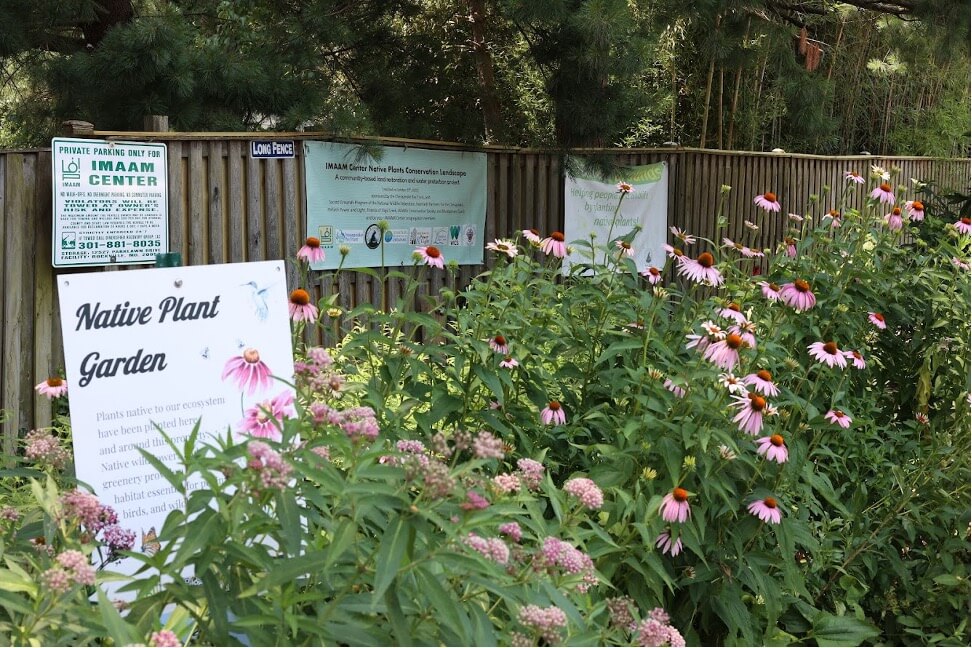
Signs explaining the value of a native plant garden provide ongoing education.
The gardens are now woven into the life of the congregation. Some services and holiday rituals take place outdoors, surrounded by native plants that bloom deep into the fall — and are literally buzzing with life. During religious school, kids make milk jug greenhouses for winter sowing, build bird feeders from recycled bottles and play “web of life” games, learning how the sun, rain, plants, critters and people are all interconnected. Many families take plants or projects home, extending the lessons into their own yards.
The ripple effect: Small acts of faith add up to bigger change
Congregations that work with Sacred Grounds often pursue certification in cohorts of religious organizations: Oseh Shalom shared training sessions and local resources with an Islamic mosque and a historically Black church. “I think it’s really special that we are all coming from very distinct faiths and sometimes, in the larger world, adversarial relationships,” says Hess‑Webber, “and yet we’ve all chosen to do this thing together.”
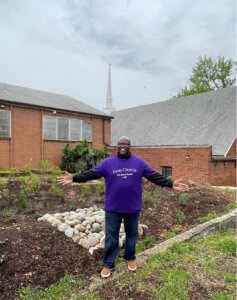
Pastor Cary James transformed the grounds of Jones Memorial United Methodist Church — and stopped the flooding of their sanctuary.
As interest in Sacred Grounds grows, Edelson and her colleagues in other regions are focused on how to expand the program without losing this sense of community and shared learning.
Since 2012, Edelson estimates that 200 congregations have participated in Sacred Grounds in the Washington, D.C., metropolitan area alone, with the biggest transformations happening where NWF can offer an on-the-ground team and funding. The National Wildlife Federation is hoping to expand that impact by revamping the program’s online resources. Virtual training sessions and webinars will allow congregations to move through the Sacred Grounds process independently — while still benefiting from peer learning. “Congregations learn so much from each other,” she says, “and many creative ideas have come from the field itself.”
When Edelson and the folks at Oseh Shalom reflect on how congregational gardens impact their spirituality, their thoughts are personal and varied — and entwined with themes of community, environmental stewardship and nature connection.
They talk about how gardens inspire “big awe.” They talk about creating a place to reconnect with the good of the world. They say that, taken together, all these small acts of faith — planting native species, inviting children to help, welcoming neighbors into shared spaces — add up to transformation. Like how a planting day becomes a lesson in showing up. A sacred site becomes a place where wildlife and humans can thrive. And a congregation becomes an ambassador for change in its greater community.
“Everywhere around the world where people get together and plant a native garden becomes a bubble,” Hess-Webber says. “As more and more people in lots of different places join in, the bubbles get bigger and start to connect, until we’ve created a world where butterflies and birds can exist — but we can’t assume that will just happen. We have to keep working at it.”
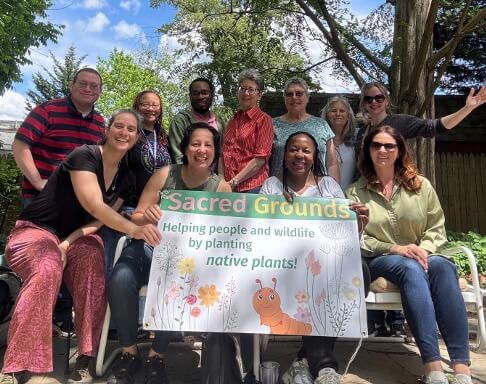
Partners include local organizations like Interfaith Power & Light and Interfaith Partners for the Chesapeake, as well as county leaders, native plant garden specialists and behavior change experts.
Learn more about Sacred Grounds
Research Digest: Nature and children’s spirituality
“10 ways faith-based organizations can connect children, families and communities to the natural world,” by Richard Louv
“Always a seeker,” a Finding Nature News story
“As a trans POC minister, my environmentalism is rooted in spirituality and identity”
“RADICAL AMAZEMENT: Nature and the spiritual life of children,” by Richard Louv
-
Richard Louv
VITAMIN N FOR THE SOUL: How Nature Can Nourish the Spirit of Children and Adults
-
Network News
Prescribe Outside: Progress moves at the speed of trust in Philadelphia
-
Voices
Nature to screens: How our built environment set the stage for the anxious generation
-
Feature
We’re all looking for the same moon
-
Feature
Forest bathing: Educators need nature connections, too