

POLICY UPDATE: Policy and advocacy for the children and nature movement

Public policy and funding decisions at all levels of government directly impact children’s ability to engage with and learn from nature. Policies and advocacy efforts around the country — and the world — serve as great tools to support similar efforts elsewhere. Each month, Finding Nature News will include a Policy Update highlighting emerging public policy (local, state, federal, tribal, international), federal policy action alerts, information about public funding streams, and tips for advocacy and coalition-building. A running list of these policy updates will be aggregated in this article, so check back often!
If you have ideas or thoughts about making our Policy Updates more helpful and relevant to your work, please contact David Beard, Director of Policy and Government Affairs at the Children & Nature Network. We look forward to growing the chorus of children and nature supporters in policy and advocacy everywhere!
April 16, 2026:
Proposed federal legislation will transform America’s schoolyards
We are excited to report that U.S. Sen. Heinrich (NM) and Rep. Lee (PA) have introduced the Revitalizing America’s Schoolyards Act (RSYA) (S.4258). See the joint press release — and sign the Outdoors Alliance for Kids (OAK) Action Alert to ask your representatives to co-sponsor the bill.
The bill:
- Creates a Revitalizing America’s Schoolyards Grant Program;
- Defines a Revitalized Schoolyard as a park-like outdoor environment at an elementary or secondary school that has been updated to strengthen local ecological systems, provide a range of hands-on learning resources, and foster nature play and social opportunities while enhancing the health and well-being of children and adults. These schoolyards may include trees and plants accessible to children; cultivated gardens; outdoor meeting and gathering areas; and other elements designed by, and for, students and the surrounding community;
- Allows funds to be used to plan and implement a revitalized schoolyard(s);
- Prioritizes funding for communities with high rates of students receiving free and reduced meals program; and
- Requires a catalog of best practices for creating these spaces to be developed.
This bill comes on the heels of the updated Green Schoolyards Action Agenda, which brings together organizations and leaders across sectors to advance policies, funding and practices that support the equitable development, activation and stewardship of green schoolyards nationwide. To support the bill, you can:
- Send this Outdoors Alliance for Kids (OAK) Action Alert to ask your member of Congress to co-sponsor the legislation.
- Share this announcement in your e-newsletters and via social media, or modify it to fit your needs:
Support the federal Revitalizing America’s Schoolyards Act (RSYA)
Too many students still spend their days in hot, asphalt schoolyards with little shade or greenery. Communities are changing that, transforming schoolyards into nature-filled spaces that support learning, health and climate resilience. The Revitalizing America’s Schoolyards Act (S. 4258) charts a path for educators, health leaders, community organizations and policymakers to work together to expand equitable access to revitalized schoolyards nationwide. Learn more here.
Please contact David for more information: david@childrenandnature.org. Let’s get this done!
YOPP Trends Report and State Legislative Session webinar
The U.S. landscape for youth outdoor access and environmental education policy is evolving fast. Which states are breaking new ground? What strategies are replicable? And how can your state capitalize on momentum in 2027?
The 2025 Youth Outdoor Policy Trends Report reveals the policy innovations shaping equitable outdoor access nationwide. The Youth Outdoor Policy Partnership will host a webinar that goes beyond the data, sharing real-world insights on:
- Emerging policy models across states in the 2025-2026 legislative sessions
- Effective messaging that builds broad coalitions
- Dual-purpose policies that address urgent community needs while laying groundwork for systemic change
- Place-based advocacy approaches tailored to local contexts and immediate community needs
Whether you’re an outdoor education provider seeking policy support, an advocate planning your 2027 strategy, a funder evaluating where to invest, or a legislator exploring what’s working in other states, you’ll leave with new ideas and inspiration! Join us on Monday, May 11, 2026, at 2 PM CT to learn more. Register here.
Presenters include:
- David Beard, Director of Policy & Government Affairs, Children & Nature Network (WA)
- Megan Fink, North American of Environmental Education (MD)
- Grant Gliniecki, National Caucus of Environmental Legislators (MI)
Panelists include:
- Laura Flores, Nuestra Tierra (NM)
- State Rep. Vanessa Grossl (KY)
- Mary Seawell, Lyra (CO)
- Karan Wood, Environmental Education Alliance (GA)
President releases 2027 federal budget proposal
Each year, the President submits a proposed budget to Congress for consideration. For the Federal Fiscal Year (FFY) 2027 budget, which runs from October 1, 2026, to September 30, 2026, the President released his proposal, which included proposed cuts to many programs that impact children’s access to nature. Cuts include full elimination of the 21st Century Community Learning Centers (afterschool and summer) program, the Community Development Block Grant (which has been used to fund parks and green schoolyards), and several environmental justice programs at the Environmental Protection Agency, among many others. Congress has already begun its work on the FFY 2027 budget. More information and action alerts will come soon. Stay tuned.
March 19, 2026:
Federal green schoolyards bill set to be introduced
We are excited to report that U.S. Sen. Heinrich (NM) and Rep. Lee (PA) are ready to introduce the Revitalizing America’s Schoolyards Act (RSYA). The introduction will take place in the first few weeks of April, and communications will go out over the coming weeks.
Kids and their green schoolyards need your help! We are excited to have sign-ons from 43 states — and would love more from all states. We are hoping to get to all 50, so we need sign-ons from Alabama, Alaska, Delaware, South Carolina, South Dakota, Tennessee and Utah. If your organization would like to be included on the list of supportive groups and/or provide a quote for the release, please sign on using this form. And, please share the sign-on form with any organization you think might be interested in any state, particularly the seven states listed.
This bill comes on the heels of the updated Green Schoolyards Action Agenda, which brings together organizations and leaders across sectors to advance policies, funding, and practices that support the equitable development, activation and stewardship of green schoolyards nationwide.
Stay tuned for more information on the Revitalizing America’s Schoolyards Act (RSYA).
California outdoor learning could see a boost
Assembly Bill 2158, the Outdoor Learning and Environmental Literacy Act of 2026, has been introduced in California. If passed, the bill would:
- recognize outdoor learning as an effective instructional method that improves academic achievement and health,
- provide statewide guidance and support for local planning for implementation,
- establish a three-year pilot program, and
- ensure equitable access to outdoor learning programming for English learners, foster youth, those receiving free/reduced-price meals, students with disabilities, and students from historically underserved communities.
Click here for more information. Be sure to check out the California Campaign for Outdoor Learning, which is leading advocacy for this great piece of legislation.
A municipal mandate for education and nature
France is holding municipal elections in mid-March, and there is a push for candidates to prioritize environmental and sustainability issues. WWF France and Fabrique des Communs Pédagogiques gathered testimonies from local elected officials who have implemented initiatives to expand opportunities for learning and play in nature. From this series of interviews, 21 recommended measures emerged — measures that are concrete, field-tested and applicable to municipal governments. Check them out here.
The manifesto includes a call to candidates to sign this pledge and prioritize children and youth learning in nature. This is a great time to consider engaging candidates for public office ahead of the midterm elections in the United States this November.
Webinar: Nature in early childhood
On Wednesday, February 25, the Children & Nature Network and the National League of Cities hosted Advancing Nature-Based Early Care & Education: Tools, Policy and Collaboration, a webinar to highlight the new Nature in Early Childhood Toolkit and to provide a 2026 State of ONB ECE Public Policy. The webinar included presentations of systems change to increase access to nature for young children happening in city, county and state contexts. Read more and watch the webinar here!
February 19, 2026:
Federal budget update
The Federal Fiscal Year 2026 budget is finally complete, with the exception of funding for the Department of Homeland Security. While the final budget did not include major increases for most federal programs affecting children and youth, it spared environmental education programs from elimination and provided slight increases for programs such as child care subsidies and Head Start. Now the 2027 budget cycle will kick off this spring, with the President’s budget proposal expected. Given it’s an election year, there is reason to be hopeful that there will not be another government shutdown next fall when the budget is due. But of course, in this political climate, nothing is guaranteed.
Webinar: Nature in early childhood
On Wednesday, February 25, the Children & Nature Network and the National League of Cities are hosting Advancing Nature-Based Early Care & Education: Tools, Policy and Collaboration, a webinar to highlight the new Nature in Early Childhood Toolkit and to provide a 2026 State of ONB ECE Policy. The Nature Everywhere Communities initiative has released the Nature in Early Childhood Toolkit. This toolkit includes a public policy component, “Amplify and Sustain Your Efforts: Public Policy & Funding,” which provides information, ideas and context on outdoor and nature-based child care and preschool regulations; public funding opportunities for nature-focused early childhood programming; and opportunities to infuse a nature- and outdoor-focused paradigm into public early childhood systems. This state legislative season, the Outdoor and Nature-Based Early Care and Education (ONB ECE) Collaborative will track and support related public policy efforts, including House Bill 496, which would create outdoor child care regulations in Kentucky. Join us on February 25 to learn more!
State legislative sessions are underway
The 2026 state legislative sessions are underway, and there are efforts to advance public policy supporting children’s access to nature. For example, in Georgia, legislators passed Senate Bill 148, which authorizes the study and development of outdoor learning spaces at schools and establishes a hunting safety program. This bill awaits the governor’s signature before becoming law. Stay tuned for additional updates and be sure to check out the Youth Outdoor Policy Playbook for more state policy information.
January 22, 2026:
Federal budget update
The House and Senate have voted on components of the discretionary budget, known as a ‘minibus’, which includes nonmandatory spending programs housed in agencies related to the sciences, energy and water projects. In a bit of good news, this package included continued funding for a few environmental education programs at the National Oceanic and Atmospheric Administration (NOAA) and the Environmental Protection Agency (EPA). This package now heads to the President for action.
Another similar set of ‘minibus’ packages is expected to be voted on any day now, including funding for health and human services, and education. This package currently includes slight increases in funding for programs like Head Start and the federal child care subsidy. Passage will likely come down to the wire before an agreement is reached between the House, Senate, and the President. All agencies and programs must have approved budget packages or a Continuing Resolution (in a sense, a bill to extend the current budget year) by January 30, or those agencies will be under a government shutdown.
Here’s what you can do: Our Outdoor Alliance for Kids (OAK) partners continue federal advocacy and need your stories related to federal policy and funding. Click here to share your story.
Nature and early childhood in public policy
The new Nature in Early Childhood Toolkit is now live. This toolkit includes a public policy component, ‘Amplify and Sustain Your Efforts: Public Policy & Funding.’ This section provides information, ideas and context relating to outdoor and nature-based child care and preschool regulations, public funding opportunities for nature-focused early childhood programming, and opportunities to infuse a nature and outdoor paradigm into public early childhood systems.
This state legislative season, the Outdoor and Nature-Based Early Care and Education (ONB ECE) Collaborative will track and support related public policy efforts, including a bill to create outdoor child care regulations in Kentucky. If you are interested in learning more about the ONB ECE Collaborative, visit the online hub with more information or please reach out to David Beard, Director of Policy & Government Affairs, at david@childrenandnature.org.
December 11, 2025:
State legislative sessions are coming
Beginning in January, 45 state legislatures will convene for the annual legislative session (Note: Montana, Nebraska, Nevada, North Dakota and Texas do not meet in even-numbered years). Many state budgets are experiencing declining revenue due to a challenging economic climate across many sectors, as well as reduced federal resources resulting from funding cuts by Congress and the White House. In all states — and especially in states with budget deficits — planning low- or no-cost legislative proposals is more likely to lead to passage. These types of policies could include:
- Outdoor and nature-based child care licensing
- Outdoor recreation for academic credit
- Outdoor and environmental learning advisory councils
- Increased opportunities for park access
Read about these ideas and more with the Youth Outdoor Policy Playbook, and stay tuned for an invite to a 2026 Policy Preview webinar coming later in January.
PLAY Act introduced in Congress
The Prioritizing Lifestyle and Activity for Youth (PLAY) Act has been introduced by Representatives Don Bacon (R-NE) and Nikema Williams (D-GA). This bipartisan legislation establishes a federal interagency task force to identify and reduce barriers to creating and improving playspaces. Only 1 in 4 kids in the U.S. get 60 minutes of daily physical activity, recommended by the U.S. Centers for Disease Control and Prevention. Additionally, the U.S. received a D+ score for children’s physical activity according to the Physical Activity Alliance’s 2024 Report Card, due in large part to inadequate access to outdoor recreation.
If passed, the PLAY Act will ensure a more coordinated, community-focused use of federal resources to promote children’s health and well-being by establishing the “Task Force on Child Wellness and Physical Activity Infrastructure.” The task force will be co-chaired by the Secretary of Health and Human Services and the Secretary of the Interior. It will include the Departments of Health and Human Services, Interior, Education, Agriculture, Housing and Urban Development, Transportation, and Defense, as well as the Environmental Protection Agency, the Council on Environmental Quality, the Army Corps of Engineers, and the Corporation for National and Community Service. The task force will submit final recommendations to Congress within one year of its initial meeting, highlighting how to better streamline funding, foster cooperation across agencies and encourage public-private partnerships to build the playspaces kids need.
November 13, 2025:
Federal budget agreement
An agreement has been reached on the discretionary budget through a short-term continuing resolution to keep the current budget in place through January. The discretionary budget includes nonmandatory spending programs, including most programs and services under the U.S. Department of Education, the Environmental Protection Agency, the Department of Health and Human Services, and the Department of the Interior. Congress will continue to work on a permanent solution to the 2026 federal budget ahead of the January 30, 2026 deadline when the continuing resolution terminates.
Here’s what you can do: Continue to follow the Outdoors Alliance for Kids (OAK) for advocacy opportunities.
Youth voice and climate in DC
The Council of the District of Columbia — the city council and effectively the state legislature of Washington, D.C. — has passed legislation to create a “Youth Climate Council” (B26-0066). The Youth Climate Council will consult with and advise the Mayor, the Council of the District of Columbia and relevant committees, the D.C. Department of Energy and Environment, the Commission on Climate Change and Resiliency, and other relevant agencies. There are specific Council seats for middle school, high school and college age students. Read more background on the legislation in this article from AFRO American Newspaper. This is an exciting step to better engage youth voices in public policy!
Updated position statement on the importance of outdoor play
The 2025 Position Statement on Active Outdoor Play has been released. The Statement serves as a celebration and extension of the 2015 Position Statement, being global in scope and inclusive of all ages, cultures and abilities, while exploring the benefits of active outdoor play. This initiative came together after an extensive process involving a Steering Committee of over 130 practitioners, policymakers, outdoor play-relevant organizations and researchers — including Dr. Cathy Jordan, the Children & Nature Network’s Consulting Research Director. The 2025 Statement was designed based on extensive research on data and trends, resulting in two scientific articles: one on the statement’s methodology and process and another on the statement’s findings and evidence. The statement is endorsed by over 500 individuals and organizations. If your organization or agency is interested in endorsing the 2025 Position Statement on Active Outdoor Play, click here.
October 16, 2025:
Federal budget agreement
There is still no agreement on a discretionary budget. The discretionary budget includes nonmandatory spending programs, including most programs and services in the U.S. Department of Education, Environmental Protection Agency, Department of Health and Human Services, and Department of the Interior. Presently, some programs and services remain open during the shutdown using funding reserves. However, these funds will continue to decrease as the shutdown continues.
One major point of disagreement in the proposed discretionary budget is a plan to offset the sharp rise in health care costs set to take effect in November for many public health care plans. These cost increases stem from the Budget Reconciliation package passed earlier this spring, which affected mandatory spending programs such as Medicaid and SNAP.
Congress will likely agree to a Continuing Resolution (C.R.) sometime in the next month in lieu of a new budget. This will keep the government “level-funding” — meaning that roughly the same levels of funding from last year will continue for a specified period of time.
Here’s what you can do: If Congress agrees to a C.R., our Outdoors Alliance for Kids (OAK) partners will create an action alert to advocate for level or increased funding of infrastructure and programming that connects children to nature. Stay tuned!
Public spaces as powerful climate infrastructure
Reimagining the Civic Commons has released a new report, “Investing with Intention: Environmental Sustainability,” highlighting innovative approaches to creating dynamic public spaces that blunt the impacts of a changing climate. This national report demonstrates that public spaces — parks, libraries, trails, community centers and other shared places — can additionally function as powerful climate infrastructure. Drawing on case studies from cities like Philadelphia, New Orleans and Singapore, the report illustrates how public space is helping innovative cities cool overheated neighborhoods, absorb stormwater and improve air quality. Plus, public spaces increase resilience by strengthening social ties — because when people in communities are more connected to each other, they are better able to recover and rebuild after extreme weather, climate shock and disasters. The report offers practical lessons for community leaders and practitioners seeking to design, manage and program civic spaces that deliver resiliency, such as nature-smart libraries and green schoolyards.
Federal Every Kid Outdoors Act Introduced
U.S. Rep. Yassamin Ansari (AZ) reintroduced the Every Kid Outdoors Act in the U.S. House of Representatives on September 23, 2025. Currently, the Every Kid Outdoors program (EKO) provides fourth graders and their families with free access to public lands and recreation sites across the United States. The program was launched in 2015, but is scheduled to sunset in 2031. The Every Kid Outdoors Act would permanently reauthorize the program and extend its benefits to fifth graders. Families wishing to participate in EKO can print out a pass from EveryKidOutdoors.gov and redeem the pass at participating locations like national parks. The Outdoor Alliance for Kids will continue to advocate for this Act, as well as other federal programs and funding streams that support children’s access to nature.
September 18, 2025:
September is a crucial month for the federal budget
As we have noted for the past few months, Congress must pass a budget bill for non-mandatory/discretionary spending by September 30. This includes many programs housed at most federal agencies, including the U.S. Department of Education, Department of Health and Human Services, Department of the Interior, and the Environmental Protection Agency. With potential across-the-board cuts proposed by the House of Representatives and cuts proposed by the Trump Administration, more challenges are on the horizon for the programs, lands and waters our children and youth need and rely on.
As with most bills, the discretionary budget bill needs 60 votes in the Senate to move forward. That means, Senate Republicans must hold their entire caucus together and count on at least 7 Democrats to move the bill to a vote. This will not be a simple task, given the concerns regarding cuts by Democrats. A Continuing Resolution (CR) may be passed that keeps the government funded at current levels for a specified period of time (e.g., one week, two months, one year, etc.). Congress must pass a new budget bill or a CR by September 30 to avoid a government shutdown. A government shutdown will result in many federal offices and lands being closed until a budget or CR is passed. This will be quite a month in the nation’s capital.
Here’s what you can do: Join OAK Week 2025 virtually! The annual gathering of the Outdoors Alliance for Kids (OAK) coalition is a once-a-year opportunity to come together as a community to plan for the coming year, lift up champions in the movement, connect with federal agency leaders, and make our collective voices heard in the halls of Congress. This year, OAK is moving to an all-virtual event. Click here for details and to sign up for each session of OAK Week. Hope you can join us!
Still time to sign onto federal green schoolyards legislation
A reminder that the Revitalizing America’s Schoolyards Act will be introduced in Congress this fall. Check out the August Policy Update for more information, and please use the linked form to add your organization to the list of supportive groups. If you have any questions or would like to discuss further, please feel free to contact David Beard (david@childrenandnature.org).
Resolution regarding extreme weather and children introduced
U.S. Representative Jennifer McClellan (D-VA) introduced a resolution highlighting the threat of the increasing instances of extreme weather to children’s health and well-being. Challenges to children’s health include disproportionate exposure to air pollutants, increasing levels of wildfire smoke and changing dust patterns — all of which can negatively impact children’s developing bodies and behavior. Other risks include less time in the classroom due to more heat and flooding, and less time in nature. The Children & Nature Network signed on in support of this resolution. We thank Rep. McClellan for uplifting this critical issue. Read the full text of the resolution here.
Outdoor and Nature-Based Early Care and Education (ONB ECE) Collaborative moving forward
The Outdoor and Nature-Based Early Care and Education Collaborative has begun taking shape, with the goal of supporting and informing local, state and federal public policy and system efforts relating to nature and early childhood. Given the specificity and interest in particular issue areas, there are some changes coming to the Collaborative. We are going to have separate meeting times for each issue area. Below are the new working groups:
- Facilities and Environments
- Federal
- Prenatal to Age 3/Family Supports
In addition to the working group meetings, we will continue doing policy update calls every other month. These calls will now be quick updates of 30 minutes or less. If you would like to learn more about the ONB ECE Collaborative and these working groups, contact the Children & Nature Network’s Director of Policy & Government Affairs, David Beard, at david@childrenandnature.org.
August 21, 2025:
Federal budget development continues
The budget reconciliation bill was signed into law and includes many cuts to several mandatory programs, including Medicaid and the Supplemental Nutrition Assistance Program (SNAP), which impacts SNAP-Ed, Farm-to-ECE and Farm-to-School programs. Additionally, Congress passed a recissions package — which cuts approved funding from the previous budget year. The recent package has cuts to several programs, including public broadcast funding to PBS.
Federal 2026 Budget Bill: Congress must now pass a budget bill for non-mandatory/discretionary spending. This includes many programs housed at the U.S. Department of Education and the U.S. Environmental Protection Agency. The Federal Fiscal Year 2026 budget proposal released by the Trump Administration contains billions of dollars in cuts, including eliminating dozens of Title I funding programs that fund early learning and programs that support children with disabilities, as well as several environmentally-focused funds.
Given the pressure on Congress from cuts in the recissions package and budget reconciliation bill, it is increasingly possible that Congressional Republicans will move to pass a Continuing Resolution (CR) that will keep the government funded at current levels for a specified period of time, which must happen by September 30 to avoid a government shutdown. However, Congressional Democrats are leery of a CR because the last CR that passed in relation to the 2025 budget led to the Recissions Package from this month that cut already approved funding. More to come in this complex political environment.
Here’s what you can do:
Join OAK Week 2025 virtually! The annual gathering of the Outdoors Alliance for Kids (OAK) coalition is a once-a-year opportunity to come together as a community to plan for the coming year, lift up champions in the movement, connect with federal agency leaders, and make our collective voices heard in the halls of Congress. Given the challenges facing vulnerable populations in Washington, D.C., we are moving to an all-virtual event. Stay tuned for more details. If you would like to discuss outreach further, contact the Children & Nature Network’s Director of Policy & Government Affairs, David Beard, at david@childrenandnature.org.
Green schoolyards and climate-related legislation introduced
We are excited that U.S. Senator Heinrich (NM) will introduce the Revitalizing America’s Schoolyards Act in Congress early this fall. His team continues to look for groups that support the bill. Please use the linked form to add your organization to the list of supportive groups. Please fill out the form by 8/29 COB if possible.
Some additional information about the bill:
Revitalizing America’s Schoolyards Act
In the U.S, nearly 50 million children attend school on millions of acres of public land that is largely paved in asphalt. This land is a vital public resource that could be used more strategically to support the health and education of students and the surrounding community. This legislation is an updated version of the Living Schoolyards Act, which aims to provide funding and support for the creation of green and living schoolyards.
Details of the Revitalizing America’s Schoolyards Act:
- creates a Revitalizing America’s Schoolyards Grant Program;
- defines a Revitalized Schoolyard as a park-like outdoor environment at an elementary or secondary school that has been updated to strengthen local ecological systems, provide a range of hands-on learning resources, and foster nature play and social opportunities while enhancing the health and well-being of children and adults. These schoolyards may include trees and plants where children can access them; cultivated gardens; outdoor meeting and gathering areas; and other elements designed by, and for, the students and the surrounding community;
- allows funds to be used to plan and implement a revitalized schoolyard(s);
- prioritizes funding for communities with high rates of students receiving free and reduced meals program; and
- requires a catalog of best practices for creating these spaces needs to be developed.
If you have any questions or would like to discuss further, please feel free to contact David Beard (david@childrenandnature.org).
The National Center on School Infrastructure (NCSI) has expanded resources
The National Center on School Infrastructure (NCSI) recently expanded its online resource library on school facilities! NCSI is a national resource hub supporting local school districts and state leaders in their stewardship of America’s elementary and secondary public school facilities. Search their library to find best practices, tools, research, case studies, and reports on topics such as energy use and efficiency, indoor air quality, facility management, master planning, capital planning and construction, and more. NCSI’s website also provides easy access to facility-related events, trainings, news articles, and funding opportunities.
Explore this new and useful resource hub here!
July 24, 2025:
Federal budget advocacy continues
Federal budget negotiations continue to cause challenges for advocates, providers, states and local governments. A few updates:
Budget reconciliation bill: The annual budget reconciliation bill funds mandatory programs, including Social Security, Medicare, Medicaid, many federal retirement programs, the Supplemental Nutrition Assistance Program (SNAP) and other “entitlement” programs. The bill also includes changes to tax policy and debt ceiling adjustments. The 2025 budget reconciliation bill (also known as the “One Big Beautiful Bill Act”) was signed by the President and includes a number of cuts that will impact children and families, including SNAP, SNAP Ed and Medicaid. The extent of challenges related to these cuts will take months to become clear, particularly given the impact on state and local government budgets.
2026 budget bill and rescission package: The Senate may vote on a $9.4 billion rescission package resulting from the Department of Government Efficiency (DOGE) recommendations for cuts that would impact programs such as global health initiatives and public broadcasting. A rescission package essentially eliminates certain approved funding line items in the federal budget already approved by Congress. These potential reductions would be on top of the cuts in the budget reconciliation bill and possible cuts in the upcoming discretionary budget bill under development. The discretionary budget includes most federal agencies and programs, including those housed in the U.S. Department of Education and the U.S. Environmental Protection Agency.
Here’s what you can do: Write to or call your members of Congress and voice your opinion on the pending cuts. If you would like to discuss outreach further, contact the Children & Nature Network’s Director of Policy & Government Affairs, David Beard, at david@childrenandnature.org.
State funding for capital and infrastructure projects
State governments fund a wide variety of capital and infrastructure projects, including those related to parks, schoolyards, nature centers and more. Most states have several pathways to obtaining funding beyond traditional competitive grant applications. The Percent for Place Coalition has released a State Capital Budget Primer which provides insight into state capital budget processes and ideas for securing this type of funding. Connect with David Beard (david@childrenandnature.org), if you would like more information and ideas for securing local and state public capital funding.
June 26, 2025:
Now is the time to get loud on the federal budget
As more and more information surrounding funding and federal programs comes out of the nation’s capital, it can be difficult to make sense of it all. We hope this overview of key bills and opportunities for action is helpful.
Budget reconciliation bill: The annual budget reconciliation bill provides funding for mandatory programs, including Social Security, Medicare, Medicaid, many federal retirement programs, the Supplemental Nutrition Assistance Program (SNAP) and other “entitlement” programs. The bill also includes changes to tax policy and debt ceiling adjustments. Unlike most other bills, Congress can pass a budget reconciliation bill with a simple majority, rather than the 60 votes needed to bypass a filibuster. The 2025 budget reconciliation bill (also known as the “One Big Beautiful Bill Act”) passed the House of Representatives in May and includes distressing cuts to Medicaid and SNAP (including SNAP-Ed, which funds Farm-to-School and Farm-to-ECE programs), among many others. The Senate released its version of the bill, which also has concerning cuts. If funding cuts to these mandatory programs pass, millions of children and families would lose access to food and health care, many people in the health care and agriculture sectors would lose their jobs, and there would be a significant hit to the overall economy.
2026 budget bill: In addition to the budget reconciliation bill, Congress must also pass a budget bill for non-mandatory/discretionary spending. This includes funding for many programs housed in the U.S. Department of Education and the U.S. Environmental Protection Agency. The executive office’s 2026 budget proposal includes billions of dollars in cuts, including eliminating dozens of Title I funding programs, reducing the Community Development Block Grant, and ending the Environmental Justice program at the Environmental Protection Agency. It also proposes eliminating the 21st Century Community Learning Center program, which provides access to afterschool and summer programs for 1.4 million children and youth across the country. Many of these programs include essential outdoor learning and engagement.
Here’s what you can do:
- Write to Congress: Write to or call your members of Congress and voice your opinion on the pending cuts. If you would like to discuss outreach further, contact the Children & Nature Network’s Director of Policy & Government Affairs, David Beard, at david@childrenandnature.org.
- Only have five minutes?: Many organizations and networks make it easy to submit pre-written comments to your representatives. Take action with the Food Research & Action Center and tell your senator to protect SNAP and SNAP-Ed. Or, join Afterschool Alliance in protecting the 21st Century Community Learning program.
Wins during the state legislative season for children’s access to nature
Many state legislative seasons have ended for 2025. Thanks to bill tracking efforts in the Youth Outdoor Policy Playbook, we know that over 275 bills were proposed on issues related to the children and nature movement — and about 40 passed. Below are a few highlights:
- Colorado passed HB 25-1061, which creates the Community Schoolyards Grant Program. Colorado now has the second statewide green schoolyard grant program in the country, after California. This new funding will support the planning and implementation of nature-filled green and living schoolyards.
- Maine passed LD 895, which created the Outdoor School for All Maine Students Program. The Maine Cooperative Extension will develop the program, which would provide a two- to three-night overnight experience to students between 4th and 8th grade. A similar program exists in several other states, including Oregon and Washington.
- Nevada passed AB 165, establishing an Outdoor Education Council within the Division of Outdoor Recreation of the State Department of Conservation and Natural Resources. This council will create a process for awarding outdoor education designations to schools, develop an Outdoor Educator of the Year award and share best practices for outdoor education. The bill was born from the recommendations by the Nevada Outdoor Education Advisory Working Group, which is a Nature Everywhere Community.
- Also in Nevada, AB 501 passed and authorizes school districts to award elective course credit to middle, junior or high school pupils who complete an approved outdoor recreational activity outside of school hours. This credit counts toward the total required for promotion to or graduation from high school.
Many of you worked on state legislation this year — thank you for your work to support kids’ access to nature! It was great to see innovative and systematic approaches to connecting kids to the outdoors. Stay tuned for an upcoming Youth Outdoor Policy Partnership webinar showcasing these wins and other state policy efforts — more information coming soon!
MAY 29, 2025:
Continuing to emphasize federal advocacy
The Trump Administration released its Federal Fiscal Year 2026 budget proposal early this month. The budget proposes billions of dollars in cuts, including eliminating dozens of Title I funding programs, reducing the Community Development Block Grant and ending the Environmental Justice program at the Environmental Protection Agency. These funding reductions and eliminations will impact children’s access to nature, their learning and their health.
Now is the time to raise your voice. Several programs slated to be cut or frozen by the Administration have persisted thanks to media outreach and advocacy to Congressional offices. The Outdoor Alliance for Kids (OAK) continues to collect stories that showcase the impacts of recent executive orders, federal layoffs and the federal funding freeze. The Percent for Place Coalition is also collecting stories about the effects of cuts on civic infrastructure (public use buildings, parks, farmers markets, urban and rural public space redevelopment, etc.). Please share your stories at the links above!
If you would like to further discuss outreach to your members of Congress, please contact the Children & Nature Network’s Director of Policy & Government Affairs, David Beard, at david@childrenandnature.org. We look forward to supporting your advocacy efforts.
Public policy has the power to increase opportunities for early childhood nature connection
Brain development is most rapid in the earliest years of life — and building comfort and joy in nature can start just as early. There are a burgeoning number of opportunities to engage young children and their families in nature, such as:
- Outdoor and forest preschools and child care
- Prescribing nature to new parents
- Increasing professional development opportunities and resources for traditional early childhood programs to engage children in nature
- Creating nature-rich outdoor spaces
To provide funding and develop supportive public systems to scale these opportunities, we must increase public policy efforts — especially during this challenging time for the movement for children and nature. In October 2024, a collection of organizations and agencies from across the country formed the Outdoor and Nature-Based Early Care and Education Collaborative. The collaborative builds upon existing policy efforts and aims to generate public policy ideas, provide technical assistance and share communications that advance advocacy efforts at the local, state and federal levels.
We are still constructing our vision and work plan, and hope to add more voices. If you are interested in participating in the collaborative or want to chat further, please contact David Beard at david@childrenandnature.org. A love of nature starts early!
APRIL 17, 2025:
Federal advocacy
The Trump administration and the Congressional majority continue to cut or propose cuts to programs and federal workforces, including at the Environmental Protection Agency, Department of Education, Department of Health and Human Services, Small Business Administration, and more. As we are learning in great detail, federal funding is a critical piece to creating opportunities for children and youth to learn from and engage in nature. From green schoolyards to Every Kid Outdoors to environmental impact and disaster aid to environmental education, and so on — federal funding is necessary to support children and youth. Additionally, federal agency staff are needed for program administration, for accountability, and for civil rights protection.
Budget negotiations are in full swing for the federal fiscal year (FFY) 2026 budget. The budget year is supposed to begin October 1, 2025, and end September 30, 2026. To aid in preventing devastating cuts, the Outdoor Alliance for Kids (OAK) is collecting stories that showcase the impacts of recent executive orders, federal funding freeze, and federal layoffs. The Percent for Place Coalition is also collecting stories about the impacts of cuts to civic infrastructure (public use buildings, parks, farmers markets, urban and rural public space redevelopment, etc.).
These stories are working! Due to on-the-ground stories of impact, some programs have been spared, and some federal staff have been retained. The stories are used in advocacy efforts, including court cases.
Please share your stories about the impacts these executive actions and funding decisions are having on your organizations and the young people you serve, and on civic infrastructure, at the above links. If you are concerned with confidentiality and want to share your story anonymously, please contact the Children & Nature Network’s Director of Policy & Government Affairs, David Beard, at david@childrenandnature.org. Using our individual and collective voices, we have a fighting chance to save these resources for kids and nature.
Green schoolyards and state-level policy
In public policy, green schoolyards (also known as “living schoolyards” and “green community schoolyards” in some places) have been centered in the local government and school district sphere and, in some cases, have been supported by federal funding such as the Community Development Block Grant. The state-level role for green schoolyards is more nascent. Several national organizations, including the Children & Nature Network, Green Schoolyards America, KABOOM!, and Trust for Public Land, have been increasing attention to the states, given the potential for funding and scalability.
As efforts begin to refresh and revitalize the national Green Schoolyards Action Agenda this year, some current state-level policy strategies are blossoming that will inform the Agenda. Below are some examples of how states approach their policy and advocacy efforts.
- California is currently the only state with a green schoolyards grant, which is housed at the CAL FIRE state agency in the Urban and Community Forestry Grant Program. California models how creating a competitive grant opportunity for schools and partners with a focus on climate mitigation and adaptation for issues such as wildfire and extreme heat management is one policy and communications strategy that can increase attention and understanding of the issue.
- Colorado has House Bill 25-1061, which would create a Community Schoolyards Grant Program. The grants would be for schools, boards of cooperative education services, and tribal organizations to develop park-like environments at schools that provide hands-on programming to students, enhance the well-being of students and community members, and address inequities in underserved communities. One interesting aspect of this proposal is the funding source, which would come from the severance tax on minerals and mineral fuels. A dedicated funding source can be an effective strategy to create and sustain a grant program.
- Grant funding may not be the only way to take the first step in a policy strategy. Adding a technical assistance opportunity for schools and partners to create and maintain green schoolyards is one pathway to build toward state funding. Nevada (Assembly Bill 165) and the state of Washington (House Bill 1134) embedded this concept into pending legislation.
Stay tuned for more information and opportunities for input on the updated Green Schoolyards Action Agenda. Don’t forget to check out the Green Schoolyards Advocacy Toolkit or reach out to the Children & Nature Network as you grow your own state green schoolyards efforts.
MARCH 20, 2025:
Share your story to help advocate for federal funding
Federal funding is critical to increasing opportunities for children and youth to learn from and engage in nature. This includes funding for programs, classrooms and infrastructure — from accessible parks to green schoolyards. In an effort to prevent additional cuts to the funding of these important resources, the Outdoor Alliance for Kids (OAK) is collecting stories that showcase the impacts of recent executive orders, federal funding freeze and federal layoffs.
Stories from youth, parents, program providers, park staff, outdoor recreation staff, teachers and other individuals also help advocates understand the impact these executive actions and funding decisions have on organizations and young people. Use this link to tell your story of impact. By filling out this form, your story will go directly to your member of Congress. With your permission, OAK will also use your story to strategically advocate for increasing young people’s access to the outdoors.
If you are concerned about confidentiality and want to share your story anonymously, please contact David Beard, the Children & Nature Network’s Director of Policy & Government Affairs, at david@childrenandnature.org. By using our individual and collective voices, we have a fighting chance to save these resources for kids and nature.
In Nevada, a workgroup leads to new legislation
In 2023, the Nevada legislature passed Assembly Bill 164, which created the Outdoor Education Advisory Working Group (AWG). The AWG was selected as a Nature Everywhere Community and received support from the Children & Nature Network, the National League of Cities and KABOOM!.
The AWG included a cross-sector team of stakeholders, including state agencies, teachers and other school representatives, youth development and early childhood providers and specialists, a youth representative and legislators. The AWG also utilized a statewide survey and focus groups of students, teachers and other adults working with youth to create a series of recommendations.
The AWG’s recommendations were developed into legislation, Assembly Bill 165 (AB 165). This bill would establish an Outdoor Education Council within the Nevada Division of Outdoor Recreation (NDOR) of the State Department of Conservation and Natural Resources. The Council would advise on:
- Creating a grant program that awards schools with a green schoolyard designation, as well as an award for “Outdoor Educator of the Year”
- Creating voluntary standards for outdoor education, including interdisciplinary curriculum and living schoolyards (aka green schoolyards)
- The development of teacher training for outdoor learning
- Providing technical assistance to support schools and school districts interested in developing initiatives for outdoor education — and prioritizing schools with the least access to nature
- Identifying state and federal funding opportunities for these efforts
AB 165 was heard in the Nevada Assembly’s Natural Resources Committee on March 3, 2025. Assemblymember Erica Mosca, AWG member and student Sean Thornton, and Children & Nature Network’s Director of Policy & Government Affairs David Beard presented both the bill and AWG recommendations to the committee. The bill must be approved by the state Assembly and state Senate by the end of the Nevada 2025 Legislative Session on June 2, 2025.
FEBRUARY 20, 2025:
Federal Advocacy
Since the new administration took office last month, funding programs related to the environment or sustainability, along with programs focusing on diversity, equity, and inclusion, are under immense scrutiny and were paused in late January.
Given the current political climate, it can be challenging to stay abreast of what is happening and to know how to respond. The Outdoor Alliance for Kids (OAK) is developing responses and is creating a response guide for OAK coalition members. OAK also provides newsletters, social media, and a Field Call to stay engaged with federal policy, funding and advocacy.
You may consider signing up to be an OAK member and continue to follow the Children & Nature Network’s Policy Updates each month as we will have a standing section on federal policy and funding, given the numerous challenges coming out of D.C. Our collective voice will be critical in maintaining programming and funding vital to connecting children to nature and ensuring our natural areas are protected.
State Legislative Sessions Have Begun
With tremendous uncertainty at the federal level, this is a great time to work on local and state-level public policies. Most 2025 state legislative sessions have begun, and policy ideas are coming to life.
Green schoolyards and similar policy ideas are taking shape in a few states:
- In Nevada, Assembly Bill 615 would establish the Outdoor Education Council within the Division of Outdoor Recreation of the State Department of Conservation and Natural Resources. The Council would advise the creation of a grant program to award designations and potentially funding relating to outdoor education, green schools, and green schoolyards. The concepts in the bill emerged from a legislatively created workgroup focused on outdoor education that was also a Nature Everywhere community.
- A bill focused on Community Schoolyards is moving through the Colorado legislature and includes many components of green schoolyards. It would be funded by an existing special tax, giving it a chance at passage in a strained budget climate.
- In Washington state, legislation was introduced that would create a Green Schools Program in their state education agency that would, among other duties, connect schools to green schoolyards and school forest information and support.
- In Hawaii, a bill would require the state departments of education and health to develop statewide guidelines for managing heat exposure to protect students’ health during outdoor activities.
Additionally, there is legislation in Nevada and South Carolina that would mandate minimum outdoor recess requirements for elementary-aged students. The legislation in Nevada also creates a pathway for middle and high school students to gain credit for approved outdoor recreation and education activities.
Check out the Youth Outdoor Policy Playbook, a resource that highlights current and past state-level legislation and features the Annual Trend Report, community spotlights, and a state bill tracking feature. If you are working on state or local-level public policy that others might be interested in learning about or to share ideas and updates on policy and advocacy efforts, please contact David Beard at david@childrenandnature.org.
JANUARY 23, 2025:
Webinar: State-Level Youth Outdoor Policy Trends
Earlier this month, the Youth Outdoor Policy Partnership held a webinar titled “Change is Coming: 2024 Youth Outdoor Policy Trends & 2025 Advocacy Strategies.” We explored the latest state-level policy updates from 2024, shared winning coalition-building strategies and heard exciting advocacy strategies for 2025 from a panel of youth outdoor policy leaders. Presenters and panelists included Colorado State Senator Janice Marchman, Kendal Scott with the Nevada Division of Outdoor Recreation, Megan Fink with the North American Association for Environmental Education, Grant Gliniecki from the National Caucus of Environmental Legislators and David Beard from the Children & Nature Network. Watch the webinar recording below.
The Youth Outdoor Policy Partnership is a collaboration of leading national organizations working across sectors to ensure that all children have access to high-quality outdoor experiences and environmental education. Every year, the collaboration supports the Youth Outdoor Policy Playbook, a resource that highlights current and past state-level legislation and features community spotlights. The Playbook also includes an Annual Trend Report that shares innovative policies to encourage legislators, advocates, communities and youth to replicate, rethink and collaborate on strategies to build equitable youth outdoor opportunities.
DECEMBER 26, 2024:
The nature and early childhood movement gains steam
The Outdoor and Nature-Based Early Care and Education (ONB ECE) Collaborative kicked off this month, following the ONB ECE Policy Roundtable held in Washington, D.C., this past October. Early childhood is the time to begin outdoor learning and engaging, whether through forest schools or creating outdoor learning environments in traditional ECE programs. A public policy approach is critical to expanding these opportunities, increasing resilience and mitigating the impacts of climate change.
The ONB ECE held a kickoff call on December 16 that brought together ONB ECE providers, intermediaries, public agencies and others. If you’re interested in learning more about the Collaborative and ONB ECE policy, please contact Children & Nature Network’s Policy & Government Affairs Director David Beard at david@childrenandnature.org. Together, we can build a love and understanding of nature in our youngest learners, and create a climate-friendly world for their future.
EXPLORE Act passes Congress, heads to the White House
Great news heading into the holiday season — the Expanding Public Lands Outdoor Recreation Experiences (EXPLORE) Act has passed through Congress on December 19th and is on its way to the President’s desk for his signature. This crucial legislation will increase outdoor accessibility, improve or create new outdoor recreation facilities, and introduce more generations of children to the outdoors. The EXPLORE Act contains four major provisions related to outdoor improvement and park access for children and youth:
- The Every Kid Outdoors program, which grants free access to federal public lands and waters to fourth graders and their families, would be reauthorized for seven years.
- The Outdoors for All Act would authorize the existing Outdoors Recreation Legacy Partnership (ORLP) program, which provides funding to economically disadvantaged communities with little to no access to public outdoor recreation spaces to build or improve outdoor recreation sites and facilities.
- The Military Veterans in Parks Act would improve signage, adaptive recreational facilities and disability access, while also increasing awareness of and access to assistive technology.
- The Simplifying Outdoor Access for Recreation Act would streamline permitting processes for guides, outfitters, outdoor leaders and nonprofit organizations. This would reduce the barriers communities and organizations face in organizing outdoor excursions and facilitating access to nature.
Advocacy from the Outdoor Alliance for Kids (OAK) coalition was central to keeping these provisions in the bill and securing its success. The passage of the EXPLORE Act in the final days of this Congress shows that steadfast advocacy can secure wins, even in the most challenging of political environments. As a member of OAK, the Children & Nature Network will continue to advocate to the President for the swift signing of the legislation.
NOVEMBER 27, 2024:
Election 2024: Gear up to ensure kids’ access to nature
The 2024 election dramatically changed the political landscape of the U.S. federal government, with Republicans now in control of Congress and the White House. Policy proposals from the new administration include significant cuts to public programs, some of which support children’s access to nature.
Below is a recap of the election and what may be in store for 2025. Stay tuned for advocacy opportunities; you can start by joining our December 3 virtual event to explore state-level policy updates and exciting children and nature advocacy strategies for the year ahead (more on that below).
- Congress: The U.S. Senate flipped to a Republican majority, and Republicans will maintain control in the U.S. House of Representatives. Congress plays a vital role in funding programs such as Every Kid Outdoors (EKO), the Outdoor Recreation Legacy Partnership Program (ORLP), and the Community Development Block Program, among many others. The extent and details of federal budget cuts remain to be seen, but it seems likely that well-organized advocacy efforts will be needed to protect important programs connecting children to nature.
- Gubernatorial races and state legislatures: Several new governors were elected, and interestingly, no state had a change in which party controls the governor’s mansion. There has not been much change in state legislative majorities, save for a new tie in the Minnesota House and possibly the Maine House, and a new Republican majority in the Michigan House. State-level policy and funding will become crucial if the federal landscape becomes more challenging for access, learning and engagement in the children and nature movement.
- Ballot measures and other races: Most states had ballot measures asking voters to weigh in on specific issues. Seven states had ballot questions relating to nature and environmental protection, such as California’s environmental protection bond (Prop 4) and Maine’s trail protection and improvement bond (Question 4) — both of which passed. Local ballot measures saw some success, with $133 million being approved for children and youth services nationwide, some of which could potentially be used for outdoor and nature-based programming.
State-level policy trends and opportunities
State-level policy approaches are the best public strategy heading into 2025. The Youth Outdoor Policy Partnership is a collaboration of leading national organizations working across sectors to ensure that all children have access to high-quality outdoor experiences and environmental education. Members include the National Caucus of Environmental Legislators, North American Association for Environmental Education, Nuestra Tierra Conservation Project and the Children & Nature Network. Every year, the Partnership publishes an annual Trends Report that shares innovative policies to encourage legislators, advocates, communities and youth to replicate, rethink and collaborate to build equitable youth outdoor opportunities.
On Tuesday, December 3 at 1 p.m. CT, Youth Outdoor Policy Partnership is hosting “Change is Coming,” a webinar to explore the latest state-level policy updates, winning coalition-building strategies and exciting advocacy strategies for 2025 with a panel of leaders in youth outdoor policy. The event will include representatives from the Partnership as well as Colorado State Senator Janice Marchman. Click here to learn more and register — we hope to see you!
OCTOBER 17, 2024:
The election is coming. Connecting children to nature is on the ballot.
The 2024 election, like the past several election cycles, will have ramifications for programs serving children, increasing access to nature and combating climate change. Time is running out (or has run out!) to register to vote — see registration deadlines in your state here.
The Presidential and Congressional elections are not the only important races — many other races impact public policy and funding. Below are the races, issues and ballot measures that the Children & Nature Network will be watching:
- President and Congress: It is no surprise to anyone that who is in the White House matters. Presidents sign or veto legislation passed by Congress, which has consequences for the public. Presidents also have a broad range of powers, including appointing secretaries to vital agencies like the Environmental Protection Agency and the Department of Education, and creating grant programs that can (or can not!) be community-minded and justice-oriented. Presidents also play a significant role in international affairs including climate treaties. Congress plays a vital role in these areas as well, including increasing or decreasing funding to important programs such as Every Kid Outdoors (EKO), the Outdoor Recreation Legacy Partnership Program (ORLP), and the Community Development Block Program (see the following CDBG section below), among many others.
- Gubernatorial races and state legislatures: Governors and state legislatures make many important decisions for their states, including choices about funding and oversight for education and state parks. Eleven governor races and almost all state legislatures are on the ballot this November. In making your voting decisions, check out the candidates’ position statements via their websites or the media, and see which organizational endorsements (such as environmental or child-focused organizations and political action committees) a candidate has secured to give you a sense of how they will support children and nature.
- Ballot measures and other races: A handful of states elect public land commissioners, who have significant decision-making authority over what happens on public lands — and who has access to them. Additionally, most states will have ballot measures asking voters to weigh in on specific issues. In the 2024 election, for example, seven states will have eight ballot questions relating to nature and environmental protection, such as California’s environmental protection bond (Prop 4) and Maine’s trail protection and improvement bond (Question 4).
Check your voter registration — even if you have previously voted — to ensure your registration status and address are current and correct. Election Day, November 5, will be here in no time!
Federal Community Development Block Grant (CDBG) celebrates 50 years
The Community Development Block Grant Program (CDBG), housed at the U.S. Department of Housing and Urban Development (HUD), turned 50 years old this year. Cities and communities across the country have leveraged CDBG funds to create opportunities to connect children to nature on public school grounds, libraries, recreational facilities, parks and playgrounds open to the general public. CDBG is one of several federal funding streams that support connecting children to nature and building climate-resilient infrastructure.
The Percent for Place Coalition, a federal coalition that advocates for increased support for civic infrastructure, released this brief featuring recent projects funded by CDBG to celebrate the program’s anniversary. The brief highlights the Salina Elementary and Middle School Green Schoolyards Initiative in Dearborn, Michigan — a city that participated in the Cities Connecting Children to Nature (CCCN) effort led by the Children & Nature Network and the National League of Cities. The Dearborn team, with technical assistance support from CCCN, has done a phenomenal job designing the space with the community, creating a bold vision, and leveraging district, state and federal funding.
SEPTEMBER 19, 2024:
Supporting Every Kid Outdoors
On National Public Lands Day (September 28th), all federally protected lands are free — but, thanks to the Every Kid Outdoors (EKO) program, fourth graders and their families can obtain free passes to federal lands and waters all year long!
Providing free access to our public lands is crucial in helping all children establish early connections with nature. For this year’s National Public Lands Day, we want to underscore the transformative impact of this connection and the importance of maintaining the EKO program.
Year after year, EKO program advocates must fight for funding and the permanent status of the program. Check out Sierra Club’s EKO Action Alert urging Congress to pass the Every Kid Outdoors Act. Your congressional offices need to hear about the importance of nature access for children, and EKO’s critical role in getting kids outdoors.
Schools prioritize green energy with federal Inflation Reduction Act funding
Two years ago, President Biden signed the Inflation Reduction Act (IRA) into law, which provided funding for infrastructure projects, new employment opportunities and American-based manufacturing, among other economic priorities. Included in the IRA were unlimited, non-competitive tax credits to provide support for school districts looking to implement clean energy technologies across their infrastructure. Check out more information from UndauntedK12 to learn how school districts from coast to coast are using these tax credits for green energy, and find helpful tools to share with your local school district. Schools are crucial in connecting kids to nature and creating sustainable infrastructure. Green energy technology can be a core component of a Green Schoolyards plan, which aims to construct a more nature-filled, climate-resilient school.
AUGUST 22, 2024:
Maine is creating systems change on multiple fronts
Maine’s breathtaking landscapes aren’t just for show — the state is also serious about connecting children to nature. The more you look, the more examples of good policy, strategy and collaboration you’ll find. Much of this work is supported by the Maine Environmental Education Association, an affiliate of the North American Association for Environmental Education (NAAEE). For more information about the following efforts and others in the Pine Tree State, please contact Olivia Griset at olivia@meeassociation.org.
The Maine Nature-Based Education Consortium is a collaborative network of outdoor learning leaders, organizations and individuals working together to advance systems-level efforts to ensure every child in Maine has access to powerful outdoor learning experiences. The Consortium is also a Thrive Outside Community, with key focus areas being the Maine GearShare library, advocacy to regrant Outdoor Equity Funds and advocacy support for outdoor learning initiatives. The Consortium’s work and collaboration with public agencies have supported the following initiatives:
- Outdoor Equity Fund: In the last two years, this fund has awarded $600,000 in grants to 20 organizations led by Black, Indigenous and People of Color working to connect more children and youth to the outdoors. The fund uses participatory grantmaking and a low-barrier application process for unrestricted and multi-year grants. The Fund is currently using private funding, but this process can be emulated in other states using public or private monies.
- Climate Education Professional Development Grants: This legislatively approved pilot program created a new climate education position within the Maine Department of Education. It also provides funding for school districts to collaborate with community-based organizations for professional development related to climate education. The first two rounds of funding have been granted with a third grant process expected later in the 2024/25 school year.
- Rethinking Responsive Education Ventures (RREV): The Maine Department of Education was granted $17 million in COVID-related federal funding to support educator-led efforts to deepen student engagement through interdisciplinary learning. Grants to local schools or districts have included creative learning strategies that include the outdoors and environmental stewardship.
- Maine Outdoor Learning Initiative: This initiative was created by Maine Governor Janet Mills using COVID-related federal funds to provide increased learning and engagement opportunities for outdoor and environmental learning programs prioritizing Maine students from low-income households. This program has allocated over $6 million to outdoor learning and also includes related career exploration for students.
In addition to these efforts, advocates and learning professionals know the importance of youth engagement. Effective and impactful youth programming has youth voice and choice embedded in its design and execution. Recognizing this, outdoor systems leaders and funders have invested in youth leadership, voice and collaboration. The Maine Environmental Changemakers Network was created in 2016 by the Maine Environmental Education Association to provide more opportunities for youth engagement and career exploration in the outdoors. Changemakers receive leadership training, participate in community events, have the opportunity for both a paid fellowship program and a paid residency, and receive support for youth-led community action projects.
Finally, there’s great work happening in early childhood. The Maine Early Childhood Outdoors (MeECO) is a coalition hosted by the Maine Association of Education of Young Children (MAEYC) currently supporting training for childcare licensors focused on understanding and supporting nature-based or nature-infused early childhood programs. MeECO also provides professional development for early learning providers to incorporate a nature focus in programming.
We will continue to monitor and uplift the numerous policy and systems change efforts blooming in Maine. Stay tuned!
JULY 25, 2024:
Federal EXPLORE Act awaits action
As we reported in April, the Expanding Public Lands Outdoor Recreation Experiences (EXPLORE) Act, also known as House Resolution 6492, passed the U.S. House of Representatives with strong bipartisan support. This legislation provides much-needed infrastructure, permitting and mapping improvements to national parks and other federal lands and waterways. The bill makes the Outdoor Recreation Legacy Partnership program permanent and extends the Every Kid Outdoors Act, which provides every American fourth grader free access to national parks. Additionally, the bill requires a joint team of federal agencies to create a public strategy to increase the number of youth visits to federal recreational lands and waters.
The bill has been awaiting Senate action for several months. Given its bipartisan nature, the Children & Nature Network and our partners at the Outdoor Alliance for Kids (OAK) coalition are urging the Senate to take swift action and President Biden to sign. Stay tuned for more information in the coming months.
Green schoolyards state-level policy begins to take shape
Green schoolyards present an opportunity to rethink school grounds by providing natural learning and play spaces. Green schoolyards have reduced costs for school districts and their communities by implementing smart infrastructure to minimize heat, manage stormwater and more. To learn more about the economic benefits of green schoolyards, check out a recent report by Federal Reserve economist Rob Grunewald, “How Green Schoolyards Create Economic Value.”
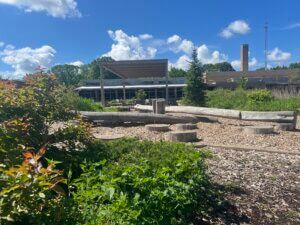
A green schoolyard from Milwaukee, Wisconsin.
Much of the public policy related to green schoolyards has focused on district- and community-level policy utilizing local and federal funding. While these levers remain critical, state-level policy and funding are coming into focus for related advocacy and planning. States often provide funding for school construction and have sustainability and infrastructure plans that provide either requirements or recommendations for school buildings. This funding provides a clear and important opportunity to support green schoolyard expansion.
A few states have funding specific to green schoolyard implementation, while others incorporate aspects of green schoolyards within pre-existing funding avenues. California has a Green Schoolyards Grant Program through the California Department of Forestry and Fire Protection (CAL FIRE) that provides grants to school districts. Massachusetts has a Green Schools Program, housed in the Massachusetts School Building Authority, that supports sustainable school construction planning and development. Several states, such as Washington, have introduced legislation to enact similar green schoolyard-related programs.
State-level green schoolyards policy efforts are growing nationwide. Stay tuned for more information, and feel free to contact David to share your ideas and efforts: david@childrenandnature.org. Also, don’t forget to see the latest state policy updates via the Youth Outdoor Policy Playbook!
JUNE 19, 2024:
Outdoor nature-based Pre-K and child care licensing
Across the country, a movement to increase outdoor learning and engagement has picked up steam. Several states are now working towards licensed, outdoor-nature-based (ONB) prekindergarten (Pre-K) and child care programming. This work builds on research and other international efforts that show early access to nature has many benefits for young children’s health, brain development and appreciation of nature. Licensing for ONB early childhood programming also paves the way for a wider array of programming that families want or need. This is especially important given the challenges many families have finding appropriate care and many providers have remaining operational amidst compounding financial constraints.
States such as Colorado, Maryland and Oregon have recently passed laws to begin ONB licensing, and several other states are working on ONB licensing through regulation or other means. Washington was the first state to enact ONB Pre-K licensing and child care licensing for both early learning and school-age child care. Resources to support Washington’s new and existing providers include Outdoor Nature-Based Learning Competencies (also available in Spanish and Somali), a Benefit-Risk Assessment and an Outdoor Nature-Based Initial Checklist. These resources help ensure quality, safe outdoor learning and engagement for Washington’s youngest children.
The Children & Nature Network and many other partners, including the Natural Start Alliance, are supporting states and advocates interested in implementing ONB Pre-K and child care licensing. Additionally, the Children & Nature Network and the National League of Cities created the Early Childhood Nature Connections Toolkit to aid providers and system leaders who want to create nature-based learning and play spaces. For more information on successful policy strategies to support programming in the ONB early childhood field, from pre-natal through early elementary, reach out to David at david@childrenandnature.org.
MAY 21, 2024:
Michigan launches Children & Nature Coalition effort
 Michigan enjoys many rural and urban nature-based environments that are ripe for fun and learning. Unfortunately, as in most of the United States, many children and youth lack access to these spaces — or have inequitable access.
To take this head-on, the Great Lakes Stewardship Initiative (GLSI), in partnership with the Children & Nature Network, is developing and implementing a sustained initiative to increase youth access to and engagement with nature and related programming throughout Michigan. The Michigan Children & Nature Coalition is a multi-year initiative that aims to increase funding and supportive state-level policies conducive to thriving, equitable children and nature connections at school, in the community and beyond. The initiative will also increase statewide collaboration and engagement around critical practices, programs and infrastructure that support sustained youth access to nature, such as through green schoolyards, pre-K-12 teaching and learning pathways, other formal and nonformal learning structures and programs, early childhood learning, nature-based play, outdoor recreation and more.
A leadership team is forming, and many organizations have begun participating. If you are in Michigan and would like to learn more and get involved, please email coalition@greatlakesstewardship.org. The more diverse the coalition member organizations that can be brought into this effort, the more likely the Michigan government will support this critical body of work for Michigan’s young people.
Children and nature advocates come to DC
Youth, providers, and advocates from around the country came to Washington, DC, on May 21 and 22 for Oak Week 2024, an opportunity to educate policymakers on the importance of outdoor learning and engagement. OAK Week is an annual event sponsored by the Outdoors Alliance for Kids (OAK), a national strategic partnership of organizations (including the Children & Nature Network), which advocates for outdoor accessibility, youth engagement, conservation, nature equity and more. Congress has many pending pieces of legislation that would greatly increase equitable access to outdoor/nature-based programming, environmental education, green/living schoolyards and much more.
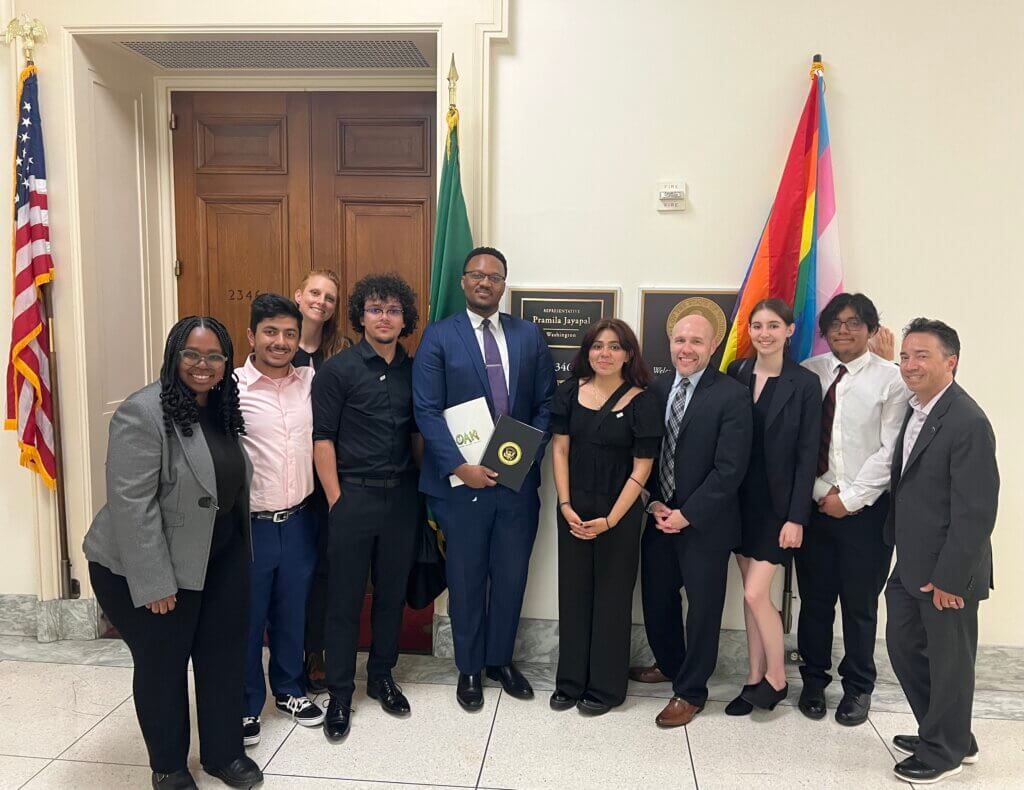
Youth and staff from Detroit Outdoors; Flint’s Young, Gifted & Green; and the Children & Nature Network educated federal policymakers on nature-based learning and engagement during OAK Week 2024.
In addition to advocacy, OAK got the chance to hear from Brenda Mallory, chair of the Council on Environmental Quality, and Andrea Delgado, chief of staff, Natural Resources & Environment, U.S. Department of Agriculture. They stressed the administration’s commitment to equitable access to our public lands for children and youth. Attendees also got to hear from a fantastic panel on best practices in securing federal funds from the USDA Forest Service, Student Conservation Association, Annapolis Recreation & Parks and the Children & Nature Network. Finally, Jacob Malcom, acting deputy assistant secretary, Department of the Interior, presented on the “National Nature Assessment,” which is a government-wide report led by the U.S. Global Change Research Program. Set to publish in 2026, it will assess how Americans view the importance of nature. Malcolm was able to receive input and ideas from young people and the OAK community to shape the report.
If you missed OAK Week 2024, we hope to see you next year! Please consider joining OAK and helping elevate these critical issues to Congress and the administration.
APRIL 25, 2024:
Federal EXPLORE Act passes U.S. House
Political infighting has led to very little policy action in Congress this year. So, it was heartening to see the Expanding Public Lands Outdoor Recreation Experiences (EXPLORE) Act, also known as House Resolution 6492, pass the U.S. House of Representatives on April 9th with strong bipartisan support. This legislation provides much-needed infrastructure, permitting and mapping improvements to national parks and other federal lands and waterways. The bill also makes the Outdoor Recreation Legacy Partnership program permanent, which provides competitive funding for “nature-deprived communities.” Eligible uses of funds include the acquisition, development and/or substantial renovation of public parks and other outdoor recreation spaces.
In relation to children and youth: the bill extends the Every Kid Outdoors Act, which provides every American 4th grader free access to national parks. Additionally, the bill requires a joint team of federal agencies to create a public strategy to increase the number of youth recreation visits to federal recreational lands and waters. Under the bill currently, agencies would have two years from enactment to finalize the initial youth recreation visit plan and would be mandated to update it every five years.
The bill now heads to the Senate, where advocates hope for swift action. President Biden is anticipated to sign the EXPLORE Act if it lands on his desk. Stay tuned for additional updates!
New and improved Youth Outdoor Policy Playbook
The Youth Outdoor Policy Playbook is an online tool that serves as a resource for state-level policy action and ideas, hosts annual nationwide legislative updates, and provides links to legislation passed and pending. A recent website refresh will allow users to more easily find policies of interest, case studies and community spotlights of state-level advocacy across the country.
The Playbook is supported by the Youth Outdoor Policy Partnership, a collaboration between the Children & Nature Network, the National Caucus of Environmental Legislators, the North American Association of Environmental Education and Nuestra Tierra. Check out our webinar to learn more about the new tool, and to hear Kentucky State Representative Josie Raymond and Ashley Hoffman with the Kentucky Association of Environmental Education (KAEE) discuss policy development and advocacy for Kentucky’s outdoor nature-based child care licensing bill.
MARCH 28, 2024:
Current 2024 federal budget is finalized, work begins on the 2025 budget
Congress has finally approved the 2024 federal budget, which should have been passed prior to October 1, 2023. In the agreement the President and Congress reached, most funding areas are flat-funded, meaning they will receive the same amount of funding as the 2023 budget cycle. There are a few exceptions, such as a $1 billion increase in the Child Care Development Block Grant (CCDBG) and Head Start, as well as slight increases for K-12 programs such as Title I. Also included are a handful of Congressional Directed Spending requests (also known as “earmarks”), many of which are related to public infrastructure.
The process for the 2025 federal budget, which needs to be passed in some form before October 1, 2024, has also begun. Both President Biden and House Republicans released the budget resolutions, which is the first step in the process. These resolutions set spending limits for sections of the budget and identify budget priorities. President Biden’s budget proposal includes several new investments in education, early learning, and environmental justice including a commitment to the Justice40 initiative that strategically aims to increase investment in communities that are marginalized by underinvestment and overburdened by pollution. The President’s budget proposal also includes new funds for public infrastructure, green energy and cleaning up waterways on which children and families depend.
While mostly good news, we are concerned to see that the Supporting America’s School Infrastructure (SASI) grant program, which can be used to support states’ ability to expand their green schoolyards, was not included in the budget proposal.
The majority House Republican concurrent budget resolution proposal (C.B.R.) provides limits for spending levels by function (e.g., energy, education, etc.) as well as related policy priorities, such as eliminating several green energy-related tax incentives. The majority Senate Democrats have not released their 2025 proposed concurrent budget resolution but are expected to over the next several weeks.
This budget process will continue to be contentious, particularly given the general election in November, when races for President, approximately one-third of senate seats and all house members are on the ballot. Given recent history, it is likely that no budget will be finalized until after the election, several months into the new 2025 federal fiscal year.
To learn more about the federal budget, see these great infographics on the 2023 federal budget from the Congressional Budget Office. These visualizations help display the enormity and complexity of the budget at a high level – although they do not show how critical this funding is to the current and future well-being of our children and the environment.
Resources for civic infrastructure funding
Civic infrastructure is a critical – and often underfunded – resource, despite decades of research showing that well-funded, programmed and managed public places can help people and communities thrive. Learn more about federal programs available for investing in public spaces where Americans can connect and flourish in this new article from the Percent for Place coalition, of which Children & Nature Network is a member.
As anyone who has ever applied for a federal grant knows, these grants can be challenging to apply for and report on. This link takes you to federal funding opportunities that we have seen work for children and nature-focused infrastructure projects. Please reach out to David with questions or ideas regarding federal funding at david@childrenandnature.org.
FEBRUARY 29, 2024:
State legislative sessions underway
Forty-six state legislatures, along with the District of Columbia City Council, territorial legislatures and Tribal Councils, will all be in session at some point during 2024. This is a time when annual budgets are created, biennial budgets are amended and bills have either passed or failed. The Youth Outdoor Policy Partnership – made up of the Children & Nature Network, the National Caucus of Environmental Legislators (NCEL), Nuestra Tierra and the North American Association of Environmental Education (NAAEE) – created and manages the Youth Outdoor Policy Playbook. This Playbook serves as a resource for state-level policy action and ideas, hosts annual nationwide legislative updates and provides links to legislation passed and pending. The Playbook will be updated and improved throughout 2024. Check it out, and feel free to connect with any of the partners about what you find or what you are looking for in state-level children and nature-focused public policy.
-
Richard Louv
ON THE RIVER: The Restorative Power of Nature in Difficult Times
-
Feature
We’re all looking for the same moon
-
Voices
Green Schoolyards Action Agenda: A national roadmap for nature-rich school grounds
-
Feature
A decade of ripples: What Nature Everywhere Communities reveal about systems change
-
Feature
Forest bathing: Educators need nature connections, too